



Understanding the Dangers of Outdated Home Wiring
Rewiring a house is the process of replacing old, outdated, or unsafe electrical wiring with new wiring that meets current safety codes and can handle modern power demands. This comprehensive guide will help you understand when it’s necessary, what’s involved, and how to approach this important home improvement project.
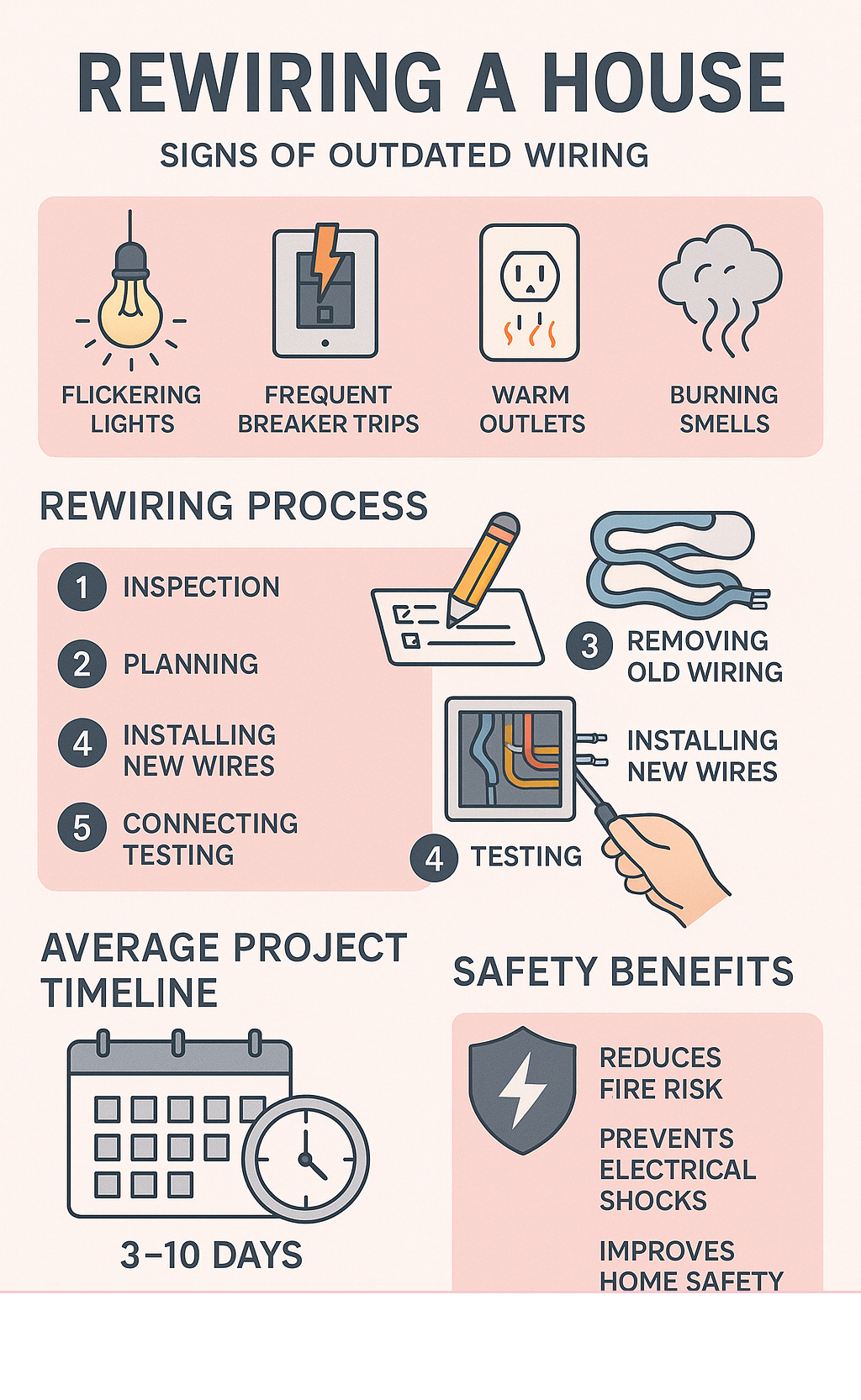
Quick Guide to Rewiring a House:
- When it’s needed: Homes over 40 years old, with aluminum wiring, knob-and-tube systems, frequent electrical issues, or insufficient power
- Warning signs: Flickering lights, frequent breaker trips, warm outlets, burning smells
- Process involves: Inspection, planning, removing old wiring, installing new wires, connecting fixtures, testing
- Timeline: Typically 3-10 days depending on home size and complexity
- Safety benefits: Reduces fire risk, prevents electrical shocks, improves home safety
- Additional benefits: Increased home value, lower insurance premiums, support for modern electronics
Electrical issues account for an estimated 51,000 home fires each year, resulting in nearly 500 deaths, 1,400 injuries, and $1.3 billion in property damage. With 60% of electrical fires caused by wires that are either too old or improperly installed, the importance of proper wiring cannot be overstated.
Modern homes require significantly more electrical capacity than homes built even 20-30 years ago. Between high-powered appliances, multiple electronics, smart home systems, and potentially electric vehicle charging, outdated wiring systems simply weren’t designed to handle today’s electrical demands.
I’m Dan W, an experienced manager of home repair services who has overseen countless rewiring a house projects and trained technicians to deliver maximum service satisfaction for electrical systems. I’ve seen how proper rewiring can transform an unsafe electrical system into one that provides peace of mind for decades.
Rewiring a house vocab to learn:
Why & When Should You Consider Rewiring?
Think of your home’s electrical system as its beating heart – it powers everything from your morning coffee maker to your evening Netflix binge. But like any vital system, it can wear out over time, creating not just inconveniences but genuine safety hazards for your family.
If your home was built before 11100, you likely need a complete rewiring a house project. Homes built between 11100-1965 often require partial rewiring, while even those built after 1965 deserve evaluation if they’ve never been updated. Electrical standards have changed dramatically over the decades – what was considered safe in the 1970s may not meet today’s more rigorous safety codes.
The statistics tell a sobering story. According to the National Fire Protection Association statistics, electrical failures rank as the second leading cause of home fires in America. What’s truly heartbreaking is that most of these disasters could have been prevented with proper wiring maintenance and timely updates.
In our 50+ years serving Greater St. Louis, St. Charles, and Warren County, we’ve seen how proper rewiring a house projects have saved countless homes from potential disaster.
Key Dangers of Outdated Systems
You might be living with a ticking time bomb and not even know it. Knob-and-tube wiring, common in pre-11100 homes, lacks a ground wire and typically has deteriorating insulation after decades of service. Homes with this outdated system face significantly higher electrical fire risks.
If your home was built in the 1960s or early 1970s, be on alert for aluminum wiring. During the copper shortages of that era, builders turned to aluminum as an alternative. The problem? Aluminum carries only about 61% of the current that same-sized copper wire can handle. Even more alarming, homes with aluminum wiring are 55 times more likely to develop fire hazard conditions than those with copper wiring.
Beyond the safety concerns, outdated wiring creates practical headaches too. Many insurance companies will either refuse coverage entirely or charge substantially higher premiums for homes with knob-and-tube or aluminum wiring. It’s not just about safety – it’s about protecting your investment.
The shock hazards of older wiring systems can’t be overstated. Without proper grounding, the risk of electrical shock increases dramatically. If you spot two-prong outlets (missing that third grounding hole) around your home, that’s a red flag signaling ungrounded wiring.
Modern homes are power-hungry, with multiple TVs, computers, smart devices, and high-powered appliances running simultaneously. Older electrical systems simply weren’t designed for today’s power demands, leading to overloaded circuits and potential fire hazards.
How Often Should Wiring Be Updated?
Even if everything seems fine, electrical wiring deserves regular attention. As a rule of thumb, have your electrical system professionally inspected every 10 years and consider updates every 25-30 years. However, certain situations call for more immediate action:
Home age matters. If your home has passed the 40-year mark without any wiring updates, schedule a professional inspection soon. What was cutting-edge in the 1980s is now potentially dangerous by today’s standards.
Major renovations should always include an electrical system evaluation. Adding that dream kitchen with high-powered appliances? Your existing wiring might not be up to the task.
Purchasing an older home is exciting, but don’t let electrical problems dampen your homeowner experience. Before finalizing any purchase, invest in a thorough electrical inspection to avoid surprise rewiring a house costs down the road.
Water damage from flooding or significant leaks can compromise wiring insulation, creating hidden hazards behind your walls. After any major water event, have your electrical system checked.
Most importantly, don’t ignore warning signs. Flickering lights, frequent breaker trips, or warm outlets aren’t just annoyances – they’re your home trying to tell you something is wrong.
By addressing wiring issues proactively, you’re not just protecting your property – you’re protecting what matters most: the people who live there.
Signs Your Home Needs Attention
Your home’s electrical system speaks to you – but are you listening to what it’s trying to say? Recognizing early warning signs can prevent dangerous situations and save you from costly emergency repairs down the road.
When your lights flicker consistently across multiple fixtures, it’s more than just a spooky ambiance – it’s your home telling you something’s wrong with the wiring. This isn’t about the occasional flicker when a bulb is loose; we’re talking about persistent issues that no amount of bulb-tightening will fix.
Frequent circuit breaker trips are another clear cry for help. If you can’t run your microwave and coffee maker at the same time without plunging part of your house into darkness, your electrical system likely can’t handle your modern power needs. Your home’s wiring was designed for the electrical demands of decades past – not today’s technology-filled lifestyle.
That buzzing sound coming from outlets or switches? It’s not a tiny bee trapped in your wall – it’s electricity taking paths it shouldn’t. Electrical systems should operate silently, and any unusual noises warrant immediate professional attention.
Take a look at your outlets. Do they have two prongs instead of three? Those two-prong outlets are a telltale sign of outdated wiring without proper grounding, increasing your risk of electrical shock and appliance damage.

Perhaps the most alarming sign is any burning smell near electrical components. This isn’t just a warning – it’s a five-alarm emergency. Similarly, outlets or switches that feel warm to the touch or show discoloration indicate dangerous overheating that could lead to fire.
Getting little shocks when plugging in appliances? That’s not static electricity playing tricks – it’s a sign of improper grounding or failing insulation. And if you can actually see cracked, frayed, or exposed wiring anywhere in your home, don’t wait another day to call a professional.
The presence of aluminum wiring (popular in the 1960s-70s) or knob-and-tube wiring (pre-11100s) are serious red flags that rewiring a house should be on your immediate to-do list. These outdated systems simply weren’t designed for today’s electrical demands and pose significant fire hazards.
Finally, if your home resembles an octopus of power strips and extension cords, you’re compensating for an insufficient electrical system. Modern homes need plenty of outlets to safely power our devices without creating dangerous workarounds.
For more detailed information about these warning signs and answers to common electrical questions, visit our comprehensive Home Electrical FAQ. Our experienced electricians at AAA Home Services can help evaluate your home’s electrical system and recommend appropriate solutions before small issues become dangerous problems.
Rewiring a House: Step-by-Step Process & Timeline
Undertaking a rewiring a house project is like giving your home’s nervous system a complete overhaul. While it’s a significant undertaking, understanding the process can help you prepare for what’s ahead. Let’s walk through what happens when electricians transform your outdated electrical system into a safe, modern powerhouse.
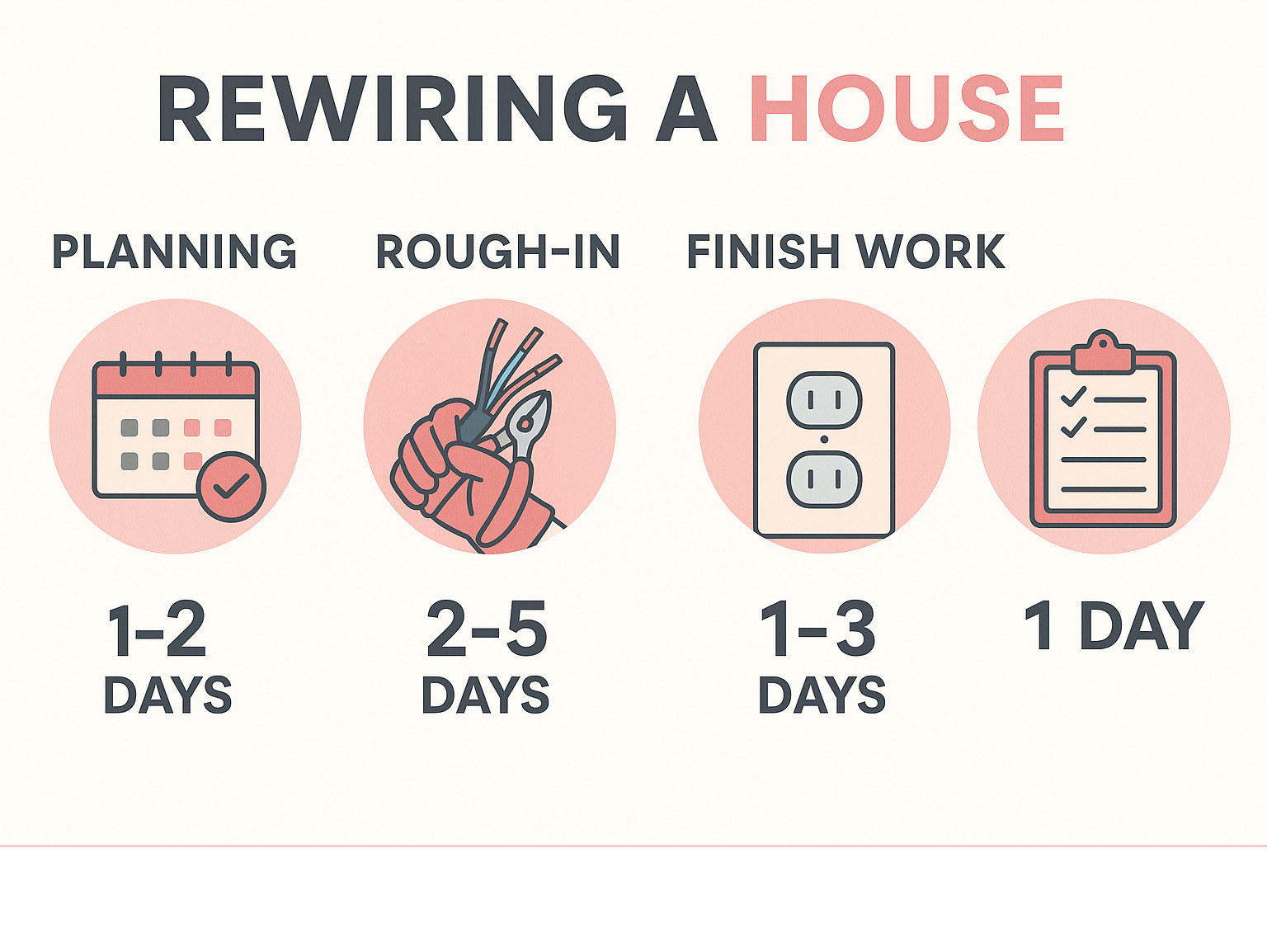
Planning Phase (1-2 Days)
Before any walls are opened, a thorough planning phase sets the foundation for success. Your electrician will carefully assess your current system, identifying potential hazards and determining exactly what needs replacement. This initial evaluation is crucial—it’s where we spot those dangerous knob-and-tube sections or aluminum wiring that needs to go.
Next comes creating a detailed electrical plan that maps out every outlet, switch, and fixture location. This is also your opportunity to think ahead—want an electric vehicle charger in the garage someday? Need more outlets for a home office? The planning phase is when we build these future needs into your design.
Don’t forget permits! Most local jurisdictions require proper permitting for electrical work. While paperwork isn’t exciting, it ensures your project meets safety codes and protects your home’s value when it’s time to sell.
First Fix / Rough-In Phase (2-5 Days)
Now the change begins! After safely disconnecting power to work areas, electricians need to access your home’s wiring pathways. This might involve some strategic drywall removal or creating access points in walls and ceilings.
Out with the old, in with the new—your outdated, potentially dangerous wiring is carefully removed and properly disposed of, making way for fresh, code-compliant cables. If your home needs more electrical capacity (and many older homes do), this phase often includes installing a new electrical panel that can handle modern power demands.
Second Fix / Finish Phase (1-3 Days)
With new wiring snaking through your walls, the next step brings everything to life. New outlets, switches, and fixtures are installed, and all circuits are properly connected to your electrical panel. Each new connection is thoroughly tested for safety and function—no shortcuts here when it comes to your family’s wellbeing.
Inspection and Completion (1 Day)
The final stage involves an official inspection by your local building department. This independent verification ensures all work meets code requirements—an important safety step you shouldn’t skip. After approval, any remaining connections are completed, power is restored, and your system undergoes a final testing under load.
Before your electrician leaves, you’ll receive documentation of all completed work, including warranties. This paperwork is valuable for your records and future home sales.
Can You Rewire a House Without Removing Drywall?
“Will they need to tear up my whole house?” This is probably the most common concern we hear at AAA Home Services. While some drywall work is typically unavoidable during a complete rewiring a house project, skilled electricians have several techniques to minimize disruption.
Experienced professionals often use existing pathways like crawlspaces, attics, and basements to run new wiring with minimal wall penetration. When walls must be accessed, strategic, small openings can be created rather than removing entire sections. Specialized wire fishing tools allow technicians to thread new wiring through walls with surprisingly minimal damage.
In some cases, junction boxes can be installed in closets or other hidden locations to facilitate wire routing without extensive wall opening. For unfinished spaces like basements or garages, surface-mounted conduit systems might be an option.
Our AAA technicians are trained to balance proper installation with minimal home disruption. While we can’t promise zero drywall work, we can assure you we’ll use every technique possible to reduce the impact on your home’s appearance.
For more detailed information about the rewiring process, visit our house rewiring guide.
How Long Does Rewiring a House Take?
“When will my life get back to normal?” That’s the next question homeowners typically ask. The honest answer is: it depends on several factors.
Home size naturally affects timeline—a cozy 1,500 sq. ft. bungalow might take just 3-5 days, while a sprawling 3,000 sq. ft. two-story could require 7-10 days. Construction type matters too; homes with plaster walls or complex layouts often take longer than newer construction with easy access points.
Are you staying in the home during rewiring? If so, work might be done in stages to maintain some functional circuits, which can extend the timeline but makes the process more livable. Municipal inspection scheduling can also add a day or two to the project.
For most average homes, expect about a week from start to finish, though the range typically falls between 3-10 days depending on your specific situation.
Ensuring Code Compliance & Future Needs
Modern electrical codes aren’t just bureaucratic red tape—they’re carefully designed safety standards that protect your family. When rewiring a house, we focus not just on meeting current requirements but preparing for tomorrow’s needs too.
Most contemporary homes require at least a 200-amp service panel to handle today’s power-hungry devices. While homes under 3,000 sq. ft. might function with 100-amp service, a 200-amp panel provides valuable flexibility for future expansion.
Safety protection has evolved significantly—current code requires GFCI outlets in moisture-prone areas like kitchens and bathrooms to prevent shock hazards. AFCI protection is now mandated for bedrooms and living spaces to detect and prevent dangerous electrical arcs before they can cause fires.
Modern appliances like refrigerators, microwaves, and laundry equipment perform best (and most safely) on dedicated circuits that prevent overloads. And thinking ahead to technologies like electric vehicle charging or smart home systems during your rewiring project can save significant costs later.
At AAA Home Services, our electricians stay current with all local and national electrical codes to ensure your home not only meets but exceeds minimum safety requirements. For more information about upgrading your electrical panel, visit our Electrical Panel Upgrades page.
How Much Does It Cost & How Do You Pay for It?
When it comes to rewiring a house, I understand that cost is often the first question on homeowners’ minds. While I can’t share specific pricing here (every home is unique!), I can walk you through what affects your investment and how most St. Louis area homeowners handle the financial side.
The scope of your rewiring project is like a fingerprint – completely unique to your home. A cozy 1,300 sq. ft. bungalow will naturally cost less than a sprawling 2,500 sq. ft. ranch home simply because there’s less wire to run and fewer outlets to install. But square footage is just the beginning of the story.
Homes with easy access points – like spacious attics, unfinished basements, or accessible crawlspaces – typically require less labor than homes where technicians need to carefully open and later repair multiple walls. Those beautiful century-old homes with plaster walls we love in St. Louis? They often need more delicate handling during rewiring, which can influence the overall investment.
| Cost Factor | Impact Level | Notes |
|---|---|---|
| Home Size | High | Directly proportional to cost |
| Wall/Ceiling Access | High | Less accessible = higher cost |
| Panel Upgrade | Medium-High | Necessary for most older homes |
| Fixture Quantity | Medium | More outlets = higher cost |
| Home Occupancy | Medium | Living in home during work may increase cost |
| Permit Fees | Low-Medium | Required but relatively fixed |
| Restoration Work | Variable | Can add 25-30% to project cost |
The electrical panel is often the heart of your rewiring project. Most older homes need an upgrade from outdated 60-amp or 100-amp service to a modern 200-amp panel that can handle today’s power-hungry homes. This component is essential but does add to the overall project scope.
Don’t forget about permits and inspections! These are non-negotiable for legal, properly completed electrical work. While the fees vary across different St. Louis area municipalities, they’re a necessary part of ensuring your home meets current safety codes.
Hidden & Additional Costs to Expect
I always recommend that homeowners prepare for the “after” work. Drywall or plaster repair following rewiring can add 25-30% to your project total, and it’s something many homeowners don’t initially consider. If your rewiring a house project is extensive, you might need temporary housing for a few days, which should factor into your budget planning.
Many of our clients find they need to temporarily relocate furniture or belongings to give our technicians proper access. While basic white outlets and switches are typically included in rewiring estimates, designer finishes or smart home components will understandably increase your investment.
The golden rule I share with every homeowner: set aside a 10-20% contingency fund. Even with thorough planning, electrical systems can reveal surprises once walls are opened. Having this buffer helps avoid financial stress if unexpected issues arise.
With AAA Electricians, we will communicate the costs well and give you a full understanding of what to expect.
“Brian Keith with AAA Home Services does an excellent job. He communicates well and works hard to meet customer needs.” – Lawrence S, St. Charles, MO
Benefits That Offset the Investment
While rewiring a house requires a meaningful investment upfront, the returns are substantial and long-lasting. Updated electrical systems typically increase home market value by 3-5% – not bad for an improvement that’s mostly hidden in your walls!
Many of our clients report lower insurance premiums after rewiring. Insurance companies understand that modern electrical systems dramatically reduce fire risk, and they often reward this safety improvement with better rates.
Modern wiring configurations are simply more efficient than older systems, which can lead to noticeable energy savings over time. Plus, there’s the peace of mind that comes from knowing your family isn’t at risk from outdated, potentially dangerous wiring – something our customers tell us is truly priceless.
Financing Options
Since rewiring a house is an investment in both safety and value, several financing approaches can make the project more manageable:
Home equity loans or lines of credit often provide the most favorable interest rates since they’re secured by your property. Personal loans based on your credit history and income offer another solid option without tapping into home equity. For smaller projects, credit cards with 0% introductory rates might make sense for short-term financing.
Many homeowners also look into specialized home improvement loans designed specifically for renovation projects. And of course, cash is always welcome for those who’ve been saving for this important upgrade!
For detailed information about various financing options, you can visit SoFi financing overview or reach out to our team at AAA Home Services to discuss payment solutions that might work for your situation.
While the initial investment might seem substantial, proper rewiring is one home improvement that truly pays you back – in safety, efficiency, and property value for years to come.
Choosing the Right Electrician & Preparing Your Home
Finding the perfect professional to handle rewiring a house isn’t just about getting the job done—it’s about ensuring your family’s safety and your home’s long-term electrical health. After helping thousands of St. Louis area homeowners with rewiring projects, we’ve learned what makes the difference between a stressful experience and a smooth one.
Electrician Qualifications
When you’re inviting someone to open up your walls and replace the electrical lifelines of your home, credentials matter. Make sure your electrician holds proper licensing in Missouri or Illinois (depending on your location)—this isn’t just a piece of paper, it’s verification they understand local codes and safety standards.
Always verify they carry both liability insurance and workers’ compensation. Without these protections, you could be financially responsible if something goes wrong or someone gets injured on your property.
Experience matters tremendously with rewiring projects. Many electricians can handle simple repairs, but whole-house rewiring requires specialized knowledge. Ask potential contractors: “How many complete home rewiring projects have you completed in the past year?” Their answer will tell you volumes.
Before making your decision, take time to read online reviews and request references from similar projects. At AAA Home Services, we’re proud of our 8,000+ Google reviews from homeowners throughout the St. Louis region who’ve trusted us with their electrical systems.
Pay attention to how clearly the electrician communicates. If they can’t explain the process in terms you understand before the project begins, communication issues will only multiply once walls are opened. A quality professional will walk you through the entire process, from initial assessment to final inspection.
Never proceed without a detailed written estimate that outlines all aspects of the work. This protects both you and the electrician from misunderstandings about scope and cost. Also, inquire about warranties—quality electrical work should be guaranteed for at least a year, with many components carrying longer manufacturer warranties.

Preparing Your Home
A little preparation before your rewiring a house project begins can save tremendous headaches later. Start by clearing access points where electricians will need to work. This means moving furniture away from walls, clearing closets where wiring may run, and ensuring attic or basement access isn’t blocked.
Protect items that can’t be moved by covering them with plastic sheeting (as shown in the image above). This simple step prevents construction dust from becoming a major cleaning project later. For particularly valuable or fragile items, consider temporarily relocating them to a room that won’t be affected by the work.
If you have pets, plan for their safety and comfort during the project. The constant coming and going of workers, noise, and disruption can be stressful for animals. Consider boarding them or creating a secure space away from work areas. Open walls can create escape routes for indoor pets.
Back up all electronic devices before work begins. Power will be disconnected to various parts of your home during rewiring, and sudden shutdowns can damage computers and smart devices. Take the time to properly save and shut down everything before the project starts.
Establish clear communication channels with your electrician before and during the project. Will you communicate by text, phone calls, or in-person meetings? How frequently will you receive updates? Setting these expectations upfront prevents frustration on both sides.
For more insights about electrician qualifications, our blog on Master Electrician vs Licensed Electrician explains the important distinctions.
DIY vs Professional: Why Hire a Pro for Rewiring a House
In an age of YouTube tutorials, it’s tempting to consider tackling home projects yourself. However, rewiring a house stands apart as one project where professional expertise isn’t just helpful—it’s essential.
Electrical work carries serious safety risks that go beyond personal injury. Improperly installed wiring can create hidden fire hazards that might not become apparent for months or years. Professional electricians undergo years of training to understand these risks and how to mitigate them.
Electrical codes exist for good reason, and they’re constantly evolving. A professional stays current with these complex requirements, ensuring your home not only meets minimum standards but exceeds them for long-term safety. This becomes particularly important when you eventually sell your home, as inspection issues can derail sales.
Most municipalities require permits for electrical work, which often necessitate a licensed professional. Work completed without proper permits can lead to complications with insurance coverage and home sales down the road.
Speaking of insurance, many homeowner policies specifically exclude coverage for damages resulting from DIY electrical work. This means if the worst happens, you could be facing out-of-pocket costs for rebuilding your home.
When professionals rewire a house, their work typically includes warranties that protect your investment. If an issue arises months later, you’re covered—a protection that simply doesn’t exist with DIY work.
What might take a homeowner weeks of evenings and weekends (with multiple trips to the hardware store) can often be completed by professionals in a matter of days. This efficiency minimizes the disruption to your daily life.
Preparing Your Family for the Project
Living through a rewiring a house project requires some adjustment, but with proper planning, it doesn’t have to be overwhelming. Start by working with your electrician to establish which areas of your home will be affected each day. This allows you to plan your family’s activities around the work schedule.
Power outages are an inevitable part of rewiring. Plan accordingly for refrigerated items by having coolers ready, and make special arrangements for medical devices that require electricity. If you work from home, identify which days might affect your office space and arrange alternative work locations if needed.
Request dust containment measures from your electrician. Professional crews use plastic barriers and specialized equipment to minimize dust spread, but it’s still wise to cover furniture and belongings in adjacent areas.
Keep battery-powered lights handy throughout your home during the project. Even areas that aren’t scheduled for work that day might experience temporary outages as circuits are tested or modified. A few strategically placed lanterns can prevent stumbles in darkened hallways.
If your kitchen will be affected, plan alternative cooking arrangements. This might mean setting up a temporary kitchen in another room with a microwave and electric kettle, or it might be the perfect excuse to try those new restaurants you’ve been curious about.
For essential devices that absolutely cannot be without power, discuss temporary power solutions with your electrician. In many cases, extension cords can be safely run from unaffected circuits to power critical equipment.
For more helpful tips on managing during electrical disruptions, see our blog on Steps to Take During an Electrical Outage.
Frequently Asked Questions About Rewiring a House
Does rewiring increase my home’s resale value?
Rewiring a house is one of those investments that pays you back in multiple ways – including when it’s time to sell your home. Updated electrical systems are a major selling point that can increase your home’s market value by 3-5%.
Think about it from a buyer’s perspective: nobody wants to purchase a beautiful home only to find it needs thousands of dollars in electrical work. Many home buyers specifically look for properties with updated electrical systems to avoid safety concerns and unexpected expenses after purchase.
When you list your home, a modern electrical system becomes a powerful marketing advantage. Your real estate agent can confidently highlight “completely rewired in [year]” as a premium feature. Plus, when the home inspector comes through (and they always do), an updated electrical system will shine in the report rather than raising red flags that could derail your sale.
Can I stay at home during the rewiring process?
Yes, most families do stay in their homes during rewiring projects, though I won’t sugarcoat it – there will be some disruptions to your daily routine. Our electricians at AAA Home Services typically work in sections, keeping some circuits operational while others are being replaced.
Think of it like zones – we might work on your upstairs bedrooms one day while keeping your kitchen and living areas powered, then switch the next day. Of course, there will be periods when power must be completely shut off for safety reasons, but we’ll always communicate these times clearly so you can plan accordingly.
Some homeowners, especially those with young children, elderly family members, or home offices, choose to temporarily relocate during the most intensive phases. If you decide to stay, here’s what to expect:
- Power outages in different areas throughout the project
- Limited access to certain rooms while work is in progress
- Some construction noise and dust (though we take great care to minimize both)
- Possible temperature fluctuations if your HVAC system is temporarily affected
Before your project begins, we’ll provide a detailed assessment of how disruptive your particular rewiring might be and help you create a plan that works for your family’s needs.
Will my homeowners insurance premiums change after a rewire?
Here’s some good news for your wallet: rewiring a house often leads to lower homeowners insurance premiums. Insurance companies are in the business of assessing risk, and they know that updated electrical systems significantly reduce fire hazards – one of the most expensive claims they cover.
Many of our customers report insurance discounts between 5-20% after completing electrical updates. Even more importantly, some insurance companies may refuse coverage entirely or charge substantially higher rates for homes with outdated systems like knob-and-tube or aluminum wiring. I’ve seen cases where homeowners were facing non-renewal notices until they updated their electrical systems.
After your rewiring project is complete, be sure to:
Get proper documentation of all work completed, including permits and inspections
Request an electrical inspection certificate
Contact your insurance company with this information
Specifically ask about their discounts for electrical system updates
The insurance savings alone can help offset a significant portion of your rewiring investment over time. When combined with improved safety, improved functionality, and increased home value, it makes the decision to rewire your home even more compelling.
At AAA Home Services, we’ve been helping St. Louis area homeowners steer these important home improvements for over 50 years. We’re always happy to help you understand how rewiring can benefit your specific situation.
Conclusion
Rewiring a house isn’t just another home improvement project—it’s a crucial investment in your family’s safety and your home’s future. While the process may involve some temporary inconvenience and financial commitment, the long-lasting benefits make it one of the wisest decisions you can make as a homeowner.
Think about what you’re really gaining: dramatically reduced risk of electrical fires, a significantly safer environment for your loved ones, and the capacity to support all your modern devices and appliances without worry. Your home becomes not just safer, but more valuable too.
Many homeowners are pleasantly surprised to find that after rewiring, their insurance companies offer them lower premiums. This ongoing savings, combined with the increased property value, helps offset the initial investment over time.
Perhaps most valuable of all is the peace of mind that comes from knowing your electrical system is up to code, properly installed, and ready to serve your family safely for decades to come. No more lying awake wondering about that flickering light or that slight burning smell you noticed earlier.
The secret to a smooth, successful rewiring project lies in choosing the right professionals. You need electricians who not only understand the technical requirements inside and out but also appreciate how to minimize disruption to your daily life during the process.
At AAA Home Services, we’ve been the trusted electrical partner for families throughout the Greater St. Louis, St. Charles, and Warren County areas for more than 50 years. Our licensed electricians bring a level of expertise and care to each rewiring project that only comes with decades of experience. We take pride in ensuring your home’s electrical system isn’t just safe and efficient—it’s ready for whatever the future brings.
Whether you’ve noticed concerning warning signs like frequent breaker trips and warm outlets, or you’re simply being proactive about an aging electrical system, we’re here to help. Our team provides fair, honest pricing and award-winning service that’s earned us over 8,000 positive Google reviews from satisfied homeowners just like you.
Ready to discuss your home’s electrical needs? Contact us today to schedule a consultation with one of our experienced electricians. We can often offer same-day or next-day service depending on availability.
For more information about our full range of electrical services, visit our More info about Electrician Services page.


