



Understanding the Investment in Your Home’s Electrical Safety
Sub panel installation cost varies based on your home’s needs and several key factors.
Key factors influencing cost include the panel’s amperage, its location (garage, basement, detached structure), distance from the main panel, and any necessary add-ons like grounding rods or GFCI breakers. Permits, inspections, and the condition of your existing wiring also play a role.
If you have flickering lights, tripped breakers, or are planning an addition, EV charger, or workshop, a subpanel can provide the power you need. At AAA Home Services, we help homeowners in the Greater St. Louis area make safe, code-compliant electrical upgrades.
What is a Subpanel and Why Do You Need One?
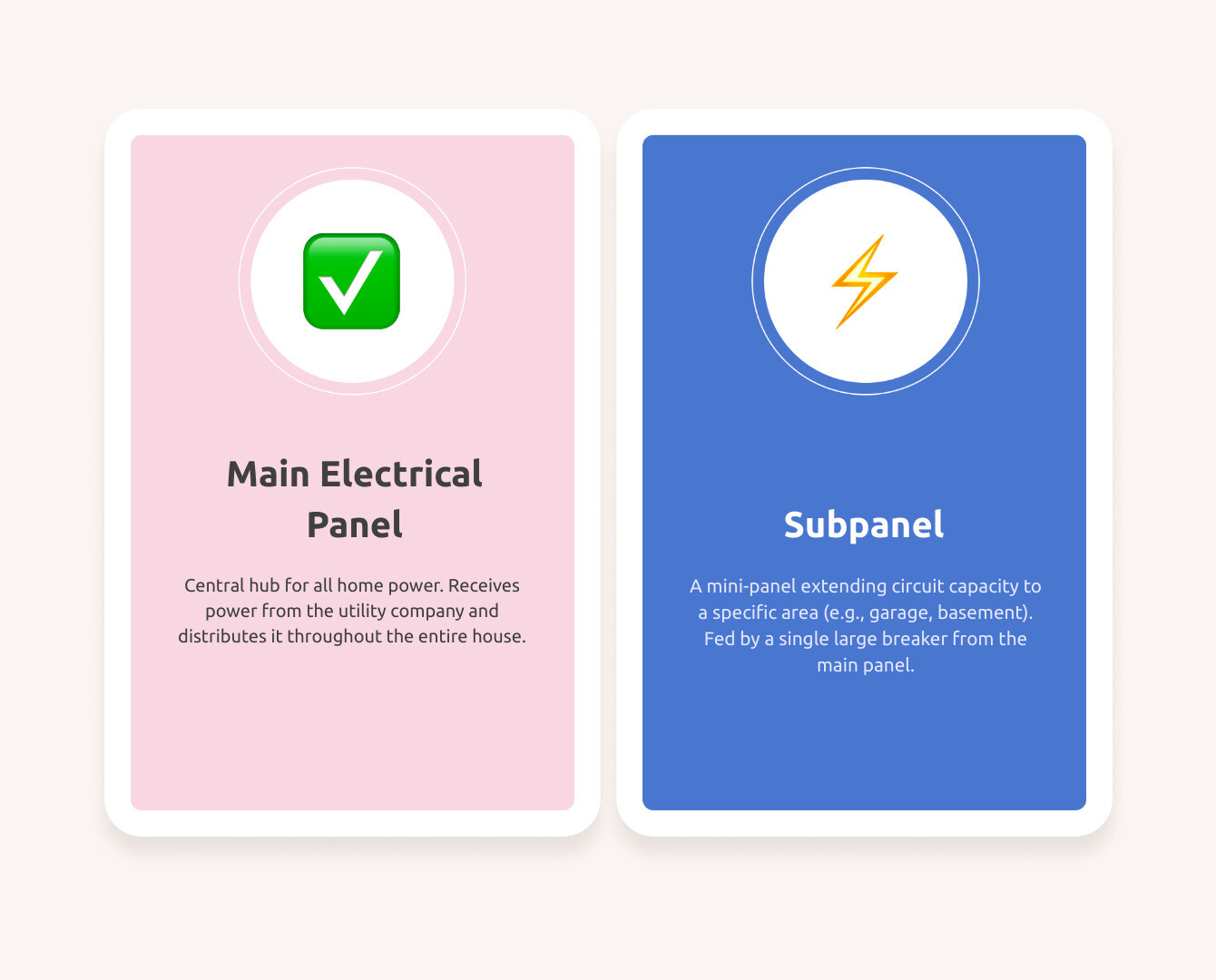
A subpanel is a mini-electrical panel that extends your main panel’s circuit capacity to a specific area, like a garage or new addition. It doesn’t increase your home’s total power but distributes it more effectively. You might need a subpanel if you experience:
- Signs of an Overloaded System: Flickering lights, frequently tripped breakers, or buzzing from your main panel are clear indicators of strain.
- New Additions or Renovations: A subpanel is the most practical way to power a finished basement, home addition, or converted attic.
- High-Demand Areas: Garages with workshops, power tools, or EV chargers often require the dedicated circuits a subpanel provides.
- Need for More Circuits: If your main panel is full, a subpanel is an excellent way to expand your electrical capacity for modern electronics and appliances.
A subpanel also improves safety and organization by better managing your home’s electrical load. For more answers to common questions, check out our Home Electrical FAQ.
When to Upgrade Your Main Panel vs. Install a Subpanel
Deciding between a subpanel and a main panel upgrade is crucial. A subpanel is great for adding circuits to a specific area, but a main panel upgrade is necessary if your entire home’s power demand exceeds its capacity.
Consider a main panel upgrade if:
- Your entire home’s electrical demand is pushing the limits of your current panel.
- You have an older 60-amp or 100-amp panel that can’t support modern electrical loads.
- Your main panel is over 20-40 years old or is a known hazardous brand (like Federal Pacific or Zinsco).
- You’re adding multiple high-draw appliances (EV charger, electric furnace) that will exceed your total available amperage.
The table below compares common scenarios:
| Scenario | Best Solution | Why |
|---|---|---|
| Adding a workshop in the garage | Subpanel | Provides dedicated circuits for a specific zone, assuming the main panel has capacity. |
| Finishing a basement with new rooms | Subpanel | Efficiently adds circuits to a new area, reducing long wire runs. |
| Frequent whole-home breaker trips | Main Panel Upgrade | Indicates the entire system is overloaded, not just one area. |
| Installing an EV charger & new HVAC | Main Panel Upgrade (likely) | These high-draw appliances often exceed an older panel’s total capacity. |
| Main panel is 30+ years old or a hazardous brand | Main Panel Upgrade | Prioritizes safety and brings the home’s electrical service up to current code. |
| Need a few more outlets in one room | Subpanel (or new circuit) | A new circuit is simple if the panel has space; a subpanel works if it’s full. |
| Planning for future home electrification | Main Panel Upgrade (proactive) | Future-proofs your home for more electric appliances, solar, or EV charging. |
A client in St. Charles, for example, needed power for a large detached workshop. Their 100-amp main panel was sufficient for the home, so a subpanel was the perfect, cost-effective solution for the new space.
Key Factors That Determine Your Sub Panel Installation Cost
When considering a subpanel, it’s important to understand what goes into a professional quote. Each home in our St. Louis service area has unique needs that influence the final sub panel installation cost.
The Impact of Amperage and Location on the Project
The two biggest factors are the panel’s amperage and its location.
- Panel Amperage: Higher amperage panels (100-amp, 150-amp, etc.) can handle more power than smaller ones (50-amp). We’ll help you choose the right size for your needs, whether it’s for a small addition or a workshop with heavy-duty equipment.
- Location: The installation location significantly impacts the complexity of the project.
- Attached Spaces (Garage/Basement): These are common installations. The complexity depends on the distance from the main panel and whether drywall repair is needed.
- Detached Structures (Shed/Workshop): These are more involved, often requiring underground trenching for the feeder wire, a separate main disconnect, and dedicated grounding rods.
- Distance from Main Panel: Longer distances require more wire and potentially a thicker gauge to prevent voltage drop, which affects the materials needed for the job.
For more details on panel upgrades, visit our page on Electrical Panel Upgrades.
Existing System Condition and Necessary Add-Ons
The condition of your current electrical system and code requirements also affect the final sub panel installation cost.
- Existing Wiring: Older wiring may need to be updated to safely handle the new subpanel.
- Main Panel Check: We’ll assess your main panel to ensure it has the capacity and space for the subpanel’s feeder breaker.
- Code-Required Add-Ons: Depending on the installation, items like grounding rods (for detached structures), GFCI breakers (for garages, bathrooms, etc.), and a main disconnect switch may be needed to meet safety codes.
- Unexpected Issues: We provide transparent estimates, but sometimes hidden issues like old code violations are found. We will always discuss these findings with you before proceeding.
One client shared their experience: “We had a sub panel installed in our garage. The electrician was very professional and did a great job. He was on time and cleaned up after himself. We are very happy with the work and would recommend AAA to anyone.”
Why Professional Installation is a Non-Negotiable for Safety
Electrical work is not a DIY project. The risks of shock, fire, and code violations are too high. Faulty electrical work is a leading cause of home fires, with the Electrical Safety Foundation International (ESFI) reporting over 51,000 fires annually from electrical issues.
Hiring a professional is non-negotiable for safety. Here’s why:
- Safety and Code Compliance: Our licensed electricians are experts in the National Electrical Code (NEC) and local St. Louis area regulations, ensuring your installation is safe and compliant.
- Permits and Inspections: We handle the entire permitting and inspection process with your local municipality, giving you peace of mind that the job is done right.
- Long-Term Reliability: Professional installation using high-quality materials ensures your subpanel will function safely and reliably for years.
Choosing a licensed, bonded, and insured electrician from AAA Home Services is an investment in your home’s safety. Learn more about our commitment on our page about Professional Electricians Ready to Help.
The Value of a Professional Upgrade for Your Home
A professional subpanel installation is an investment in your home’s safety, functionality, and future value. A robust electrical system is essential for modern life.
Key benefits include:
- Future-Proofing Your Home: A subpanel provides the infrastructure to support smart home technology, home offices, and other modern electrical demands.
- EV Charging Readiness: It’s often the most efficient way to add a dedicated high-amperage circuit for a Level 2 EV charger.
- Increased Safety and Peace of Mind: An updated, professionally installed system reduces the risk of electrical fires and gives you confidence that your home can safely handle its power needs.
A proper electrical upgrade can also increase property value. You may also be eligible for the federal Energy Efficient Home Improvement Credit for qualifying panel upgrades.
As one client says: “I have used AAA for several projects, including electrical work, and have always been impressed with their professionalism and quality of work. The technicians are knowledgeable, courteous, and always take the time to explain the work they are doing. I highly recommend them.”
For over 50 years, AAA Home Services has provided the Greater St. Louis area with safe, reliable electrical solutions backed by our fair, honest pricing. We’re here to ensure your home’s electrical system is ready for the future.
Explore our Electrical Panel Upgrades to learn more.
Ready to upgrade your home’s electrical system?
Contact us today to request service!
Learn more about our fair, honest pricing guarantee.
Discover our comprehensive electrician services.


