



Understanding the Real Cost of Electrical Work
The electrician cost per hour varies widely based on several factors including location, experience level, job complexity, and whether you’re hiring an independent contractor or a larger company. Understanding these variables helps you budget accurately and avoid surprise charges.
When an electrical problem occurs in your home, getting it fixed safely should be your first priority. However, understanding pricing comes a close second because everyone deserves a fair price for quality electrical work.
Average Electrician Cost Per Hour in 2024–2025
Wondering what you’ll pay for electrical work this year and next? Let’s break down the electrician cost per hour so you can plan your home projects with confidence. Whether you need a simple repair or a major upgrade, understanding today’s rates helps avoid sticker shock when the bill arrives.
The national average for residential electricians currently sits between $50 and $130 per hour. Here in the St. Louis area, we’re fortunate to enjoy rates that typically align with the national average rather than the premium prices seen in coastal cities.
I recently spoke with a homeowner in O’Fallon who shared, “I called around for quotes on installing some new outlets and was surprised by how much the prices varied. Once I understood the different license levels, it all made much more sense why one quote was so much higher than another.”
Electrician cost per hour by license level
Your project’s complexity should determine which license level is right for your needs. Think of it like choosing between a family doctor and a specialist – you want the right expertise for your specific situation.
One of our experienced journeyman electricians put it perfectly: “The difference isn’t just years of experience – it’s about the complexity of problems we can solve. When your home has unusual electrical issues that leave others scratching their heads, that’s when a master electrician’s expertise really pays for itself.”
At AAA Home Services, we thoughtfully match the right license level to your specific job. This ensures you get the expertise you need without paying for skills your project doesn’t require.
Regional price snapshot – coast to coast
While we proudly serve St. Louis, St. Charles, and Warren County areas, it’s eye-opening to see how our region compares nationally:
Our Midwest rates generally fall close to the national average, offering good value for quality work. By contrast, East and West Coast homeowners typically pay 20-40% more for the same services due to higher living costs and overhead expenses.
Those in rural areas might enjoy rates 10-20% lower than city dwellers, while those in urban centers often pay premium prices. One of our technicians who previously worked in San Francisco noted, “I was charging nearly double there for the same work I do here in St. Louis.”
For our customers in St. Charles, O’Fallon, Lake St. Louis and nearby communities, this regional advantage means more reasonable rates without sacrificing quality or safety.
Factors that change electrician cost per hour
Beyond geography and license level, several other factors influence what you’ll pay for electrical work:
Project complexity plays a major role – installing a bathroom exhaust fan is straightforward compared to rewiring an entire home. Accessibility challenges like cramped attics or crawlspaces often warrant higher rates due to the difficult working conditions.
Travel time may affect your final bill, especially for homes farther from our service center. During peak seasons like summer renovation time, demand can drive rates higher as skilled electricians become harder to schedule.
Material costs fluctuate with market conditions – when copper prices rise, so do electrical project costs. And code compliance requirements become more stringent each year. As the National Fire Protection Association updates safety standards, bringing older homes up to code often requires more extensive work.
A Lake St. Louis customer recently told us, “I was surprised that updating my 1970s home’s electrical system cost more than my neighbor’s newer home, but it made sense once the electrician explained all the code changes since my house was built.”
According to the Bureau of Labor Statistics, electrician employment is projected to grow faster than average through 2030, potentially affecting future rates as demand for skilled professionals increases in our region.
What Drives the Price? 8 Factors That Affect Your Final Bill
Understanding what goes into the electrician cost per hour helps explain why rates vary and what you’re actually paying for when you hire a professional electrician.
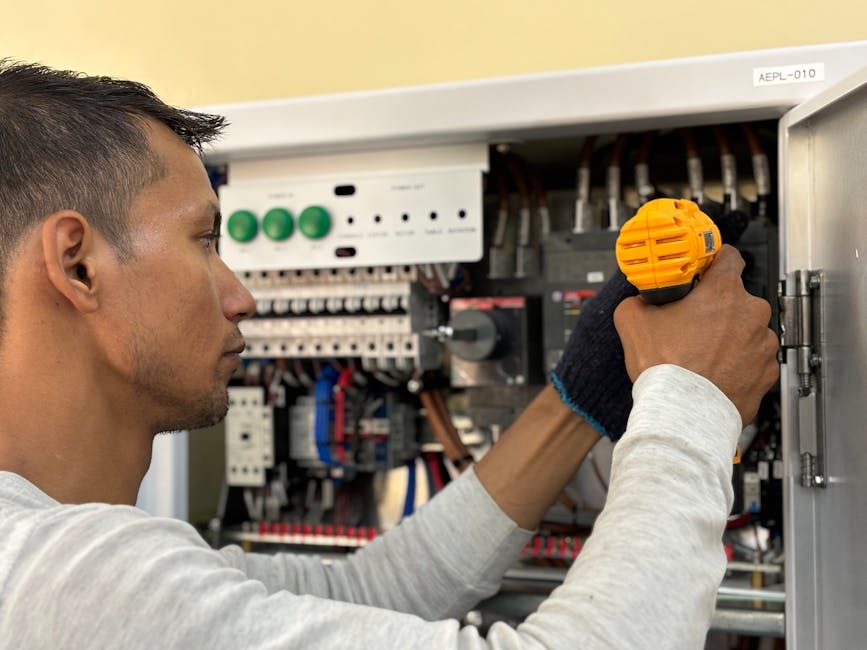
When you look at the bill from your electrician, that hourly rate might seem high at first glance. But there’s a lot more behind that number than just someone’s wages. Let me walk you through the main factors that influence what you’ll pay.
1. Scope of Work
Not all electrical jobs are created equal. The complexity of your project plays a huge role in pricing. Swapping out a light switch might take 30 minutes for a skilled pro, while rewiring an old St. Louis home could require days of careful work. More complex jobs require more planning, expertise, and time – all factors that affect your final cost.
2. Materials Markup
Your electrician isn’t just charging for parts at cost. Most professionals apply a markup of 10-50% on materials, and with good reason. This covers the time spent selecting quality components, picking them up, transporting them to your home, and handling any warranty issues that might arise. At AAA Home Services, we keep our material markups fair and transparent, ensuring you get quality components without unnecessary markup.
3. Overhead Costs
Running a legitimate electrical business involves expenses that many homeowners don’t consider. There’s office space, administrative staff to schedule your appointment, software systems to track your service history, and a whole fleet of service vehicles that need maintenance, insurance, and fuel. These behind-the-scenes costs are essential to providing reliable service when you need it.
4. Licensing Requirements
Professional electricians invest significantly in their education and credentials. Missouri and Illinois require specific licensing that involves initial education costs, testing fees, and regular renewal payments. These licenses aren’t just pieces of paper – they represent thousands of hours of training and demonstrated expertise that keeps your family safe.
5. Insurance Coverage
When an electrician works in your home, proper insurance coverage protects both of you. Professional electricians carry substantial insurance policies including general liability (typically $1-2 million in coverage), workers’ compensation for their team, vehicle insurance, and business insurance. These policies aren’t cheap, but they provide peace of mind that you’re protected if anything unexpected happens.
6. Permit Fees
Many electrical projects require permits from local authorities, which can range from $75 for simple work to $900 for major upgrades. These permits ensure work meets safety codes and is properly inspected. While permit fees are typically passed on to customers, they’re an important investment in your home’s safety and resale value.
7. Non-Billable Time
For every hour an electrician spends working in your home, they spend additional hours you never see. This includes driving to supply stores, preparing detailed estimates, scheduling appointments, and ongoing training to stay current with electrical codes. These necessary activities can’t be directly billed to any single customer but must be factored into hourly rates.
8. Equipment Investment
That van full of specialized tools and testing equipment represents a substantial investment. Professional-grade electrical tools are expensive and need regular calibration, maintenance, and eventual replacement. The right tools make the job safer, faster, and more reliable – but they’re a significant expense for any electrical contractor.
Hidden overhead most homeowners miss
When considering the electrician cost per hour, many homeowners overlook several significant factors that contribute to the final rate.
Those specialized tools in your electrician’s truck? A fully equipped professional may have $15,000-$30,000 invested in equipment that’s constantly being upgraded and replaced. Digital multimeters, wire tracers, conduit benders, and power tools don’t last forever in daily use.
Workers’ compensation insurance hits electrical contractors particularly hard due to the inherent risks of the profession. These rates are among the highest in the construction trades, often costing thousands per employee annually.
Marketing costs might surprise you too. Finding and keeping customers requires investment in websites, vehicle wraps, uniforms, and responsive customer service systems. As one of our longtime St. Charles customers recently told us, “I found you through a neighbor’s recommendation, but I stayed because of your online scheduling and the way your office staff remembers my home’s details.”
Perhaps most significant is the reality of downtime between jobs. A professional electrician might be at work for 40+ hours weekly, but only 25-30 of those hours are typically billable to customers. Travel time, job preparation, and scheduling gaps all represent non-billable hours that must be factored into hourly rates to maintain a sustainable business.
As one veteran electrician explained in a recent forum discussion: “When I charge $90 an hour, I’m not putting $90 in my pocket. After accounting for all my overhead, vehicle expenses, insurance, and unbillable time, my actual take-home is closer to $30-35 per hour.”
Calculating rates the pro way
Professional electricians use specific formulas to determine their hourly rates, which helps explain why the electrician cost per hour is set at certain levels.
The calculation starts with an annual revenue target that includes both desired income and all overhead costs. This total is then divided not by total working hours, but by expected billable hours – typically 1,200-1,500 annually out of a potential 2,080 work hours per year.
For example, if an electrician needs to generate $197,000 in annual revenue (covering salary, benefits, vehicle, insurance, tools, and business expenses) and expects to bill 1,500 hours, their minimum hourly rate would need to be approximately $131 per hour just to stay in business.
According to the U.S. Bureau of Labor Statistics, electricians earn a median annual wage of $60,240, but this represents personal income rather than business revenue. The hourly rate charged to customers must be significantly higher to cover all business expenses while providing a sustainable living for the electrician.
At AAA Home Services, we’re transparent about these factors because we believe educated customers make better decisions. We’ve refined our operations over 50+ years to keep costs reasonable while never compromising on safety or quality – the two areas where cutting corners simply isn’t an option with electrical work.
Hourly vs Flat-Rate vs Project Pricing: Which Saves You More?
When it comes to electrical work, understanding different pricing models can help you choose the most cost-effective option for your specific needs. Each approach to electrician cost per hour has its advantages and potential drawbacks.

Hourly Rate Pricing
With hourly pricing, you pay for the actual time spent on your project, typically billed in hourly or half-hour increments.
Think of hourly pricing as paying for a taxi ride – the meter runs until you reach your destination. It’s wonderfully transparent because you see exactly what you’re paying for, but like that taxi ride during rush hour, the final cost can sometimes surprise you.
The beauty of hourly rates is that you only pay for the time actually worked. For quick fixes, this can be a real money-saver. However, keep in mind that most electricians have a minimum service call fee (typically 1-2 hours) to cover their travel and setup time.
“We often recommend hourly rates when we can’t predict exactly what we’ll find,” explains one of our senior electricians. “It protects both you and us from trying to guess what might be hiding behind your walls.”
Flat-Rate Pricing
Flat-rate pricing provides a set price for specific tasks regardless of the time required.
Imagine ordering a meal at a restaurant – you know exactly what you’ll pay before you order. That’s the comfort of flat-rate pricing. You get a single, straightforward number for a defined task, whether it takes the electrician 30 minutes or 2 hours.
Many homeowners prefer this approach because it eliminates the anxiety of watching the clock. It also motivates electricians to work efficiently since they’re paid for the job, not by the hour.
The potential downside? Flat rates typically include a buffer for unexpected complications. If your job goes smoothly, you might pay a bit more than you would have with hourly pricing. But many find this predictability well worth it.
Project-Based Pricing
For larger electrical jobs, project-based pricing covers the entire scope of work with a comprehensive quote.
Think of project pricing like building a house – you get a comprehensive price that includes everything from foundation to roof. For major electrical undertakings, this approach bundles all materials, labor, permits, and other expenses into one package.
Project pricing works wonderfully for planned upgrades where the scope is clear. You’ll know your total investment upfront, making budgeting straightforward. However, this approach requires detailed planning and inspection before work begins to avoid surprise change orders later.
When hourly makes sense for homeowners
Hourly pricing for electrician cost per hour shines in situations where the scope is unclear or variable.
Troubleshooting electrical problems is perhaps the perfect scenario for hourly billing. When you have flickering lights, intermittent power outages, or mysterious electrical issues, nobody knows exactly how long the diagnosis will take. Hourly rates ensure you pay only for the time needed to solve the puzzle.
Sarah from Chesterfield shared: “When my bathroom outlets suddenly stopped working, I was worried it would be expensive to fix. The electrician charged hourly and found a simple GFCI issue in just 20 minutes. I would have overpaid with a flat-rate approach.”
Hourly rates also make sense for small unknown faults and code corrections. When an electrician needs to inspect multiple areas or systems to identify issues, the time required can vary dramatically. Paying hourly keeps things fair for everyone.
Learn more about our troubleshooting and diagnostic services.
When flat-rate wins
There are definitely times when flat-rate pricing delivers the best value and peace of mind.
Fixture swaps like replacing outdated light fixtures or ceiling fans are predictable tasks that lend themselves perfectly to flat-rate pricing. The work is standardized, and experienced electricians know exactly how long these jobs typically take.
EV charger installations have become one of our most requested flat-rate services. For standard installations (assuming your electrical panel can handle the additional load), we can quote a straightforward price that covers the entire job.
“I was getting my first electric vehicle and needed a charger installed,” recalls Michael from Lake St. Louis. “AAA gave me a flat rate that included everything. No surprises, no complications – just exactly what was promised.”
Flat-rate pricing works best when the job has a written scope with clear boundaries. Our technicians use detailed price books that account for the typical time, materials, and complexity of standard electrical tasks.
Project pricing for big upgrades
Major electrical renovations call for comprehensive project pricing that covers all aspects of these complex jobs.
Whole-house rewiring is a perfect example of when project pricing makes the most sense. This extensive work touches every room in your home and requires careful planning, multiple days of labor, and significant materials. A detailed project quote gives you a clear picture of the total investment required.
Panel upgrades are another ideal candidate for project pricing. When upgrading from an outdated 100-amp panel to a modern 200-amp service, there are numerous components involved – permits, utility coordination, new breakers, and extensive labor. Project pricing wraps all these elements into one comprehensive package.
Many homeowners in Creve Coeur and Town & Country are investing in smart home retrofits that integrate lighting, security, and climate control. These complex systems require careful planning and coordination, making project pricing the logical approach.
Learn more about our electrical panel upgrade services and how we structure these larger projects.
At AAA Home Services, we’ll always recommend the pricing approach that makes the most sense for your specific situation – because fair, transparent pricing is at the heart of everything we do.
Common Residential Electrical Jobs & What You’ll Pay
Understanding typical costs for common electrical projects helps you budget appropriately and recognize fair pricing. While the electrician cost per hour forms the foundation of these estimates, the total project cost depends on materials, complexity, and time required.

When homeowners in Chesterfield or Ballwin call us about electrical work, they often want to know what to expect price-wise. While every home is different, we can provide some helpful guidelines based on the thousands of electrical projects we’ve completed across St. Louis and St. Charles counties.
Most common electrical jobs fall into three categories based on time requirements and complexity. Here’s what you should know about each:
Quick fixes under two hours
Many electrical issues can be resolved relatively quickly by a professional. These smaller jobs typically require less than two hours of labor but may still be subject to minimum service call fees.
Switch replacement is one of the most straightforward electrical tasks we handle. Whether you’re replacing a worn-out switch or upgrading to a dimmer, most electricians can complete this in 30-60 minutes plus the cost of the switch itself.
GFCI outlet installation provides crucial protection in wet areas like kitchens and bathrooms. As Karen from O’Fallon told us, “I was surprised how quickly the technician installed three GFCI outlets in my home—just over an hour for all three. The peace of mind knowing my family is protected from electrical shocks is priceless.”
Doorbell transformer replacement is often the solution when your doorbell stops working. This typically takes about an hour and restores functionality to your home’s entry alert system.
Simple fixture replacement for standard lights usually takes 30-90 minutes depending on accessibility and the condition of existing wiring. Many of our St. Louis customers combine several fixture replacements into one service call to maximize efficiency.
Mid-range half-day tasks
Some electrical projects require more time and expertise, typically taking 2-4 hours to complete.
Ceiling fan installation transforms both comfort and aesthetics in your home. If you’re replacing an existing light fixture with a fan, the job typically takes 1-2 hours. When new wiring is needed, expect 2-3 hours for proper installation.
Chandelier installation adds elegance to dining rooms and entryways but requires careful handling and secure mounting. Our technicians typically spend 2-3 hours ensuring these heavier fixtures are safely installed, especially in homes with high ceilings throughout Town & Country and Ladue.
Outdoor lighting improves both security and curb appeal. Installing weatherproof fixtures with appropriate wiring typically takes 2-4 hours depending on the number of lights and accessibility around your property.
Dedicated appliance circuits are essential for major appliances like refrigerators or dishwashers. Mike from Wentzville shared his experience: “When we installed our new hot tub, AAA Home Services ran a dedicated circuit from our panel to the patio in about 3 hours. Everything was done to code with proper weatherproofing.”
Major home improvements
Larger electrical projects represent significant improvements to your home’s electrical system and typically require substantial time and expertise.
Whole-house rewiring becomes necessary in many older homes throughout Webster Groves and Kirkwood. This major undertaking is typically priced per square foot and can take several days to complete, but provides safety and reliability for decades to come.
Service panel upgrades from older 100-amp panels to modern 200-amp service have become increasingly common as homes use more electricity than ever before. This typically takes a full day or more and requires coordination with utility companies, but enables your home to safely handle modern appliances and electronics.
Whole-house surge protection installed at your main panel provides valuable protection for all your sensitive electronics and typically takes 2-3 hours to install properly. With the increasing number of smart devices in homes across Clayton and Creve Coeur, this has become a popular upgrade.
Generator interlock installation gives you peace of mind during power outages. Adding this safety feature to your electrical panel typically takes 2-4 hours depending on your panel configuration and provides a code-compliant way to connect a portable generator during emergencies.
For homeowners considering these major electrical improvements, AAA Home Services provides detailed assessments and transparent project quotes. We help you understand both the scope and cost of significant upgrades, ensuring there are no surprises when the work is completed.
Smart Ways to Save Without Cutting Corners
Finding ways to save on electrical work doesn’t mean compromising on safety or quality. Here are proven strategies to get the best value while ensuring your electrical work is done properly.
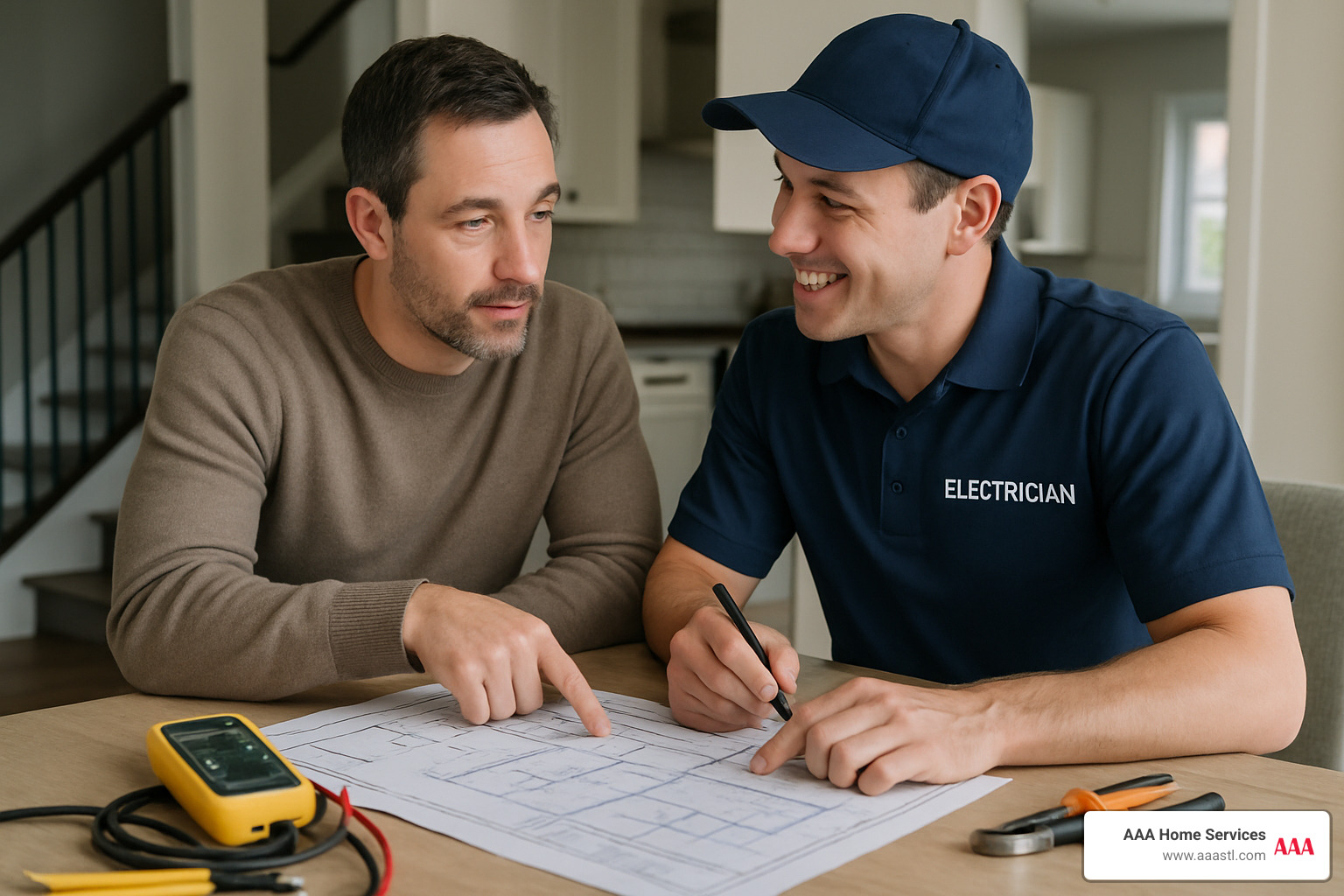
Bundle Multiple Jobs Together
One of the most effective ways to save on the electrician cost per hour is to combine several small projects into a single service call.
“I kept a list of small electrical issues around my home for months,” shares Sarah from Cottleville. “When I finally called AAA Home Services, I had them replace three light fixtures, add two outlets, and install a ceiling fan all in one visit. I saved significantly on the service call fee and overall labor time.”
Most electricians charge a minimum service call fee that covers their first hour of work. By tackling multiple small jobs in one visit, you’ll only pay this fee once instead of several times. Plus, the electrician can work more efficiently when handling multiple projects in the same home.
Schedule During Off-Peak Seasons
Just like many home service industries, electrical contractors experience seasonal ups and downs. Winter months after the holidays and late fall often see fewer renovation projects, making it an ideal time to schedule non-urgent electrical work.
Mark from Ballwin told us, “I waited until January to have my basement recessed lighting installed. Not only did I get an appointment within days, but the electrician mentioned they weren’t as rushed during this slower period.”
By avoiding the spring and summer renovation rush, you might find more scheduling flexibility and possibly more favorable pricing as companies work to keep their technicians busy during slower periods.
Supply Your Own Fixtures When Possible
While you should never try to source technical components like wiring, breakers, or boxes (these need to meet specific code requirements), you can often save by purchasing your own decorative fixtures. Many homeowners don’t realize they can buy their own:
Light fixtures and chandeliers from home improvement stores or online retailers
Ceiling fans that match their décor preferences
Smart home devices like specialized switches or outlets
Decorative switch plates and outlet covers
This approach eliminates any markup on these items while still ensuring professional installation. Just be sure to discuss your plans with your electrician beforehand to ensure compatibility.
Prepare the Work Area in Advance
Your time preparing can save you money on billable hours. Before your electrician arrives, take some time to clear the work area. Move furniture away from walls where work will be done, clear a path to the electrical panel, and remove stored items from attic or crawlspace access points if needed.
“I spent about 30 minutes clearing my cluttered utility room before the electrician came to install my new panel,” explains Tom from St. Charles. “He mentioned that my preparation probably saved him at least that much time in billable hours.”
Label Your Circuit Breakers Clearly
A clearly labeled electrical panel saves valuable diagnostic time. If your panel isn’t already well-marked, work with your electrician to identify which breakers control which areas of your home. This small step can save significant time on future service calls when specific circuits need to be identified.
One homeowner in O’Fallon shared: “After having our electrician help label our panel properly, our next service call went much faster because he didn’t have to spend time figuring out which breaker controlled the bathroom outlets.”
Choose the Right Skill Level for Your Job
Not every electrical job requires a master electrician with decades of experience. For standard installations and repairs, a journeyman electrician often has all the necessary skills at a lower hourly rate.
At AAA Home Services, we match the appropriate technician to your specific job requirements. This thoughtful approach ensures you don’t pay for more expertise than your project requires while still guaranteeing the work is done safely and correctly.
For complex panel upgrades or whole-house rewiring, you’ll benefit from a master electrician’s expertise. But for installing a ceiling fan or replacing outlets, a journeyman’s skills are perfectly suited to the task at a more budget-friendly rate.
Get a Detailed Quote Before Work Begins
Understanding exactly what you’ll pay before work begins eliminates surprises. For larger projects, request a comprehensive written quote that includes the scope of work, materials, estimated labor hours, permit fees if applicable, and warranty information.
With over 50 years of experience serving the St. Louis area, AAA Home Services provides transparent, detailed quotes for all electrical work. This approach allows you to make informed decisions about your electrical projects and budget appropriately.
“The detailed quote I received from AAA Home Services gave me complete confidence,” says Jennifer from Webster Groves. “Everything was spelled out clearly, and there were no surprises when I received the final bill.”
By combining these smart strategies, you can maximize the value you receive while ensuring your electrical work is completed safely and professionally. Learn more about choosing the right electrical contractor for your home.
Frequently Asked Questions about Electrician Hourly Rates
What is the typical minimum service call fee?
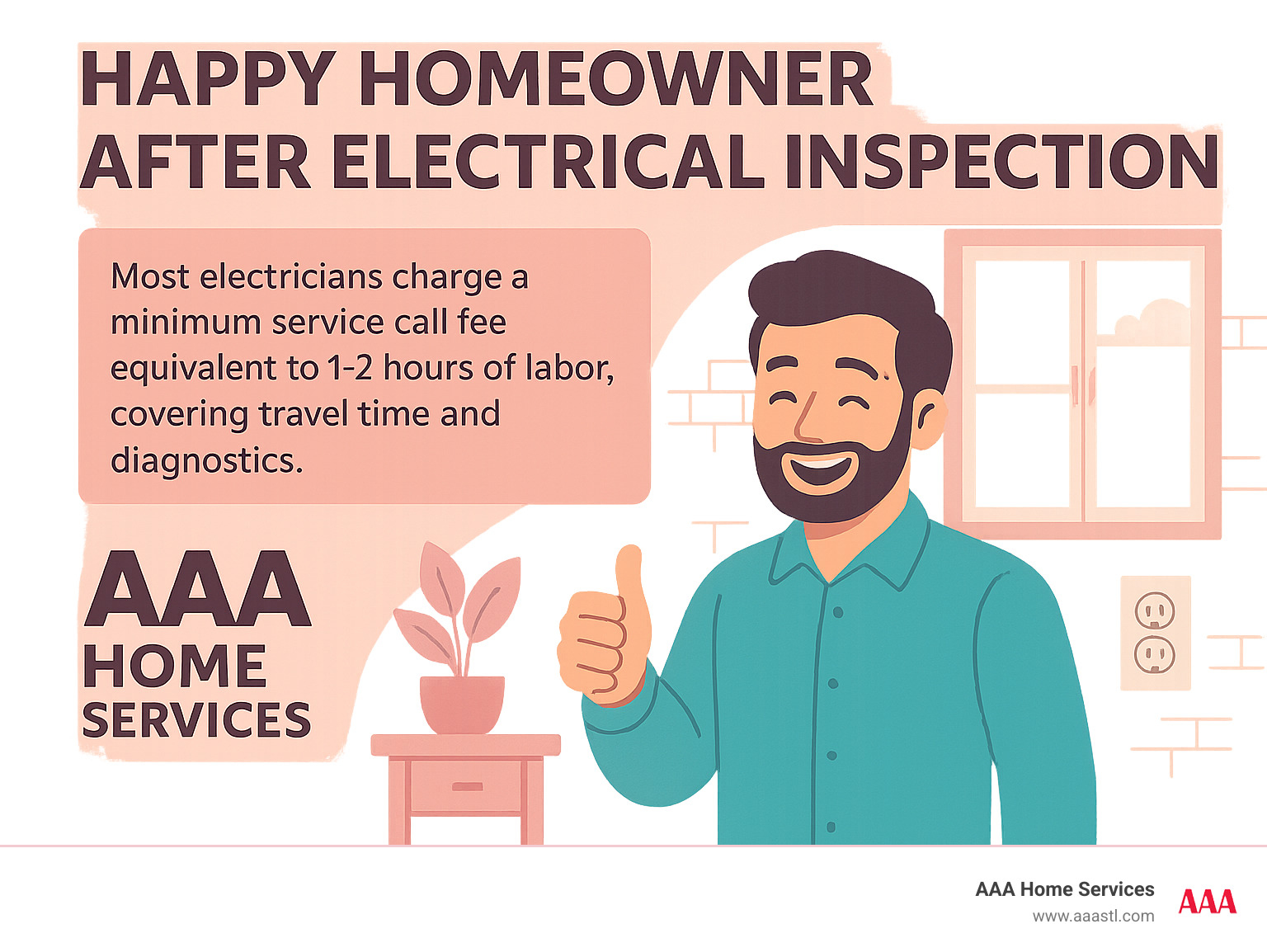
Nearly every electrician charges a minimum service call fee, typically equivalent to 1-2 hours of their labor rate. This applies even if the actual repair takes just 15 minutes. Why? This fee covers their travel time to your home, initial diagnostics, and the fact that they’ve reserved that time slot specifically for you.
At AAA Home Services, our minimum service call structure ensures we can provide prompt, professional service throughout St. Louis and surrounding communities while covering our basic operational costs. The exact fee varies based on your location and the specific electrical issue you’re experiencing.
One of our customers in Brentwood recently shared: “Even though the actual repair only took about 30 minutes, I completely understood the minimum charge. The electrician had to drive across town, bring all his tools and equipment, and had blocked off that time just for my small job.”
How is travel time billed if I live outside the city?
If you live further from an electrician’s service base, travel time billing becomes an important consideration. Different electrical contractors handle this in various ways:
Some use a flat travel fee with set charges based on distance zones, while others apply an hourly travel rate billing the actual driving time. You might encounter a higher minimum call-out fee for distant locations, or service area pricing with different base rates depending on your geographic area.
For homeowners in our extended service regions like Warrenton or Lake St. Louis, AAA Home Services strives to provide fair, transparent travel time billing. We’re always upfront about any additional costs related to distance before scheduling your service, so you’ll never face surprise charges.
Can I negotiate the electrician cost per hour for multiple projects?
While the base electrician cost per hour usually isn’t flexible, you absolutely have room for negotiation when scheduling multiple projects or extensive work. Smart homeowners often find savings by:
Asking about package pricing when combining related tasks – installing several ceiling fans at once is more efficient than separate visits. Inquiring about possible off-season discounts for non-urgent work during slower periods. Requesting a project rate rather than hourly billing for larger jobs, which often works in your favor. Comparing detailed quotes from multiple licensed professionals to ensure competitive pricing.
A homeowner from Chesterfield recently told us: “When I needed several ceiling fans installed plus some outlet upgrades, AAA Home Services offered me a better overall rate than if I’d scheduled these as separate visits. It made financial sense for both of us.”
At AAA Home Services, we genuinely value building long-term relationships with customers throughout St. Louis, St. Charles, and Warren County. While we maintain fair pricing for everyone, we’re always happy to discuss the most cost-effective approach for larger projects or ongoing electrical needs. After all, helping you find value while ensuring quality work is part of our commitment to the community we’ve served for over 50 years.
Conclusion
Understanding the electrician cost per hour is essential for budgeting your home electrical projects accurately. While it might be tempting to focus solely on finding the lowest hourly rate, the true value comes from hiring qualified professionals who prioritize safety, code compliance, and quality workmanship.
At AAA Home Services, we’ve been serving the St. Louis, St. Charles, and Warren County areas for over 50 years with fair, transparent pricing and highly skilled electricians. Our approach balances competitive rates with the exceptional service our 8,000+ Google reviews reflect.
Whether you need a simple outlet installation or a complete electrical panel upgrade, we provide detailed quotes that explain exactly what you’re paying for. We often can offer Same Day or Next Day service depending on availability, ensuring your electrical issues are addressed promptly.
Remember these key takeaways about electrician cost per hour:
- License level significantly impacts hourly rates
- Bundling multiple small jobs saves on service call fees
- The right pricing model (hourly, flat-rate, or project) depends on your specific needs
- Proper electrical work protects your home and family
- Investing in qualified professionals prevents costly repairs later
For all your electrical needs in St. Charles, O’Fallon, Lake St. Louis, Warrenton, Wentzville, Cottleville, Chesterfield, Ballwin, Ellisville, Town & Country, St. Louis, Maryland Heights, Creve Coeur, Webster Groves, Kirkwood, Clayton, and Brentwood, trust the experienced team at AAA Home Services to provide fair pricing and exceptional workmanship.
Contact us today to discuss your electrical project and receive a transparent quote from our licensed professionals.


