



Why Understanding Electrical House Wiring Basics Keeps Your Home Safe
Electrical house wiring is the network of cables, outlets, switches, and circuit breakers that safely delivers electricity throughout your home. Whether you’re planning a renovation, troubleshooting a problem, or simply want to understand what’s behind your walls, knowing the basics helps you make informed decisions and communicate effectively with electricians.
Key Electrical House Wiring Components:
- Service panel – Distributes power through individual circuit breakers
- Circuit breakers – Protect against overloads and short circuits
- NM cable (Romex) – Standard interior wiring with hot, neutral, and ground wires
- Outlets and switches – End points where you access electrical power
- GFCI/AFCI devices – Advanced protection against shocks and fires
Common Wire Gauges:
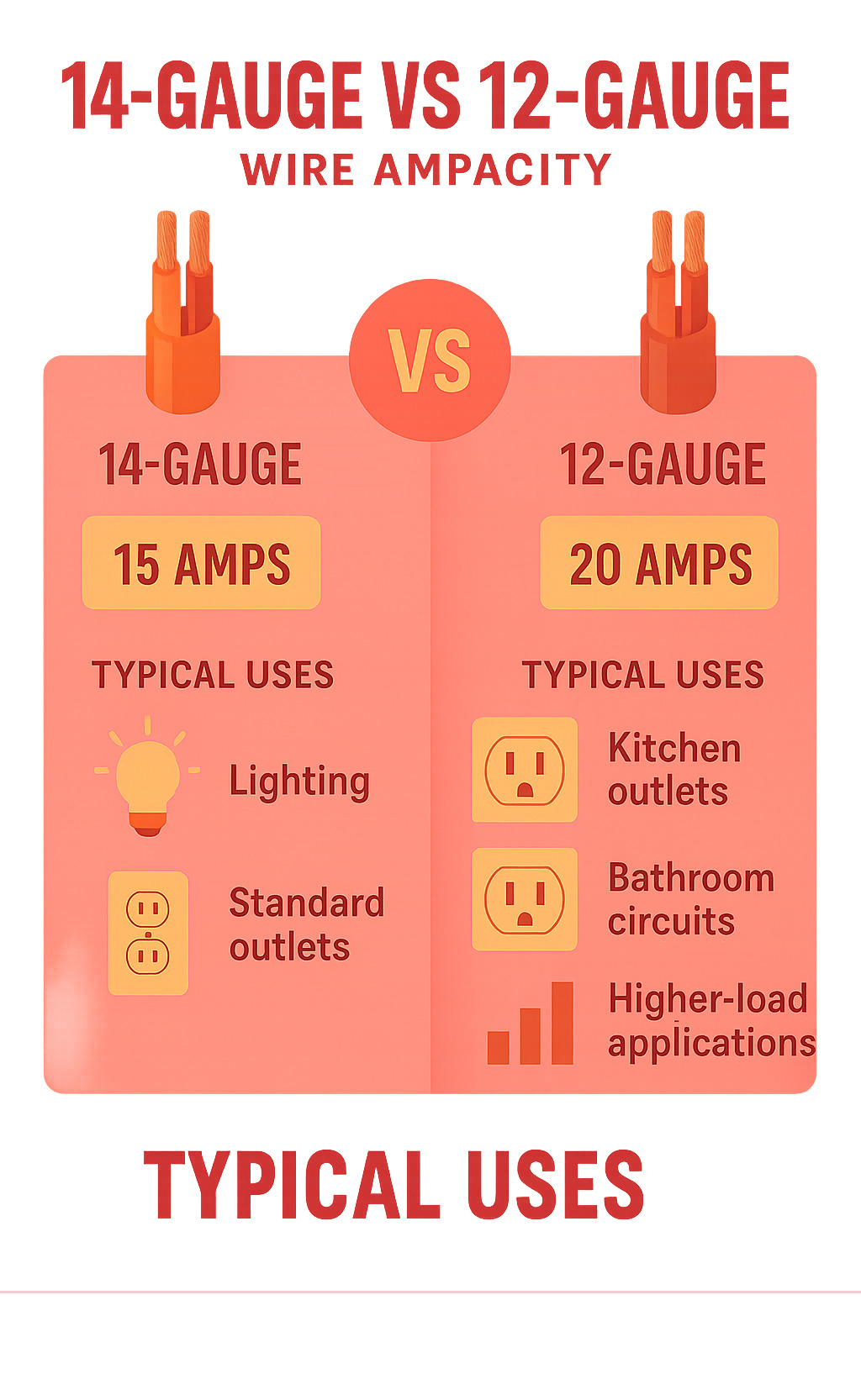
- 14-gauge – 15-amp circuits for lighting and standard outlets
- 12-gauge – 20-amp circuits for kitchens, bathrooms, and higher loads
- 10-gauge – 30-amp circuits for dryers and larger appliances
More than 30 million U.S. homes are at least 50 years old, and studies show these aging homes have disproportionately high fire rates due to outdated wiring. Understanding your electrical system isn’t just about convenience—it’s about protecting your family and property.
Modern safety features like Ground Fault Circuit Interrupters (GFCIs) have cut home electrocutions in half since the 1970s. The 2008 National Electrical Code also mandated tamper-resistant receptacles in new construction after approximately 2,400 children annually suffer severe shock and burns from electrical outlets.
While this guide covers the fundamentals, electrical work involves serious safety risks and code requirements. Licensed electricians have the training and tools to handle installations safely and ensure everything meets current standards.
I’m Dan W, and through my experience managing home repair services and working with skilled technicians, I’ve seen how proper electrical house wiring knowledge helps homeowners make better decisions about their electrical systems. My goal is to help you understand the basics while emphasizing when professional expertise is essential.
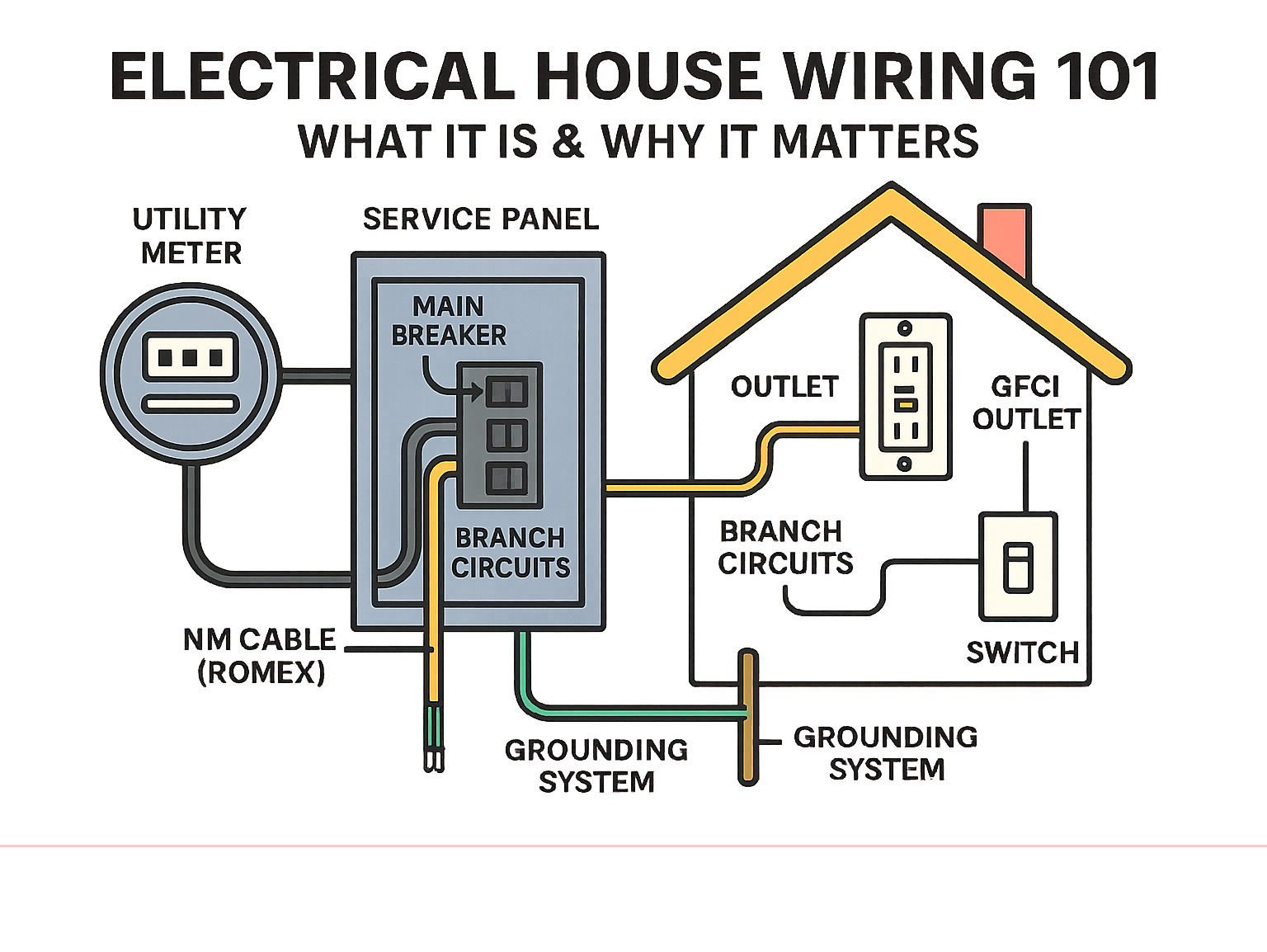
Quick electrical house wiring terms:
Electrical House Wiring 101: What It Is & Why It Matters
Your home’s electrical house wiring is like a sophisticated highway system, carrying power safely from the street to every corner of your house. Just as traffic lights and road signs keep cars moving safely, your electrical system has built-in protections that prevent dangerous situations before they happen.
Understanding how this system works helps you spot potential problems early and communicate better with electricians when repairs are needed. More importantly, it helps you appreciate why proper installation and maintenance matter so much for your family’s safety.
What Is Electrical House Wiring?
Electrical house wiring brings together several components that work as a team to deliver power throughout your home safely and efficiently.
Conductors are the actual copper or aluminum wires that carry electricity. Think of them as the lanes on our highway analogy. These wires are wrapped in colored insulation so electricians can tell them apart, then bundled together in cables. The most common type you’ll find in homes is NM-B cable (often called Romex), which typically contains three wires: a hot wire that brings power out (usually black), a neutral wire that carries it back (white), and a ground wire for safety (bare copper or green).
Circuits are complete electrical paths that form loops from your main panel to the devices in your home and back again. Each circuit serves specific areas or appliances and has its own circuit breaker for protection. You might have separate circuits for your kitchen outlets, bedroom lights, and air conditioning system.
The service entrance is where electricity first enters your home from the utility company. This includes the connection point where utility wires attach to your house, your electric meter, and your main service panel that splits power into individual circuits.
Your grounding path acts like a safety valve for your electrical system. It provides a safe route for excess electricity to flow harmlessly into the earth instead of through your body or causing fires. This system includes ground wires in every circuit, grounding electrodes like ground rods driven into the earth, and proper connections between all metal components.
Why Proper Electrical House Wiring Saves Lives & Devices
The numbers tell a serious story about electrical safety. With more than 30 million homes in the United States being at least 50 years old, aging electrical house wiring creates real risks that proper updates can eliminate.
Fire reduction happens through multiple layers of protection built into modern wiring systems. Circuit breakers act like vigilant guards, shutting off power when circuits become overloaded and start generating dangerous heat. Arc Fault Circuit Interrupters (AFCIs) go even further by detecting dangerous electrical arcs that can start fires even when circuits aren’t overloaded. Since the National Electrical Code began requiring AFCIs for most residential circuits in 2008, they’ve prevented countless house fires.
Electrocution prevention has improved dramatically thanks to Ground Fault Circuit Interrupters (GFCIs). These remarkable devices have literally cut home electrocutions in half since the 1970s. They work by constantly monitoring the flow of electricity and cutting power in milliseconds if they detect electricity going where it shouldn’t—like through a person’s body.
Modern wiring also provides surge protection that shields your expensive electronics and appliances from voltage spikes. Whether it’s lightning, utility switching, or your neighbor’s air conditioner cycling on, these voltage fluctuations can destroy sensitive components in everything from your refrigerator to your home theater system.
Insurance implications make proper wiring a smart financial decision too. Many insurance companies offer discounts for homes with updated electrical systems, recognizing the reduced fire risk. On the flip side, some insurers refuse to cover homes with severely outdated wiring like old knob-and-tube systems, leaving homeowners in a difficult position.
The bottom line is simple: proper electrical house wiring protects your family, your belongings, and your investment in your home. When electrical problems arise, the experienced technicians at AAA Home Services can help assess your system and recommend the best solutions for your specific situation.
Core Components, Wire Types & Sizing
When you peek inside your walls or electrical panel, you’ll find a carefully orchestrated system of components working together to keep your lights on and devices powered. Understanding these electrical house wiring components helps you speak the same language as electricians and make smart decisions about your home’s electrical needs.
Your service panel acts like the conductor of an electrical orchestra, receiving power from the utility company and directing it through individual pathways to every corner of your home. Most modern homes have 200-amp service panels—think of this as the main highway that can handle all your electrical traffic. Inside this metal box, you’ll find the main disconnect switch that can shut off power to your entire house, plus rows of circuit breakers that control individual circuits.
Circuit breakers are your electrical system’s safety guards. When something goes wrong—like too many appliances running on one circuit or a short circuit—these devices trip and cut the power before dangerous heat can build up. They’re much more reliable and convenient than the old screw-in fuses your grandparents might remember.
The workhorses of residential wiring are NM-B cables, commonly called Romex after the brand name that became synonymous with this type of wiring. These plastic-sheathed cables contain multiple insulated wires bundled together—typically a hot wire, neutral wire, and ground wire. The “B” rating means they can handle higher temperatures, making them perfect for most home applications.
For outdoor applications and wet locations, electricians use UF cable (Underground Feeder), which has a tough, solid plastic jacket that laughs off moisture and physical damage. When wires need extra protection in exposed areas, they’re run through conduit—protective tubing that acts like armor for your electrical conductors.
The debate between copper and aluminum conductors is like comparing a luxury car to a reliable truck. Copper is the gold standard for residential wiring because it conducts electricity beautifully and resists corrosion. Aluminum sometimes appears in service entrance wiring and large appliance circuits, but it requires special connectors and careful installation to prevent dangerous overheating.
Wire gauges follow a backwards numbering system where smaller numbers mean thicker wires. It’s like golf scores—lower is better for handling more electrical current. The most common residential sizes are 14-gauge wire for 15-amp circuits and 12-gauge wire for 20-amp circuits. Larger appliances might need 10, 8, or even 6-gauge wire to handle their hefty appetites for electricity.
Box fill calculations ensure electrical boxes don’t become overcrowded fire hazards. A standard junction box with 18 cubic inches can safely hold nine 14-gauge wires, but add an outlet or switch and you need to subtract space for the device.
Choosing the Right Wire Gauge
Selecting the proper wire size isn’t just about following code—it’s about safety and performance. Ampacity tells you the maximum current a wire can carry without turning into a dangerous heating element. Use wire that’s too small for the job, and you’re essentially installing a fire starter in your walls.
14-gauge wire handles up to 15 amps and works perfectly for lighting circuits and standard bedroom outlets. It’s the minimum size allowed for most branch circuits, but many experienced electricians prefer going bigger when possible.
12-gauge wire steps up to handle 20 amps and is mandatory for kitchen outlets, bathroom circuits, and other high-demand areas. Even for 15-amp circuits, this thicker wire provides extra safety margin and better performance.
Voltage drop becomes a real concern on long wire runs. Electricity encounters resistance as it travels through wire, causing voltage to sag like water pressure dropping in a long garden hose. For runs longer than 80 feet, smart electricians often bump up to the next larger wire gauge to maintain proper voltage at the destination.
The choice between 15-amp and 20-amp circuits depends on what you’re powering. General lighting and standard outlets typically use 15-amp circuits, while kitchens, bathrooms, and workshop areas benefit from 20-amp circuits that can handle higher electrical loads without breaking a sweat.
Decoding Wire & Cable Color Codes
Wire colors aren’t just for decoration—they’re a safety language that electricians use nationwide. Understanding these colors helps you communicate effectively about your electrical house wiring and stay safe around electrical components.
Hot wires that carry current from the panel to your devices wear black, red, blue, or yellow insulation. Black is the most common choice for standard circuits, while red often indicates a switched hot wire or serves as the second hot in 240-volt circuits for large appliances.
Neutral wires always dress in white or gray and provide the return highway for electrical current heading back to the panel. These connect to the neutral bus in your service panel and should never moonlight as hot wires—that’s a dangerous code violation.
Ground wires keep things safe by providing an emergency escape route for stray electricity. They’re either bare copper or wear green insulation and connect to the grounding system that ultimately leads to earth.
Travelers in three-way switch setups often sport blue or yellow colors, though any color except white, gray, or green can legally carry hot current.
Sheathing colors on cables provide quick identification—yellow jackets typically contain 12-gauge wire rated for 20 amps, while white jackets hold 14-gauge wire rated for 15 amps.
Smart electricians always label their work, marking cables at both ends with destination and circuit information. This simple step makes future troubleshooting and additions much easier.
Essential Tools & Materials Checklist
Professional electrical house wiring demands specialized tools that ensure safety and quality results. While we strongly recommend having licensed electricians handle electrical work, understanding these tools helps you appreciate the skill and precision required.
A voltage tester tops every electrician’s safety list. Non-contact testers can detect live wires without touching them, while digital multimeters provide precise voltage readings. No professional ever works on electrical circuits without first verifying they’re completely de-energized.
Quality wire strippers remove insulation cleanly without nicking the copper conductors underneath. Different wire gauges require different settings, and cheap strippers can damage wires and create dangerous connection points.
Cable staples secure NM cable to wooden framing members, but they must be driven carefully to avoid damaging the protective cable sheath. Plastic electrical boxes cost about 70% less than metal boxes and work perfectly for most residential applications while being easier to install.
For comprehensive electrical services in the St. Louis area, including professional installations, repairs, and upgrades, more info about our electrical services is available from our licensed professionals who bring the right tools and expertise to every job.
How To Plan & Install Electrical House Wiring Safely
Planning successful electrical house wiring is like preparing for a major home renovation—the more thought you put into it upfront, the smoother everything goes. Even if you’re hiring professionals (which we strongly recommend), understanding the process helps you make smart decisions and communicate clearly with your electrician.
Getting permits isn’t just bureaucratic red tape—it’s your safety net. Most electrical work requires permits to ensure installations meet current safety codes. Your local building department can walk you through what work needs permits in your area. Trust me, it’s much easier to get permits before starting than to deal with code violations later.
Professional electricians create detailed drawings that map out your entire electrical system. These aren’t just pretty pictures—they’re roadmaps that ensure every outlet, switch, and circuit is exactly where you need it. Good drawings prevent the “I wish we’d put an outlet there” regrets that come after drywall goes up.
Load calculations might sound technical, but they’re basically electrical math that keeps your home safe. Your electrician adds up all your electrical needs—from LED bulbs to that powerful kitchen mixer—to make sure your service panel can handle everything without overloading.
Room-by-room planning considers how you actually live in your space. Your kitchen needs multiple 20-amp circuits to handle appliances, while your bedroom might do fine with 15-amp circuits for lamps and phone chargers. Smart planning puts power where you need it most.
When cables get installed, staple spacing follows strict rules. NM cable must be secured within 8 inches of electrical boxes and at least every 4.5 feet along its path. This isn’t just tidiness—loose cables can get damaged and create fire hazards.
Cable routing requires careful navigation around your home’s other systems. Experienced electricians know how to thread cables around plumbing, heating ducts, and structural beams while keeping everything protected from damage.
Securing boxes properly ensures they’ll stay put for decades. Electrical boxes must be firmly attached to framing and positioned perfectly flush with your finished wall surface. Crooked outlets are more than just an eyesore—they can indicate unsafe installation.
Smart electricians always leave slack at both ends of cable runs. This extra wire length makes connections easier and provides flexibility for future modifications. It’s like leaving room in your pants waistband—you’ll appreciate it later.
Step 1: Create Your Wiring Plan & Get Permits
Layout planning starts with thinking about how you actually use each room. Where will your couch go? Do you need outlets for table lamps? Standard practice puts outlets every 12 feet along walls, but many electricians prefer 8-foot spacing because it’s more convenient and meets modern living needs.
Circuit count varies with your home’s size and electrical appetite. A typical home might need 15-20 circuits, including dedicated lines for major appliances and GFCI-protected circuits for wet areas like bathrooms and outdoor spaces.
Meeting with your inspector early in the planning process can save you headaches and money. Building inspectors aren’t trying to make your life difficult—they can clarify local code requirements and answer questions specific to your project before you start work.
Choosing the right electrical contractor makes all the difference between a smooth project and a nightmare. Choosing the Right Electrical Wiring Installation Contractor for Your Home walks you through what to look for when making this important decision.
Step 2: Rough-In – Drilling, Running & Securing Cable
The hole distance rule of 1-1/4 inches from stud faces isn’t arbitrary—it prevents drywall screws from puncturing your cables. Imagine a screw hitting a live wire when hanging a picture. That’s exactly what this rule prevents.
Nail plates come into play when cables must run closer than 1-1/4 inches to stud faces. These metal plates act like armor, protecting cables from accidental penetration during construction or future renovations.
Corner drilling requires special techniques to route cables efficiently around turns while maintaining proper clearances. Experienced electricians have tricks for navigating tight corners without compromising safety.
Stapling intervals aren’t suggestions—they’re code requirements that prevent cable damage. Properly supported cables last longer and stay safer throughout your home’s lifetime.
Step 3: Box Installation & Fill Calculations
Box sizing follows a specific formula that ensures adequate space for wires and devices. Each 14-gauge wire counts as 2 cubic inches, while 12-gauge wires need 2.25 cubic inches. It’s like packing a suitcase—everything needs to fit without being crammed.
Device allowance means subtracting space for outlets, switches, and other components. A standard duplex outlet counts as two wires toward box fill calculations, so bigger boxes are often worth the small extra cost.
Pigtailing grounds involves connecting all ground wires together with a short jumper to the device. This technique ensures grounding continuity even if a device gets removed for service—smart planning for future maintenance.
Step 4: Service Panel Connections & Circuit Labeling
Breaker sizing must match wire gauge and intended load perfectly. A 15-amp breaker protects 14-gauge wire, while 20-amp breakers protect 12-gauge wire. Using an oversized breaker is like having a security guard who’s too lenient—it won’t protect your wires from dangerous overheating.
Torque specifications for panel connections are critical safety requirements. Loose connections create heat buildup that can cause fires. Professional electricians use calibrated torque wrenches to ensure connections are tight enough for safety but not so tight they damage components.
Leaving 4-5 feet of slack at the panel makes professional connections easier and safer. This extra length gives electricians room to work without stretching cables or making awkward connections.
Clear panel workspace isn’t just convenience—it’s required by the National Electrical Code. You need 30 inches of width and 36 inches of depth in front of electrical panels for safe access during maintenance and emergencies.
If your home needs a panel upgrade to handle modern electrical demands, Electrical Panel Upgrades can improve both safety and capacity while bringing everything up to current codes.
Step 5: Device Trim-Out & Final Inspection
GFCI and AFCI installation requires understanding where these life-saving devices belong. GFCIs are mandatory in bathrooms, kitchens, garages, and outdoor locations—anywhere water and electricity might meet. AFCIs protect most living areas from dangerous electrical arcs that can start fires.
Terminal torque ensures connections stay reliable for years. Different devices have specific torque requirements from manufacturers, and professional electricians follow these specs religiously to prevent loose connections.
Circuit labeling clearly pays dividends for decades. Each circuit breaker should be labeled with its purpose and the areas it serves. Good labeling turns future troubleshooting from a detective story into a quick reference check.
Scheduling inspection before closing up walls or energizing circuits ensures everything meets code requirements and operates safely. It’s your final safety check before the system goes live.
Compliance documentation helps with insurance and resale value down the road. Keep permits, inspection certificates, and contractor licenses on file—they prove your electrical work was done right the first time.
Code Compliance, Safety Devices & Troubleshooting
Modern electrical house wiring must meet strict safety standards that continue to evolve. The National Electrical Code (NEC) gets updated every three years, incorporating new technologies and addressing emerging electrical hazards that researchers find. These aren’t just bureaucratic requirementsthey’re literally life-saving measures based on real-world accidents and fire investigations.
NEC updates in the 2023 edition reflect decades of electrical safety research. The code now requires more comprehensive arc-fault protection, expanded ground-fault protection, and new energy efficiency measures. What’s particularly important for homeowners is understanding that older homes may not have these modern safety features, even if they were perfectly legal when originally built.
Arc Fault Circuit Interrupters (AFCIs) represent one of the biggest advances in electrical safety since the GFCI. These sophisticated devices can detect dangerous electrical arcs that occur when wires are damaged, connections become loose, or insulation breaks down. Unlike regular circuit breakers that only trip on overloads, AFCIs can prevent fires even when circuits aren’t overloaded.
The technology behind GFCI protection is remarkable in its precision. These devices constantly monitor electrical flow and can detect as little as 5 milliamps of current leakageabout 1/200th of what it takes to trip a standard 15-amp breaker. When they sense electricity flowing through an unintended path (like through a person’s body), they shut off power in just 4-6 milliseconds.
Tamper Resistant Receptacles (TRR) became mandatory nationwide after studies showed approximately 2,400 children suffer severe electrical injuries annually from inserting objects into outlets. These outlets have internal shutters that only open when both prongs of a plug are inserted simultaneously, effectively childproofing every outlet in your home.
Your home’s grounding electrode system connects your electrical system safely to the earth itself. This typically involves ground rods driven deep into the soil, though it may also include connections to metal water pipes or concrete-encased electrodes. This grounding path gives dangerous fault currents somewhere safe to go instead of through people or causing fires.
If your home was built between 1962 and 1972, aluminum wiring checks become critically important. Nearly two million homes were wired with aluminum during this period when copper prices soared. While aluminum itself isn’t necessarily dangerous, connections can become hazardous over time due to oxidation and thermal expansion differences between aluminum and other metals.
Common faults in residential wiring often start small but can become serious safety hazards. Loose connections create heat that can ignite surrounding materials. Damaged insulation exposes live wires that can cause shocks or ground faults. Overloaded circuits stress components beyond their design limits, leading to failures that can cause fires.
The Electrical Safety Principles guide from Lawrence Berkeley National Laboratory provides comprehensive information about electrical safety fundamentals for homeowners and professionals alike.
GFCI & AFCI: Where and Why
Understanding where these protective devices are required helps you evaluate your home’s safety level. Kitchen protection mandates GFCI outlets for all countertop receptacles and any outlet within 6 feet of a sink. The combination of water, metal appliances, and electricity makes kitchens particularly hazardous without proper ground-fault protection.
Bathroom circuits present the highest electrocution risk in most homes, which is why every bathroom outlet must have GFCI protection. Even small amounts of moisture can create dangerous conditions when combined with electrical devices, making this protection absolutely essential.
Bedroom circuits require AFCI protection because people spend hours sleeping in these rooms, often with multiple electrical devices plugged in. Damaged extension cords under beds, loose connections behind furniture, or failing electrical devices can create dangerous arcs that AFCIs detect and stop before fires start.
Outdoor protection requires GFCI outlets for all exterior receptacles because weather exposure dramatically increases ground fault risks. Rain, snow, humidity, and temperature changes all contribute to conditions where electrical current can find unintended paths to ground.
Arc-fault statistics from the U.S. Fire Administration show electrical malfunctions caused 24,200 residential fires in 2021 alone. Many of these fires could have been prevented with proper AFCI protection, which is why the code now requires these devices in nearly every living area of new homes.
The Electrical Safety Foundation International provides detailed information about Ground Fault Circuit Interrupters and their life-saving capabilities.
Troubleshooting Common Electrical House Wiring Problems
When breaker trips occur, the pattern tells you a lot about the underlying problem. A breaker that trips immediately when you reset it indicates a serious short circuit or ground fault that needs immediate professional attention. Never keep resetting a breaker that trips repeatedlythis safety device is protecting your home from a dangerous condition.
Breakers that trip only under load suggest different issues. The circuit might be overloaded with too many devices, or the breaker itself might be failing after years of service. Sometimes what seems like an overload is actually voltage drop caused by loose connections or undersized wiring.
Dead outlets frustrate homeowners, but the solution often involves understanding how GFCI protection works. A single tripped GFCI outlet can shut off power to multiple downstream outlets, so always check GFCI devices first. Look for outlets with “Test” and “Reset” buttons in bathrooms, kitchens, garages, and outdoor areas.
Flickering lights deserve immediate attention because they often indicate loose connections that can become fire hazards. This is especially concerning when lights dim significantly as large appliances like air conditioners or space heaters start up. This pattern suggests serious voltage drop problems that can damage equipment and create safety risks.
Safe testing sequence should always start with turning off power at the circuit breaker and verifying it’s actually off with a voltage tester. Never trust switch positions or assume circuits are dead based on lack of visible activity. Electrical current is invisible and silent, making proper testing essential for safety.
When to Call a Licensed Electrician
Panel upgrades involve working with the main electrical service to your home, where voltages can be lethal and mistakes catastrophic. Modern homes typically need 200-amp service to handle today’s electrical loads, while many older homes have inadequate 60- or 100-amp panels that limit what appliances you can safely operate.
240-volt circuits for electric dryers, ranges, water heaters, and air conditioning systems require specialized knowledge of high-voltage wiring and safety procedures. These circuits carry enough power to cause fatal injuries, making professional installation essential.
Aluminum remediation requires specific techniques and materials that most homeowners don’t have access to. Aluminum wiring connections can become dangerous fire hazards over time, and proper repair involves specialized connectors and techniques that only trained electricians should handle.
Complex faults like intermittent problems, mysterious ground faults, or circuits that work sometimes but not others require diagnostic equipment and troubleshooting expertise that professional electricians develop through years of training and experience.
Liability concerns make professional installation crucial for most electrical house wiring projects. Insurance companies require proper permits and licensed installation for coverage, and building departments won’t approve work that doesn’t meet current codes.
Understanding electrician qualifications helps you choose the right professional for your project. Master Electrician vs Licensed Electrician: What’s the Difference? explains these important distinctions and what they mean for your electrical work.
Frequently Asked Questions about Electrical House Wiring
These are the most common questions I hear from homeowners about electrical house wiring. Understanding these basics helps you communicate better with electricians and make informed decisions about your home’s electrical system.
How does electricity enter and get distributed throughout a home?
Your home’s electrical journey starts at the utility pole or underground transformer, where high-voltage electricity gets stepped down to the 240 volts that enter your house. This power arrives through your service entrance, which includes the weatherhead (that curved pipe on your roof), the electric meter that tracks your usage, and finally your main service panel.
The service typically delivers two 120-volt “hot” wires and one neutral wire to your panel. This setup gives you both 120-volt power for regular outlets and lights, plus 240-volt power for larger appliances like electric dryers and ranges.
Inside your service panel, the main breaker acts like a master switch for your entire house. Below that, individual circuit breakers protect separate branch circuits that serve different areas. Think of it like a tree—the main trunk splits into branches, and each branch has its own protection.
Each circuit creates a complete electrical loop. Power flows from the panel through the hot wire to your outlets and devices, then returns through the neutral wire back to the panel. The grounding system provides an additional safety path, giving dangerous fault currents a direct route to earth instead of through you.
What wire sizes do I need for outlets, lighting, and appliances?
Wire sizing might seem complicated, but it follows a logical pattern based on how much electrical current each circuit needs to carry safely. Using the wrong size wire is like trying to push too much water through a garden hose—it creates dangerous heat and potential fires.
14-gauge wire handles up to 15 amps and works perfectly for most lighting circuits and standard outlets in bedrooms, living rooms, and hallways. However, many electricians prefer using 12-gauge wire even for these circuits because it provides better performance and leaves room for future needs.
12-gauge wire is rated for 20 amps and is required by code for kitchen countertop outlets, bathroom circuits, and laundry areas. These locations typically have higher electrical demands from appliances like hair dryers, coffee makers, and microwaves.
When you move up to major appliances, the wire gets thicker. 10-gauge wire handles 30 amps and is typically used for clothes dryers and some electric water heaters. Electric ranges, central air conditioning units, and electric furnaces often need 8-gauge or 6-gauge wire, depending on their specific power requirements.
The key is matching wire size to both the circuit breaker rating and the actual electrical load, with built-in safety margins. Professional electricians use load calculations to determine exactly what each circuit needs, ensuring everything operates safely and efficiently.
Where are GFCI and AFCI protection required by code?
Modern electrical codes require two types of advanced protection devices, and understanding where they’re needed helps keep your family safe. GFCI (Ground Fault Circuit Interrupter) protection prevents electrocution, while AFCI (Arc Fault Circuit Interrupter) protection prevents fires.
GFCI protection is mandatory anywhere water and electricity might meet. This includes all bathroom outlets, kitchen countertop outlets, and any outlets within 6 feet of sinks. You’ll also need GFCI protection for garage outlets, outdoor outlets, basement and crawl space outlets, and laundry area outlets. These devices detect when electricity is flowing through unintended paths (like through a person) and shut off power in milliseconds.
AFCI protection is required for most living areas to prevent fires from dangerous electrical arcs. This includes bedrooms, living rooms, dining rooms, family rooms, dens, libraries, closets, and hallways. These devices detect the unique electrical signature of dangerous arcs that can occur from damaged cords, loose connections, or deteriorating wiring.
The requirements for both types of protection have expanded significantly since 2008, so homes built or renovated before recent code updates may not have complete protection. Some newer codes even extend AFCI requirements to kitchens and other areas that previously only needed GFCI protection.
If your home lacks these modern safety features, it’s worth having a licensed electrician evaluate your electrical house wiring and recommend upgrades. The peace of mind and improved safety are invaluable for protecting your family and property.
Conclusion & Next Steps
Understanding electrical house wiring basics empowers you to make smart decisions about your home’s electrical system and know when it’s time to call in the professionals. From the moment electricity enters your service panel to that final outlet where you plug in your phone charger, every wire, breaker, and safety device works together to keep your family safe.
Safety first isn’t just a catchphrase—it’s the foundation of everything we’ve discussed. Modern homes benefit from incredible safety innovations like GFCI protection that has cut electrocutions in half since the 1970s, and AFCI devices that detect dangerous electrical arcs before they can start fires. Yet with over 30 million homes in America being at least 50 years old, many families are living without these life-saving protections.
Code compliance goes far beyond just following rules. The National Electrical Code evolves every three years because electrical safety technology keeps improving. What was considered safe in 1980 simply doesn’t meet today’s standards. Local codes often add even more stringent requirements, which is why professional electricians spend years learning their trade and continuing their education.
Professional assistance becomes essential when you’re dealing with something as potentially dangerous as electricity. You might feel confident changing a light bulb, but when it comes to installing circuits, upgrading panels, or troubleshooting electrical problems, licensed electricians bring irreplaceable expertise. They understand load calculations, proper wire sizing, grounding requirements, and the countless details that keep electrical systems safe and code-compliant.
Here in the Greater St. Louis area, electrical problems don’t wait for convenient times. That’s why AAA Home Services can often provide same-day or next-day service to communities throughout St. Charles, O’Fallon, Lake St. Louis, and beyond. With over 50 years of experience and more than 8,000 Google reviews, our licensed electricians have seen just about every electrical house wiring challenge imaginable.
Whether you’re dealing with a tripped breaker that won’t reset, planning a kitchen renovation that needs new circuits, or living in an older home that could benefit from modern safety upgrades, our team approaches every job with the same commitment to fair, honest service. We believe in explaining what we’re doing and why, so you feel confident about the work being performed in your home.
Electrical work isn’t the place to cut corners or take chances. The potential consequences—house fires, electrocution, or expensive equipment damage—simply aren’t worth the risk. When you need electrical services, choose professionals who stand behind their work and prioritize your family’s safety above all else.
More info about our full electrical services is available to help you with everything from simple outlet repairs to complete electrical system upgrades and emergency repairs throughout the Greater St. Louis area.


