



What Are IAQ Issues and Why Should St. Louis Homeowners Care?
IAQ issues—short for “indoor air quality issues”—happen when the air inside your home is polluted with things like dust, mold, pet dander, chemicals, carbon monoxide, or even radon gas. Most people spend about 90% of their time indoors, and research shows that indoor air can be 2 to 5 times more polluted than outside air. This means problems inside your home—like hidden leaks, poor ventilation, or dirty HVAC filters—can lead to health issues from headaches and allergies to even more serious illnesses.
If you want a quick answer to “What are IAQ issues?” here’s a simple breakdown:
| IAQ Issue | What It Means | What to Watch For |
|---|---|---|
| Dust & Allergens | Build up in air from pets, dust mites, pollen | Sneezing, itchy eyes |
| Mold & Moisture | Growth from hidden leaks or high humidity | Musty smells, spots |
| Combustion Gases | Fumes from gas stoves, furnaces, water heaters | CO alarm, headaches |
| Volatile Chemicals (VOCs) | Fumes from cleaners, paints, new furniture | Odors, headaches |
| Radon | Radioactive gas from the ground | Needs home testing |
Why does it matter? Poor indoor air can cause fatigue, coughs, asthma attacks, and even increase your risk for heart disease or cancer over time. Kids, older adults, and anyone with allergies or breathing problems are especially at risk.
“We tend to think of air pollution as a risk faced outside, but the air we breathe indoors can also be polluted.” — NIEHS
As someone who’s managed residential service teams for years, I’m Dan Walsh. I help homeowners every day figure out what’s making them uncomfortable—or sick—at home, and have extensive experience solving iaq issues across the Greater St. Louis area.
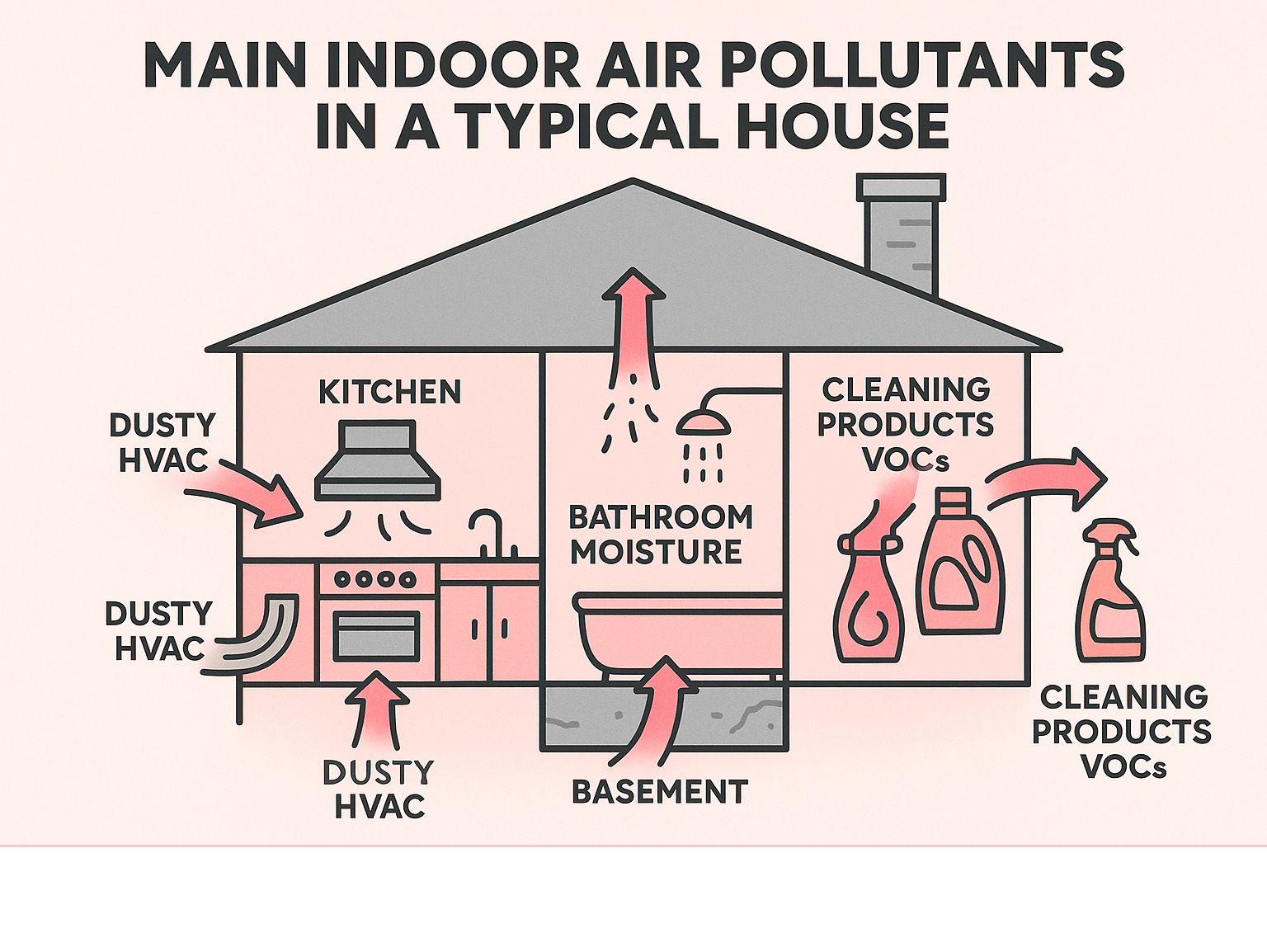
Important iaq issues terms:
Why Indoor Air Quality Should Be on Every Homeowner’s Radar
When we think of health risks, we often picture smoggy cities or traffic fumes. But the real danger may be right under your nose—at home. The World Health Organization estimates 3.8 million deaths per year worldwide are linked to illnesses caused by poor indoor air, especially from things like dirty cookstoves and fuels.
For families in St. Louis and the surrounding areas, the main threats come from seemingly ordinary sources—like the gas stove in your kitchen, the basement’s damp corners, or the cleaning sprays under your sink. Poor IAQ is linked to:
- Asthma attacks and allergies
- Heart and lung problems
- Headaches, fatigue, and trouble concentrating
- Increased risk of cancer from long-term exposure (e.g., radon, asbestos)
Emerging research even links IAQ to cognitive performance—meaning your home’s air might literally be making you sluggish or foggy-headed.
Short- & Long-Term Health Consequences
Let’s break it down:
- Short-term effects:
Itchy eyes, sore throat, runny nose, headaches, coughing, dizziness, fatigue. These can appear within hours of exposure—think “sick building syndrome.” - Long-term effects:
Chronic respiratory diseases (like asthma and COPD), heart disease, and cancers (especially lung cancer from radon or asbestos). Some exposures, like radon or asbestos, may not show symptoms for years, but the consequences can be severe.
Multiple studies show a significant link between indoor air pollution and problems like pneumonia in children, cardiovascular disease in adults, and even dementia risk in seniors. It’s not just about comfort—iaq issues can be life-changing.
Populations Most at Risk
While everyone can be affected, certain groups are much more vulnerable:
- Children:
Their lungs and immune systems are still developing, and they breathe more air relative to their body size. - Older adults:
More likely to have chronic health conditions that poor air can worsen. - Pregnant women:
Some pollutants can harm fetal development. - Low-income households:
Often have older homes with more sources of pollutants (like lead paint or unvented appliances) and less access to remediation.

For more on the science, see this research on health effects.
The Usual Suspects: Common Indoor Pollutants & Where They Hide
Your home is full of potential sources of iaq issues. Here’s what to watch for—and where they like to lurk.
| Pollutant | Where It Comes From | Health Effects |
|---|---|---|
| PM2.5 (fine particles) | Cooking, candles, fireplaces, dust | Asthma, heart & lung disease |
| Volatile Organic Compounds (VOCs) | Cleaners, paints, air fresheners, new furniture | Headaches, dizziness, cancer |
| Formaldehyde | Particleboard, pressed wood, glues, new textiles | Eye/skin irritation, cancer |
| Carbon Monoxide (CO) | Gas stoves, furnaces, water heaters, attached garages | Headaches, death (at high doses) |
| Radon | Soil under basement, cracks in foundation | Lung cancer |
| Mold & Mildew | Leaks, flooding, high humidity, poor ventilation | Allergies, asthma, infection |
| Dust Mites, Pet Dander | Bedding, carpets, upholstery, pets | Allergies, asthma attacks |
| Asbestos | Old insulation, floor tiles, pipe wrap | Cancer, lung scarring |
| Lead | Old paint, pipes | Neurological damage |
| Ozone | Some air purifiers, reactions between pollutants | Respiratory irritation |
| Cooking Fumes | Frying, grilling, poor venting | Respiratory, eye irritation |
Gases That Can Kill Quickly
-
Carbon Monoxide (CO):
Odorless, colorless gas from burning fuels. It can kill in minutes if it builds up indoors. The CDC estimates nearly 5,000 people in the U.S. go to the ER for CO poisoning each year. Always have a functioning CO detector near bedrooms and fuel-burning appliances.
More on carbon monoxide safety from the CDC -
Radon:
A radioactive gas from the ground. It’s the second leading cause of lung cancer in the U.S. after smoking, responsible for about 21,000 deaths per year. It’s invisible and odorless—only a test kit can tell you if it’s a problem. -
Nitrogen Dioxide (NO₂), Sulfur Dioxide (SO₂):
Byproducts of combustion (gas stoves, fireplaces). Can trigger asthma and worsen respiratory conditions.
Particles & Allergens That Make You Miserable
- Pet Dander & Pollen:
Tiny particles that can float in the air for hours, triggering sneezing, watery eyes, and asthma. - Mold Spores & Biological Aerosols:
Thrive in damp areas—think basements, bathrooms, crawlspaces. Mold can start growing in as little as 24 hours after moisture exposure. - Legionella & Other Bacteria:
Grow in stagnant water (humidifiers, AC condensate pans). Legionnaires’ disease can be severe and is often linked to poor HVAC maintenance.
Detecting and Solving IAQ Issues at Home
How do you know if your St. Louis home has iaq issues? Sometimes, it’s obvious—a musty smell, visible mold, or a CO alarm. Other times, the problem is hidden.
Early Warning Signs of IAQ Issues
- Musty or chemical smells:
May indicate mold, mildew, or off-gassing from new materials. - Condensation on windows or walls:
Points to high humidity and potential for mold. - Soot stains near vents or appliances:
Can mean incomplete combustion or dirty HVAC. - CO alarm beeps or headaches near fuel appliances:
Take this seriously—leave the house and call for help. - Persistent allergy or asthma symptoms indoors:
Especially if symptoms improve when you leave the house.
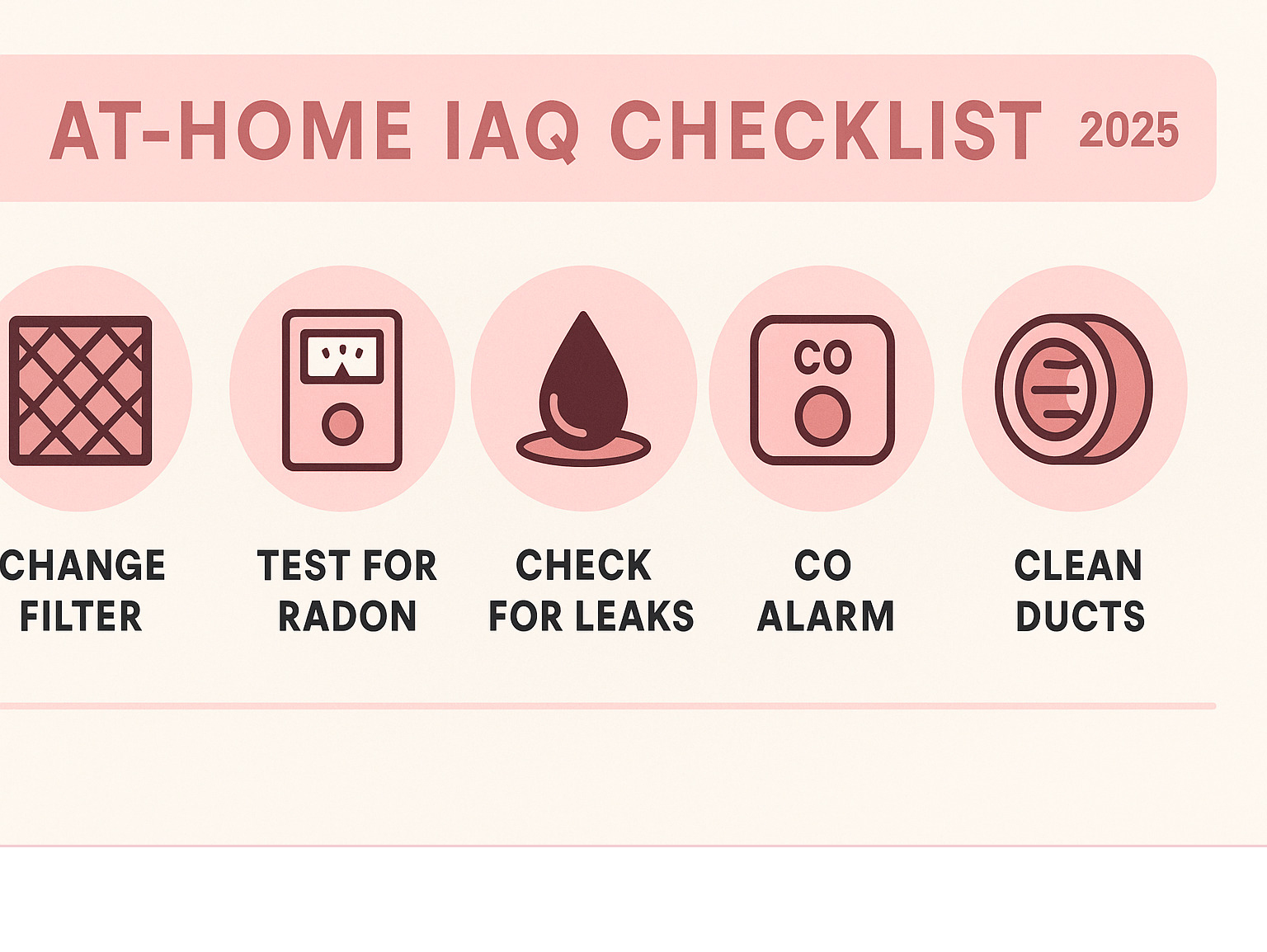
Affordable Tools to Track IAQ Issues
You don’t have to guess—some simple tools can catch problems early:
- Carbon monoxide detectors:
Install near bedrooms and fuel-burning appliances. Test them monthly and change batteries at least once a year. - Radon test kits:
Available at hardware stores or online. Place in the lowest lived-in level of your home for several days. - Humidity meters:
Keep indoor humidity between 30-50%. Over 60%? Risk of mold and dust mites skyrockets. - Smart air quality monitors:
Track VOCs, PM2.5, CO2, and humidity. Some send alerts to your phone. - Symptom logs:
Note when and where symptoms occur (e.g., “Always worse in the basement after rain”).
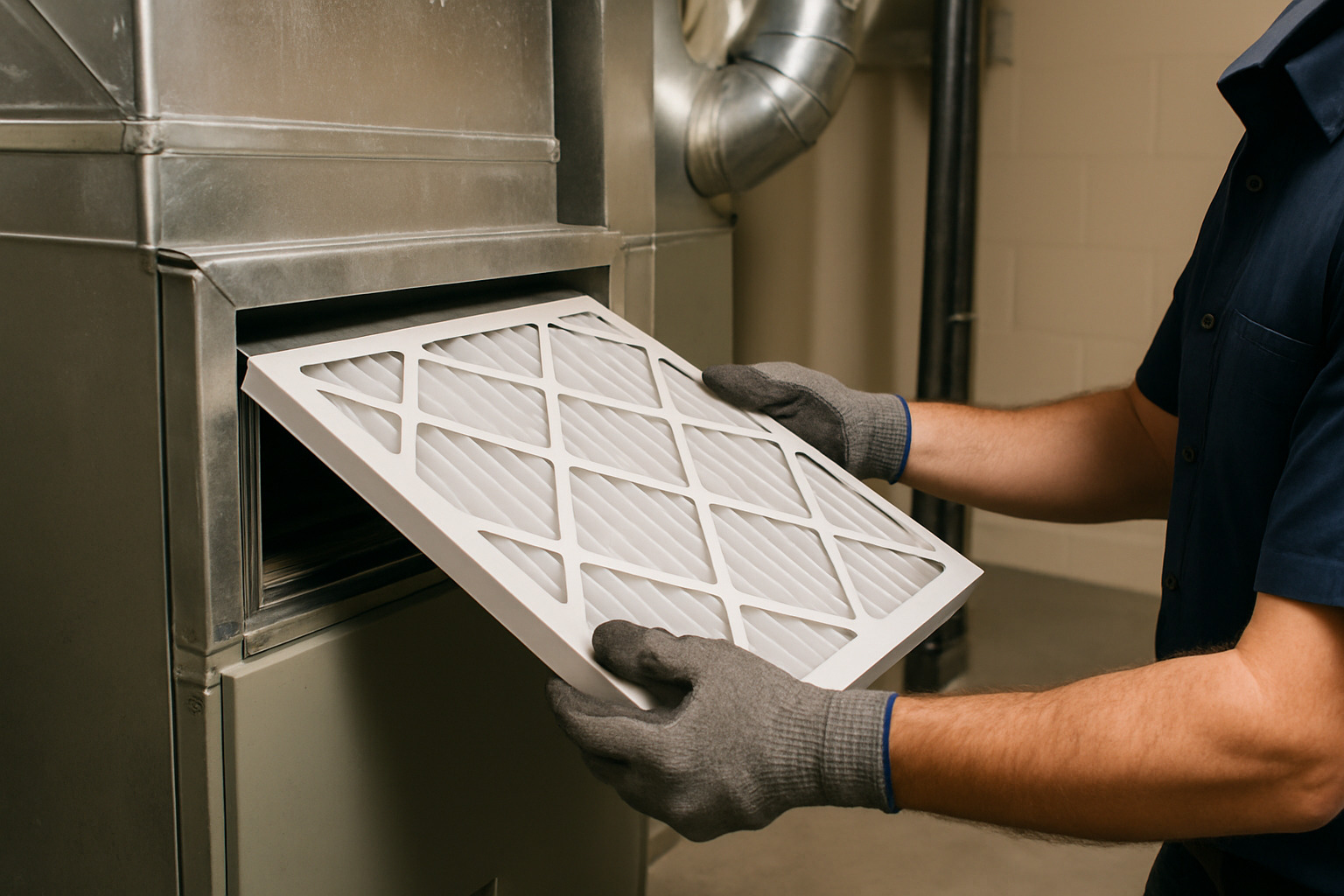
Pro Tip: Change your HVAC filter every 1-3 months, especially during high-use seasons, or if you have pets or allergies.
If you notice patterns or persistent problems, it’s time to bring in a professional for a thorough inspection. AAA Home Services can often offer same-day or next-day visits for indoor air quality concerns.
Ventilation, HVAC Optimization & Moisture Control
Proper ventilation is the backbone of healthy indoor air. Modern homes are more energy-efficient—but that means they’re also more sealed up, letting pollutants accumulate.
ASHRAE Standard 62.1 recommends bringing in enough fresh outdoor air to dilute indoor pollutants. But that only works if your system is designed, installed, and maintained correctly.
What You Can Do
- Use kitchen and bathroom exhaust fans:
Always vent cooking fumes and shower steam outside, not just into the attic. - Keep humidity in check:
30-50% is ideal. Use dehumidifiers in damp areas like basements. - Upgrade your HVAC filter:
Filters rated MERV 11 or higher capture finer particles. A MERV 13 filter can trap more than 90% of microscopic particles (but make sure your system can handle it—ask our technicians). - Regular maintenance:
Annual HVAC checkups catch leaks, dirty coils, and clogged drains before they cause trouble. - Seal ducts:
Leaky ductwork pulls in dust and can spread pollutants throughout your home. - Keep intakes clear:
Don’t block fresh-air intakes with boxes, furniture, or debris.
For more, see our guide to HVAC maintenance.
“Our technician was prompt and explained everything about our air quality and filter options. The difference was noticeable the next day!”
— See more reviews for AAA Heating & Cooling in Wentzville, MO
When to Call a Pro & Cost-Effective Fixes
If you’ve tried the basics—changing filters, running fans, using a dehumidifier—but still struggle with odors, mold, headaches, or unexplained symptoms, it’s time to call in the experts.
What Can a Professional Do?
- Comprehensive IAQ testing:
Identify hidden problems like radon, asbestos, or chemical off-gassing. - Source removal:
Find and eliminate the root cause—like sealing up a leaky foundation, removing moldy drywall, or isolating combustion appliances. - Duct cleaning and sealing:
Prevents dust and allergens from circulating. - Air purifier recommendations:
Whole-home systems or portable HEPA units for specific rooms. - Attic and basement checks:
Insulation, vapor barriers, and moisture control. - Lead and asbestos abatement:
Only certified professionals should handle these hazards.
We don’t recommend broad “catch-all” air tests unless there’s a clear reason. Instead, a targeted approach—starting with areas where you have symptoms or visible problems—saves money and gets results faster.
“AAA found a hidden mold problem after a flood in our basement. They walked us through every step and even helped us with the insurance paperwork. We are finally breathing easy again!”
— See more AAA Plumbing & Water Heater Service reviews in Ellisville, MO
Frequently Asked Questions about IAQ Issues
What symptoms suggest my home’s air is unhealthy?
- Frequent headaches, fatigue, or “brain fog”
- Coughing, sneezing, runny nose, or irritated eyes
- Worsening of asthma or allergy symptoms indoors
- Musty, chemical, or burning smells that linger
- Mold spots or condensation on windows/walls
- CO detector alarms or dizziness near fuel-burning appliances
If symptoms improve when you leave home, it’s a strong sign indoor air is the culprit.
How often should I replace HVAC filters to avoid IAQ issues?
- Standard recommendation: Every 1-3 months
- With pets, allergies, or high use: Every month
- Thicker filters (4″+): Every 6-12 months, but check monthly
A dirty filter can turn your HVAC system into a pollutant distributor!
Do portable air purifiers really help with IAQ issues?
Yes—if used correctly. HEPA-filter air purifiers can trap fine particles, dust, pollen, and some allergens. For best results:
- Choose a purifier rated for your room size (check CADR rating)
- Run it continuously in bedrooms or main living spaces
- Change filters as recommended
- For gases (like VOCs), look for models with an activated carbon filter
But remember, air purifiers are a supplement—not a substitute—for cleaning, ventilation, and source control.
Conclusion
Indoor air quality isn’t just a comfort issue—it’s a health issue. From headaches and allergies to serious diseases, iaq issues can quietly undermine your family’s wellbeing.
The good news? Most indoor air problems are fixable—often with simple changes or targeted repairs. If you’re not sure where to start, AAA Home Services brings over 50 years of experience, thousands of five-star reviews, and a reputation for fair, honest service throughout the Greater St. Louis area.
We can often offer same-day or next-day help for most indoor air quality concerns. Our technicians are trained, background-checked, and ready to help your family breathe easier—whether it’s filter upgrades, duct sealing, moisture control, or solving stubborn odor and allergy complaints.
Ready for answers?
Learn more about AAA’s indoor air solutions, or browse our customer reviews for HVAC, Plumbing, Electrical, and Appliance Repair.
Breathe easy, St. Louis. We’re here to help solve your indoor air quality issues—so your home is a place of comfort, not concern.


