



Why Quality Inside Air Matters More Than Ever
Quality inside air is about creating a healthy, comfortable environment in your home where you and your family can breathe easy and feel your best. With Americans spending approximately 90% of their time indoors, the air quality in your home directly impacts your health, comfort, and overall well-being.
Quick Facts About Indoor Air Quality:
- Indoor air can be 2-5 times more polluted than outdoor air
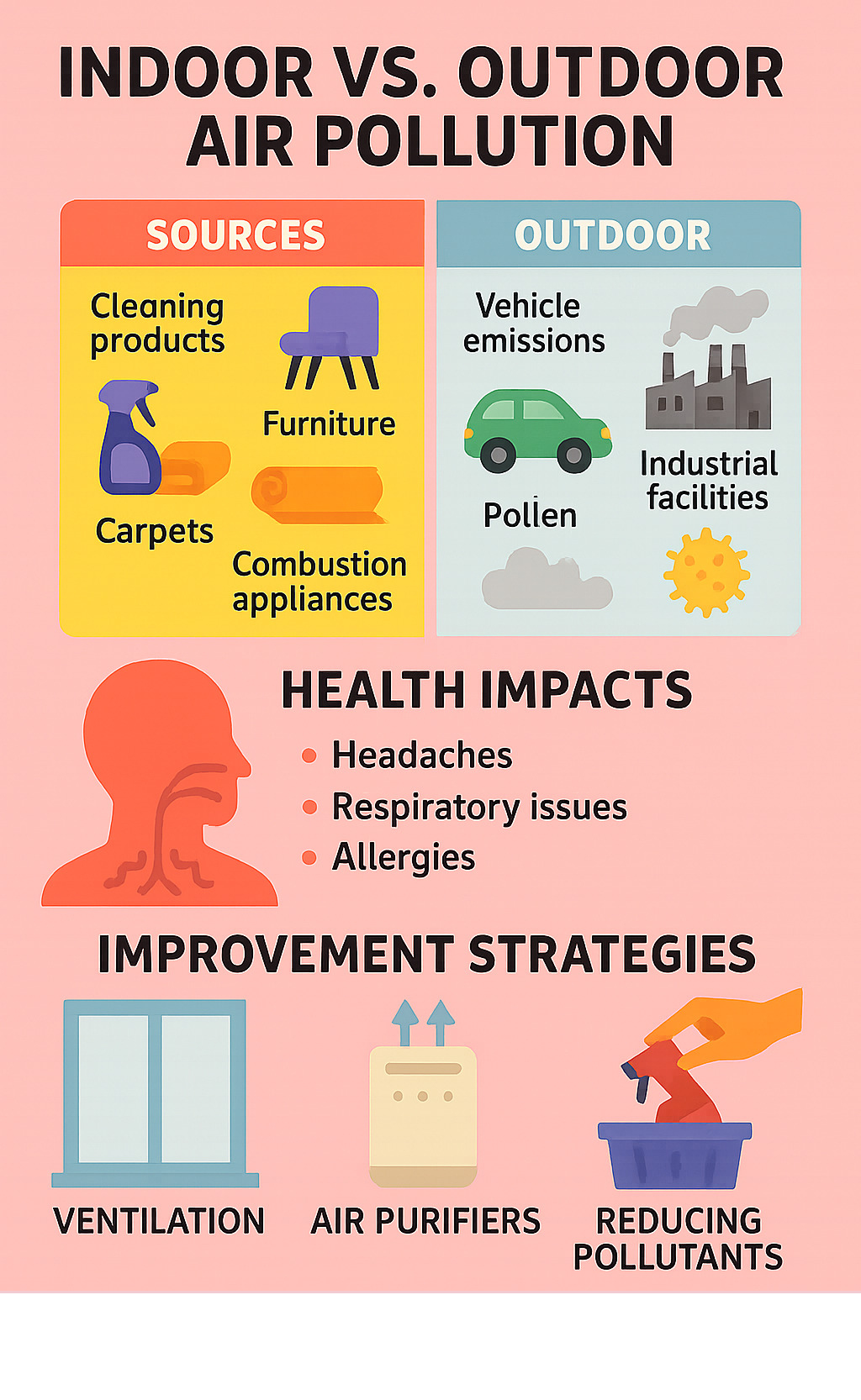
- Common sources include cleaning products, furniture, carpets, and combustion appliances
- Poor indoor air causes headaches, fatigue, respiratory issues, and concentration problems
- Radon exposure causes about 21,000 lung cancer deaths annually in the U.S.
- Simple improvements can reduce health risks and boost comfort
The reality is shocking: while we worry about outdoor pollution, the air inside our homes often contains higher concentrations of harmful pollutants. These come from everyday items like cleaning supplies, furniture, building materials, and even cooking.
Poor indoor air quality doesn’t just make you uncomfortable – it can trigger asthma attacks, cause headaches and fatigue, and even impact your ability to think clearly. Research shows that people in buildings with better air quality score significantly higher on cognitive function tests.
The good news? Unlike outdoor air pollution, you have complete control over your indoor environment. Small changes and professional improvements can dramatically improve the air you breathe at home.
I’m Dan Walsh, and I’ve spent years helping Greater St. Louis area homeowners improve their quality inside air through proper HVAC maintenance, filtration upgrades, and indoor air quality solutions. Through my experience managing home repair services, I’ve seen how the right approach to indoor air can transform a family’s comfort and health.
Understanding “Quality Inside Air” for Your Home
When you think about your home’s comfort, what comes to mind? Maybe it’s that perfect temperature on a chilly winter evening, or the way sunlight streams through your windows on a bright morning. But there’s something even more fundamental happening that you might not notice – the quality inside air that you and your family breathe every single day.
Quality inside air goes far beyond just making sure your home doesn’t smell musty. It’s about creating an indoor environment where the air is clean, properly ventilated, and free from harmful pollutants. This means your home maintains the right humidity levels, has adequate fresh air circulation, and keeps dangerous substances like carbon monoxide, radon, and volatile organic compounds at safe levels.
Think of quality inside air as the foundation of your home’s comfort. Just like you wouldn’t ignore a leaky roof or broken furnace, poor indoor air quality affects your family’s health, sleep quality, and overall well-being. It’s especially crucial in residential homes because, unlike office buildings with strict ventilation codes, your home’s air quality depends entirely on the choices you make.
When indoor air quality problems persist, they can lead to what experts call “sick building syndrome.” This happens when people experience headaches, fatigue, throat irritation, or difficulty concentrating – and these symptoms improve when they leave the house. It’s your home’s way of telling you that the quality inside air needs attention.
The Evolution of Quality Inside Standards
Over the past several decades, our understanding of quality inside air has grown tremendously. Organizations like ASHRAE have developed detailed guidelines establishing minimum ventilation rates needed for healthy indoor air. The EPA has also stepped up with comprehensive residential air quality guidelines, recognizing that indoor air pollution is often worse than what we breathe outside.
Building certification programs like WELL and LEED have pushed the conversation even further, focusing on optimizing indoor environments for peak human health and performance. They recognize that truly excellent quality inside air can improve everything from your sleep quality to your ability to think clearly.
How Energy Efficiency Changed Quality Inside Conversations
The push toward energy-efficient homes has been fantastic for reducing utility bills and environmental impact, but it’s also created new challenges for quality inside air. Modern homes are built much tighter than older homes, with better insulation and sealed windows and doors. This keeps conditioned air from escaping, which saves energy. But it also means that pollutants, moisture, and stale air can get trapped inside your home.
The solution isn’t to go back to drafty, inefficient homes. Instead, it’s about finding the right balance between energy efficiency and indoor air quality through proper ventilation systems, high-quality filtration, and careful moisture control. This is where working with experienced HVAC professionals becomes essential – they understand how to maintain excellent quality inside air while keeping your energy bills reasonable.
Why Healthy Air Matters: Health & Lifestyle Payoffs
When you think about your family’s health, quality inside air might not be the first thing that comes to mind. But here’s something that might surprise you: the air you breathe at home affects everything from how well your kids do on their homework to how soundly you sleep at night.
Your family’s respiratory health depends heavily on clean indoor air. We’ve worked with countless families in the St. Louis area who noticed their children’s asthma symptoms improved dramatically after addressing their home’s air quality issues. Adults with allergies often find they need less medication when their quality inside air improves.
But the benefits go way beyond just breathing easier. Scientific research on office air and cognition shows something remarkable: people in environments with better air quality score up to 11% higher on cognitive function tests. Think about what that means for your family – better focus during homework time, clearer thinking when you’re working from home, and improved decision-making throughout your day.
Your cardiovascular health also benefits from clean indoor air. Fine particles and pollutants can actually enter your bloodstream and affect your heart. When you improve your home’s quality inside air, you’re taking a step toward better heart health too.
Hidden Costs of Ignoring Quality Inside
Poor quality inside air hits your wallet harder than you might expect. We’ve seen families spend hundreds on doctor visits and medications that could have been avoided with better indoor air quality. Lost productivity from sick days and that foggy feeling you get from breathing stale, polluted air adds up over time.
The property damage can be even more expensive. Excess moisture from poor ventilation leads to mold growth, and we’ve worked with homeowners who faced thousands in remediation costs. When it comes time to sell your home, quality inside air problems become obvious to potential buyers.
Quality Inside & Luxury Living
If you’re someone who appreciates the finer things in life, excellent quality inside air represents the ultimate in home comfort. Luxury homes increasingly feature premium materials specifically chosen for their clean air benefits, including low-VOC paints and finishes that don’t release harmful chemicals into your home’s air.
Silent ventilation systems provide fresh air without the noise, and precise humidity control creates that perfect feeling you get in high-end hotels. Some of our clients have invested in whole-home air purification systems that work so well, their homes feel noticeably fresher than anywhere else they visit.
Key Drivers of Quality Inside Air
When you walk into your home after a long day, you want to breathe easily and feel comfortable. The quality inside air you experience depends on several interconnected factors working together like pieces of a puzzle.
Think of your home’s air quality as a delicate balance. Ventilation rate forms the foundation – your home needs fresh outdoor air to dilute pollutants and carry away stale air. Your HVAC system’s filtration acts as a protective barrier, catching particles before they circulate throughout your home.
The most powerful strategy for improving quality inside air is source control – stopping pollution before it starts. This means choosing cleaning products carefully, maintaining your furnace properly, and being selective about the materials you bring into your home.
Humidity control plays a surprisingly important role in how your air feels and how healthy it remains. When humidity stays between 30-50%, you avoid the stuffiness of overly moist air and the dry, scratchy feeling of winter air.
Your home’s temperature control affects more than just comfort. Consistent temperatures help your HVAC system maintain proper air circulation, ensuring that filtered air reaches every room instead of creating stagnant pockets where pollutants can accumulate.
Quality Inside and Common Pollutants
Volatile Organic Compounds (VOCs) top the list of common indoor pollutants. These invisible chemicals float out of everyday items like furniture, cleaning supplies, and building materials. You might notice them as that “new carpet smell” or the lingering scent after cleaning, but many VOCs are completely odorless while still affecting your quality inside air.
Particulate matter includes everything from visible dust to microscopic particles you can’t see. Pet dander, pollen that sneaks in through open doors, and tiny particles from cooking all contribute to this category.
Carbon monoxide deserves special attention because it’s completely undetectable without a monitor, yet it comes from common sources like gas furnaces, water heaters, and even attached garages. Radon seeps into homes naturally from the ground below, and you’d never know it’s there without testing.
Quality Inside Air & Building Materials
The materials surrounding you every day shape the air you breathe. Solid wood versus pressed wood makes a dramatic difference. Real hardwood cabinets and furniture release minimal chemicals, while particleboard and MDF alternatives can off-gas formaldehyde for years.
Paint choices offer one of the easiest ways to improve quality inside air. Low-VOC and zero-VOC paints smell better during application and continue protecting your air quality for years. Flooring materials create the foundation of your indoor environment. Hardwood, tile, and natural stone contribute virtually nothing to indoor air pollution, while carpet can trap allergens, dust, and chemicals.
Proven Strategies to Improve Quality Inside Air
Creating healthier quality inside air doesn’t have to be overwhelming. After helping hundreds of families throughout the Greater St. Louis area, I’ve learned that the most effective approach combines smart prevention with targeted improvements.
Source elimination is where you’ll see the biggest impact on your quality inside air. Think of it as stopping the problem at its source rather than trying to clean up the mess afterward. This means choosing cleaning products that don’t fill your home with harsh chemicals, maintaining your appliances so they don’t leak harmful gases, and controlling moisture before it becomes a mold problem.
Mechanical ventilation has become essential in today’s tighter homes. Your house needs fresh air, but it can’t rely on random air leaks anymore. Properly designed ventilation systems bring in fresh outdoor air while removing stale indoor air.
Whole-home filtration upgrades can transform your existing HVAC system into a powerful air cleaning machine. The right filters capture particles you can’t even see, from pet dander to pollen to dust mites.
Humidity control prevents a host of problems before they start. When humidity stays between 30-50%, mold can’t grow, dust mites struggle to survive, and your respiratory system stays comfortable.
Easy Wins Every Homeowner Can Do
Replacing your HVAC filter regularly is the single most important thing you can do for quality inside air. Most families should change filters every 1-3 months, but homes with pets or allergy sufferers might need monthly changes. Look for filters with MERV ratings between 8-12 for the best balance of cleaning power and airflow.
Dusting with a HEPA vacuum removes allergens and particles that regular cleaning misses. Washing bedding in hot water at least 130°F weekly kills dust mites and removes allergens. Controlling humidity with exhaust fans in bathrooms and kitchens prevents moisture problems that lead to mold growth.
When to Bring in the Pros for Deeper Quality Inside Gains
While basic maintenance helps, achieving truly excellent quality inside air often requires professional expertise. At AAA Home Services, we’ve seen how professional solutions can transform homes that seemed impossible to make comfortable.
Professional duct cleaning addresses contamination that builds up over years in your HVAC system. More info about Air Duct Cleaning
Air scrubber installation brings hospital-grade air purification to your home. These advanced systems work within your HVAC system to eliminate pollutants that regular filters can’t capture. More info about Air Scrubber
Radon mitigation becomes critical if testing reveals liftd levels of this dangerous gas. Mold remediation requires professional expertise to address both visible mold and the underlying moisture problems that caused it.
We often recommend professional assessment because quality inside air problems aren’t always obvious. A trained technician can identify issues you might miss and recommend solutions that address your specific home’s needs.
Assess & Monitor Your Home’s Quality Inside Air
You can’t improve what you don’t measure. That’s why understanding your home’s current quality inside air is so important – and fortunately, it’s easier than ever to get a clear picture of what you’re breathing.
The simplest starting point is DIY test kits for specific concerns like radon or mold. While these aren’t as precise as professional testing, they give you valuable baseline information about potential problems. Radon test kits are particularly important since this dangerous gas is completely undetectable without testing.
For a comprehensive understanding of your home’s quality inside air, nothing beats a professional IAQ audit. Our trained technicians can identify problems you might not notice and provide specific recommendations custom to your home.
Smart air quality monitors have revolutionized how homeowners can track their indoor environment. These devices continuously measure multiple factors affecting quality inside air, including particulate matter, volatile organic compounds, carbon dioxide levels, and humidity. The Haven Air Monitor and similar devices connect to your smartphone, letting you see how cooking, cleaning, or opening windows affects your air quality in real-time.
Interpreting Sensor Readings & Taking Action
Carbon dioxide (CO₂) levels tell you about ventilation. When readings climb above 1000 parts per million, your home isn’t getting enough fresh air exchange. Particulate matter (PM2.5) measurements show how much dust, pollen, and other tiny particles are floating in your air. Levels above 35 micrograms per cubic meter are considered unhealthy.
VOC indices indicate chemical pollutants from cleaning products, furniture, or building materials. Humidity percentages between 30-50% keep your quality inside air comfortable and healthy.
Quality Inside Verification After Home Projects
Home improvement projects can dramatically affect your quality inside air, sometimes for months after completion. New materials off-gas chemicals as they cure and settle into your home. Even low-VOC paints and finishes can temporarily impact air quality.
New furniture, especially pieces made with pressed wood or synthetic materials, can significantly affect quality inside air. We recommend letting new furniture air out in a garage or well-ventilated area before bringing it into main living spaces when possible.
Innovations & Future Trends Enhancing Quality Inside
The world of quality inside air is evolving rapidly, and the innovations coming to market are making it easier and more affordable than ever to maintain healthy indoor environments.
Low-cost air quality sensors have revolutionized how we understand our home environments. Just a few years ago, professional-grade air quality monitoring cost thousands of dollars. Today, you can purchase reliable sensors for under $200 that track multiple pollutants in real-time.
Smart ventilation systems represent another major leap forward in quality inside air technology. These systems automatically adjust ventilation rates based on indoor air quality measurements, outdoor weather conditions, and even occupancy patterns.
Heat recovery ventilators are becoming increasingly popular in our area as homeowners recognize the importance of controlled ventilation. These systems bring in fresh outdoor air while recovering energy from the exhaust air, maintaining excellent quality inside air without wasting energy.
The shift toward home electrification is creating significant opportunities for better indoor air quality. Electric induction cooktops, for example, produce zero combustion byproducts compared to gas ranges, dramatically improving kitchen air quality. Latest research on reducing indoor combustion shows that eliminating gas appliances can reduce indoor nitrogen dioxide levels by up to 50%.
Advanced filtration technologies continue to improve, with new filter materials capable of capturing smaller particles and different types of pollutants than traditional filters. Some newer systems combine mechanical filtration with electronic air cleaning to address both particles and gases.
These innovations are making quality inside air more achievable for every homeowner. At AAA Home Services, we stay current with these developments to help our customers in the Greater St. Louis area take advantage of the latest technologies that make sense for their homes and budgets.
Frequently Asked Questions about Quality Inside Air
When homeowners in the Greater St. Louis area ask me about quality inside air, I hear the same questions over and over. These are the most important ones that can help you understand what you’re dealing with in your own home.
What does “quality inside” actually measure?
Quality inside air is really about creating a healthy environment where your family can thrive. We’re looking at several key factors: the concentration of pollutants like volatile organic compounds from your furniture and cleaning products, tiny particles floating around from dust and allergens, and biological contaminants like mold spores.
Quality inside air also includes whether your home has proper ventilation to bring in fresh air and remove stale air, humidity levels that keep you comfortable without encouraging mold growth, and temperatures that don’t stress your respiratory system. Good quality inside air means your home’s environment supports your health instead of working against it.
How often should I change my HVAC filter for better quality inside air?
For most homes, changing your HVAC filter every 1-3 months will keep your quality inside air on track, but your specific situation matters a lot. If you have pets, you’re probably looking at monthly filter changes. Same goes if anyone in your family has allergies or asthma.
A dirty filter doesn’t just reduce air quality, it makes your whole HVAC system work harder. When choosing filters, look for MERV ratings between 8-12. These provide excellent filtration for quality inside air without restricting airflow too much.
Do houseplants really improve quality inside air?
While plants can remove some pollutants from the air, they’re not the quality inside air solution many people hope they’ll be. You’d need an enormous number of plants – dozens or even hundreds – to make a meaningful difference in air quality in a typical home.
Plants can actually create quality inside air problems in some situations. The soil in plant pots can harbor mold, especially if you tend to overwater. Instead, focus on proven approaches: proper ventilation, quality filtration through your HVAC system, controlling pollution sources, and maintaining appropriate humidity levels.
Conclusion
Creating excellent quality inside air isn’t just about comfort – it’s about giving your family the healthy home environment they deserve. When you consider that we spend 90% of our time indoors, the air quality in your home becomes one of the most important factors affecting your daily energy, sleep quality, and long-term health.
The journey to better quality inside air doesn’t have to be overwhelming. Start with simple steps like regularly changing your HVAC filters and choosing low-VOC cleaning products. These small changes can make a noticeable difference in how your home feels and how your family feels in it.
For deeper improvements, professional solutions like whole-home air purification, duct cleaning, and proper ventilation systems can transform your indoor environment. The investment in quality inside air pays you back every single day through better sleep, fewer sick days, improved focus, and that wonderful feeling of walking into a home that just feels fresh and clean.
At AAA Home Services, we’ve spent over 50 years helping families throughout the Greater St. Louis area breathe easier in their homes. From St. Charles and O’Fallon to every corner of our service area, we’ve seen how the right approach to indoor air quality can completely change how a home feels. Our trained technicians understand that every home is different, and we take the time to assess your specific situation and recommend solutions that actually work.
You don’t have to live with stuffy air, mysterious odors, or that nagging feeling that your home’s air just isn’t as clean as it could be. Whether you’re dealing with humidity problems, need your ducts cleaned, or want to explore advanced air purification options, we’re here to help you create the healthy, comfortable environment your family deserves.
Ready to take the next step toward better quality inside air? More info about Indoor Air Quality Service and find how we can help you transform your home’s air quality. Your family’s health and comfort are worth the investment, and we’re here to make sure you get results that last.


