



The Invisible Element We Live In
Air inside our homes is something we rarely think about until it causes problems. The EPA reports that indoor air can be 2-5 times more polluted than outdoor air, and in some cases up to 100 times worse. Since Americans spend approximately 90% of their time indoors, the quality of this air directly impacts our health and comfort.
Key facts about indoor air quality:
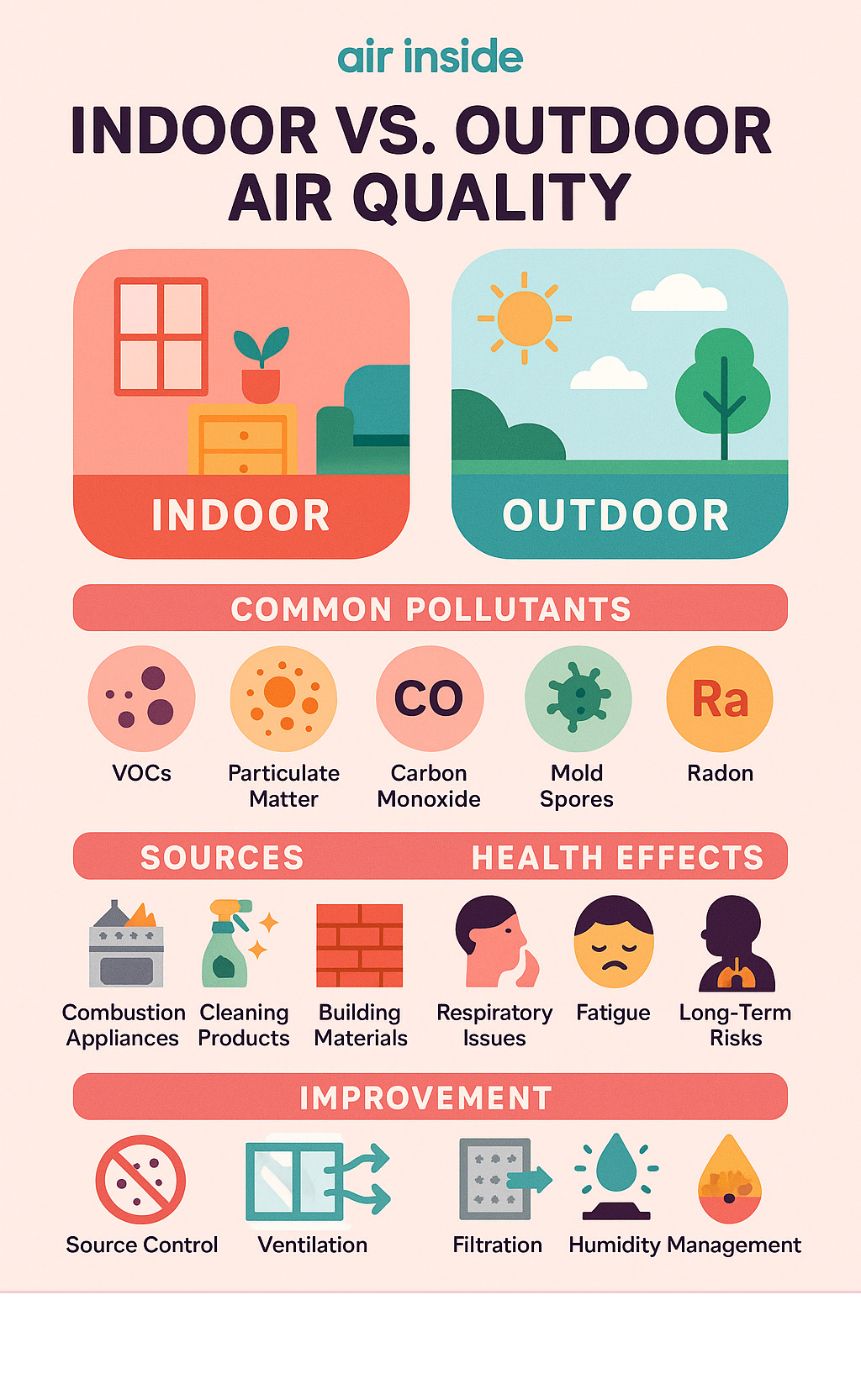
- Sources of indoor pollution: Combustion appliances, cleaning products, building materials, and everyday activities like cooking
- Common pollutants: VOCs, particulate matter, carbon monoxide, mold spores, and radon
- Health impacts: Respiratory issues, headaches, fatigue, and long-term risks including lung cancer
- Improvement methods: Source control, ventilation, filtration, and humidity management
When you walk through a pine forest, the crisp, fresh scent is one of the first things you notice. Contrast this with the air inside many homes, which can contain a complex mixture of particles and gases from countless sources – many invisible to the naked eye.
Most buildings trap these pollutants due to energy-efficient designs that limit air exchange. The average home experiences unintended air leaks equivalent to leaving one window open year-round, yet this random ventilation doesn’t guarantee healthy air.
I’m Dan W, with extensive experience managing home repair services and helping homeowners improve the air inside their homes through proper ventilation and filtration systems. My years working with technicians have shown me how proper maintenance dramatically improves indoor environments.
Key air inside vocabulary:
Air Inside: The Invisible Passenger in Every Room
Have you ever noticed those dancing dust particles when sunlight streams through your window? That’s just a tiny glimpse of what’s actually floating in the air inside your home. Just as air in your tires keeps your car running smoothly, the air inside your home significantly impacts how well your body “runs” each day.
Indoor Air Quality (IAQ) isn’t just another home maintenance buzzword—it’s a measure of how clean or polluted the air is within your living spaces. And here’s the wake-up call for St. Louis homeowners: the air inside your home is typically 2 to 5 times more polluted than the air outside. In some extreme cases, indoor pollution levels can skyrocket to 100 times higher than outdoor air!
This reality becomes even more concerning when you consider that most of us spend about 90% of our time indoors—that’s nearly 22 hours each day breathing your home’s air. For families in St. Charles, O’Fallon, and throughout St. Louis County, this means the quality of your indoor environment has a far greater impact on your health than any outdoor pollution you might worry about.
Your home isn’t airtight, despite what you might think. Air inside moves through your home via infiltration—the unintentional introduction of outside air through tiny cracks and openings in your home’s structure. Then there’s the “stack effect,” where warm air naturally rises and escapes through your home’s upper levels, creating a vacuum that pulls new air in at lower levels. This natural air movement happens whether you want it to or not.
The Curious Case of “Air Inside” in Everyday Life
Ever walked into a conference room after a long meeting and immediately felt that “stuffy” sensation? The contrast between your home and office environments isn’t just your imagination—it’s chemistry at work.
In many office buildings throughout Chesterfield and Creve Coeur, carbon dioxide (CO₂) levels serve as a canary in the coal mine for overall air quality. When CO₂ rises above 800 parts per million, it signals poor ventilation. At 1,000 ppm, your brain starts to slow down. By 2,500 ppm, your decision-making abilities can plummet by up to 51%—almost like having a couple of cocktails!
The stack effect becomes particularly noticeable in those beautiful multi-story homes in Town & Country and Clayton. During winter, your heated air rises like an invisible hot air balloon, escaping through tiny openings in upper levels. This creates negative pressure that pulls in cold outdoor air through lower-level cracks and gaps. This natural movement can either refresh your indoor air or introduce new pollutants, depending on what’s outside.
What’s truly puzzling about our relationship with air inside is our priorities. We’ll immediately adjust the thermostat if a room feels too warm or chilly, but we rarely consider whether the air we’re breathing contains invisible particles that could harm our health. This disconnect is something our technicians observe daily when servicing homes throughout St. Louis and St. Charles counties.
While we can’t see most indoor pollutants, their effects on our health are very real. The EPA’s extensive scientific research on indoor air quality confirms that poor IAQ can trigger asthma attacks, allergic reactions, and even contribute to long-term health issues. The air inside your home isn’t just about comfort—it’s about creating an environment where your family can truly thrive.
Where the Air Inside Goes Wrong: Sources and Chemistry
The air inside your home is like a living chemistry experiment happening right under your nose. Every day, this invisible mix swirls with compounds that interact, transform, and sometimes create problems for St. Louis area families. Let’s peek behind the curtain at what’s really happening in the air you breathe at home.
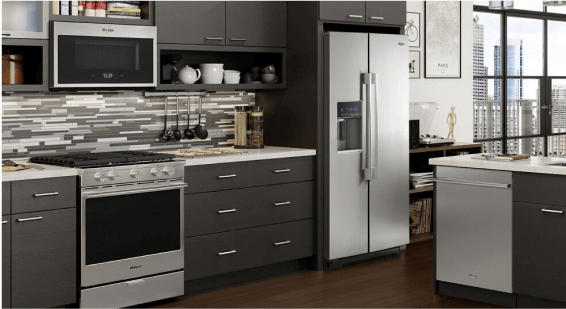
Your kitchen might be the heart of your home, but combustion appliances like gas stoves are major contributors to indoor pollution. Here’s something that might surprise you: cooking just one meal on a gas stove releases 10 quadrillion particles smaller than 3 nanometers—that’s as much or more than what comes from car exhaust! Many homes in Ballwin and Manchester have these appliances without adequate ventilation.
Those lovely scented products that make your home smell like “Mountain Breeze” or “Vanilla Sugar Cookie” aren’t as innocent as they seem. When air fresheners, scented candles, and wax melts release their fragrances, they actively react with ozone naturally present in your home. This chemical dance creates ultrafine particles that weren’t there before. In just 20 minutes of breathing near these products, between 100 billion and 10 trillion nanoparticles could deposit in your respiratory system.
Volatile Organic Compounds (VOCs) are sneaky pollutants that emanate from countless everyday items. That “new furniture smell” from your couch? VOCs. The fresh paint in your bedroom? More VOCs. Even your recently dry-cleaned clothes and cleaning supplies contribute to this invisible chemical soup. What makes VOCs particularly troublesome for Maryland Heights and Bridgeton homeowners is that they can continue off-gassing for years after installation.
Beneath many St. Louis area homes lurks radon, a naturally occurring radioactive gas that seeps in through foundation cracks. You can’t see, smell, or taste it, but radon is the second leading cause of lung cancer, claiming approximately 21,000 American lives annually. Certain areas of Missouri and Illinois have higher radon levels than others, making testing essential.
Formaldehyde hides in pressed wood products, certain insulation materials, and some glues and adhesives. This common indoor pollutant can irritate your respiratory system and has been classified as a human carcinogen. In newer homes throughout Chesterfield and Wildwood, these materials may be more prevalent due to modern construction methods.
Tiny Invaders: How Nanoparticles Hijack the Air Inside
The newest frontier in indoor air research focuses on nanoparticles—ultrafine invaders less than 100 nanometers in diameter that can penetrate deep into your lungs and even enter your bloodstream. These microscopic troublemakers are changing how we think about the air inside our homes.
Those innocent-looking wax melts on your coffee table? They typically contain higher concentrations of fragrance oils than many candles, which means more terpene emissions. When these terpenes meet the ozone naturally present in your home, they form secondary organic aerosols—fancy science talk for nanoparticles that hang around in your air inside for hours like unwanted guests.
Your morning routine might be creating more pollution than you realize. A single hair-styling session with aerosol products can result in inhaling 1–17 mg of cyclic volatile methyl siloxanes. These chemicals linger in your Florissant or Ferguson home’s air long after you’ve left for work.
Kitchen activities create some of the most significant indoor pollution. Research shows that cooking on a gas stove emits 10–100 times more tiny particles indoors than standing near car exhaust outdoors. This is particularly concerning for families in older homes throughout Webster Groves and Kirkwood where kitchen ventilation systems might be outdated or inadequate.
What makes these tiny invaders so problematic is their size—they’re so small that many standard air filters can’t effectively capture them. At AAA Home Services, we’ve visited countless homes throughout St. Louis County where these invisible pollutants accumulate, especially in newer, more airtight construction that doesn’t allow for natural air exchange.
Understanding these sources is the first step toward creating healthier air inside your home. While the chemistry might be complex, the solution doesn’t have to be—and that’s where professional guidance from experienced technicians makes all the difference.
When Air Turns Against Us: Health and Cognitive Impacts
Poor air inside your home doesn’t just create unpleasant odors—it can have serious consequences for your health and cognitive function. The health effects range from immediate irritation to long-term chronic diseases.
Asthma and respiratory conditions are frequently triggered or worsened by indoor air pollutants. The EPA estimates that exposure to environmental tobacco smoke (secondhand smoke) is responsible for approximately 3,000 lung cancer deaths each year in nonsmoking adults and impairs the respiratory health of hundreds of thousands of children.
Radon exposure in homes presents a silent but deadly risk. As mentioned earlier, it’s responsible for about 21,000 U.S. deaths from lung cancer annually. What makes radon particularly insidious is that it has no immediate symptoms—the damage accumulates over many years of exposure.
“Sick Building Syndrome” describes situations where building occupants experience acute health effects that seem linked to time spent in a particular building, with no specific illness or cause identified. Symptoms typically include headaches, eye, nose, and throat irritation, dry cough, itchy skin, dizziness, nausea, difficulty concentrating, fatigue, and sensitivity to odors. We’ve helped many homeowners in Brentwood and Clayton who complained of these symptoms only to find significant indoor air quality issues.
Perhaps most surprising is the impact of indoor air quality on cognitive function. Research has shown that higher CO₂ levels and VOCs can significantly impair decision-making abilities, problem-solving skills, and overall cognitive performance. One study found that office workers in environments with lower indoor pollutants and CO₂ levels demonstrated 101% better cognitive performance compared to those in conventional office environments.
Certain groups are particularly vulnerable to the effects of poor indoor air. Children, whose lungs are still developing and who breathe more air relative to their body weight, are especially susceptible. Older adults, people with pre-existing respiratory or cardiovascular conditions, and pregnant women also face increased risks from poor indoor air quality.
One measure researchers use to track exposure to certain pollutants is serum cotinine, a biomarker that indicates exposure to tobacco smoke. This allows scientists to quantify exposure even when the pollution itself is not visible. Such biomarkers help demonstrate how indoor air pollutants don’t just pass through our homes—they pass through our bodies as well.
Tuning Up Your Home’s Defense System
Just as your car needs regular maintenance to run efficiently, your home needs a well-maintained system to ensure the air inside remains clean and healthy. Think of it as giving your home’s respiratory system the care it deserves.
Monitoring is where your air quality journey begins. After all, you can’t improve what you don’t measure. CO₂ monitors serve as excellent canaries in the coal mine – when levels rise, it’s a sign your home isn’t breathing properly. Particulate matter sensors detect the invisible dance of dust, smoke, and other tiny particles floating through your rooms. Today’s smart monitors can track multiple pollutants at once, giving you a complete picture of what you’re breathing every day.
Filtration is your home’s first line of defense. For central HVAC systems, upgrading to MERV-13 rated filters can make a world of difference. These workhorses capture a significant portion of airborne particles that standard filters miss. For even better protection, HEPA filters remove an impressive 99.97% of particles 0.3 microns or larger – though your system might need some professional adjustments to accommodate them.
Looking for something more advanced? The Air Scrubber with ActivePure® Technology doesn’t just passively wait for particles to pass through – it actively hunts down contaminants both in the air and on surfaces throughout your home. Our technicians across St. Louis and St. Charles counties can seamlessly integrate these systems with your existing HVAC setup.
Humidity control is often overlooked but absolutely crucial for comfortable, healthy air inside. Aprilaire Humidifiers maintain that sweet spot between 30-50% humidity, where you’ll not only feel more comfortable, but many viruses and bacteria struggle to survive. In our St. Louis summers, controlling excess humidity prevents mold, while winter calls for adding moisture to counteract dry heated air.
Source control might be the most effective strategy of all. This means eliminating or reducing individual pollution sources at their root – switching to low-VOC products, ensuring proper ventilation for gas appliances, or quickly addressing water leaks before mold can take hold.
For newer, tightly-sealed homes in Chesterfield and Maryland Heights, balanced ventilation systems offer the best of both worlds. They provide controlled fresh air exchange while recovering energy that would otherwise be lost – keeping your home efficient while ensuring fresh air circulation.
DIY enthusiasts might be interested in the Corsi-Rosenthal box – a homemade air purifier made from a box fan and multiple high-efficiency filters. While these can be effective for specific rooms, whole-home solutions from AAA Home Services provide comprehensive protection throughout your living space.
| Solution Type | Best For | Maintenance | Effectiveness |
|---|---|---|---|
| Air Monitors | Detection | Low | N/A (diagnostic only) |
| MERV Filters | Whole-home filtration | Replace every 1-3 months | Medium-High |
| HEPA Purifiers | Room-specific filtration | Replace filter annually | Very High |
| Air Scrubber | Whole-home active purification | Annual professional service | High |
| Humidifiers | Humidity control | Seasonal cleaning | High for moisture-related issues |
| ERV/HRV Systems | Fresh air exchange | Semi-annual filter changes | High for ventilation |
From Detection to Correction: Practical Steps to Improve the Air Inside
Breathing easier at home doesn’t require a complete home overhaul. Here are straightforward steps that make a real difference:
Change your air filters regularly – this simple task pays huge dividends. When filters become clogged, your system works harder while allowing more pollutants to circulate. Most St. Louis area homes benefit from checking filters monthly and replacing them quarterly at minimum. If you have pets or allergies, you’ll want to change them even more frequently. Learn more about fresher air with new filters.
Professional air duct cleaning makes a noticeable difference, especially in older homes throughout Kirkwood and Webster Groves. Over years of use, your ductwork can become a reservoir for dust, pet dander, and even mold. Our professional cleaning removes these hidden contaminants, preventing them from continuously recirculating throughout your home. More info about Air Duct Cleaning.
While we don’t recommend DIY air sealing projects (improper sealing can create moisture problems or combustion safety issues), understanding basic air sealing principles helps you identify potential problem areas. Common air leak culprits include gaps around windows and doors, electrical outlets on exterior walls, and attic access points. Our trained technicians can address these issues safely while avoiding unintended consequences.
Maintaining proper humidity levels is particularly important in St. Louis’s climate extremes. Our humid summers often require dehumidification to prevent mold growth, while winter heating systems can dry out the air inside your home to uncomfortable levels. Both extremes affect your health, comfort, and even your home’s structure.
Ensure adequate ventilation in bathrooms and kitchens, which generate significant moisture. These spaces should have functioning exhaust fans that vent completely to the outside – not just into an attic or wall cavity where moisture can cause damage.
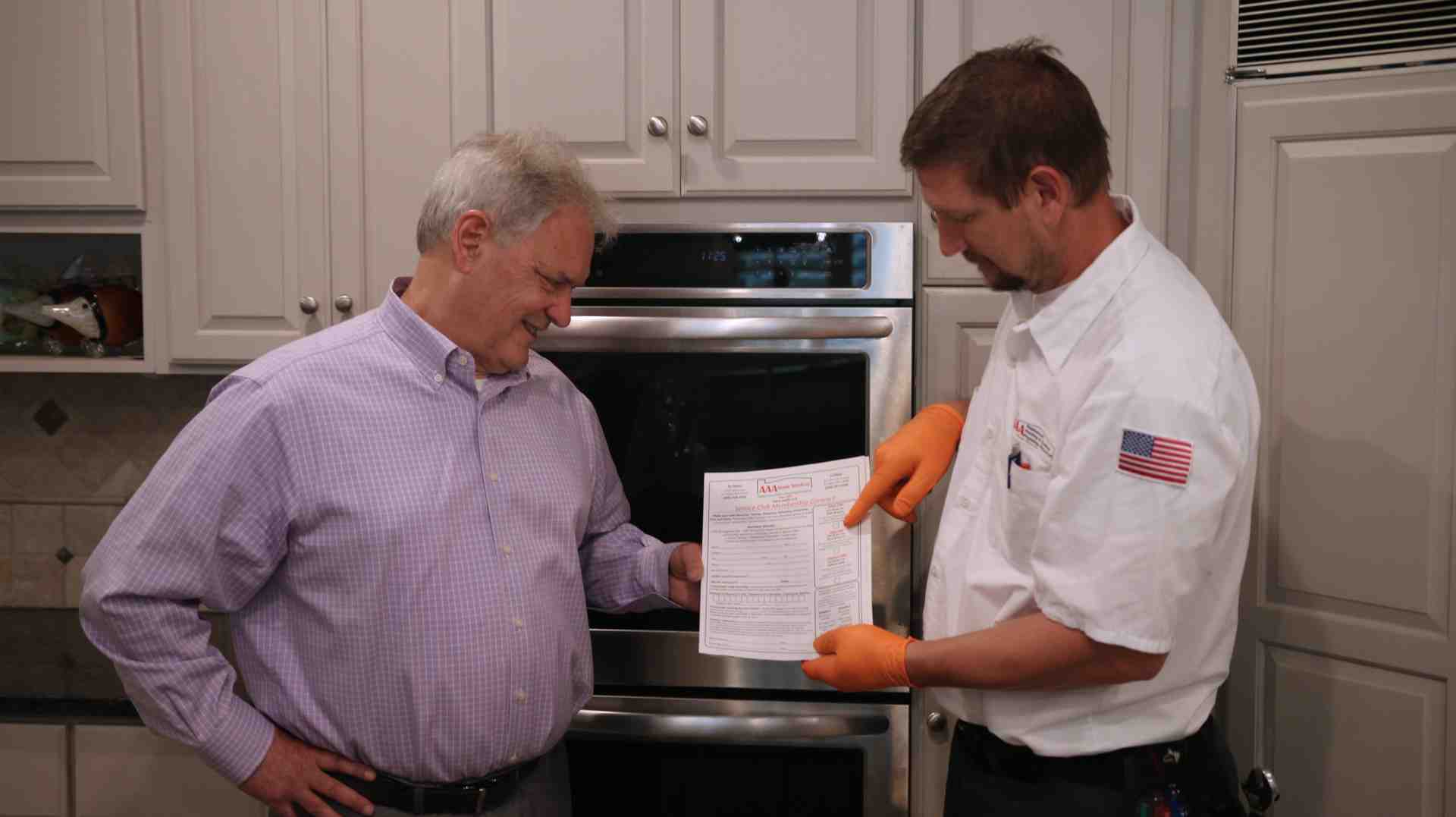
Regular HVAC maintenance from AAA Home Services ensures your system operates efficiently and effectively. Our technicians can identify potential indoor air quality issues during routine visits, often catching problems before they impact your family’s health or comfort. More info about Indoor Air Quality Service.
While changing filters is something most homeowners can handle, addressing more complex indoor air quality issues requires professional expertise and equipment. Our trained technicians bring specialized knowledge and tools to diagnose and solve even the most challenging air inside problems, helping families throughout St. Louis breathe easier every day.
The Road Ahead: Future Science & Community Action
The science of indoor air quality is evolving at a breathtaking pace, with innovations that promise to transform how St. Louis homeowners understand and manage the air inside their homes.
I’ve watched with excitement as DIY sensors and citizen science initiatives have begun democratizing air quality monitoring. In communities across Missouri, high-school students are developing their own radon testing kits, while neighborhood groups create affordable portable sensors for community-based exposure tracking. These grassroots efforts aren’t just collecting valuable data—they’re starting conversations about indoor air that simply weren’t happening before.
One technology I’m particularly enthusiastic about is far-UVC light. Unlike conventional UV light which can harm skin and eyes, far-UVC can safely inactivate airborne pathogens without harmful side effects. Imagine future homes where your ceiling lights quietly disinfect the air while illuminating your living room—technology that’s moving from science fiction to reality.
The building industry continues to evolve its standards too. ASHRAE 62.2, which establishes minimum ventilation requirements for homes, regularly updates as our understanding of indoor air improves. For homeowners in Chesterfield or Creve Coeur planning renovations, these evolving standards provide a roadmap for healthier indoor environments.
Indoor air equity has emerged as a critical focus area in recent years. We’ve seen how vulnerable populations—including elderly residents in North County, families in older housing stock, and lower-income households—often face disproportionately poor indoor air quality with fewer resources to address it. Community programs providing education and resources for improving indoor air are helping bridge this gap, but much work remains.
The integration of smart-home technology with air quality management represents perhaps the most exciting frontier for everyday homeowners. Modern IoT systems can now connect your indoor air monitors directly to your HVAC system, air purifiers, and ventilation fans. These systems adjust automatically based on real-time conditions, optimizing both air quality and energy efficiency. When a cooking session spikes your particulate levels, your ventilation automatically increases—no manual intervention required.
At AAA Home Services, we’re committed to staying at the forefront of these developments. Our technicians regularly update their training to incorporate emerging technologies and best practices. We believe that every family throughout St. Louis, St. Charles, and Warren County deserves access to clean air inside their homes, and we’re proud to help make that possible.
As we head into winter months, ensuring your home’s air stays clean becomes even more important. For practical advice on maintaining healthy indoor air during the heating season, check out our guide to Ensure Cleaner Air This Winter. And for those interested in the scientific frontiers of indoor air quality management, the latest research on emerging IAQ trends provides fascinating insights into what the future might hold.
Frequently Asked Questions about the Air Inside Your Home
Why is indoor air often worse than outdoor air?
Have you ever wondered why the air inside your home might be making you feel less than your best? There’s actually some science behind this common issue.
Modern homes are built like cozy fortresses of energy efficiency—which is great for your utility bills but not always for your lungs. These tightly sealed environments trap pollutants inside with nowhere to go. Think about it: from your morning toast to your evening shower, you’re constantly adding particles and moisture to your indoor environment.
Meanwhile, outdoor air has nature’s cleaning crew working around the clock. Rain washes away particulates, wind disperses pollutants, and sunlight breaks down certain chemicals. Inside your home, these natural air purifiers simply don’t exist, allowing contaminants to build up over time.
Here in St. Louis, our seasonal extremes make matters worse. During our sweltering summers, homes stay sealed tight with air conditioners running non-stop, recycling the same air inside for months. When winter arrives, our heating systems not only circulate dust throughout our homes but also dry out the air, creating ideal conditions for viruses and irritating our respiratory systems.
How can I tell if my home’s air is unhealthy?
Your body is often the first to notice when something’s not right with your air inside. If you find yourself feeling better at work than at home, your house might be trying to tell you something.
Pay attention to those persistent symptoms that mysteriously improve when you leave home—headaches that disappear during your workday, a cough that calms down during your weekend getaway, or allergy symptoms that ease up when you’re visiting friends. These patterns aren’t coincidental; they’re valuable clues.
Visual signs can also reveal air quality issues. Excessive dust gathering on surfaces shortly after cleaning, black spots that might indicate mold growth, or persistent condensation on windows all suggest that your air inside needs attention.
Unusual odors are another telltale sign. That musty smell when you walk in the door, chemical odors that linger after cleaning, or a generally stale atmosphere often indicate poor air circulation and pollutant buildup.
For a definitive assessment, our technicians at AAA Home Services can perform comprehensive testing throughout your home, identifying specific pollutants and their sources. This professional evaluation takes the guesswork out of improving your indoor environment.
What’s the quickest upgrade for cleaner air inside?
When clients ask me for the fastest way to breathe easier at home, my answer is almost always the same: upgrade your filter. It’s the indoor air quality equivalent of changing your oil—simple but incredibly effective.
Those standard fiberglass filters that come with many systems are primarily designed to protect your equipment, not your lungs. Upgrading to a higher MERV-rated filter (MERV 11-13 is ideal for most homes) can dramatically reduce the particles floating around your living space. This single change can help capture dust, pollen, mold spores, and even some bacteria before they circulate through your home.
For those with specific health concerns like allergies or asthma, adding a portable HEPA purifier to bedrooms can provide an additional layer of protection where you spend most of your time. These units can remove nearly all airborne particles down to microscopic sizes, creating a sanctuary for sensitive lungs.
For truly comprehensive protection, we often recommend whole-home air purification systems that integrate with your existing HVAC setup. While these require professional installation, they work silently in the background, providing consistent protection throughout every room in your home.
Remember though, better filtration is just one piece of the puzzle. The most effective approach combines proper filtration with smart source control (eliminating pollutants before they spread), adequate ventilation, and appropriate humidity management. Our technicians can help you develop a complete strategy custom to your home’s specific needs and your family’s health concerns.
Conclusion
The air inside our homes silently shapes our daily lives in ways most of us rarely consider. Throughout this journey exploring indoor air quality, we’ve uncovered how the invisible environment within our walls directly impacts not just our physical health, but our comfort, energy levels, and even our ability to think clearly.
From those tiny nanoparticles floating off your scented candles to the accumulation of cooking byproducts in your kitchen, the challenges to maintaining healthy indoor air are ever-present—especially in our modern, energy-efficient homes that seal these pollutants inside with us.
At AAA Home Services, we’ve been walking into St. Louis area homes for over five decades, helping families breathe easier. What we’ve learned from thousands of service calls is eye-opening: nearly every home has at least some indoor air quality issues that can be improved with the right approach. Sometimes it’s as simple as proper filter maintenance; other times, more comprehensive solutions make a dramatic difference.
Whether you’re dealing with seasonal allergies that seem worse at home, a child with asthma, or simply want to ensure your family enjoys the cleanest possible environment, taking action now makes sense. Our experienced technicians can assess your specific situation and recommend targeted solutions that work with your existing HVAC system—from basic filtration upgrades to advanced whole-home purification.
Don’t wait until you’re experiencing symptoms to address your air inside. Many of the most harmful pollutants have no odor and cause no immediate symptoms. By the time you notice problems, you may have been breathing compromised air for months or years.
For more information about our comprehensive indoor air quality services or to schedule an assessment with one of our friendly technicians, visit our Indoor Air Quality Service page or give us a call. With over 8,000 Google reviews and generations of experience serving the St. Louis community, you can trust that AAA Home Services will provide honest recommendations and effective solutions—never upselling you on equipment you don’t need.
The air inside your home should support your family’s health and comfort. Let us help you make sure it does.


