



The Invisible Element of Home Health: Air Quality in House
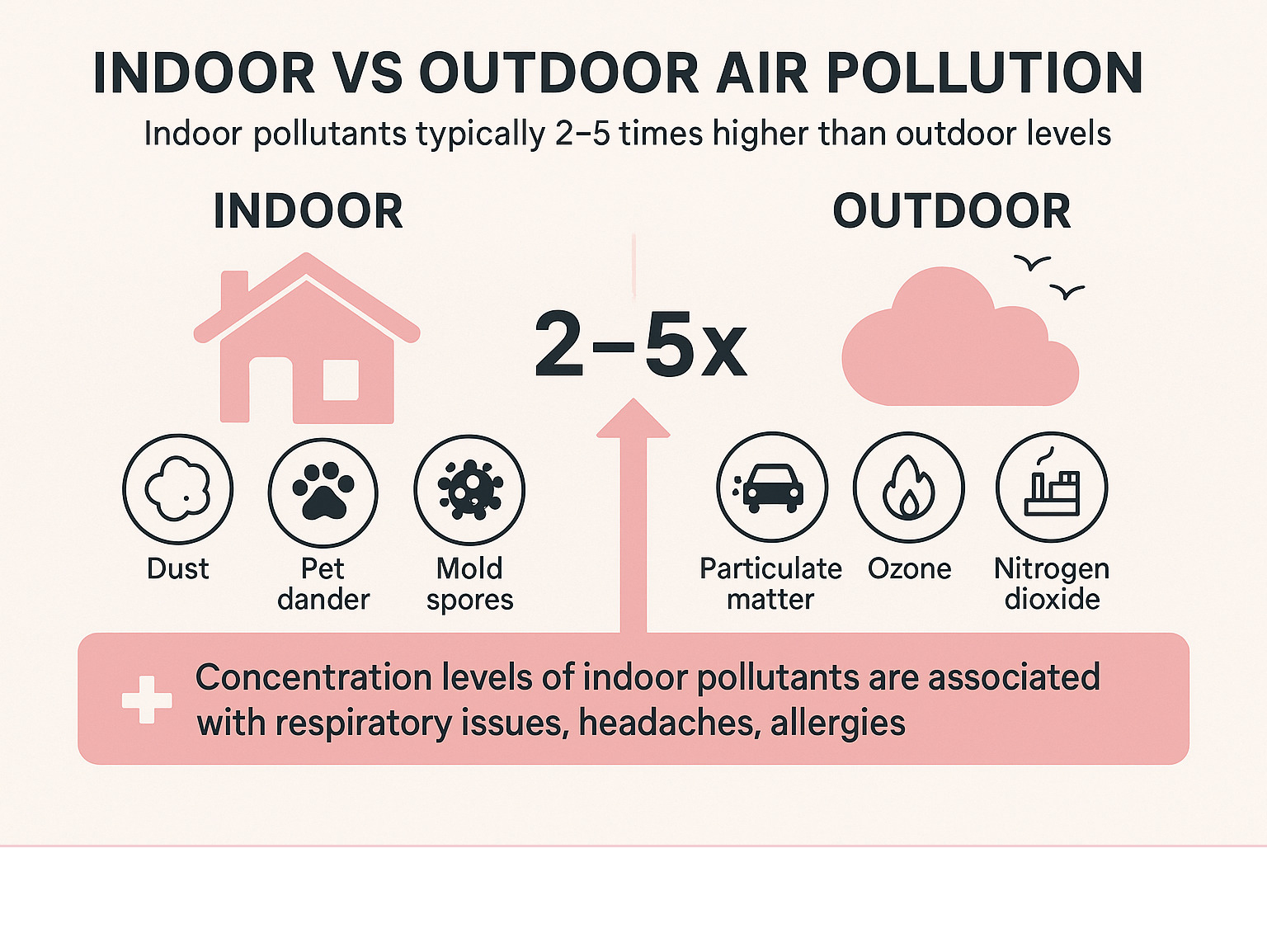
Air quality in house refers to the condition of the air within your home, which directly impacts your health and comfort. Most homes have air that is 2-5 times more polluted than outdoor air, with common contaminants including dust, pet dander, mold spores, VOCs from cleaning products, and combustion byproducts.
Quick Guide to Understanding Indoor Air Quality:
- Sources of pollution: Cooking, cleaning products, pets, building materials, humidity
- Health effects: Respiratory issues, headaches, allergies, fatigue
- Warning signs: Musty odors, excessive dust, worsening allergies indoors
- Key measurements: CO₂ < 1,000 ppm, humidity 30-50%, radon < 4 pCi/L
We often think of air pollution as an outdoor problem, but the reality hits closer to home. With Americans spending approximately 90% of their time indoors, the quality of the air we breathe within our walls matters tremendously. The EPA estimates that indoor air can be 2 to 5 times more polluted than outdoor air—even in major cities. In some cases, these levels can exceed 100 times that of outdoor air.
Poor indoor air quality isn’t just uncomfortable—it can be dangerous. Indoor air pollutants contribute to respiratory issues, allergies, headaches, and even more serious conditions like heart disease. The World Health Organization attributes millions of deaths annually to indoor air pollution worldwide.
What makes indoor air unhealthy? Common culprits include:
- Combustion byproducts from cooking and heating
- Volatile organic compounds (VOCs) from cleaning products and furniture
- Biological pollutants like mold, dust mites, and pet dander
- Building materials that off-gas chemicals
- Radon seeping in from the ground
- Excessive humidity promoting mold growth
I’m Dan W, an experienced manager of home repair services who has seen how poor air quality in house environments affects families’ health and comfort, especially when working with HVAC systems and ventilation solutions that make dramatic improvements to indoor environments.
Air Quality in House: What You Need to Know
When we talk about air quality in house environments, we’re referring to something that affects every breath you take while at home. Indoor Air Quality (IAQ) directly impacts your health, comfort, and even your long-term wellbeing—yet it remains largely invisible until problems arise.
Think about it: you can’t see most airborne pollutants, but they’re there, silently accumulating in the spaces where you eat, sleep, and spend time with loved ones. What’s particularly concerning is that the EPA has found indoor air is typically 2-5 times more polluted than outdoor air—even in urban areas. In some cases, these levels can spike to 100 times higher than outside!
Poor air quality in house settings doesn’t just make your home feel stuffy or uncomfortable. It can trigger immediate health responses like irritated eyes, scratchy throats, nagging headaches, and unexplained fatigue. These symptoms often masquerade as common colds or allergies, making their true source easy to miss. Over time, exposure to indoor pollutants can contribute to more serious conditions including respiratory diseases, cardiovascular problems, and in some cases, cancer.
The major indoor air villains include:
Radon – This naturally occurring radioactive gas seeps into homes through foundation cracks and is the second leading cause of lung cancer, claiming around 21,000 American lives annually.
Volatile Organic Compounds (VOCs) – These chemicals off-gas from countless household products including paints, cleaning supplies, and new furniture. Beyond the headaches and irritation they cause, VOCs can damage vital organs like your liver and kidneys with long-term exposure.
Biological Contaminants – From mold spores and bacteria to pet dander and dust mites, these tiny invaders can trigger allergic reactions and asthma attacks, especially in children and sensitive individuals.
Combustion Gases – Carbon monoxide and nitrogen dioxide released from improperly vented appliances can cause symptoms ranging from dizziness to impaired coordination—and in severe cases, can be life-threatening.
Indoor Air Quality vs Outdoor Air Quality
There’s a common misconception that stepping inside protects us from air pollution, but the reality is more complicated. Your home isn’t just affected by outdoor pollution—it has its own pollution ecosystem.
The relationship between indoor and outdoor air isn’t straightforward. Scientific research on indoor pollution confirms that indoor pollutant concentrations can reach staggering levels, up to 100 times higher than outdoors, regardless of whether you live in a rural paradise or an industrial zone.
Several factors influence this indoor-outdoor relationship. First, there’s infiltration, where outdoor pollutants sneak in through windows, doors, and even tiny cracks in your home’s structure. Then there’s ventilation rates—modern energy-efficient homes are wonderfully airtight for saving on heating and cooling costs, but without proper ventilation, they essentially become pollution traps.
What makes indoor air unique is that so many pollutants originate from inside activities—cooking dinner, cleaning bathrooms, or even just bringing home new furniture. Even weather impacts play a role, as temperature fluctuations and humidity levels affect how pollutants move and concentrate within your home.
While we’ve made great strides in addressing outdoor air quality through regulations and technology, indoor air has received comparatively little attention despite its profound impact on our health.
Key Signs Your Home Air Is Unhealthy
Your body often sends signals when something’s wrong with your air quality in house environment. Here are the warning signs to watch for:
Musty or stale odors that linger despite cleaning often indicate mold growth or inadequate air circulation. If your home smells “off” even after opening windows, your air quality may be compromised.
Excessive humidity above 50% creates the perfect breeding ground for mold and dust mites. If you notice condensation on windows or a clammy feeling in your home, your humidity levels are likely too high.
Chronic respiratory symptoms like coughing, wheezing, or congestion that seem to worsen when you’re at home suggest indoor air triggers may be at work. Pay particular attention if these symptoms improve when you leave your house.
Unexplained headaches that develop while you’re home could be your body’s response to VOCs or even carbon monoxide. Don’t ignore this potential warning sign, especially if headaches become a regular occurrence.
Symptom relief upon leaving your house is perhaps the most telling sign of all. If you consistently feel better at work or while running errands than you do at home, your house may be harboring air quality issues.
Visible mold spots, even small ones in bathrooms or basements, indicate moisture problems that likely extend beyond what you can see. Where there’s visible mold, there are almost certainly airborne spores affecting your air quality.
If several of these signs sound familiar, it may be time to take a closer look at your home’s air. Here at AAA Home Services, we help homeowners throughout St. Louis, St. Charles, and Warren County breathe easier by identifying and addressing indoor air quality concerns. Our experienced technicians can help you understand what’s happening in your home and recommend appropriate solutions for healthier indoor air.
Sources That Degrade Air Quality in House
Ever wonder why you might be sneezing more indoors than outside? The culprits degrading your air quality in house environments are often hiding in plain sight. Understanding these sources is your first step toward creating a healthier home environment.
Cooking and Kitchen Activities
That delicious meal you’re preparing could be serving up more than just nutrition. High-temperature cooking, especially frying, releases a cocktail of particulate matter, nitrogen dioxide, and carbon monoxide into your air. Gas stoves are particularly problematic—they emit nitrogen dioxide and formaldehyde even when they’re turned off! Without proper ventilation, these invisible pollutants can build up to surprising levels in your kitchen and spread throughout your home.
Cleaning Products and Chemicals
Ironically, the products we use to “clean” our homes often dirty our air. Conventional cleaning products contain volatile organic compounds (VOCs) that evaporate at room temperature and linger long after you’ve finished cleaning. Your lemon-scented cleaner might smell nice, but those aerosol sprays, air fresheners, chlorine bleach, detergents, furniture polish, and carpet cleaners are all potential contributors to indoor air pollution.
Building Materials and Furnishings
Your home itself might be quietly releasing pollutants. Modern building materials and furnishings contain numerous chemicals that “off-gas” over time. That new furniture smell? It’s actually formaldehyde and other chemicals releasing from pressed-wood products. New carpets, fresh paint, insulation, and construction adhesives all contribute to the chemical soup in your indoor air.
Biological Sources
Not all pollution comes from chemicals—living organisms contribute significantly too. Pet dander, dust mites, cockroach particles, mold, mildew, and outdoor pollen that sneaks inside all affect how you breathe at home. These biological pollutants are particularly troublesome for allergy sufferers and those with respiratory conditions.
Environmental Factors
Your home doesn’t exist in isolation—external factors impact your indoor air too. Colorless, odorless radon gas can seep through foundation cracks, while asbestos might lurk in older home materials. If you have an attached garage, car exhaust can find its way into your living spaces. During wildfire season, smoke particles can infiltrate even well-sealed homes, and everyday outdoor pollution regularly makes its way inside through windows, doors, and ventilation systems.

Everyday Activities That Pollute
You might be surprised to learn how many routine activities impact your air quality in house environments without you even realizing it.
When you’re cooking dinner, particularly if you’re frying or using high heat, you’re generating particulate matter and nitrogen dioxide. Gas stoves are especially concerning—Stanford University research from 2022 found they can leak methane even when off, and cooking without proper ventilation can quickly raise indoor nitrogen dioxide to levels that would violate outdoor air quality standards. That’s why proper ventilation is so important while cooking.
Cleaning your home presents another air quality paradox. While you’re removing visible dirt, many cleaning products introduce invisible pollutants. That streak-free shine comes with a cost—conventional cleaning sprays release VOCs, disinfectants emit chlorine compounds, and furniture polish contains solvents that evaporate into your breathing space. Even vacuuming without a HEPA filter can make matters worse by resuspending dust and allergens into the air.
Those lovely scented products that make your home smell like a spring meadow? They’re significant contributors to indoor air pollution. Scented candles release both particulate matter and VOCs, plug-in air fresheners continuously emit synthetic chemicals, incense produces particulate matter similar to cigarette smoke, and aerosol sprays contain propellants and fragrances that linger in your air.
Weekend DIY projects can be particularly problematic for your indoor air. That fresh coat of paint releases VOCs for days or weeks afterward, sanding creates fine particles that hang in the air, and hobby supplies like glues and solvents emit harmful chemicals. Even your morning routine contributes—hairsprays, perfumes, powdered makeup, and nail products all release compounds that affect your air quality.
What makes these everyday pollutants especially concerning is their cumulative effect. While any single source might seem minor, the combined impact throughout your day can significantly degrade your home’s air quality.
Hidden Structural Contributors
Beyond the obvious culprits, your home’s structure and systems can silently impact your air quality in house environment in ways you might never suspect.
Modern homes are built to be energy-efficient, which typically means they’re sealed tight against outdoor air. While this design saves on energy bills, it can inadvertently trap pollutants inside. Insufficient fresh air exchange leads to buildup of carbon dioxide and other pollutants, blocked vents restrict airflow, improperly sized HVAC systems fail to move enough air, and sealed windows limit natural ventilation opportunities. The American Society of Heating, Refrigerating and Air-Conditioning Engineers recommends a minimum of 0.35 air changes per hour in homes—a standard many residences fail to meet.
How you heat your home significantly impacts your air quality too. Unvented gas space heaters release nitrogen dioxide, carbon monoxide, and water vapor directly into your living space. Malfunctioning furnaces can release deadly carbon monoxide, while wood-burning stoves and fireplaces produce particulate matter and various gases. Even properly installed chimneys can sometimes experience backdrafting, pulling combustion gases back into your home instead of venting them outside.
The very materials your home is built from might be silently polluting your air. Pressed-wood products like particleboard, plywood, and paneling contain formaldehyde-based adhesives that off-gas over time. Insulation materials may contain formaldehyde or other irritants, while older homes might harbor lead paint or asbestos insulation. Any damp building materials can become breeding grounds for mold.
Formaldehyde emissions from pressed-wood products deserve special attention. New furniture and cabinetry can emit significant levels of this irritant, with emissions gradually decreasing over time:
| Material Type | New Product Emission Rate | After 5 Years |
|---|---|---|
| Particleboard | High (0.2-0.4 ppm) | Moderate |
| MDF | Very High (0.3-0.5 ppm) | Moderate-High |
| Plywood | Moderate (0.1-0.3 ppm) | Low-Moderate |
| Solid Wood | Very Low (<0.01 ppm) | Very Low |
Moisture issues contribute significantly to poor air quality too. Damp basements promote mold growth, leaking roofs or plumbing create hidden moisture pockets, improperly vented bathrooms and kitchens trap humidity, and crawl spaces without vapor barriers allow ground moisture to enter your home.
Even your HVAC distribution system can harbor and spread pollutants. Dusty or contaminated ducts circulate particles throughout your home, leaky ducts can pull in pollutants from attics or crawl spaces, and improperly installed ductwork creates pressure imbalances that affect ventilation.
At AAA Home Services, our technicians are trained to identify these hidden contributors during home assessments. With over 50 years of experience serving the St. Louis area, we’ve seen how addressing these structural issues can dramatically improve indoor air quality and family health. Rather than trying to diagnose complex ventilation or ductwork problems yourself, our experienced professionals can quickly identify and resolve the root causes of poor indoor air quality.
Detecting & Monitoring Air Quality in House
Taking control of your home’s air starts with knowing what you’re breathing. Thanks to advances in technology, you don’t need to be an environmental scientist to understand what’s floating around in your living space.
Types of Air Quality Monitoring
The invisible nature of air pollution makes monitoring tools invaluable for homeowners concerned about their family’s health. Rather than guessing, these devices give you concrete data to work with.
Carbon dioxide monitors serve as excellent ventilation indicators. While CO₂ isn’t typically harmful at household levels, liftd readings often signal that other pollutants might be building up too. I’ve seen many homeowners surprised to find how quickly CO₂ levels rise in bedrooms overnight or during gatherings when windows are closed.
Particulate matter monitors track those tiny airborne particles that can cause big health problems. These devices focus on PM2.5—particles smaller than 2.5 microns—which are concerning because they can bypass your body’s natural defenses and penetrate deep into your lungs. During wildfire season here in St. Louis, these monitors become particularly valuable.
VOC monitors help detect the invisible gases emitted from everyday products like cleaners, paints, and new furniture. While they typically don’t identify specific compounds, they alert you when overall levels rise, giving you a chance to increase ventilation before headaches or irritation begin.
Radon test kits are essential since this odorless, colorless gas is the second leading cause of lung cancer. I always recommend long-term tests (90+ days) for the most accurate results, though short-term kits can provide a helpful snapshot if you’re in a hurry.
Humidity monitors (hygrometers) help you maintain that sweet spot between 30-50% relative humidity. Too dry, and you’ll face irritated sinuses and static electricity; too humid, and you’re creating a paradise for dust mites and mold.
Carbon monoxide detectors aren’t optional—they’re life-saving devices that alert you to dangerous levels of this odorless, colorless gas produced by fuel-burning appliances. Every home should have these installed near sleeping areas and on each level.
For comprehensive monitoring, the Haven Air Monitor offers an excellent all-in-one solution. This system continuously tracks temperature, humidity, CO₂, VOCs, PM2.5, and radon levels, sending real-time updates to your smartphone so you can spot problems before they affect your family’s health.
DIY Testing vs Professional Assessment
While DIY air quality testing gives you valuable insights, there are times when professional expertise makes all the difference.
Home testing options give you a good starting point. Short-term radon kits provide a snapshot of levels over a few days, though they might miss seasonal variations. Consumer-grade air monitors range from simple single-pollutant devices to more sophisticated systems that track multiple parameters. Even keeping a simple symptom journal—noting when and where health issues occur—can help identify patterns related to air quality in house problems.
However, there are clear situations when calling in professionals makes sense. If family members experience persistent symptoms that improve when they leave home, that’s a red flag worth investigating thoroughly. After water damage or flooding, professional mold assessment becomes crucial since DIY kits can miss hidden growth. Before major renovations, identifying hazards like asbestos or lead prevents dangerous exposure. High radon readings (4 pCi/L or higher) on DIY tests should always trigger professional follow-up. And during real estate transactions, professional testing provides documentation that both buyers and sellers can trust.
What sets professional assessments apart is their comprehensiveness. At AAA Home Services, our technicians don’t just bring advanced equipment—they bring decades of experience spotting the subtle signs that DIY testing might miss. We examine your entire home, use thermal imaging to identify hidden moisture issues, test pressure differentials to evaluate ventilation, and provide detailed analysis with specific recommendations custom to your home’s unique challenges.
Benchmark Numbers to Watch
Understanding what the numbers mean helps you interpret test results and know when to take action. Here are the key benchmarks every homeowner should know:
Carbon Dioxide (CO₂) should ideally stay between 400-1,000 parts per million (ppm). When levels exceed 1,000 ppm, it signals inadequate ventilation. Above 2,000 ppm, you might notice drowsiness, headaches, and difficulty concentrating—especially important if you work from home or have students doing homework.
Relative Humidity (RH) works best between 30-50%. When humidity drops below 30%, you’ll notice dry skin, irritated airways, and increased static electricity. Above 60%, you’re creating ideal conditions for dust mites and mold growth. In St. Louis summers, dehumidification often becomes essential for maintaining healthy indoor air.
Particulate Matter (PM2.5) should remain below 12 micrograms per cubic meter (µg/m³). Levels between 12-35 µg/m³ may affect sensitive individuals, while readings above 35 µg/m³ are unhealthy for everyone and require immediate action like improved filtration or source control.
Radon levels are safest below 2 picocuries per liter (pCi/L). Readings between 2-4 pCi/L warrant follow-up testing, while levels at or above 4 pCi/L call for professional mitigation. Since radon is the second leading cause of lung cancer, these numbers deserve serious attention.
Carbon Monoxide (CO) should register at 0 ppm—there’s no safe level of exposure. Readings of 9 ppm over 8 hours indicate a problem, while 35 ppm requires immediate ventilation and investigation. At 70+ ppm, evacuation becomes necessary while professionals address the source.
Volatile Organic Compounds (VOCs) should stay below 0.3 milligrams per cubic meter (mg/m³). Higher levels can cause headaches, irritation, and over time, more serious health effects.
Formaldehyde, a specific VOC found in many building materials, should remain below 0.1 ppm. Higher levels can trigger respiratory irritation, especially in children and sensitive adults.
Mold spores inside your home should be similar to or lower than outdoor levels. When indoor counts significantly exceed outdoor levels—or when visible growth appears—it’s time to address moisture sources and remove affected materials.
These benchmarks are guidelines—some family members, particularly those with asthma, allergies, or other respiratory conditions, may be sensitive to levels within the “acceptable” range. Monitoring these parameters regularly gives you the information you need to create a truly healthy home environment.
How to Improve Air Quality in House: 10 Proven Steps
Now that we understand what affects air quality in house environments and how to detect problems, let’s explore effective solutions. We’ve compiled 10 proven strategies to help you breathe easier at home.
1. Ventilate Like a Pro
Think of ventilation as your home’s breathing system—it’s absolutely essential for maintaining healthy air quality in house environments. When you ventilate properly, you’re not just removing stale air; you’re diluting indoor pollutants and bringing in fresher outdoor air that can make a world of difference for your family’s health.
Kitchen Ventilation
Your kitchen might be the heart of your home, but it’s also a major pollution hotspot. Those delicious cooking aromas come with less pleasant companions—particulate matter, nitrogen dioxide, and moisture that can linger for hours.
A proper range hood that vents to the outside (not just a recirculating model) is your first line of defense. Make it a habit to switch on your hood before you even turn on the stove, and let it run for about 15 minutes after you finish cooking. When you’re stir-frying or using high heat, crank that fan up to high speed—it might be a bit noisy, but your lungs will thank you!
Don’t forget that even the best range hood needs maintenance. Those filters can become clogged with grease and dust, dramatically reducing their effectiveness. A monthly cleaning with hot, soapy water keeps them working efficiently.
Bathroom Ventilation
Bathrooms create tremendous amounts of moisture—a single shower can release up to a pint of water into your air! This moisture doesn’t just fog up mirrors; it creates the perfect breeding ground for mold and dust mites.
Your bathroom fan needs to vent completely to the outside (not into an attic or wall cavity). Run it during every shower and for a full 30 minutes afterward to remove excess moisture. Those bathroom fan covers can collect surprising amounts of dust, so give them a regular wipe-down to maintain proper airflow.
For forgetful family members (we all have them!), humidity-sensing fans that turn on and off automatically can be a game-changer for maintaining proper moisture levels.
Whole-House Ventilation
Beyond these spot ventilation strategies, your entire home needs a consistent supply of fresh air. Here’s how to achieve it:
The simplest approach is natural ventilation—opening windows on opposite sides of your home to create refreshing cross-breezes. This works wonderfully during mild weather when outdoor air quality is good, giving your home a complete air change in just minutes.
For year-round ventilation regardless of weather, Energy Recovery Ventilators (ERVs) and Heat Recovery Ventilators (HRVs) offer remarkable efficiency. These systems bring in fresh air while recovering energy from the air you’re exhausting. HRVs transfer heat between incoming and outgoing air, while ERVs transfer both heat and moisture. They’re particularly valuable in St. Louis’s hot summers and cold winters, allowing you to ventilate without the energy penalties.
Balanced ventilation systems use separate fans for supply and exhaust, creating equilibrium that prevents pressure imbalances that could draw in radon or other unwanted pollutants from crawl spaces or attached garages.
The Centers for Disease Control and Prevention (CDC) confirms that proper ventilation significantly reduces airborne contaminants, including viruses. Their research shows that increasing fresh air exchange can dramatically reduce the concentration of infectious particles indoors—something we’ve all become more aware of in recent years.
At AAA Home Services, we’ve been helping St. Louis area families breathe easier for over 50 years. Our experienced technicians can assess your home’s specific ventilation needs and recommend appropriate solutions that work with your existing systems. Whether you need a new bathroom fan installation, a kitchen hood upgrade, or a whole-house ventilation system, we can help you breathe easier at home.
2. Upgrade & Replace Filters Regularly
Your HVAC system’s air filter serves as your home’s first line of defense against airborne particles. When it comes to improving air quality in house environments, few strategies offer as much bang for your buck as simply maintaining clean, effective filters.
Think of your filter as the unsung hero of your home’s air quality system. It works silently behind the scenes, trapping particles that would otherwise circulate throughout your living spaces and into your lungs. But not all filters are created equal, and knowing which one to choose can make a world of difference.
Filters are rated using the MERV (Minimum Efficiency Reporting Value) scale, which ranges from 1 to 20. For most homes, filters in the MERV 8-13 range hit the sweet spot – capturing most harmful particles without restricting airflow too much. MERV 8 filters catch larger particles like dust mites and pet dander, while MERV 13 filters can trap bacteria and virus carriers. Going above MERV 13 in residential settings can sometimes restrict airflow unless your system is specifically designed for high-efficiency filtration.
Even the best filter becomes practically useless once it’s clogged with debris. That’s why regular replacement is crucial. For standard 1-inch filters, plan to replace every 30-90 days. If you’ve upgraded to pleated 4-inch filters, you might get 3-6 months of effective filtration. Several factors might require more frequent changes – having pets, family members with allergies, recent construction, or high outdoor pollution levels all call for more vigilant filter maintenance.
Don’t forget about the other important filters around your home. Your vacuum cleaner works best with a clean HEPA filter, range hood filters need cleaning or replacement every 3-6 months, and portable air purifiers require regular filter changes according to manufacturer guidelines. Even your dryer vent, while not technically a filter, needs regular cleaning to maintain proper airflow and prevent fire hazards.
At AAA Home Services, we’ve seen how proper filtration transforms indoor environments for families throughout St. Louis. Our technicians can help you select the ideal filters for your specific system and set up a regular maintenance schedule. During our routine HVAC maintenance visits, we check and replace filters as needed, ensuring your system runs efficiently while providing the cleanest possible air.
Want to learn more about how proper filtration can improve your home’s air? Check out our detailed guide on Fresher Air with New Filters. With over 50 years of experience serving the St. Louis area, we’ve helped thousands of homeowners breathe easier through proper filter maintenance and replacement.
3. Use Certified Air-Cleaning Devices
When basic ventilation and regular filter changes aren’t enough to achieve the air quality in house that your family deserves, dedicated air purification devices can make a remarkable difference. These specialized systems are particularly valuable if someone in your home suffers from allergies, asthma, or other respiratory conditions.
Types of Air Purifiers
The world of air purification offers several effective technologies, each with its own unique strengths. HEPA air purifiers remain the gold standard for particle removal, capturing an impressive 99.97% of particles as small as 0.3 microns—including dust, pollen, and pet dander. These workhorses produce no harmful byproducts and are the go-to choice for allergy sufferers.
For those battling odors and gaseous pollutants, activated carbon filters excel at adsorbing cooking smells, tobacco residue, and volatile organic compounds. They work beautifully alongside HEPA filters, which can’t capture gases on their own. Remember though, carbon eventually becomes saturated and requires replacement.
Looking to tackle microorganisms? UV air purifiers use ultraviolet light to neutralize bacteria and viruses as air passes through the system. They’re most effective when air moves slowly through the UV field, giving the light time to work its magic.
For more advanced protection, photocatalytic oxidation (PCO) cleaners combine UV light with a catalyst to transform pollutants into harmless substances. These innovative systems handle VOCs and odors without requiring replacement filters, though you’ll want to choose CARB-certified models to avoid ozone concerns.
At the cutting edge of air purification technology, advanced oxidation systems create reactive hydroxyl radicals that seek out and neutralize a wide spectrum of contaminants. Unlike passive systems that only treat air passing through them, these proactive technologies work throughout your entire home.
The Air Scrubber Plus represents this advanced approach, using ActivePure® Technology to send purifying molecules throughout your living space. This system doesn’t just clean air—it actively reduces contaminants on surfaces too, providing comprehensive protection for your family.
Choosing the Right Air Purifier
Finding the perfect air purifier starts with understanding your specific needs. What bothers your family most? If it’s allergens, prioritize HEPA filtration. Struggling with cooking odors or chemical sensitivities? Look for robust carbon filtration.
Room size matters tremendously—a purifier with insufficient Clean Air Delivery Rate (CADR) for your space simply won’t perform effectively. For bedrooms and quiet spaces, noise levels at different fan speeds should factor into your decision.
Don’t forget to consider the long-term costs of ownership, including electricity usage and replacement filter expenses. And always look for respected certifications like AHAM Verified, Energy Star, and CARB approval to ensure you’re getting a quality product.
While standalone purifiers work well for single rooms, whole-house systems integrated with your HVAC offer the most comprehensive coverage. At AAA Home Services, we can help you select and professionally install the right air purification technology for your specific needs and budget. Our experienced technicians excel at integrating advanced systems with existing HVAC equipment to provide protection throughout your entire home.
For a deeper dive into how advanced air purification can transform your home environment, check out our article about AAA’s Air Scrubber Plus. This remarkable technology has helped countless families throughout St. Louis, St. Charles, and Warren County breathe easier and live healthier.
4. Keep Humidity in the Goldilocks Zone
Finding that perfect balance of moisture in your home’s air is a bit like Goldilocks and her porridge – not too wet, not too dry, but just right. When it comes to air quality in house environments, humidity plays a surprisingly important role in both your comfort and your health.
The EPA recommends keeping your indoor relative humidity between 30% and 50%. This sweet spot helps you avoid the problems that come with either extreme. When humidity drops below 30%, you might notice static electricity zapping you at every turn, skin feeling dry and itchy, and sinuses getting irritated. Even worse, research shows viruses actually survive longer and spread more easily in very dry air. On the flip side, when humidity creeps above 60%, you’re creating a paradise for dust mites, mold spores, and bacteria – none of which you want as houseguests!
Dealing with high humidity is common, especially during those sticky St. Louis summers. A quality dehumidifier can be your best friend here – whether it’s a portable unit for trouble spots like basements or a whole-house system that works with your existing HVAC. Just remember to empty collection tanks regularly or ensure proper drainage to prevent overflow (and the ironic situation of a water problem from your water-removing device).
Water leaks are humidity’s sneaky accomplices. Even small drips from faucets or pipes can pump gallons of moisture into your home over time. Those roof leaks? They’re not just damaging your ceiling – they’re turning your attic into a steam room. And don’t forget about proper drainage around your foundation. Your gutters, downspouts, and the grading of soil around your home all play important roles in keeping unwanted moisture at bay.
During those dry winter months, the pendulum swings the other way. Indoor heating systems can create desert-like conditions inside your home. Whole-house humidifiers integrate with your HVAC system to add just the right amount of moisture throughout your entire home. Unlike portable units that only affect one room, these systems provide consistent comfort everywhere.
Aprilaire humidifiers are particularly effective whole-house solutions. They connect directly to your existing HVAC system and automatically maintain optimal humidity levels with minimal maintenance. They’re smart enough to adjust based on outdoor temperatures, preventing window condensation while still providing the moisture your home needs.
Monitoring is key to staying in that humidity “Goldilocks zone.” Simple hygrometers in different areas of your home can help you spot trouble areas, and many smart thermostats now include humidity sensing. The goal is to be proactive rather than reactive – adjusting your humidity control systems before problems develop.
At AAA Home Services, we’ve been helping St. Louis area homeowners tackle humidity challenges for more than 50 years. Our experienced technicians can assess your specific situation and recommend the right solution, whether it’s a whole-house system or targeted approach for problem areas. We know the local climate patterns and how they affect homes throughout St. Louis, St. Charles, and Warren County.
For more information on how proper humidity control can transform your indoor environment, check out our Aprilaire Humidifiers page to see how these systems can make breathing easier for everyone in your home.
5. Control Combustion & Heating Sources
The way we heat our homes and cook our food can have a dramatic impact on our air quality in house. Combustion appliances might keep us warm and well-fed, but they’re also significant sources of indoor pollution if not properly managed.
When fuels burn in your home – whether it’s natural gas, propane, wood, or oil – they produce a cocktail of byproducts that you definitely don’t want to breathe. Carbon monoxide is perhaps the most notorious, a silent killer that gives no warning signs you can detect without special equipment. But there’s also nitrogen dioxide that irritates your lungs, microscopic particles that can trigger asthma attacks, and various volatile organic compounds that can cause both short and long-term health effects.
The biggest culprits in most homes are gas stoves and ovens, furnaces, fireplaces, water heaters, and space heaters. Even your car can be a problem if your garage is attached to your home, as exhaust fumes can seep through connecting walls and doors.
Safe Use of Combustion Appliances
You don’t necessarily need to eliminate all combustion appliances to maintain good air quality. Instead, focus on ensuring they’re properly vented and maintained. Direct-vent gas appliances are your best option since they pull in outside air for combustion and exhaust all byproducts directly outdoors, creating a sealed system that keeps pollution out of your living space.
Power-vented units use fans to force exhaust gases outdoors, which can be more effective than natural draft systems, especially in tightly-sealed modern homes. What you should avoid are unvented or “vent-free” gas appliances – despite their marketing, these release 100% of their combustion byproducts directly into your home.
Regular maintenance is absolutely crucial for safety. Your furnace should receive a professional tune-up annually before heating season begins. This isn’t just about efficiency – it’s about preventing carbon monoxide leaks that could endanger your family. When our technicians at AAA Home Services perform furnace maintenance, checking for proper combustion and venting is always a top priority.
If you have a fireplace or wood stove, annual chimney inspections and cleaning prevent dangerous creosote buildup that can lead to chimney fires or blocked venting. And always look for proper flame color in gas appliances – a healthy blue flame indicates complete combustion, while yellow flames suggest a problem that needs immediate attention.
Your daily habits matter too. Always use your range hood (vented to the outside) when cooking with gas. Never use your gas oven to heat your home – it’s dangerous and produces significant pollution. And follow the manufacturer’s guidelines for all fuel-burning appliances in your home.
Perhaps most importantly, install carbon monoxide alarms on every level of your home and outside each sleeping area. These devices save lives, but they need regular attention – test them monthly, replace batteries annually, and replace the entire unit every 5-7 years as their sensors degrade over time.
Alternative Heating Options
If you’re concerned about combustion pollutants or have family members with respiratory issues, you might consider alternative heating options that don’t involve burning fuel in your home.
Electric heat pumps have become increasingly popular and efficient in recent years. These systems work like air conditioners in reverse, extracting heat from outdoor air (even cold air) and moving it indoors. Air-source heat pumps work well in moderate climates like St. Louis, while ground-source (geothermal) systems offer exceptional efficiency in any climate by tapping into the stable underground temperature. The best part? No combustion means no combustion pollutants.
Electric resistance heating options like baseboard heaters, electric furnaces, and radiant floor systems are another possibility. While they typically cost more to operate than heat pumps, they produce zero direct indoor pollution.
For the environmentally conscious, solar heating systems can supplement other heating methods without creating any indoor pollution. These can be passive (designed into the home’s architecture) or active (using solar collectors and distribution systems).
At AAA Home Services, our certified technicians can help you evaluate your current combustion appliances for safety and efficiency. We can identify potential problems before they become dangerous and recommend appropriate solutions for your St. Louis area home. Whether you need your existing system serviced or are considering alternatives that might improve your indoor air quality, we have over 50 years of experience helping families breathe easier.
6. Choose Low-Emission Materials & Furnishings
Ever walked into a newly renovated room and noticed that distinctive “new” smell? That’s the scent of chemicals being released into your air, and while it might seem temporary, those emissions can affect your air quality in house for months or even years.
Many building materials and furnishings release volatile organic compounds (VOCs) through a process called off-gassing. These invisible chemicals can cause headaches, respiratory irritation, and other health issues, especially for sensitive individuals like children or those with asthma.
Understanding Off-Gassing
Off-gassing isn’t something you can see, but it’s happening all around your home. The process is typically most intense when products are new and gradually decreases over time – think of it like a sponge slowly releasing water. Common culprits in your home include new furniture (especially anything made with pressed wood), fresh paint, new carpeting, vinyl flooring, and even that new mattress smell.
The good news? You have plenty of healthier options that won’t compromise your home’s style or your budget.
Selecting Healthier Materials
When it’s time to update your home, these smarter choices can help you breathe easier:
For paints and finishes, look for products labeled low-VOC or zero-VOC. These have come a long way in recent years – today’s low-VOC paints offer excellent coverage and durability without the strong fumes. Water-based paints generally release fewer chemicals than oil-based alternatives. And remember to keep windows open during and after painting, even with low-VOC products.
When choosing flooring, solid hardwood with low-VOC finishes offers both beauty and better air quality. Ceramic tile, natural linoleum (not vinyl), and cork are also excellent low-emission options. If your heart is set on carpet, look for the Green Label Plus certification and ask about low-VOC adhesives for installation.
For furniture and cabinetry, solid wood pieces generally release fewer chemicals than those made with particleboard or medium-density fiberboard (MDF), which often contain formaldehyde-based adhesives. Consider fully-cured, factory-finished products where finishing occurs off-site, allowing most emissions to happen before the items enter your home. Antique or gently-used furniture is another smart choice – these pieces have already completed most of their off-gassing.
Your textiles and upholstery matter too. Natural fibers like cotton, wool, and linen typically contain fewer chemicals than synthetic alternatives. Look for OEKO-TEX Standard 100 certification, which limits harmful substances in fabrics. And think twice about stain-resistant treatments, which often contain additional chemicals that can impact your air.
EPA Guidelines for Reducing Exposure
The Environmental Protection Agency offers practical advice for minimizing your exposure to these emissions. Start with source control by choosing low-emission products from the beginning. Consider timing your renovations when you can spend several days away from home, allowing initial off-gassing to occur while the house is empty. Increase ventilation during and after installation of new materials, and be aware that higher temperatures and humidity can accelerate chemical releases.
Planning for Renovations
If you’re planning a home makeover, a little forethought goes a long way toward protecting your air quality. Research and specify low-emission materials before work begins. Consider sealing off construction areas from living spaces with plastic sheeting and using negative pressure ventilation (fans blowing outward) to prevent dust and VOCs from spreading throughout your home. After the work is complete, thorough cleaning with HEPA vacuums and increased ventilation for several weeks can significantly reduce lingering pollutants.
At AAA Home Services, we understand the connection between your home’s materials and your family’s health. Our experienced technicians can help you maintain proper ventilation during renovations and recommend solutions to address any air quality issues that arise from new materials in your St. Louis area home. We’ve seen how making smarter material choices can make a real difference in how you feel in your space.
7. Practice Smart Cleaning
Keeping your home clean is essential for healthy air quality in house, but many people don’t realize that how you clean can be just as important as how often. The products and methods you choose can either improve your air or introduce new pollutants. Let’s explore how to clean smarter, not just harder.
Cleaning Products and Air Quality
That fresh, clean smell we associate with a just-cleaned home? It might actually be a sign of chemicals lingering in your air. Many conventional cleaning products release volatile organic compounds (VOCs) that can irritate your lungs and contribute to indoor pollution.
Some of the biggest culprits include aerosol sprays that send tiny particles directly into your breathing space, ammonia-based cleaners that can trigger asthma symptoms, chlorine bleach that releases irritating fumes, and those wonderfully scented air fresheners that can contain dozens of undisclosed chemicals.
Healthier Cleaning Alternatives
You don’t need to sacrifice cleanliness for better air. Fragrance-free products offer the same cleaning power without the added scents that can trigger sensitivities. When shopping, look specifically for the words “fragrance-free” rather than “unscented,” which may still contain masking fragrances.
Simple DIY cleaners can be surprisingly effective for many household tasks. A solution of equal parts water and white vinegar works wonders on most surfaces, while baking soda makes a gentle scrubbing paste for tougher jobs. These ingredients clean effectively without leaving chemical residues behind.
Microfiber cloths have revolutionized cleaning by trapping dust and bacteria through their physical structure rather than chemical action. They can be used with just water for many cleaning tasks and can be washed and reused hundreds of times, making them economical as well as healthy.
For deeper cleaning, consider steam cleaning options. The high-temperature steam can sanitize surfaces without chemicals, making it ideal for families with allergies or chemical sensitivities.
Effective Dust Control
Dust isn’t just unsightly—it’s a complex mixture of skin cells, pet dander, dust mite waste, pollen, and even chemicals that have settled out of the air. Managing dust effectively is crucial for good indoor air quality.
When dusting, use damp cloths or microfiber to capture particles rather than sending them airborne. Work from top to bottom in a room, and always dust before vacuuming so that airborne particles can be captured by the vacuum.
Speaking of vacuuming, invest in a machine with a HEPA filter that can trap the tiniest particles rather than recirculating them. Move the vacuum slowly to allow it to extract embedded particles, and don’t forget to vacuum upholstered furniture, curtains, and mattresses where allergens love to hide.
You can also reduce your dusting workload by minimizing dust-collecting items in your home. Consider washable throw rugs instead of wall-to-wall carpet, reduce clutter on open shelves, and opt for window treatments that can be easily cleaned.
Managing Allergens and Biological Contaminants
For those with allergies or asthma, a few extra steps can make a significant difference in symptoms. Bedding care is particularly important since we spend about a third of our lives in bed. Wash sheets and pillowcases weekly in hot water (at least 130°F) to kill dust mites, and use allergen-proof covers on mattresses and pillows.
If you have pets, create pet-free zones (especially bedrooms), brush pets regularly outdoors to reduce shedding inside, and wash pet bedding frequently. These simple habits can dramatically reduce pet dander in your home.
Be mindful of mold prevention during your cleaning routine. Don’t leave surfaces wet after cleaning, regularly clean refrigerator drip pans and door seals where moisture collects, and address any water damage immediately before mold can take hold.
Finally, smart pest control practices can prevent cockroach and rodent allergens, which are powerful asthma triggers. Store food in sealed containers, fix leaky plumbing promptly, seal cracks and entry points, and use traps rather than chemical pesticides when possible.
At AAA Home Services, we understand that maintaining good air quality in house environments requires a holistic approach. While these smart cleaning practices are essential, they work best alongside proper HVAC maintenance and ventilation. Our experienced technicians can ensure your home’s systems support your efforts to maintain a clean, healthy indoor environment throughout the St. Louis area.
8. Tackle Mold & Moisture Fast
There’s nothing that impacts your air quality in house quite like mold. It’s not just unsightly—it’s a serious health concern that can trigger allergies, asthma attacks, and other respiratory problems for your family. The secret to winning the battle against mold isn’t complicated: control moisture, and you’ll stop mold before it starts.
Understanding Mold and Its Impact
Mold is essentially a moisture problem wearing a fungus disguise. These tiny organisms release spores that float through your air, potentially causing health issues when breathed in. The frustrating thing about mold is that it needs just three simple things to thrive: mold spores (which are everywhere), something to eat (virtually any organic material, even dust), and moisture—the only factor you can actually control in your home.
Identifying Moisture Sources
Before you can tackle mold effectively, you need to become a moisture detective in your own home. Start by checking the usual suspects:
Plumbing problems often hide in plain sight. Take a close look under sinks, around toilet bases, and near appliances like dishwashers and washing machines. Water stains, warping, or discoloration are telling you there’s a problem that needs addressing.
Roof and exterior leaks can be sneakier. After a good rain, head up to your attic with a flashlight and look for damp spots or water trails. Check your ceilings for water stains—they’re like moisture road maps leading you to potential problems.
Condensation issues are particularly common in bathrooms and kitchens. If your windows regularly fog up or you notice moisture beading on cold water pipes (especially in summer), you’ve got excess humidity that needs addressing.
High indoor humidity is mold’s best friend. Invest in an inexpensive hygrometer to measure humidity levels throughout your home. Any areas consistently reading above 60% are prime real estate for mold development.
Immediate Moisture Control Steps
When you find moisture problems, quick action is your best defense:
Fix leaks promptly—even small ones. That slowly dripping pipe under your sink might seem harmless, but it’s creating the perfect environment for mold to flourish. Roof leaks deserve the same urgency; what starts as a minor drip during heavy rain can lead to major mold colonies in your attic.
Dry wet areas quickly and thoroughly. If you’ve had any water intrusion, you have a 24-48 hour window before mold can take hold. Use fans and dehumidifiers to speed the drying process. For serious water damage, especially involving carpets or drywall, removal is often safer than trying to dry in place.
Improve bathroom ventilation to tackle one of the most common moisture sources in homes. Run your exhaust fan during showers and keep it running for 30 minutes afterward. This simple habit can dramatically reduce bathroom humidity. Taking an extra minute to squeegee shower walls after use prevents water from lingering on surfaces.
Control basement moisture with strategic approaches. Basements are naturally prone to dampness, so using a dehumidifier can make a big difference. Make sure your gutters and downspouts direct water away from your foundation—at least 5-6 feet is ideal. For persistent problems, professional waterproofing or a sump pump installation might be necessary.
Safe Mold Remediation
When you do find mold, handling it properly is crucial for your health and effective removal:
For small areas (less than 10 square feet), you might be able to handle the cleanup yourself with proper precautions. Always wear protective gear—an N110 mask at minimum, along with gloves and eye protection. Scrub the affected area with detergent and water, dry it completely, and dispose of all cleaning materials in sealed plastic bags.
For larger areas or recurring problems, professional help is usually the safest option. Professionals have the equipment and expertise to ensure the mold is completely removed and, more importantly, that the underlying moisture issue is properly addressed to prevent regrowth.
When it comes to affected materials, porous items like drywall, carpet, and ceiling tiles that have visible mold often need to be discarded rather than cleaned. Hard, non-porous surfaces like glass, metal, and hard plastics can usually be thoroughly cleaned and salvaged.
Don’t forget HVAC considerations when dealing with mold. If you find mold near vents or suspect it’s in your ductwork, turn off your system until it can be professionally assessed. Mold in your HVAC system can quickly spread spores throughout your entire home.
At AAA Home Services, we’ve seen how moisture problems can quickly escalate into serious air quality issues for families throughout St. Louis. Our experienced technicians can help identify hidden moisture sources and recommend effective solutions before mold takes hold. For homes already dealing with mold issues, we can guide you toward appropriate remediation strategies and implement long-term moisture control measures to keep your indoor air clean and healthy.
9. Regular Air Duct Maintenance
Your home’s air ducts are like the circulatory system of your house, quietly distributing conditioned air to every room. But over time, these passageways can collect dust, allergens, and other unwelcome hitchhikers that affect your air quality in house. Just like you wouldn’t want to breathe through a dusty straw, your home shouldn’t have to either!
Why Duct Maintenance Matters
Every time your HVAC system kicks on, it’s circulating air throughout your entire home—multiple times daily. If your ducts are harboring dust or other particles, you’re essentially getting a fresh delivery of these contaminants with each cycle.
Think about what might be lurking in those hidden passages: everyday dust and dirt, the pet dander from your beloved furry friends, seasonal pollen that sneaks indoors, and potentially even mold spores if moisture has found its way in. In some cases, you might even have evidence of unwanted “roommates” like insects or rodents who’ve left debris behind.
The EPA has a straightforward position on this: if you can see visible mold growth, substantial dust accumulation, or signs of pests in your ducts, cleaning them will likely improve your indoor air quality. It’s not just about comfort—it’s about health.
Signs Your Ducts Need Attention
Your home will usually give you hints when duct cleaning should move up your priority list. Dark lines around air registers or visible dust puffing out when the system turns on are clear visual cues. You might notice uneven airflow with some rooms feeling like they’re being shortchanged on heating or cooling.
Many homeowners first notice something’s amiss when they detect musty odors wafting through the house when the system first kicks on—that’s the accumulated dust and debris getting warmed up and circulated. If family members experience increased allergy symptoms that seem to coincide with the HVAC running, your ducts might be the culprit.
Does your home seem to get dusty almost immediately after cleaning? This unexplained dust buildup often points to duct issues. Recent home renovations are another red flag, as construction activities generate significant dust that inevitably finds its way into your ductwork. And if you’ve recently purchased a home, the unknown maintenance history makes a duct inspection a wise investment.
Professional Duct Cleaning Process
When you call in the pros for duct cleaning, you’re getting much more than someone with a vacuum. A thorough cleaning is a systematic process that starts with a careful inspection using specialized cameras to assess contamination and identify potential issues.
Before work begins, technicians will protect your furnishings by covering furniture and flooring. The cleaning itself involves creating negative pressure in the system using commercial-grade equipment—this ensures that dislodged contaminants flow into the collection equipment, not your living space.
Specialized tools like brushes, air whips, and compressed air devices agitate the debris clinging to duct surfaces, while powerful vacuum equipment collects these particles through HEPA filtration. The process includes cleaning all components like registers, grilles, and accessible HVAC parts.
In cases where mold or bacterial contamination is present, technicians may recommend sanitizing with EPA-approved products. The service concludes with a final inspection to verify both cleaning effectiveness and system integrity.
Maintaining Clean Ducts Between Cleanings
While professional cleaning is essential, you can help maintain cleaner ducts between services. Regular filter changes are your first line of defense—quality filters capture particles before they can enter your duct system. If you have leaky ducts, having them sealed prevents dust from unconditioned spaces from infiltrating.
Controlling humidity levels in your home (keeping them below 60%) prevents mold growth in ducts, while regularly vacuuming registers removes surface dust before it can be pulled deeper into the system. And always address water leaks promptly, especially those near ductwork, as moisture is mold’s best friend.
When to Schedule Professional Cleaning
The National Air Duct Cleaners Association suggests a cleaning every 3-5 years for typical homes, but certain situations call for more frequent attention. Households with pets, smokers, or residents with respiratory conditions benefit from more regular cleaning. After major renovations or water damage affecting ductwork, it’s wise to schedule a cleaning regardless of when your last one occurred. And if you’ve just moved into a previously owned home, a duct cleaning gives you a fresh start.
At AAA Home Services, we understand how important clean ducts are to your family’s comfort and health. Our professional duct cleaning service uses advanced equipment to thoroughly clean your entire system. Our certified technicians take the time to properly inspect, clean, and sanitize your ductwork, improving both airflow and reducing contaminants circulating throughout your St. Louis area home.
For more information about our comprehensive approach to duct cleaning, visit our Air Duct Cleaning page.
10. Test & Mitigate Radon
Radon is a colorless, odorless radioactive gas that silently seeps into homes across America. As the second leading cause of lung cancer in the United States, this invisible intruder claims an estimated 21,000 lives annually. Yet many homeowners remain unaware of the potential danger lurking beneath their foundations, affecting their air quality in house.
Understanding the Radon Risk
Radon forms naturally from uranium breakdown in soil, rock, and water surrounding your home. It finds its way inside through foundation cracks, construction joints, gaps around service pipes, wall cavities, and even through well water.
The EPA recommends taking action when indoor radon levels reach or exceed 4 picocuries per liter (pCi/L). For perspective, the average indoor level is about 1.3 pCi/L, while outdoor air typically contains around 0.4 pCi/L. What’s concerning is that even levels below the EPA action threshold carry some health risk—there’s no completely “safe” level of radon exposure.
Testing for Radon
Since you can’t see, smell, or taste radon, testing is your only defense. Fortunately, testing is straightforward and affordable:
Short-term tests take 2-90 days to complete and include charcoal canisters, alpha track detectors, and continuous monitors. These give you quick results but might not account for seasonal variations.
Long-term tests run for 90+ days and provide a more accurate annual average, as radon levels can fluctuate with seasons and weather patterns. Alpha track detectors are commonly used for these extended measurements.
When testing, place devices in the lowest lived-in level of your home and keep windows and exterior doors closed except for normal entry and exit. Follow all test kit instructions precisely—small deviations can affect accuracy. If your first test shows levels at or above 4 pCi/L, confirm with a second test. Even for levels between 2-4 pCi/L, consider retesting or proceeding with mitigation for peace of mind.
Radon Mitigation Techniques
Finding liftd radon doesn’t mean you need to move—effective solutions exist to reduce levels by 80-99%. The most common approaches include:
Sub-slab depressurization works like a vacuum beneath your foundation, drawing radon gas from the soil before it enters your home and venting it safely above the roofline. This highly effective method is the gold standard for most homes.
For houses with crawl spaces, sub-membrane depressurization involves covering soil with special plastic sheeting and installing a vent pipe and fan system to draw radon from under the membrane.
Basement pressurization takes a different approach by using a fan to blow air into the basement, creating positive pressure that prevents radon from entering through foundation cracks.
In smaller or well-sealed homes, heat recovery ventilation increases fresh air while exhausting indoor air, maintaining energy efficiency by recovering heat during the exchange.
Professional Mitigation Process
While DIY testing is straightforward, mitigation requires specialized knowledge and equipment. A certified radon professional will:
Begin with diagnostic testing to determine the most effective approach for your specific home structure and radon entry points.
Create a customized mitigation plan based on your home’s construction, radon levels, and other factors.
Complete the installation typically in just one day, minimizing disruption to your household.
Perform post-mitigation testing to verify the system’s effectiveness in reducing radon to safe levels.
Recommend ongoing monitoring solutions to ensure continued protection for your family.
Preventing Radon in New Construction
If you’re building a new home, incorporating radon-resistant features during construction costs a fraction of retrofitting later. These techniques include installing a gas-permeable layer beneath the slab, using plastic sheeting as a barrier, sealing and caulking foundation cracks, installing a vent pipe from below the home to the roof, and adding a junction box for easy fan installation if needed later.
At AAA Home Services, we understand that protecting your family from invisible threats is just as important as addressing visible ones. While we don’t perform radon mitigation ourselves, our experienced technicians can help you understand your radon risk and connect you with certified radon measurement and mitigation professionals in the St. Louis, St. Charles, and Warren County areas.
Taking this invisible threat seriously is an essential part of creating a truly healthy home environment. After all, the air you can’t see is just as important as the comfort you can feel.
Common Myths & Mistakes About Air Quality in House
When it comes to air quality in house environments, misconceptions abound. Let’s debunk some common myths and highlight frequent mistakes homeowners make when trying to improve their indoor air.
Myth #1: New homes have better air quality than old homes
Reality: Modern homes are built tighter for energy efficiency, which can actually trap pollutants inside. Without proper ventilation, new homes can have higher concentrations of VOCs from building materials, radon from the soil, and pollutants from everyday activities. Older homes often have more natural ventilation through cracks and gaps, which, while less energy-efficient, can dilute indoor pollutants.
Myth #2: Air fresheners improve air quality
Reality: Most commercial air fresheners don’t clean the air—they merely mask odors with chemicals that can actually worsen indoor air quality. Many contain phthalates, formaldehyde, and other VOCs that contribute to indoor pollution. Instead of improving air quality, they add potentially harmful chemicals to your environment.
Myth #3: Closing vents in unused rooms saves energy without consequences
Reality: Closing too many vents creates pressure imbalances in your HVAC system, which can reduce efficiency, damage components, and even create negative pressure that draws pollutants into your home from attics, crawl spaces, or attached garages. This practice can actually worsen your indoor air quality while potentially damaging your heating and cooling system.
Myth #4: HEPA filters remove all indoor air pollutants
Reality: While HEPA filters are excellent at removing particulate matter (capturing 99.97% of particles 0.3 microns or larger), they don’t capture gases, VOCs, or smaller particles. A comprehensive air quality strategy requires addressing multiple types of pollutants through various means, not just filtration.
Myth #5: You only need to worry about indoor air quality if you have allergies
Reality: Poor indoor air affects everyone, not just allergy sufferers. Exposure to indoor pollutants can cause headaches, fatigue, concentration problems, and long-term health issues including respiratory diseases, cardiovascular problems, and cancer. Everyone benefits from healthier indoor air.
Why Houseplants Alone Won’t Fix IAQ
One persistent myth deserves special attention: the idea that houseplants can purify your indoor air effectively.
This belief stems from a famous 1989 NASA study that found certain plants could remove formaldehyde and other VOCs from sealed chambers. However, the real-world application has significant limitations:
-
Scale Issues – The NASA study used small, sealed chambers. Research suggests you would need 10-1,000 plants per square meter of floor space to achieve similar air-cleaning results in a typical home.
-
Limited Pollutant Removal – Plants primarily remove certain VOCs but have minimal effect on particulate matter, which comprises a significant portion of indoor pollution.
-
Ventilation Outperforms Plants – Studies show that even modest ventilation rates are far more effective at removing indoor pollutants than plants.
-
Potential Downsides – Plants can introduce their own problems:
- Mold growth in soil, especially when overwatered
- Pollen from flowering plants
- Allergic reactions in sensitive individuals
While plants offer psychological benefits and may provide modest air quality improvements, they should be considered a supplement to, not a replacement for, proper ventilation, filtration, and source control.
Energy Efficiency vs Fresh Air Balance
Another common misconception is that energy efficiency and good indoor air quality are mutually exclusive goals. Many homeowners inadvertently sacrifice air quality in pursuit of lower energy bills.
The reality is that energy efficiency and healthy indoor air can coexist with proper planning:
-
Mechanical Ventilation – As homes become more airtight for energy efficiency, mechanical ventilation becomes essential:
- Heat Recovery Ventilators (HRVs) and Energy Recovery Ventilators (ERVs) provide fresh air while recapturing 70-80% of the energy that would otherwise be lost
- ASHRAE Standard 62.2 provides guidelines for minimum ventilation rates in residential buildings
-
Smart Filtration – Higher-efficiency filters can be used without energy penalties if:
- They’re properly sized for your system
- Filter area is increased (using deeper pleated filters)
- Regular replacement schedules are maintained
-
Zoned Systems – Rather than closing vents, properly designed zoned HVAC systems allow you to direct conditioning only where needed without creating pressure imbalances
-
Scheduled Ventilation – Using ventilation strategically when outdoor conditions are favorable (lower humidity, better air quality) can reduce energy impacts
At AAA Home Services, we understand the importance of balancing energy efficiency with healthy indoor air. Our experienced technicians can help you find solutions that achieve both goals in your St. Louis area home, ensuring comfort, health, and reasonable energy costs.
Frequently Asked Questions About Air Quality in House
How often should I change my HVAC filter?
This is one of the most common questions I hear from homeowners, and for good reason – your HVAC filter is your first line of defense against airborne pollutants. The simple answer is: it depends on your specific situation.
For standard 1-inch fiberglass filters, plan to replace them monthly. These basic filters catch larger particles but fill up quickly. If you’ve upgraded to pleated filters (1-2 inches thick), you can typically extend that to every 60-90 days. For those premium high-efficiency pleated filters (4-5 inches thick), you might get 6-12 months of effective filtration.
That said, your home’s unique circumstances matter tremendously. Do you have a golden retriever shedding throughout your home? You’ll need more frequent changes. Does someone in your family suffer from asthma or allergies? More frequent changes will help them breathe easier. Are you in the middle of a renovation or living near a construction site? That extra dust means your filter is working overtime.
I always tell homeowners to actually look at their filters regularly. If it appears dirty before the recommended time, go ahead and replace it early. A clogged filter not only fails to clean your air properly but also forces your system to work harder, potentially leading to breakdowns and higher energy bills.
Setting calendar reminders for filter changes has saved many of my customers from forgetting this simple but crucial maintenance task. And keep a small supply of filters on hand – you don’t want to find you need one on a Sunday evening when stores are closed!
Can an air purifier remove COVID-19 particles?
This question has been on many minds since 2020, and the answer is nuanced. Air purifiers can help reduce the risk of airborne virus transmission, including SARS-CoV-2, but they’re just one piece of a larger protection strategy.
True HEPA filters can capture 99.97% of particles as small as 0.3 microns. While the coronavirus itself is smaller (about 0.1 microns), it typically travels attached to larger respiratory droplets and aerosols that HEPA filters can effectively trap. Think of the virus like a tiny passenger on a much larger vehicle – catch the vehicle, and you catch the passenger too.
Some air purifiers offer additional technologies that may provide extra protection. UV-C light systems can inactivate viral particles, while photocatalytic oxidation systems create hydroxyl radicals that can break down organic pollutants, including some viruses.
For maximum effectiveness, proper sizing matters tremendously. A small desktop unit won’t adequately clean the air in your great room. Look for a purifier with a Clean Air Delivery Rate (CADR) appropriate for your space, place it where airflow won’t be obstructed, and run it at a setting high enough to process the room’s air multiple times per hour.
Air purifiers work best as part of a comprehensive approach. The CDC and EPA recommend combining purification with increased ventilation, following public health guidelines, and other appropriate measures for the most effective protection.
Do I need to test for radon if my neighbor’s levels are low?
Absolutely yes! I’ve seen this scenario play out many times during my years in home services – one home has minimal radon while the house next door has levels well above the EPA action threshold of 4 pCi/L.
Radon levels can vary dramatically between adjacent homes for several reasons. Underground uranium deposits that produce radon can be surprisingly localized. Your home’s specific construction details – foundation type, presence of cracks, sealing around pipes, and even the way air flows through your home – all influence how much radon accumulates inside.
Even lifestyle factors make a difference. How you ventilate your home, whether you use your basement as living space, and how your HVAC system creates pressure differences all affect radon accumulation.
Testing is remarkably affordable (typically $15-25 for a DIY kit) and provides valuable information about a serious health risk. Radon is the second leading cause of lung cancer, responsible for about 21,000 deaths annually in the U.S.
Here in the St. Louis region, approximately 20% of homes have liftd radon levels according to the Missouri Department of Health and Senior Services. That’s a significant number that makes testing an important step in protecting your family’s health.
At AAA Home Services, we’ve helped countless homeowners throughout St. Louis, St. Charles, and Warren County understand their indoor air quality challenges, including radon concerns. Don’t let your neighbor’s test results give you a false sense of security – the only way to know your home’s radon level is to test it.
Conclusion
Throughout this guide, we’ve explored the critical importance of air quality in house environments and how it directly impacts your family’s health and comfort. With Americans spending approximately 90% of their time indoors and indoor air often being 2-5 times more polluted than outdoor air, addressing indoor air quality should be a top priority for every homeowner.
The journey to cleaner indoor air isn’t complicated, but it does require awareness and consistent action. We’ve covered numerous strategies that work together to create a healthier home environment. Understanding what’s in your air is the first step—whether through DIY testing or professional assessment. From there, controlling pollution sources, from cleaning products to building materials, gives you the biggest impact for your effort.
Proper ventilation remains one of the most powerful tools in your air quality arsenal. Whether it’s using kitchen and bathroom fans consistently, opening windows when weather permits, or investing in whole-house ventilation systems, fresh air exchange is essential for diluting indoor pollutants.
Effective filtration through regularly changed HVAC filters and possibly supplemental air purifiers provides another layer of protection. Paired with smart humidity management—keeping your home in that comfortable 30-50% range—you create an environment that’s not only more comfortable but also less hospitable to allergens like dust mites and mold.
Regular maintenance of your home’s systems isn’t just about efficiency—it’s about health. Clean ducts, properly functioning combustion appliances, and well-maintained HVAC equipment all contribute to cleaner indoor air. And don’t forget to test for invisible threats like radon, which affects many homes in our region.
At AAA Home Services, we’ve been helping families throughout St. Louis, St. Charles, and Warren County breathe easier for over 50 years. Our experienced technicians understand the unique air quality challenges in our region and can provide customized solutions for your specific needs.
We take pride in offering comprehensive indoor air quality services—from duct cleaning and advanced air purification systems to humidity control solutions and thorough HVAC maintenance. With our fair, honest pricing and highly rated service backed by over 8,000 Google reviews, you can trust us to help you create a healthier home environment.
For more information about our complete range of indoor air quality services or to schedule an appointment, visit our Indoor Air Quality Service page. We can often offer same-day or next-day service depending on availability.
Your home should be a sanctuary, not a source of health concerns. Let us help you transform your house into the clean-air haven your family deserves.


