


The Hidden Dangers Lurking in Your Home Air
Air quality inside your home is likely worse than you think. Most homeowners are surprised to learn that indoor air can be 2-5 times more polluted than outdoor air, even in urban areas. Since Americans spend approximately 90% of their time indoors, this has significant implications for your health and wellbeing.
Quick ways to improve indoor air quality:
- Open windows strategically (check outdoor air quality first)
- Use exhaust fans in kitchens and bathrooms
- Replace HVAC filters every 1-3 months
- Maintain humidity levels between 30-50%
- Vacuum with HEPA filters and dust with microfiber cloths
- Test for radon and carbon monoxide
Indoor air pollution comes from many sources you might not suspect: cooking fumes, cleaning products, pet dander, dust mites, mold spores, and off-gassing from furniture and building materials. Even activities like burning candles or using aerosol sprays can significantly degrade your home’s air quality.
“Indoor air can be more polluted than outdoor air even in industrial cities,” according to the EPA. This is especially concerning since poor indoor air quality has been linked to respiratory issues, headaches, fatigue, and even long-term health problems like heart disease and cancer.
The good news is that you don’t need to hold your breath – there are many effective strategies to improve air quality inside your home, from simple daily habits to advanced filtration systems.
I’m Dan W, with extensive experience managing home repair services and helping homeowners address air quality inside your home issues through proper HVAC maintenance and ventilation solutions. In this guide, I’ll walk you through practical steps to breathe easier starting today.

Why Air Quality Inside Your Home Matters
When we talk about pollution, most of us picture smoggy highways or factory smokestacks. But the truth? The air inside your own home likely deserves more attention than the air outside your window.
Think about it: your lungs process thousands of gallons of air each day. Since most of us spend around 90% of our time indoors, the quality of that air directly shapes both how you feel today and your health tomorrow. Air quality inside your home isn’t just about comfort—it’s about protecting your family’s wellbeing.
The invisible threats lurking in your home air are more common than you might think. Radon, a naturally occurring radioactive gas, seeps up through foundation cracks and becomes trapped inside, contributing to approximately 14,000 lung cancer deaths yearly. It’s the second leading cause of lung cancer after smoking, yet many homes have never been tested for it.
Those microscopic particles known as PM2.5 are small enough to bypass your body’s natural defenses, traveling deep into your lungs and even entering your bloodstream. Meanwhile, volatile organic compounds (VOCs) silently evaporate from everyday items like fresh paint, new furniture, and even cleaning products you might be using to make your home “healthier.”
Carbon monoxide presents perhaps the most immediate danger—this odorless, colorless gas can be fatal within hours at high concentrations. Common allergens like dust mites, pet dander, and mold spores might seem merely annoying, but they can trigger serious respiratory issues, especially in children and elderly family members.
Poor air quality inside your home doesn’t just make you sneeze. Research from the World Health Organization shows it can contribute to serious health conditions including:
- Worsened asthma and allergy symptoms
- Higher risk of respiratory infections
- Heart problems, including increased risk of heart attacks
- Reduced cognitive function and productivity
- Certain cancers, particularly from radon exposure
- Chronic irritation of eyes, nose, and throat
These risks are especially significant for vulnerable household members like children, pregnant women, elderly individuals, and anyone with existing respiratory or cardiovascular conditions.
The Surprising Stats Behind Poor Home Air
The numbers tell a startling story about what we’re breathing at home:
The EPA has found that indoor air is typically 2-5 times more polluted than outdoor air—even in urban areas with traffic and industry. In some cases, certain indoor pollutants can reach levels up to 100 times higher than outdoors. This becomes particularly concerning when you consider we spend approximately 90% of our lives inside buildings.
Beyond the 14,000 annual radon-related deaths, secondhand smoke claims around 3,000 non-smoking adults through lung cancer each year. For children, the impact is equally troubling—passive smoke exposure causes between 150,000 and 300,000 lower respiratory tract infections in infants and young children annually.
Even our efforts to maintain clean homes can backfire: about 75% of American households use at least one indoor pesticide product yearly, adding yet another layer of chemical exposure to our indoor environments.
These statistics aren’t meant to frighten you—they’re a wake-up call about why improving the air quality inside your home matters so much. The good news? Many effective solutions exist, from simple daily habits to advanced filtration systems that can dramatically improve what you’re breathing at home. And you don’t have to figure it all out alone—the experts at AAA Home Services have been helping St. Louis area families breathe easier for over 50 years.
How to Tell If You Have an Indoor Air Quality Problem
Identifying an indoor air quality problem isn’t always straightforward. Unlike outdoor pollution that might create visible smog, indoor air issues are often invisible. Here are signs that might indicate your home has air quality concerns:
Physical symptoms that may worsen when you’re at home:
- Frequent headaches or dizziness
- Irritation of eyes, nose, or throat
- Persistent coughing or sneezing
- Fatigue or lethargy
- Worsening asthma or allergy symptoms
- Respiratory infections that seem to recur
Home indicators:
- Musty or unusual odors
- Excessive dust accumulation
- Visible mold growth
- Condensation on windows or walls
- Stuffy or stale air
- Poor airflow between rooms
Not all indoor air pollutants produce odors. Carbon monoxide and radon, two of the most dangerous indoor air contaminants, are completely odorless. This is why relying on your senses alone isn’t sufficient.
One way to get more objective data is to use low-cost sensors or monitors. These devices can measure various aspects of air quality inside your home, including:
- Carbon dioxide (CO₂) levels, which can spike during gatherings or overnight in bedrooms with poor ventilation
- Particulate matter (PM2.5 and PM10)
- Volatile organic compounds (VOCs)
- Temperature and humidity
- Carbon monoxide (CO)
DIY test kits are also available for specific pollutants like radon, mold, and lead. These can provide valuable baseline information about your home’s air quality.
Simple Tests for Air Quality Inside Your Home
If you’re concerned about your indoor air quality, here are some simple tests you can perform:
Carbon Monoxide and Carbon Dioxide Monitors
Carbon monoxide (CO) detectors are essential safety devices that every home should have. They alert you to dangerous levels of this deadly gas. More advanced models can also track CO₂, which, while not immediately dangerous like CO, can cause drowsiness, headaches, and reduced cognitive function at liftd levels.
Radon Test Kits
Radon is the second leading cause of lung cancer after smoking. Since it’s odorless and invisible, testing is the only way to know if your home has liftd levels. Short-term test kits (2-7 days) provide a snapshot, while long-term kits (90+ days) give a more accurate picture of average radon levels.
Humidity Meter
Also called a hygrometer, this inexpensive device measures the moisture content in your air. Ideal indoor humidity is between 30-50%. Too high, and you risk mold growth; too low, and you may experience dry skin, irritated eyes, and respiratory issues.
Particle Counter
These devices measure the concentration of airborne particles in your home. While professional-grade equipment is expensive, consumer models can give you a general idea of particulate pollution levels.
Professional Diagnostics
For a comprehensive assessment of air quality inside your home, consider hiring a professional. Licensed indoor air quality specialists can:
- Conduct a thorough inspection of your home
- Test for specific pollutants using calibrated equipment
- Perform a blower door test to measure air leakage
- Assess your ventilation system’s effectiveness
- Provide detailed recommendations based on findings
At AAA Home Services, our technicians are trained to identify and address indoor air quality issues. We can perform comprehensive diagnostics to pinpoint exactly what’s affecting your home’s air and recommend the most effective solutions.
A professional assessment is particularly important if:
- You or family members have unexplained health symptoms
- You’ve recently renovated your home
- You live in an area with known radon issues
- Your home has had water damage or visible mold
- You’re planning to improve your home’s energy efficiency, which can sometimes reduce natural ventilation
Quick Wins: Steps You Can Take Today
Breathing cleaner air doesn’t require a complete home renovation or breaking the bank. Let’s explore some immediate actions you can take to improve air quality inside your home starting right now.
Opening your windows might seem obvious, but timing matters. Check your local air quality index first, especially during pollen season or if you live near busy roads. Early mornings or evenings typically offer the cleanest outdoor air. A gentle cross-breeze for even 15 minutes can work wonders for refreshing your indoor environment.
Your kitchen and bathroom fans aren’t just for cooking smells or shower steam. These workhorses actually pull contaminated air right out of your home before pollutants can spread. Make it a habit to flip that switch whenever you’re cooking, showering, or using cleaning products—your lungs will thank you!
Perhaps the simplest yet most impactful change you can make is replacing your HVAC filter regularly. This inexpensive maintenance task can dramatically improve air quality inside your home by capturing dust, allergens, and other particles before they circulate through your living spaces.
When it comes to dusting, technique matters. Swap those feather dusters (which just relocate dust) for microfiber cloths or slightly damp rags that actually capture particles. Pair this with HEPA vacuum cleaning once or twice weekly, and you’ll notice a significant difference in air quality. Those with allergies might benefit from more frequent vacuuming—every two to three days can be life-changing during high-symptom periods.
Moisture management is another crucial factor. Your home should maintain 30-50% humidity—not too dry, not too damp. This sweet spot discourages both dust mites and mold growth while keeping your respiratory system comfortable. Consider a simple humidity meter (hygrometer) to monitor levels in different rooms.
The products you use matter too. Those pine-fresh, lemon-scented cleaners might smell delightful, but many conventional cleaning products release harmful VOCs. Opt for fragrance-free, non-toxic alternatives whenever possible. When stronger chemicals are necessary, ensure proper ventilation during and after use.
Safety should never be overlooked. Install carbon monoxide detectors on every level of your home, especially near sleeping areas. These invisible guardians protect against one of the deadliest indoor air pollutants. Similarly, consider a radon test kit, particularly if you live in a high-risk area or have a basement.
Ventilation Hacks for Better Air Quality Inside Your Home
Think of ventilation as your home’s breathing system. Without proper airflow, pollutants become trapped and concentrated indoors. Create intentional cross-breezes by opening windows on opposite sides of your home. Even in winter, a brief 5-10 minute “air flush” can dramatically refresh your indoor environment without significantly affecting your heating bill.
Window fans can amplify natural ventilation. Position one fan facing outward in one window to push stale air outside, while opening another window elsewhere to draw fresh air in. This creates a controlled flow pattern that efficiently exchanges air throughout your home.
The CDC recommends at least five air exchanges per hour for healthy indoor environments. While measuring this precisely requires professional equipment, increasing natural ventilation whenever possible helps approach this target. If you notice condensation on windows or persistent stuffiness, your home likely needs more air movement.
Don’t forget about your HVAC system’s vents. Furniture, curtains, or decorative items can inadvertently block these crucial airflow pathways, reducing system efficiency and creating stagnant air pockets. A quick walk-through to ensure clear paths for supply and return vents can make a noticeable difference in air quality inside your home.
Housekeeping Habits That Matter
Some cleaning practices have outsized impacts on your indoor air. Washing bedding in hot water (at least 130°F) weekly kills dust mites and removes allergens that accumulate where you spend roughly a third of your life. For additional protection, consider dust-mite-proof covers for mattresses and pillows.
Your shoes are unwitting transporters of outdoor pollutants. They track in dirt, pesticides, lead dust, and countless other contaminants that can become airborne once inside. Creating a designated area for footwear near entrances prevents these pollutants from spreading throughout your living spaces.
Pet owners face unique air quality challenges. Regular outdoor brushing captures loose fur and dander before they can disperse indoors. Following your veterinarian’s recommended bathing schedule further reduces pet-related allergens without compromising your furry friend’s skin health.
Cleaning smarter means focusing your efforts where they matter most. Prioritize surfaces that collect the most dust and allergens: bedding, upholstered furniture, carpets, and horizontal surfaces. Working from top to bottom—starting with ceiling fans and light fixtures before moving to floors—prevents redistribution of dust you’ve already removed.
Finally, the connection between clutter and poor air quality inside your home is often overlooked. Extra items create additional surfaces for dust collection and make thorough cleaning nearly impossible. Minimizing unnecessary objects not only creates a more peaceful environment but also contributes to cleaner indoor air.
Looking for more ways to improve your home’s air quality? Learn more about Fresher Air with New Filters or explore our comprehensive Air Duct Cleaning services.
Long-Term Source Control & Maintenance Strategies
While quick fixes can provide immediate relief, addressing the root causes of poor air quality inside your home requires a more comprehensive approach. Here are long-term strategies to consider:
Seal Foundation Cracks
Radon, a radioactive gas that is the second leading cause of lung cancer, typically enters homes through foundation cracks. Sealing these entry points can significantly reduce radon levels. However, if testing reveals high radon levels (4 pCi/L or above), a professional radon mitigation system may be necessary.
Upgrade to Direct-Vent Appliances
When replacing fuel-burning appliances like water heaters, furnaces, or stoves, choose direct-vent models that exhaust combustion gases directly outside rather than into your home. This prevents carbon monoxide and other combustion byproducts from contaminating your indoor air.
Choose Solid-Wood Furnishings
New furniture, particularly those made with composite wood products, can off-gas formaldehyde and other volatile organic compounds (VOCs). When possible, opt for solid wood or used furniture, which has likely already released most of its VOCs.
Use Low-VOC Paints and Finishes
When renovating or redecorating, choose paints, varnishes, and adhesives labeled as low-VOC or zero-VOC to minimize chemical emissions.
Install Whole-House Air Purification
Consider professional-grade solutions like the Air Scrubber, which uses ActivePure® Technology to actively purify air and surfaces throughout your entire home. These systems can be integrated with your existing HVAC system for continuous air cleaning.
Maintain Proper Humidity
Installing whole-house humidifiers like those from Aprilaire can help maintain optimal humidity levels (30-50%) throughout your home, preventing issues related to both excessive dryness and moisture.
Schedule Regular HVAC Maintenance
Annual professional maintenance of your heating and cooling system ensures it operates efficiently and effectively filters your indoor air. At AAA Home Services, our technicians can clean components, check for proper operation, and recommend upgrades to improve air quality inside your home.
Combustion & Gas Safety
Combustion appliances like furnaces, water heaters, fireplaces, and gas stoves can be significant sources of indoor air pollution if not properly maintained:
Annual Furnace Tune-Up
Have your furnace inspected and tuned up annually by a qualified technician. This ensures proper combustion, reduces the risk of carbon monoxide leaks, and maintains efficiency.
Install and Maintain Carbon Monoxide Detectors
Place CO detectors on every level of your home and near sleeping areas. Replace batteries according to manufacturer recommendations and replace the entire unit every 5-7 years.
Consider Alternatives to Wood-Burning Stoves
Wood-burning stoves and fireplaces can release particulate matter and other pollutants into your home. If you use these heating sources, ensure they’re EPA-certified, properly vented, and regularly maintained. Better yet, consider cleaner alternatives like electric or direct-vent gas options.
Use Range Hoods When Cooking
Always use your kitchen’s exhaust fan when cooking, especially with gas stoves, which can release nitrogen dioxide, carbon monoxide, and particulate matter. Ensure the hood vents to the outside rather than recirculating air through a filter.
Moisture & Mold Mastery
Excess moisture is one of the most common causes of indoor air quality problems:
Use Dehumidifiers in Damp Areas
Basements, crawl spaces, and bathrooms often have higher humidity levels. Using dehumidifiers in these areas can prevent mold growth and reduce dust mite populations.
Fix Leaks Promptly
Address any water leaks within 24 hours to prevent mold growth. This includes visible leaks from plumbing as well as roof or window leaks.
Follow Proper Flood Clean-Up Protocol
If your home experiences flooding, proper clean-up is essential to prevent mold. Remove water-damaged materials that can’t be thoroughly dried, and use fans and dehumidifiers to dry out the area completely.
Monitor Bathroom Ventilation
Ensure bathroom fans are vented to the outside and run them during and for 30 minutes after showering to remove moisture.
Chemical & Particulate Controls
Reducing chemical and particulate pollutants requires both preventive measures and active filtration:
Implement a No-Indoor-Smoking Policy
Secondhand smoke contains over 7,000 chemicals, including about 70 known carcinogens. The only effective way to eliminate this health risk is to prohibit smoking inside your home.
Choose EPA Safer Choice Cleaning Products
Look for the EPA Safer Choice label when purchasing cleaning supplies. These products meet strict safety criteria while still being effective cleaners.
Upgrade to MERV-13+ Filters
When replacing your HVAC system’s air filter, choose one with a MERV rating of 13 or higher for better filtration of fine particles. However, check your system’s specifications first, as high-MERV filters can restrict airflow in some systems.
Store Chemicals Properly
Keep paints, solvents, pesticides, and other chemicals in a detached garage or shed when possible. If they must be stored indoors, ensure containers are tightly sealed and kept in well-ventilated areas.
Advanced Technology to Improve Air Quality
When simple solutions aren’t enough to transform the air quality inside your home, it might be time to explore advanced technologies that provide comprehensive protection. These modern systems offer powerful ways to clean, filter, and monitor your indoor environment.
Energy Recovery Ventilators (ERVs) and Heat Recovery Ventilators (HRVs) work like the lungs of your home, bringing in fresh outdoor air while expelling stale indoor air. The magic happens in the heat exchange core, where these systems capture valuable energy from the outgoing air stream. During winter, they recover heat; in summer, they transfer coolness—all while maintaining proper ventilation without wasting energy. Our team at AAA Home Services can assess your home’s needs and handle professional installation to ensure you get the right system.
Whole-House HEPA Filtration takes air cleaning to hospital-grade levels. While your standard HVAC filter might capture larger particles, true HEPA filtration removes an impressive 99.97% of particles as small as 0.3 microns—including fine dust, pollen, mold spores, and many bacteria. These systems typically work as a bypass on your existing HVAC system, treating air as it circulates throughout your entire home.
UV-C Air Purification harnesses the power of ultraviolet light to neutralize biological contaminants. These systems use UV-C wavelengths to disrupt the DNA of microorganisms like bacteria, viruses, and mold spores, rendering them unable to reproduce. Installed directly in your ductwork, UV-C purifiers treat air as it passes through your HVAC system, providing an extra layer of protection beyond filtration alone.
Smart Thermostats with IAQ Controls have evolved far beyond simple temperature adjustment. Today’s advanced models monitor humidity levels, track filter life, and can even integrate with air quality sensors to automatically adjust your ventilation system when pollutant levels rise. These smart systems take the guesswork out of maintaining healthy indoor air by responding to changing conditions in real time.

Whole-House Activated Carbon Filtration specifically targets gases, odors, and volatile organic compounds (VOCs) that standard particle filters miss. These systems use specially treated carbon with millions of microscopic pores that trap gas molecules through adsorption. For homes with concerns about cooking odors, chemical sensitivities, or proximity to industrial areas, activated carbon filtration provides relief from gaseous pollutants.
Air Purifiers & Scrubbers for Better Air Quality Inside Your Home
With so many options available, understanding the differences between air cleaning technologies helps you make the right choice for your home:
HEPA vs. Activated Carbon filtration serves different but complementary purposes. HEPA excels at capturing particles—the visible and invisible bits floating in your air like dust, dander, and pollen. Activated carbon, meanwhile, works on the molecular level to absorb gases and odors. The most effective air purification systems combine both technologies for complete coverage against both particle and gaseous pollutants.
When selecting a portable air purifier, pay attention to its Clean Air Delivery Rate (CADR), which tells you how quickly it can filter air in a given space. For best results, choose a purifier with a CADR rating that’s at least two-thirds of your room’s square footage. A bedroom measuring 150 square feet, for example, would benefit from a purifier with a CADR of at least 100.
The Air Scrubber Plus represents the cutting edge of air purification technology. Using ActivePure® Technology originally developed for NASA, this system doesn’t just passively wait for contaminants to pass through a filter—it actively sends out scrubbing molecules that seek and neutralize pollutants both in the air and on surfaces. This can reduce up to 99.9% of surface microorganisms while dramatically improving the air quality inside your home.
Placement matters tremendously with air purification systems. For portable units, position them in rooms where you spend the most time, keeping them away from walls and furniture that could restrict airflow. For whole-house systems, professional installation ensures proper integration with your existing HVAC system and optimal performance throughout your home.
Smart Monitoring: Track Air Quality Inside Your Home in Real Time
Modern air quality monitoring brings awareness and control to your fingertips:
App-Based Alerts keep you informed about your home’s air quality even when you’re away. When pollutant levels rise above healthy thresholds, these systems send notifications to your smartphone, allowing you to take immediate action—whether that means remotely adjusting your ventilation system, turning on air purifiers, or addressing the pollution source when you return home.
Trend Dashboards help you see the bigger picture of your home’s air quality over time. By tracking data and displaying it in easy-to-understand graphs, these systems reveal patterns you might otherwise miss. You might find that VOC levels spike during certain activities, CO₂ builds up in specific rooms overnight, or particulate matter increases seasonally—insights that empower you to make targeted improvements.
Integration with HVAC Systems represents the pinnacle of smart home air quality management. These advanced setups connect your monitors directly to your heating, cooling, and ventilation systems, creating an automated response network. When monitors detect liftd pollution levels, your system can automatically increase ventilation, boost filtration, or adjust humidity without any manual intervention.
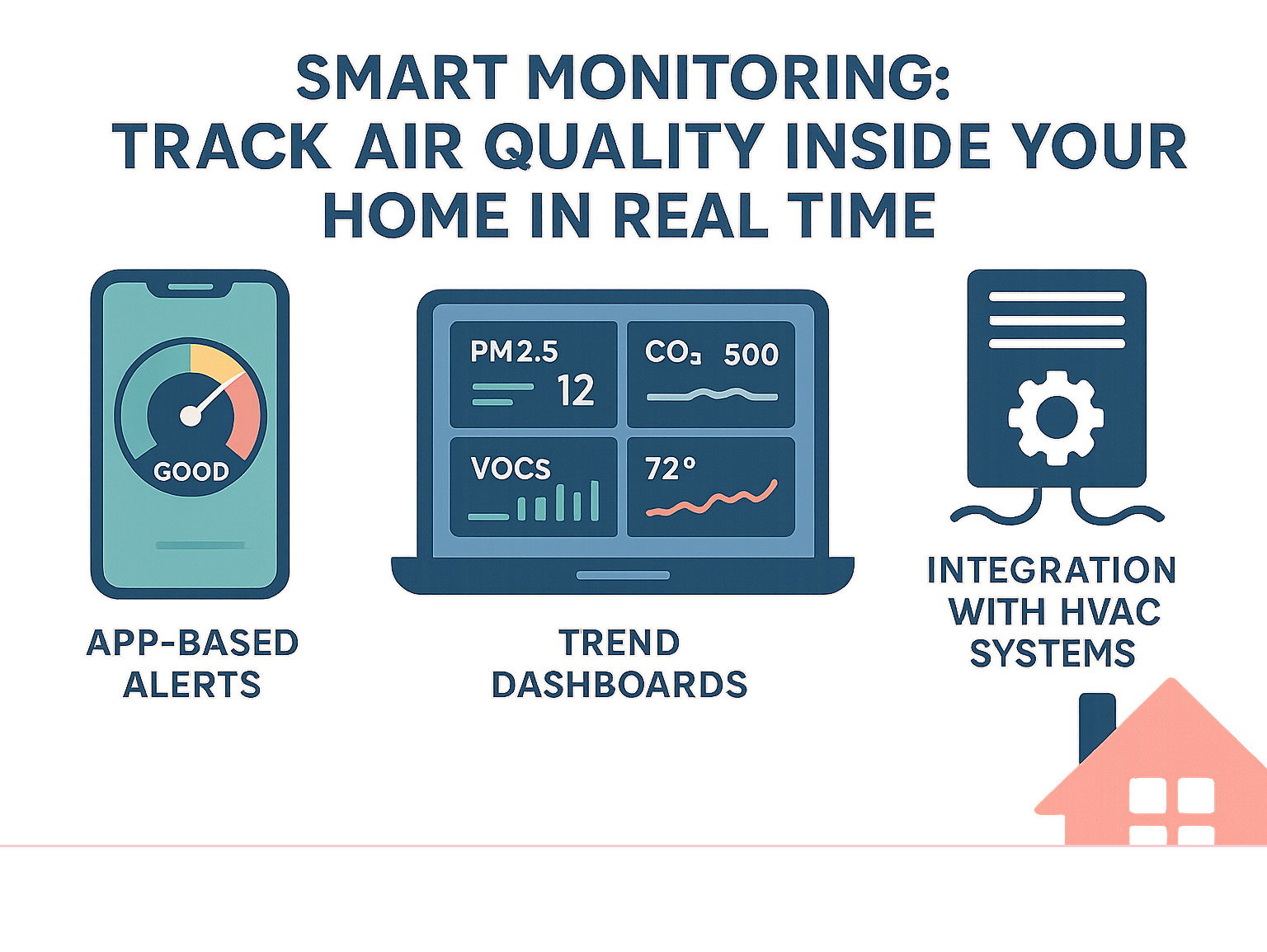
The most valuable monitoring systems track multiple air quality parameters simultaneously. Look for devices that measure particulate matter (both PM2.5 and PM10), carbon dioxide levels, volatile organic compounds, temperature, humidity, and carbon monoxide. Some advanced models even monitor radon, providing comprehensive awareness of your home’s air quality profile.
At AAA Home Services, we can recommend and install smart monitoring systems that integrate seamlessly with your home’s HVAC system. Our experienced technicians will help you select the right combination of advanced technologies to address your specific air quality concerns, providing both immediate improvements and long-term protection for your family’s health.
Frequently Asked Questions about Indoor Air Quality
What are the most dangerous pollutants I should test for first?
When it comes to protecting your family’s health, not all indoor pollutants pose the same level of risk. Here’s what you should prioritize testing for:
Carbon monoxide deserves immediate attention as this silent killer can cause fatalities within hours at high concentrations. Every home should have working CO detectors installed on each floor and near bedrooms. This colorless, odorless gas gives no warning signs until it’s often too late.
Radon ranks as the second leading cause of lung cancer after smoking, affecting thousands of unsuspecting homeowners each year. The EPA strongly recommends testing all homes for radon, especially in regions known to have higher concentrations. Since this radioactive gas is completely undetectable without testing, many families live with dangerous levels without realizing it.
If you notice visible mold growth or persistent musty odors, don’t ignore these warning signs. Mold can trigger severe respiratory issues, especially in children, elderly people, and those with compromised immune systems. Professional testing can identify hidden mold colonies growing behind walls or under flooring.
Fine particulate matter (PM2.5) deserves special attention if your home is near busy roads, industrial areas, or if you use wood-burning appliances. These microscopic particles can penetrate deep into your lungs and even enter your bloodstream, potentially causing serious cardiovascular and respiratory problems over time.
While less immediately dangerous than carbon monoxide, long-term exposure to volatile organic compounds (VOCs) from common household products, building materials, and furnishings can lead to chronic health issues including headaches, liver damage, and even certain cancers with prolonged exposure.
How often should I change my HVAC filter?
Your HVAC filter is your home’s first line of defense against airborne particles, but knowing when to change it isn’t always straightforward. The replacement schedule varies based on several factors:
Basic fiberglass filters should be changed approximately every 30 days. These inexpensive filters capture larger particles but allow smaller ones through.
Pleated filters (MERV 8-10) typically last longer, needing replacement every 60-90 days. These medium-efficiency filters trap smaller particles like mold spores and pet dander.
High-efficiency filters (MERV 11-13) can generally go 90-120 days between changes. These premium filters capture very fine particles including some bacteria and smoke.
However, these are just guidelines. Air quality inside your home depends on your specific circumstances. You should check filters monthly and replace them more frequently if you have furry pets, family members with allergies or asthma, live in a dusty area, have had recent renovation work, or run your HVAC system constantly.
A simple visual check works well: if the filter looks dirty, it’s time for a change regardless of how recently you installed it. During regular maintenance visits, AAA Home Services technicians can recommend the optimal filter replacement schedule custom to your home’s specific needs and your family’s health requirements.
Are houseplants really effective at cleaning indoor air?
The idea that a few potted plants can significantly improve air quality inside your home has become something of an urban myth. While NASA studies from the 1980s suggested plants could remove substantial amounts of air pollutants, more recent research paints a different picture. In typical home environments with normal air exchange rates, the impact of houseplants on air quality is actually quite minimal.
That’s not to say plants offer no benefits. They do remove small amounts of VOCs like formaldehyde and benzene, can help maintain healthy humidity levels in dry environments, and undoubtedly contribute to psychological well-being—which is an important aspect of overall health.
For meaningful air purification, however, you’d need an impractical jungle of plants—approximately 10-20 plants per 100 square feet of living space. Traditional air purification methods like HEPA filtration, activated carbon systems, and proper ventilation provide far more effective results.
If you do enjoy keeping houseplants, be mindful that overwatering can lead to mold growth in soil, potentially worsening air quality inside your home. Some plants that perform better at air purification include snake plants, spider plants, peace lilies, Boston ferns, and rubber plants—though even these would need to be present in large numbers to make a measurable difference.
For truly effective indoor air quality improvement, we recommend consulting with the professionals at AAA Home Services about whole-home filtration systems that can remove pollutants throughout your entire living space rather than relying solely on botanical solutions.
Conclusion
Breathing clean air shouldn’t be a luxury—it should be a given in the place where you spend most of your time. Yet as we’ve finded, air quality inside your home is likely more compromised than you realize. With indoor air often 2-5 times more polluted than outdoor air, and Americans spending roughly 90% of their time indoors, taking steps to purify your home environment isn’t just about comfort—it’s about protecting your family’s health.
The journey to cleaner indoor air doesn’t have to be overwhelming. Start with those quick wins we discussed—swap out those dusty filters, crack open windows strategically, and run those kitchen and bathroom fans. These simple habits can make a noticeable difference right away. Then, when you’re ready, consider those longer-term investments like professional duct cleaning, whole-house air purification systems, or smart monitoring technology that takes the guesswork out of knowing when your air needs attention.
Every home tells its own story when it comes to air quality challenges. Your home’s age, location, building materials, and even your daily habits all create a unique air quality fingerprint. What works for your neighbor might not be the perfect solution for you. That’s why a personalized assessment can be so valuable.
Here at AAA Home Services, we’ve been helping St. Louis area families breathe easier for over five decades. Our technicians don’t just sell equipment—they take the time to understand your specific concerns, assess your home’s unique challenges, and recommend solutions that make sense for your family and budget. From a simple filter upgrade to a comprehensive whole-house air purification system, we’ll help you find the right balance.
The best part? We can often provide same-day or next-day service, so you don’t have to wait weeks to start addressing your indoor air concerns. Backed by over 8,000 Google reviews and half a century of experience in the Greater St. Louis, St. Charles, and Warren County areas, you can trust us to help create a healthier home environment with fair, honest pricing and exceptional service.
Don’t wait until someone in your family develops respiratory issues or allergies worsen. Take that first step today toward ensuring the air your loved ones breathe at home supports their health and wellbeing rather than compromising it.
For more information about how we can help improve the air quality inside your home, or to schedule your personalized assessment, visit our Indoor Air Quality Service page or give us a call. Your lungs—and your family—will thank you!


