



Why Your Home’s Air Quality Matters More Than You Think
Causes of indoor air pollution are surprisingly common in most homes, often creating air that’s 2-5 times more polluted than outdoor air. Understanding these sources is crucial since the average American spends 90% of their time indoors.
The main causes of indoor air pollution include:
- Combustion sources – Gas stoves, fireplaces, and heating systems
- Building materials – Formaldehyde from pressed wood, asbestos, lead paint
- Moisture problems – Mold, dust mites, and biological contaminants
- Chemical products – Cleaning supplies, air fresheners, pesticides
- Outdoor infiltration – Radon gas, wildfire smoke, vehicle exhaust
- Everyday activities – Cooking, smoking, pet dander
These pollutants can trigger immediate symptoms like headaches and throat irritation, or contribute to long-term health issues including asthma, heart disease, and even cancer. Poor indoor air quality is especially dangerous for children, elderly adults, and people with existing respiratory conditions.
The good news? Most indoor air quality problems can be fixed once you know what to look for and how to address them properly.
I’m Dan Walsh, and through my years managing home repair services and working with technicians to solve indoor air quality issues, I’ve seen how identifying causes of indoor air pollution can dramatically improve families’ health and comfort. My experience has shown that most homeowners are surprised to learn about the hidden pollutant sources in their own homes.
Key terms for causes of indoor air pollution:
Invisible Hazards: Why Indoor Air Quality Matters
You know that fresh air feeling when you step outside on a beautiful day? What if your home’s air isn’t giving you that same comfortable, clean feeling? Poor indoor air quality isn’t just about stuffy rooms or lingering cooking smells – it’s a serious health concern that quietly affects millions of Americans every single day.
Think about it: we spend a whopping 90% of our lives indoors! That’s a lot of time breathing whatever is circulating inside our homes. The Environmental Protection Agency (EPA) tells us that the air inside our homes can actually be 2 to 5 times more polluted than the air outside. When you consider that, it makes you wonder what invisible hazards might be lurking. These hidden causes of indoor air pollution can contribute to everything from everyday annoyances to serious health conditions.
The World Health Organization (WHO) has even reported that household air pollution is responsible for a staggering 3.2 million deaths worldwide each year. This isn’t just about feeling a little off; it’s about real, tangible health impacts. For more in-depth scientific research on how air pollution affects our health, you can visit the WHO’s air pollution page.
Certain groups are especially vulnerable. Our children, whose lungs are still developing, and our older adults, who might have weaker immune systems, are at higher risk. People already dealing with respiratory issues like asthma or COPD (Chronic Obstructive Pulmonary Disease) can find their symptoms significantly worsened by poor indoor air. Research even suggests that long-term exposure to indoor pollutants could contribute to issues like heart disease, lung cancer, and even cognitive decline over time.
Immediate vs. Long-Term Effects
The tricky thing about indoor air pollution is that its effects can show up quickly, or they can build up over many years.
You might experience immediate effects like:
- Eye, nose, and throat irritation
- Headaches that just won’t quit
- Feeling dizzy or lightheaded
- Unexplained fatigue or difficulty concentrating
- Worsening asthma attacks
But don’t be fooled by temporary relief. The causes of indoor air pollution can also lead to much more serious long-term health problems with continued exposure. These include:
- Chronic respiratory diseases
- Increased risk of heart disease
- Various types of cancer, especially lung cancer from things like radon exposure
- Even permanent lung damage
Have you ever noticed that you feel better when you’re out of the house, but as soon as you step back inside, those sniffles, headaches, or tired feelings return? That’s a big clue that your indoor air quality might be the culprit. It’s like your home is trying to tell you something!
Environmental Justice at Home
It’s also important to recognize that the burden of poor indoor air quality isn’t always shared equally. Sadly, low-income households and certain communities, often those of color, are disproportionately affected. These families often live in older homes, which can come with more hidden causes of indoor air pollution like old lead paint, asbestos, or simply very poor, inadequate ventilation systems.
Here’s an interesting paradox: while making homes more energy-efficient is great for your utility bills and the planet, if not done correctly, it can sometimes worsen indoor air quality. When homes are made very airtight to save energy, they can also trap pollutants inside, creating a “sealed box” effect. Without proper ventilation upgrades to match, these homes can inadvertently become pollutant traps, placing an unfair burden on the residents. It highlights why a holistic approach to home comfort and health is so vital.
Top Causes of Indoor Air Pollution in Your Home
Most homeowners are shocked to find that their indoor air can be 2-5 times more polluted than outdoor air. The causes of indoor air pollution lurk in everyday items we use without thinking – from the gas stove where we cook breakfast to the cleaning products under the sink.
Understanding these pollution sources is crucial because they each require different solutions. Some can be fixed with simple changes, while others need professional attention from trained technicians.
Combustion Sources – Key causes of indoor air pollution
Your home’s fuel-burning appliances might be silently poisoning your family’s air. Every time you light that gas stove or cozy up to the fireplace, you’re potentially releasing carbon monoxide, nitrogen dioxide, and fine particles into your living space.
Gas stoves are particularly sneaky troublemakers. They can produce nitrogen dioxide levels that actually exceed what’s considered safe for outdoor air. Think about that – the air inside your kitchen while cooking dinner might be more polluted than a busy street corner.
Carbon monoxide is the silent killer here. You can’t see it, smell it, or taste it, but a malfunctioning furnace or blocked chimney can fill your home with this deadly gas. Even something as simple as running your car in an attached garage can create dangerous CO levels throughout your house.
Wood-burning fireplaces might create a cozy atmosphere, but they’re pumping out particles that irritate your nose and throat. If someone in your family has asthma, that romantic fire could trigger a serious attack.
The good news? A qualified technician can inspect your combustion appliances and make sure they’re venting properly. For detailed information about these pollutant sources, the Indoor Pollutants and Sources | US EPA page offers comprehensive guidance.
Hidden Building Materials – Surprising causes of indoor air pollution
Your home itself might be making you sick. Many common building materials and furnishings quietly release chemicals into your air through a process called off-gassing. These hidden causes of indoor air pollution can affect your family’s health for months or even years.
Formaldehyde is probably floating around your home right now. It seeps out of pressed-wood products like particleboard furniture, kitchen cabinets, and subflooring. That new bookshelf or dining table could be releasing formaldehyde for years, causing eye irritation and breathing problems.
Carpets seem innocent enough, but they’re actually pollution magnets. They trap dust mites, pet dander, and allergens while slowly releasing chemicals from their backing materials and adhesives. New carpeting is especially problematic – it should be aired out before installation to reduce those initial chemical emissions.
Asbestos remains a serious concern in homes built before 1980. While it’s not dangerous when left alone, any renovation work can release deadly fibers into your air. Never attempt to remove suspected asbestos materials yourself – this absolutely requires professional assessment and removal.
Lead paint creates airborne particles when it’s scraped or sanded. These particles don’t just affect children who might eat paint chips – they contaminate the air that everyone in your household breathes.
| Material Type | Low-VOC Options | Conventional Options | Health Impact |
|---|---|---|---|
| Paint | Water-based, low-VOC formulas | Oil-based, high-VOC paints | Respiratory irritation, headaches |
| Flooring | Solid hardwood, natural linoleum | Vinyl, laminate with formaldehyde | Eye irritation, allergic reactions |
| Furniture | Solid wood, metal frames | Pressed wood with urea-formaldehyde | Long-term formaldehyde exposure |
| Adhesives | Water-based, low-emission | Solvent-based adhesives | Nervous system effects |
Moisture & Biology – Often-overlooked causes of indoor air pollution
Water problems create some of the most dangerous causes of indoor air pollution. When humidity gets too high or water damage isn’t properly addressed, your home becomes a breeding ground for biological contaminants that can seriously harm your family’s health.
Mold growth happens faster than you might think. Keep indoor humidity above 60% for just a few days, and you’ll start seeing mold colonies. These microscopic spores float through your air, triggering asthma attacks and respiratory infections. The worst part? Mold can grow inside your walls where you can’t see it.
Dust mites are tiny creatures living in your bedding, furniture, and carpets. They feed on dead skin cells and thrive in warm, humid conditions. Their waste products become airborne allergens that can make life miserable for anyone with allergies or asthma.
Pet dander isn’t just a problem for people who are allergic to animals. These microscopic skin flakes can stay airborne for hours and settle on surfaces throughout your entire home. Even if you don’t directly handle pets, you’re still breathing in these particles.
Cockroaches and other pests produce allergens that are particularly harmful to children. Studies show that kids exposed to cockroach allergens have more severe asthma symptoms and more frequent attacks.
The key to controlling these biological pollutants is moisture management. A trained HVAC technician can assess your home’s ventilation and humidity levels to prevent these problems before they start.
Everyday Activities & Chemicals – Lifestyle causes of indoor air pollution
Some of the most significant causes of indoor air pollution come from products we use every day. These routine activities and household items can spike your indoor pollution levels without you realizing it.
Cleaning products often contain volatile organic compounds (VOCs) that cause headaches, dizziness, and breathing problems. And here’s something that could save your life – never mix chlorine bleach with ammonia or acid-based cleaners. This combination creates deadly chlorine gas.
Air fresheners, candles, and incense might make your home smell wonderful, but they’re adding particles and chemicals to your air. Research shows that burning incense releases over 100 times more fine particles than candles. Those “fresh linen” plug-ins are actually making your air less fresh.
Pesticides don’t just disappear after you spray them. They linger in your air and on surfaces for days or weeks, potentially causing neurological problems and other health issues. This is especially concerning if you have children or pets who spend time on the floor.
DIY projects can temporarily turn your home into a chemical soup. Painting, varnishing, or using adhesives can spike VOC levels by up to 1,000 times normal levels. These chemicals can affect your air quality for hours after you finish the project.
For practical tips on maintaining cleaner air during daily activities, check out our guide on Fresher Air with New Filters.
Outdoor Intruders – Weather-Driven causes of indoor air pollution
Sometimes the causes of indoor air pollution come from outside your home. These external pollutants can sneak inside through various pathways, creating air quality problems that seem to appear out of nowhere.
Radon gas is invisible, odorless, and deadly. It seeps up from the ground through foundation cracks and other openings. The EPA estimates that radon causes about 21,000 lung cancer deaths every year in the United States, making it the second leading cause of lung cancer after smoking.
Wildfire smoke can travel hundreds of miles and infiltrate homes through ventilation systems, windows, and tiny cracks. Even if the nearest fire is states away, your indoor air quality can become dangerous during wildfire season.
Vehicle exhaust from attached garages or nearby roads can enter your home through air leaks and ventilation systems. Never run a car engine inside a closed garage – carbon monoxide can reach lethal levels in minutes.
Pollen and outdoor allergens hitch rides inside on your clothing, shoes, and pets. While these are natural substances, they can trigger serious allergic reactions and asthma symptoms in sensitive family members.
The good news about outdoor pollutants is that proper sealing and ventilation can keep most of them outside where they belong. A qualified technician can assess your home’s air leakage and recommend solutions.
For more information about radon risks and testing, visit the Scientific research on radon risk page.
Detecting and Measuring the Problem
You can’t fix what you can’t see, and that’s exactly the challenge with indoor air quality. Many causes of indoor air pollution are completely invisible and odorless, making them tricky to detect without the right tools and approach.
The good news is that identifying these problems doesn’t require a chemistry degree. With some basic monitoring equipment and careful observation, you can start to piece together what’s happening in your home’s air.
Air quality monitors have become much more affordable and user-friendly in recent years. These devices can detect particulate matter, volatile organic compounds (VOCs), and other pollutants in real-time. What’s really helpful is that they show you how pollution levels change throughout the day, so you can connect the dots between activities and air quality spikes.
Carbon monoxide alarms aren’t just a good idea – they’re absolutely essential for any home with fuel-burning appliances. Install them in every room where fuel is burned and near sleeping areas. These life-saving devices can detect dangerous CO levels before you even notice symptoms.
Radon test kits should be used in every home, whether it’s brand new or decades old. You can pick up short-term tests for quick results, but long-term tests give you a more accurate picture of average radon levels. Don’t skip this step – radon is responsible for about 21,000 lung cancer deaths annually in the United States.
Humidity gauges help you keep an eye on moisture levels that can lead to mold growth and dust mite problems. Your target range is 30-50% humidity for optimal health and comfort. Too high, and you’re inviting biological contaminants. Too low, and you might experience dry skin and respiratory irritation.
Here’s something many homeowners overlook: keeping a smell and symptom log. It sounds simple, but tracking when you notice odors or experience symptoms can reveal patterns. Do you get headaches after using certain cleaning products? Does your throat feel scratchy after cooking? These observations can help identify specific pollution sources.
DIY Filter Checks
One of the easiest ways to monitor and improve your air quality is through regular filter maintenance. Understanding MERV ratings (Minimum Efficiency Reporting Value) helps you choose the right filter for your needs.
MERV 1-4 filters provide basic protection against large particles like dust and lint. MERV 5-8 filters offer better protection against dust and pollen. MERV 9-12 filters provide good protection against most household pollutants. MERV 13-16 filters offer excellent protection against fine particles and some bacteria.
Visual inspection tells you a lot about your filter’s condition and your home’s air quality. A filter that’s black or gray after just a few weeks might indicate high particulate levels from cooking, pets, or outdoor pollution. A clean-looking filter after several months could mean your HVAC system isn’t running properly or air isn’t flowing through it correctly.
A dirty, clogged filter doesn’t just reduce air quality – it makes your HVAC system work harder and increases energy costs. For detailed guidance on proper filter maintenance, check out our article on How to Change Your Home Air Filters.
When to Call a Pro
While you can handle basic monitoring and filter changes, some situations require professional expertise. Suspected mold problems need proper assessment and safe remediation techniques. Persistent odors or health symptoms that don’t improve with basic fixes deserve professional investigation.
Radon testing and mitigation often requires specialized equipment and techniques. HVAC system evaluation goes beyond simple filter changes to examine ductwork, ventilation rates, and system performance. Asbestos or lead paint concerns must be handled by licensed professionals to avoid dangerous exposure.
Licensed technicians have specialized equipment for comprehensive testing and the training to safely address complex indoor air quality problems. They can perform diagnostic testing that goes far beyond what consumer-grade monitors can detect.
At AAA Home Services, our technicians regularly help homeowners identify and solve indoor air quality issues that have been affecting their families’ health and comfort. We can assess your specific situation and recommend appropriate solutions based on your home’s unique needs.
For professional indoor air quality assessment and solutions, visit our Indoor Air Quality Service page.
Practical Fixes: Ventilation, Filtration & Source Control
The good news about causes of indoor air pollution is that most can be addressed with the right combination of strategies. Think of it like treating a cold – you want to tackle the symptoms while also addressing the root cause. For indoor air quality, that means a three-pronged approach: eliminating pollution sources, improving ventilation, and upgrading your filtration systems.
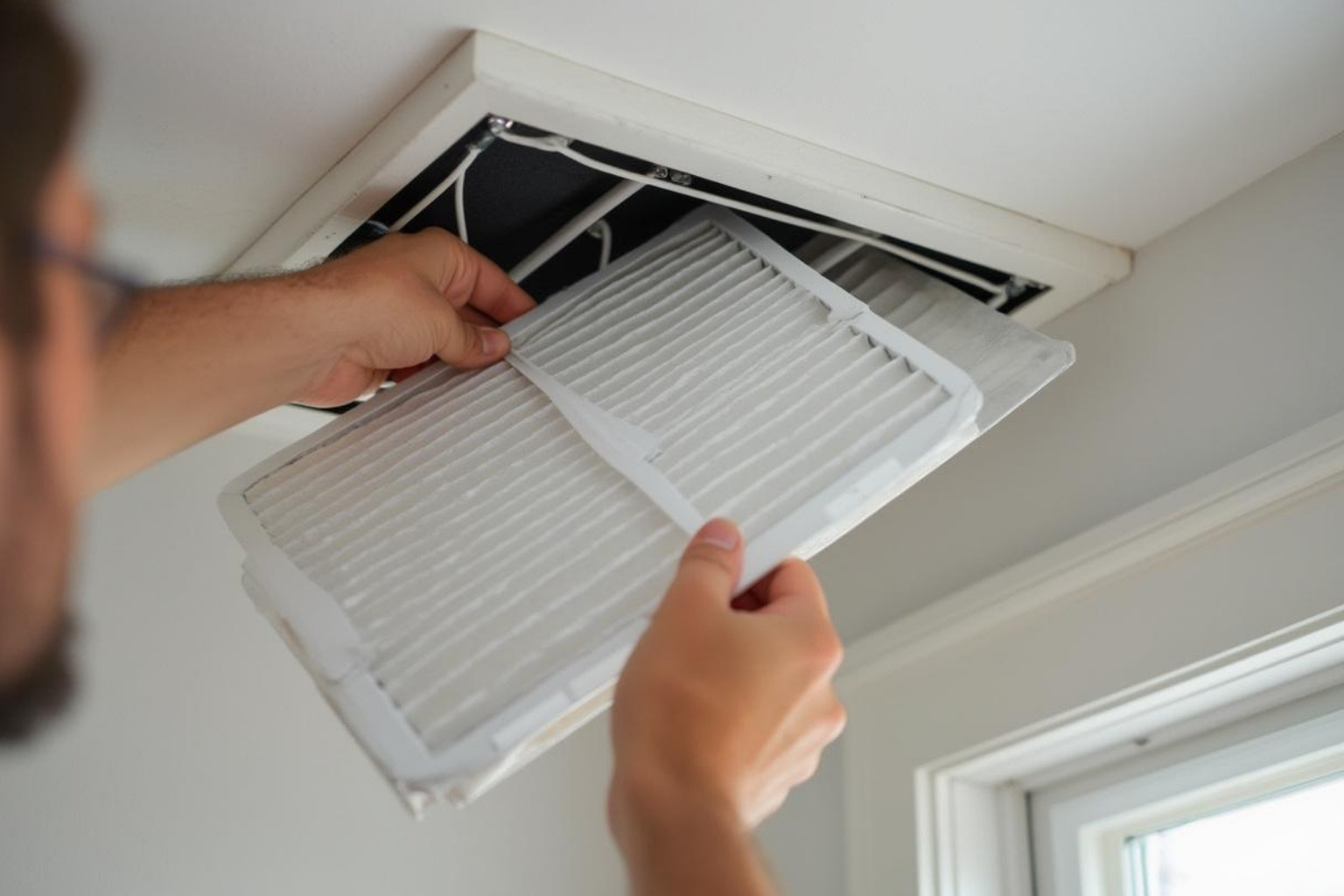
Source control is usually your best bang for the buck. Rather than trying to clean contaminated air after the fact, you’re stopping the problem at its source. This might mean switching to low-VOC cleaning products instead of harsh chemicals, properly maintaining your gas appliances so they don’t leak combustion gases, or controlling moisture levels to prevent mold from taking hold in the first place.
When you can’t eliminate a pollutant source completely, ventilation improvements help dilute those contaminants with fresh outdoor air. Sometimes it’s as simple as opening windows on opposite sides of your home to create cross-ventilation. Other times, you might need mechanical solutions like properly vented exhaust fans or even whole-home ventilation systems.
Air cleaning systems round out your defense by actively removing pollutants from your indoor air. These work best when combined with source control and adequate ventilation – think of them as the final layer of protection rather than a cure-all solution.
Ventilation Strategies to Cut causes of indoor air pollution
Getting fresh air into your home and stale air out is fundamental to good indoor air quality. The challenge is doing this efficiently without wasting energy or letting in outdoor pollutants.
Natural ventilation through open windows works great when weather permits and outdoor air quality is good. The key is creating airflow patterns that actually move air through your home rather than just letting it sit stagnant. Cross-ventilation – opening windows on opposite sides of your home – works much better than opening just one window.
Mechanical ventilation gives you more control over when and how much fresh air enters your home. Your kitchen and bathroom exhaust fans are perfect examples – they remove moisture, odors, and pollutants right at the source. The catch is that these fans need to be vented directly outdoors, not just into your attic or crawl space.
For homes that are well-sealed for energy efficiency, balanced ventilation systems like heat-recovery ventilators provide controlled fresh air while recovering energy from the outgoing stale air. These systems are particularly valuable during extreme weather when opening windows isn’t practical.
Filtration Upgrades that tackle causes of indoor air pollution
Your home’s filtration system is like a security guard for your indoor air – but only if it’s properly equipped for the job. Many homes come with basic filters that barely capture large dust particles, leaving smaller pollutants to circulate freely.
MERV-13 filters represent a significant upgrade for most homes. These filters can capture particles as small as 0.3 microns, including most bacteria and even some viruses. They’re particularly effective against the fine particles that cause the most health problems, while still allowing good airflow through your HVAC system.
Portable HEPA units can provide extra protection in specific rooms where you spend the most time. These are especially helpful in bedrooms or home offices, where you want the cleanest possible air during extended periods.
Whole-home air purifiers integrate directly with your HVAC system to provide comprehensive air cleaning throughout your entire home. Advanced systems like our Air Scrubber use multiple technologies to tackle different types of pollutants – from particles and odors to biological contaminants.
The key is choosing the right solution for your specific situation. A trained technician can assess your home’s unique needs and recommend the most effective approach for addressing your particular causes of indoor air pollution.
Real-World Success
One of our customers, Graham, experienced how addressing indoor air quality issues can transform a home. After we upgraded his filtration system and addressed ventilation problems, he noticed dramatically improved AC airflow and reduced odors throughout his home. His family’s allergy symptoms also decreased noticeably – something that made a real difference in their daily comfort.
Graham left us a five-star review highlighting how our indoor air quality service solved problems he didn’t even realize were connected to his HVAC system. These kinds of improvements often surprise homeowners because indoor air quality affects so many aspects of home comfort and health.
You can read Graham’s full review and others on our Google review – AAA Home Services in O’Fallon page to see how other families have benefited from professional indoor air quality solutions.
Frequently Asked Questions about Indoor Air Pollution
These are the questions I hear most often from homeowners who are concerned about causes of indoor air pollution in their homes. Let me share some practical answers based on what I’ve learned working with families throughout the St. Louis area.
Do houseplants really clean the air?
I get this question a lot, and I understand why. That famous NASA study from 1989 made it sound like a few spider plants could solve all your air quality problems. The reality is more complicated.
While certain houseplants can remove pollutants in controlled laboratory conditions, real-world effectiveness is quite limited. The air exchange rates in typical homes mean that plants have minimal impact on overall air quality. You’d actually need hundreds of plants scattered throughout your home to match the effectiveness of a single quality air purifier.
That said, plants aren’t useless. They can provide psychological benefits and add some humidity to dry indoor air during winter months. But if you’re serious about addressing causes of indoor air pollution, you’ll need proper ventilation, filtration, and source control rather than relying on your houseplants to do the heavy lifting.
How often should I replace HVAC filters?
This is probably the most practical question homeowners ask, and the answer depends on your specific situation. Filter replacement frequency varies based on several factors including the type of filter you’re using, your home’s size, whether you have pets, and local air quality conditions.
Here’s what I typically recommend: Basic fiberglass filters need changing every 1-2 months, while pleated filters can usually go 2-3 months. High-efficiency filters might last 3-6 months, and HEPA filters can often go 6-12 months before replacement.
But here’s the key – check your filters monthly regardless of the recommended schedule. If they look dirty or clogged, it’s time for a change. Homes with pets, smokers, or family members with allergies often need more frequent filter changes to maintain good air quality.
A clogged filter doesn’t just reduce air quality – it makes your HVAC system work harder and can increase your energy bills. If you’re unsure about the right filter type or replacement schedule for your system, our technicians can help you create a maintenance plan that works for your specific situation.
Is radon a problem in newer homes?
This is a common misconception that concerns me because it can give homeowners a false sense of security. Radon can absolutely affect homes of any age, including brand-new construction.
The gas comes from natural uranium decay in soil and rock beneath your home, so location matters much more than building age. What’s particularly interesting is that newer homes are often built more tightly for energy efficiency, which can actually increase radon concentrations if proper mitigation systems aren’t installed during construction.
All homes should be tested for radon regardless of their age. The EPA recommends action when levels reach 4 pCi/L or higher, and professional mitigation is the only safe way to address liftd radon levels.
If you haven’t tested your home for radon yet, don’t wait. Simple test kits are available, or you can have professional testing done. It’s one of those causes of indoor air pollution that you can’t see, smell, or taste, but the health risks are too serious to ignore.
If you find liftd radon levels or have other concerns about indoor air quality, our team can help assess your situation and recommend appropriate solutions. We’ve helped many families in the St. Louis area address various indoor air quality challenges, and we’re here to help you create a healthier home environment too.
Conclusion
Taking control of your home’s air quality doesn’t have to be overwhelming. Once you understand the causes of indoor air pollution – from that gas stove releasing nitrogen dioxide to the formaldehyde slowly off-gassing from your cabinets – you can take meaningful steps to protect your family’s health.
The reality is that most homes have multiple pollution sources working against you every day. Combustion appliances like furnaces and water heaters, building materials that release VOCs, moisture problems that encourage mold growth, and even everyday cleaning products can all contribute to indoor air that’s more polluted than the air outside.
But here’s the encouraging news: these problems are solvable. The most effective approach combines source control (eliminating pollutants at their origin), improved ventilation (bringing in fresh air), and proper filtration (cleaning the air that circulates through your home).
Some fixes are straightforward – switching to low-VOC cleaning products, maintaining proper humidity levels, or upgrading to MERV-13 filters. Others, like addressing combustion safety issues or installing whole-home air purification systems, require professional expertise to ensure they’re done safely and effectively.
At AAA Home Services, we’ve spent over 50 years helping families throughout the Greater St. Louis area breathe easier in their homes. Our experienced technicians understand that every home is unique, with its own combination of pollution sources and air quality challenges. We don’t just install equipment – we take the time to identify what’s actually causing your indoor air quality problems and recommend targeted solutions that make sense for your family and budget.
Whether you’re dealing with persistent odors, family members with worsening allergies, or you simply want to be proactive about your home’s air quality, professional assessment can make all the difference. Our comprehensive Indoor Air Quality Service goes beyond basic filter changes to address the root causes of poor indoor air.
Your home should be your family’s healthy sanctuary, not a source of respiratory problems or discomfort. With the right approach to identifying and addressing the causes of indoor air pollution, you can create an environment where everyone can breathe easy and feel their best.
Ready to start breathing cleaner air? Contact AAA Home Services today to schedule your indoor air quality assessment and take the first step toward a healthier home.


