



Protecting Your Home From Power Surges
A whole home surge protector is a device installed directly at your electrical panel that safeguards all electronics and appliances in your home from damaging power surges. Here’s what you need to know:
- Definition: A panel-mounted device that diverts excess voltage to ground
- Protection: Shields all connected electronics and appliances throughout your home
- Cost-Effective: Prevents thousands in potential damage for a one-time installation
- Lifespan: Typically lasts 3-5 years depending on surge frequency
- Installation: Requires a licensed electrician for proper setup
Power surges are more common than you might think. Your home could experience up to 100 small surges every month that silently damage your electronics over time. These “mini-surges” act like a slow poison, gradually reducing the lifespan of your expensive TVs, computers, appliances, and smart home devices.
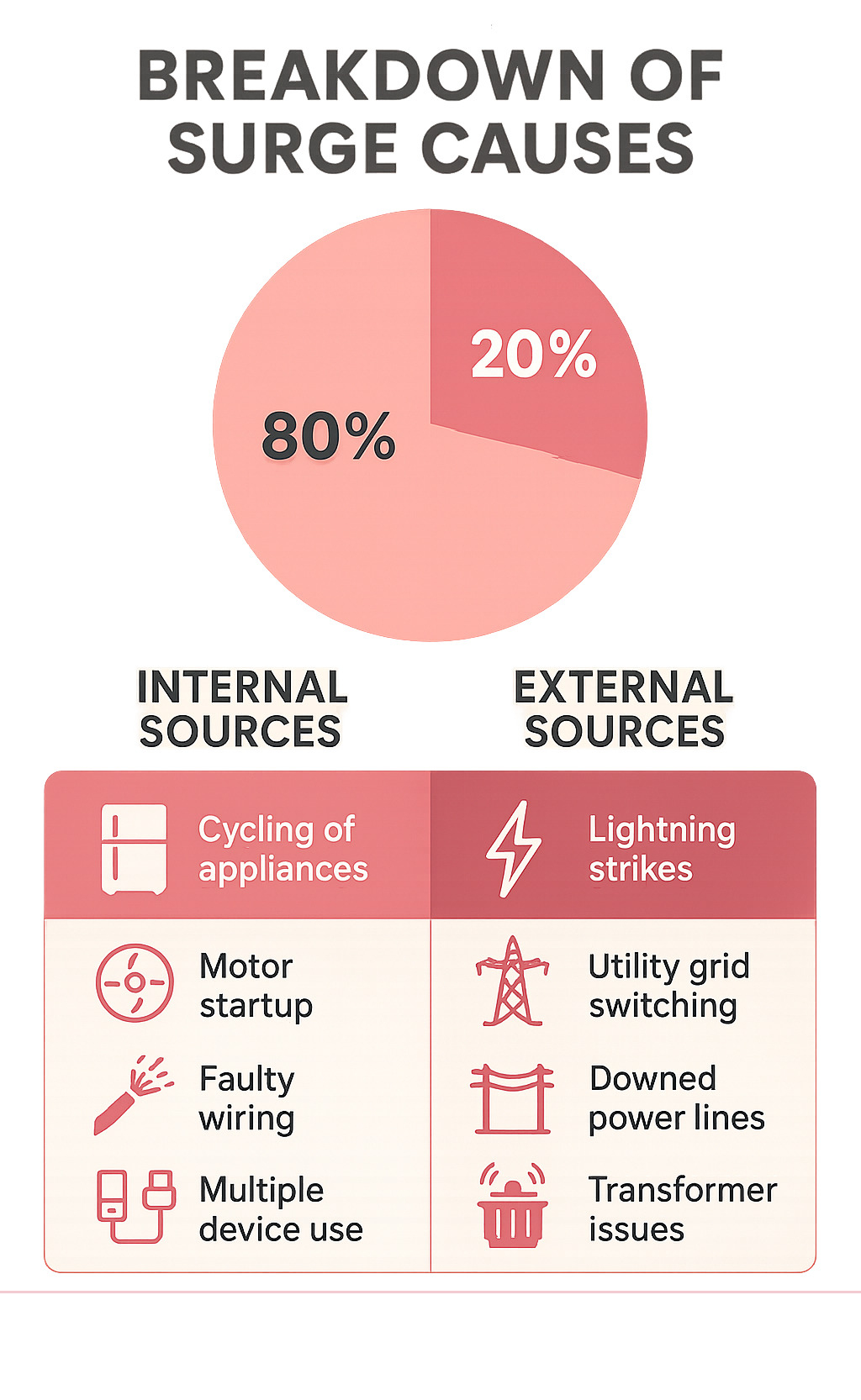
While most people think of lightning as the main culprit, the truth is surprising: up to 80% of all power surges actually originate from inside your home. Every time your air conditioner or refrigerator cycles on and off, it can create a small surge that travels through your electrical system.
Think of a whole home surge protector as an insurance policy for all the electronics in your home. The average household contains around $15,000-$20,000 worth of electronic equipment – all of which could be damaged or destroyed by a single significant power surge.
I’m Dan W, and I’ve managed home repair services for years, witnessing how whole home surge protectors have saved countless homeowners from expensive electronics replacements and electrical system damage. Let me guide you through everything you need to know about these essential protective devices.
Simple guide to whole home surge protector:
What Is a Whole Home Surge Protector?
A whole home surge protector, also known as a surge protective device (SPD), is a specialized electrical component installed directly at your home’s main electrical panel. Unlike plug-in surge strips that protect only the devices connected to them, a whole home surge protector safeguards your entire electrical system and all connected appliances and electronics.
These devices are designed to detect voltage spikes that exceed normal levels (typically 120 volts in standard American homes) and divert that excess energy safely to the ground before it can travel through your home’s wiring and damage your valuable electronics.
The core technology behind a whole home surge protector is the Metal Oxide Varistor (MOV). These components act like electrical pressure-relief valves. Under normal conditions, they remain inactive, but when voltage exceeds safe thresholds, they instantly create a path of least resistance to redirect the surge away from your home’s wiring and into the ground.
All quality surge protectors should be listed to UL 1449, which is the safety standard for surge protective devices. This certification ensures the device meets stringent safety and performance requirements.
Whole Home Surge Protector Operation
The operation of a whole home surge protector happens in milliseconds—even nanoseconds—which is crucial for protecting sensitive electronics. Here’s how it works:
- The device constantly monitors the voltage levels coming into your home
- When it detects a voltage spike above normal levels, the MOVs inside the unit activate
- The MOVs create a low-resistance path to the ground wire
- Excess voltage is diverted through this path instead of continuing through your home’s wiring
- Your electronics remain protected from the damaging surge
The “clamping voltage” is a key specification that indicates at what voltage level the surge protector activates. Lower clamping voltage ratings (330V-400V) provide better protection than higher ones, as they’ll respond to smaller surges.
Key Specs of a Whole Home Surge Protector
When evaluating a whole home surge protector, several specifications are important to understand:
-
Joule Rating: This indicates the total energy absorption capacity of the device. Higher joule ratings (1,000+ joules) mean the surge protector can handle larger or multiple surges before wearing out.
-
NEMA Rating: The National Electrical Manufacturers Association (NEMA) categorizes surge protectors based on their protection level:
- Type 1: Basic protection
- Type 2: Intermediate protection
- Type 3: Advanced protection
- Type 4: Comprehensive protection
- Type 5: Maximum protection
-
LED Status Indicators: Quality surge protectors include LED lights that show whether the protection is active or if the unit needs replacement.
-
Maximum Surge Current: Measured in kiloamperes (kA), this indicates the maximum current the device can redirect. For residential applications, 40kA to 80kA is typically sufficient.
-
Response Time: How quickly the surge protector reacts to a voltage spike, measured in nanoseconds. Faster is better for protecting sensitive electronics.
Inside vs. Outside: Where Surges Come From
Understanding where power surges originate helps explain why whole home surge protectors are so valuable. Contrary to popular belief, lightning isn’t the most common source of damaging surges.
According to the NEMA Surge Protection Institute, up to 80% of all surges actually originate from inside a building. This surprising statistic reveals why comprehensive protection is so important for your St. Louis home.
Everyday Internal Surges—The Silent Killer
The most frequent power surges in your home are happening right under your nose. These internal surges occur when your everyday appliances go about their business:
Your refrigerator kicks on while you’re sleeping. Your air conditioner cycles during a hot St. Louis summer afternoon. Your washing machine shifts between cycles. Each of these events creates a small power surge that ripples through your home’s electrical system.
These small surges—which can happen up to 100 times per month in a typical home—might not immediately fry your electronics, but they’re slowly chipping away at their lifespan. Think of it as a form of electrical erosion, gradually weakening components until they fail long before they should.
That expensive smart TV you just bought? Your gaming console? Your home office computer? All could be experiencing this silent damage daily without showing any warning signs until it’s too late.
External Surges and Lightning Risks
While less common, external surges pack a much more destructive punch:
When lightning strikes near your St. Louis neighborhood, it doesn’t need to hit your home directly to cause damage. Indirect strikes that hit nearby power lines or transformers can send destructive voltage spikes straight into your home’s electrical system.
Utility grid switching events happen whenever power companies reroute electricity or restore power after an outage. These normal operations can create significant voltage fluctuations that travel right to your outlets.
In the Greater St. Louis, St. Charles, and Warren County areas, our frequent thunderstorms—especially during spring and summer—significantly increase the risk of lightning-related surges. When severe weather rolls through our region, your home’s electrical system is particularly vulnerable without proper protection.
Other external threats include downed power lines from accidents or storms, and transformer issues that can send surges through the entire neighborhood grid.
Surge Protector Types & Standards
When it comes to protecting your home from electrical surges, not all solutions offer the same level of defense. Understanding the different types of surge protectors and the standards they follow will help you make a smart choice for your family’s safety and your electronics’ longevity.
Type 1 vs. Type 2 vs. Type 3 Surge Protectors
| Type | Installation Location | Primary Purpose | Best For |
|---|---|---|---|
| Type 1 | Before main service panel (at utility meter) | Protection from external surges | Lightning-prone areas |
| Type 2 | At main service panel | Whole-home protection | Most residential applications |
| Type 3 | Point-of-use (power strips) | Device-specific protection | Sensitive electronics |
Think of Type 1 Surge Protectors as your home’s first line of defense. These guardians stand watch at your service entrance, before your main breaker panel. They’re the heavy-duty protectors designed to intercept and tame those massive surges from lightning strikes that hit utility lines. If you live in an area where summer storms light up the sky regularly, these provide valuable peace of mind. Just remember, installing these typically means working with your utility company.
Type 2 Surge Protectors are what most homeowners think of as a whole home surge protector. Installed directly at your main electrical panel, these versatile defenders handle both external surges that sneak past Type 1 devices and those pesky internal surges generated by your own appliances. For most St. Louis area homes, a Type 2 protector offers that sweet spot of comprehensive protection without breaking the bank.
Type 3 Surge Protectors are the familiar power strips you might already have around your home. While they’re helpful for particularly sensitive electronics, relying solely on these is like trying to stop a flood with a few strategically placed paper towels – they simply can’t protect everything.
It’s worth noting that the National Electrical Code (NEC) Section 230.67, which took effect with the 2020 code cycle, now requires surge protection for all new home construction and service upgrades. This requirement shows that surge protection has graduated from a “nice-to-have” to an essential safety feature for modern homes.
Quality matters too – look for surge protectors that meet UL 1449 4th Edition standards, which ensure they’ve passed rigorous safety and performance testing.
Whole Home Surge Protector vs. Power Strips
Many homeowners believe that plugging their TV and computer into a surge-protecting power strip provides all the protection they need. While those power strips certainly have their place, they’re only a small piece of the protection puzzle.
A whole home surge protector offers several advantages that power strips simply can’t match. For starters, it protects everything connected to your electrical system – including those expensive hardwired appliances like your HVAC system, water heater, and built-in microwave that can’t plug into a strip. When you consider that replacing a modern HVAC system can cost thousands of dollars, this comprehensive protection becomes even more valuable.
Most power strips also have relatively modest joule ratings compared to whole home units, meaning they might not stand up to significant surges. And if you’re trying to protect multiple areas in your home, the cost of quality power strips ($15-$50 each) can quickly add up to what you’d spend on a whole home solution that provides far better protection.
There’s also the convenience factor – a whole home surge protector works silently in the background, protecting everything without requiring you to remember which devices are plugged into protected outlets.
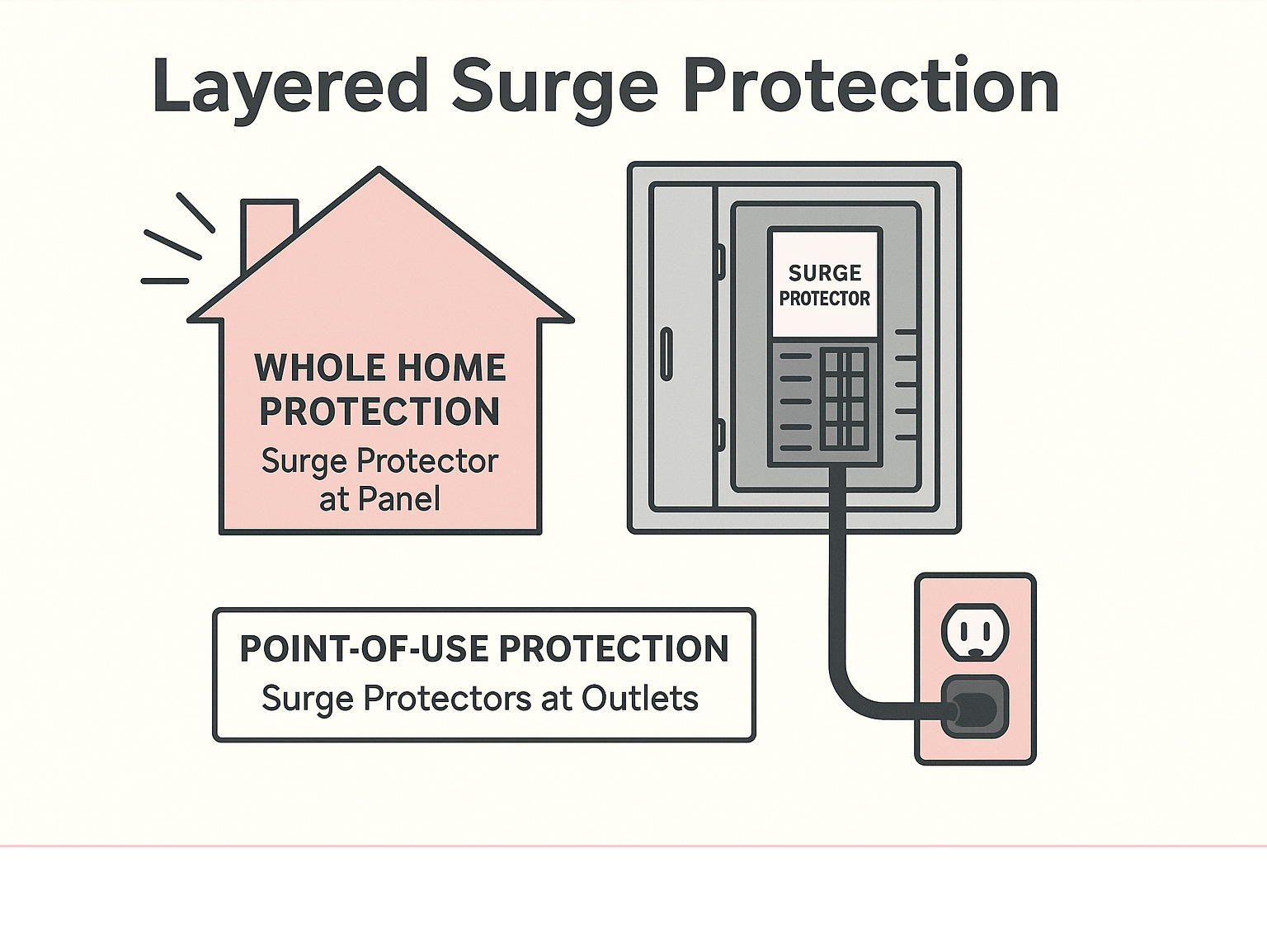
For the best protection, we recommend a layered approach: install a whole home surge protector at your main panel, then supplement it with quality surge-protecting power strips for particularly sensitive electronics like your gaming system or home theater equipment.
Code & Safety Compliance
Installing a whole home surge protector isn’t just about protecting your gadgets – it’s also about ensuring your home meets current electrical safety standards.
Your surge protector relies on proper grounding to function correctly. Without a solid grounding system that meets code requirements, that expensive surge protector might not be able to do its job when you need it most. Similarly, the surge protector must be connected to an appropriately sized circuit breaker as specified by the manufacturer – this isn’t a place to improvise.
Not all surge protectors play nicely with all electrical panels, either. Professional assessment is necessary to ensure proper fit and function. If your home has an older electrical panel (especially a fuse box or a panel that’s already maxed out), you might need to consider an electrical panel upgrade before installing a surge protector.
At AAA Home Services, our licensed electricians can assess your current electrical panel and recommend appropriate solutions that meet all local code requirements in the St. Louis, St. Charles, and Warren County areas. We’ll make sure your surge protection isn’t just installed – it’s installed right, giving you both protection and peace of mind.
Selecting & Installing the Right Whole Home Surge Protector
Choosing the right whole home surge protector involves considering several key factors to ensure optimal protection for your specific needs.
Key Selection Criteria
-
Energy Absorption Rating: Look for a surge protector with a high joule rating (at least 1,000 joules, but preferably 2,000+ for whole-home protection). This indicates how much energy the device can absorb before it needs replacement.
-
Nominal Discharge Current (In): This rating (measured in kA) indicates how much surge current the device can safely divert multiple times. For residential applications, 10kA to 20kA is typically sufficient.
-
Panel Compatibility: Ensure the surge protector is compatible with your electrical panel brand and has the appropriate connection method (breaker mount, bus mount, etc.).
-
Warranty Terms: Many quality surge protectors come with warranties not just for the device itself but also for connected equipment. Some manufacturers offer up to $100,000 in connected equipment coverage if their surge protector fails to protect your electronics.
-
Lifespan Indicators: Choose a model with clear status indicators that show when protection is active and when the unit needs replacement. Most whole home surge protectors last 3-5 years, depending on how many surges they absorb.
-
UL Listing: Ensure the device is UL 1449 listed, which is the safety standard for surge protective devices.
Professional Installation of a Whole Home Surge Protector
While some homeowners may be tempted to install a surge protector themselves, we strongly recommend professional installation by a licensed electrician for several important reasons:
-
Safety: Working with your main electrical panel involves serious safety risks, including potential electrocution.
-
Code Compliance: Professional installation ensures your surge protection meets all local electrical codes and requirements.
-
Warranty Protection: Many manufacturers void their warranties if the device isn’t professionally installed.
-
Proper Grounding: Effective surge protection requires proper grounding, which a professional can verify and correct if necessary.
-
Panel Assessment: A professional can identify any pre-existing issues with your electrical panel that might affect surge protector performance.
At AAA Home Services, our licensed electricians are experienced in installing whole home surge protectors throughout the St. Louis area. We can often offer Same Day or Next Day service, depending on availability, to get your home protected quickly.
The installation process typically involves:
- Turning off power to the main panel
- Mounting the surge protector near the panel
- Connecting the device to an appropriate circuit breaker
- Ensuring proper grounding connections
- Testing the installation
- Restoring power and verifying proper operation
For more information about our electrical services, visit our Professional Electricians Ready to Help page.
Maintenance & End-of-Life Indicators
Unlike many electrical components, whole home surge protectors don’t last forever. They sacrifice themselves bit by bit with each surge they absorb, gradually wearing out over time.
Most quality surge protectors include indicators to show their current status:
-
LED Indicators: Green typically indicates full protection, while red or no light suggests the unit needs replacement.
-
Surge Counters: Some advanced models include counters that track how many surges they’ve absorbed.
-
Audible Alarms: Certain units emit a beeping sound when protection has been compromised.
We recommend having your surge protector inspected during routine electrical maintenance. Most units will need replacement every 3-5 years, though this varies based on your local power quality and how many surges occur in your area.
Remember: A surge protector with expired protection is giving you a false sense of security. Regular inspection and timely replacement are essential parts of maintaining effective surge protection.
Frequently Asked Questions about Whole Home Surge Protectors
Are whole home surge protectors effective against direct lightning strikes?
When it comes to Mother Nature’s most powerful electrical display, it’s important to have realistic expectations. While a whole home surge protector provides excellent defense against most power surges and indirect lightning events, I have to be honest with you—nothing can fully protect against a direct lightning strike to your home.
Direct lightning contains millions of volts and thousands of amps, which is simply overwhelming for any residential surge protection device. The good news? Direct strikes to homes are incredibly rare. Most lightning-related damage actually comes from strikes to nearby power lines or transformers, and your whole home surge protector handles these indirect events very effectively.
If you live in a particularly lightning-prone area of St. Louis or St. Charles County, you might consider adding a lightning protection system (those lightning rods you see on buildings) alongside your surge protection for comprehensive coverage. Think of it as wearing both a belt and suspenders for your most valuable electrical investment—your home.
How long does a whole home surge protector last?
Just like the brake pads on your car wear down over time, your whole home surge protector gradually sacrifices itself to keep your electronics safe. Most units last between 3-5 years, but this timeline can vary significantly depending on your specific situation.
Think of your surge protector like a bodyguard that takes a hit each time it protects you. Each surge that gets diverted causes a bit of wear to the internal components, especially those hardworking Metal Oxide Varistors (MOVs). Your protection’s lifespan depends on several factors:
- The quality of power in your neighborhood (older areas often have more fluctuations)
- How many thunderstorms roll through our St. Louis region each year
- The number of large appliances cycling on and off in your home
- The age and condition of your home’s electrical system
Quality surge protectors come with indicator lights that tell you when protection is still active—kind of like the wear indicators on those brake pads. When these indicators show protection has weakened, it’s time for a replacement. Some newer models even include surge counters that track how many electrical “punches” they’ve absorbed, giving you a clearer picture of their remaining life.
Can any electrical panel accept a whole home surge protector?
Not every electrical panel can welcome a whole home surge protector without some adjustments. It’s a bit like trying to add a new appliance to an already-crowded kitchen—sometimes you need to make space first.
Your panel needs:
- Available space for a double-pole circuit breaker to connect the surge protector
- Compatibility with modern protection devices (very old panels or fuse boxes may not qualify)
- The right configuration to accept the surge protector’s connection method
If your panel is already maxed out or showing its age, you might need an electrical panel upgrade before installing surge protection. While this might seem like an extra step, it’s actually an opportunity to improve your home’s overall electrical safety and capacity. Many of our customers find that upgrading an older panel provides peace of mind beyond just surge protection.
Our licensed electricians at AAA Home Services can assess your panel during an initial visit and recommend solutions custom to your home’s specific needs. We’ve seen just about every panel configuration throughout our decades serving the greater St. Louis area.
Will a whole home surge protector protect my electronics during a power outage?
A whole home surge protector is like a bouncer at the door of your electrical system—it stops the troublemakers (surges) from getting in, but it doesn’t keep the party going when the power goes out. For that, you’d need an uninterruptible power supply (UPS) for individual devices or a whole-home generator system.
Where your surge protector really shines is during power restoration. When electricity comes back on after an outage, it often arrives with a significant surge that can damage electronics. This moment—when you hear all your appliances powering back up at once—is particularly dangerous for your expensive electronics. Having surge protection in place is especially valuable if your neighborhood experiences frequent power interruptions.
Do I still need plug-in surge protectors if I have a whole home surge protector?
I recommend a “belt and suspenders” approach for maximum protection. While a whole home surge protector provides excellent first-line defense, adding quality surge-protecting power strips for your most sensitive electronics creates a robust, layered protection system.
Think of it this way: your whole home protector catches the big surges at the panel, while point-of-use surge protectors handle any smaller fluctuations that might sneak past. This approach is particularly important for protecting expensive devices with sensitive microprocessors—your gaming systems, smart TVs, computers, and home theater equipment.
These devices represent significant investments and often contain irreplaceable data or settings. The small additional investment in quality power strips provides an extra layer of security that most homeowners find well worth it.
Conclusion
Where smart TVs, computers, and appliances fill our homes, power surge protection isn’t just nice to have—it’s essential. The average household contains over $20,000 worth of electronics vulnerable to the invisible threat of electrical surges. A whole home surge protector provides the peace of mind every homeowner deserves.
Think about it: most damaging surges actually start inside your own home, not from dramatic lightning strikes. Your refrigerator, air conditioner, and other large appliances create small power fluctuations every time they cycle on and off. These mini-surges—up to 100 per month—quietly chip away at your electronics’ lifespan, like waves gradually eroding a shoreline.
What makes a whole home surge protector so valuable is its comprehensive coverage. Unlike plug-in strips that protect only what’s connected to them, these devices shield everything wired into your electrical system—from your expensive HVAC system to your built-in microwave and smart home hub.
I’ve seen how devastating an unexpected surge can be. One St. Louis family lost their new smart refrigerator, gaming console, and home theater system all in one afternoon after a nearby transformer issue. A simple whole home surge protector could have prevented thousands in damages and preserved irreplaceable digital photos and files.
Professional installation is absolutely crucial. Our licensed electricians at AAA Home Services ensure your surge protection is properly grounded, correctly connected, and fully compliant with all electrical codes. This attention to detail not only maximizes protection but also preserves manufacturer warranties.
Surge protectors don’t last forever. Even the best units need replacement every 3-5 years as they sacrifice themselves bit by bit protecting your home. When those indicator lights change from green to red, it’s time for an upgrade.
For over five decades, AAA Home Services has been protecting homes throughout St. Louis, St. Charles, and Warren County. Our experienced team can help you select the right surge protection solution for your specific needs and install it correctly the first time.
Don’t wait until after a surge has already damaged your valuable electronics. Being proactive about protection is always more cost-effective—and less stressful—than replacing damaged devices after the fact.
Ready to protect your home and everything in it? Learn more about our complete range of electrician services or schedule a consultation today. With over 8,000 Google reviews and half a century of experience, you can trust our team to provide fair, honest pricing and award-winning service for all your home’s electrical needs.


