



Is It Time for a Furnace Replacement? Key Warning Signs
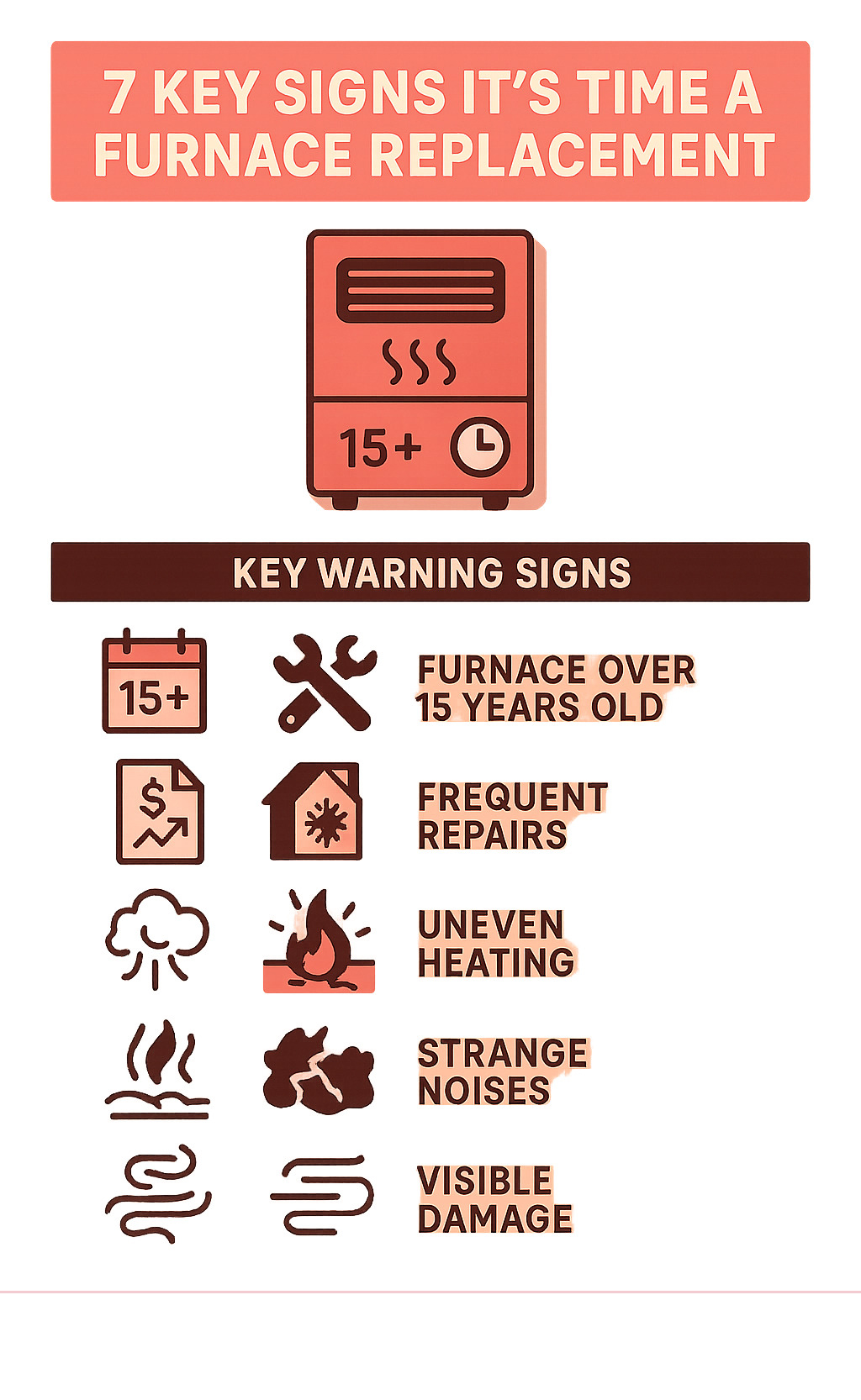
Home furnace replacement becomes necessary when your heating system can no longer efficiently warm your home or poses safety risks. Here are the key indicators that it’s time to replace your furnace:
Most Common Signs:
- Age: Furnace is 15-20+ years old
- Frequent repairs: Multiple service calls in recent years
- Rising energy bills: Significant increases without usage changes
- Uneven heating: Some rooms consistently warmer or colder
- Strange noises: Popping, rattling, or squealing sounds
- Visible damage: Rust, cracks, or corrosion on the unit
- Poor air quality: Increased dust, dry air, or respiratory issues
The average furnace lasts 15 to 30 years with proper maintenance. However, older systems operate at only 56% to 70% efficiency, while modern systems can achieve up to 98.5% efficiency. This means a new furnace can significantly cut your heating costs.
One AAA customer shared their experience: “We have used AAA for many years. They are always professional and do a great job. We just had our furnace and air conditioner replaced. The installers were great. They were very professional and did a great job. They were very neat and cleaned up everything when they were done. I would highly recommend them.”
I’m Dan Walsh, and with years of experience overseeing furnace replacements in the St. Louis area, I know that understanding these warning signs helps homeowners make confident decisions about this important investment.
Ignoring these warnings can lead to unexpected breakdowns, higher utility bills, and potentially unsafe conditions. For more details, see our guide on Top 9 Common Heating Service and Furnace Repair Issues.
When to Repair vs. Replace Your Furnace
Deciding between repair and replacement involves weighing short-term costs against long-term benefits. A good guideline is the “1/3 rule”: if a repair costs more than one-third of a new furnace’s price, replacement is often the smarter financial choice, especially for an older unit.
Repairing an 18-year-old furnace may not be cost-effective. A new system offers better efficiency, lower bills, and improved comfort. While we provide expert Furnace Repair services, our technicians will be transparent if replacement is the more economical solution.
Common Problems That Lead to Replacement
Certain furnace problems are red flags that a full home furnace replacement is needed:
- Cracked Heat Exchanger: A serious safety hazard that can leak carbon monoxide into your home. Due to the severe health risk, this issue almost always requires immediate replacement.
- Blower Motor Failure: The blower motor circulates warm air. Its failure leads to uneven heating and can be a costly repair on older units, often pointing toward replacement.
- Frequent Cycling: Frequent on-and-off cycling indicates a possible sizing or internal problem, causing component stress, uneven heat, and wasted energy.
- Ignition Control Issues: Faulty ignition controls or pilot lights can prevent the furnace from starting, leaving you in the cold.
- Tripped Circuit Breaker/Blown Fuse: Frequent breaker trips can signal an overworked motor or electrical system, indicating a deeper problem.
When these issues arise in an older furnace, repair costs can add up, making replacement a more sensible investment. If you’re unsure, our technicians can provide a thorough assessment. For guidance, see our article on When should you call a HVAC professional for furnace repair?.
Understanding the Costs of a Home Furnace Replacement
Understanding the costs of a home furnace replacement helps you budget effectively. The total price varies, but knowing the key factors will help you make a confident decision for your home’s comfort and efficiency.
The main factors that influence your replacement cost include:
- Furnace type (gas, electric, oil, or alternative fuel)
- Unit size measured in BTUs to match your home’s heating needs
- Energy efficiency ratings, particularly AFUE percentages
- Labor and installation complexity
- Ductwork condition and any necessary modifications
The furnace unit itself is about 60% of your total investment, with labor at 25%. The remaining 15% covers disposal of your old unit, additional equipment, and necessary permits.
For homeowners in the St. Louis, St. Charles, and Warren County area, it’s worth noting some changes in available incentives. Unfortunately, there’s Surprising News for Missouri Homeowners: Ameren is Ending HVAC Rebate Programs in December 2024 After 11 Years. However, federal programs may still provide savings. You can explore current options at Federal tax credits for energy efficiency.
How Furnace Type Affects Replacement Cost
Your choice of furnace type impacts both upfront and long-term costs. Each fuel source has unique pros and cons for your home.
Natural gas furnaces are popular in the St. Louis area for their efficiency and reasonable operating costs. Installation is straightforward with existing gas lines and good ductwork.
Electric furnaces have a lower upfront cost and simpler installation but can be more expensive to operate due to electricity rates in our cold Midwest winters.
Oil and solid fuel options are for homes without natural gas access but typically have higher unit and installation costs.
Here’s how the main factors compare between gas and electric systems:
| Factor | Gas Furnace | Electric Furnace |
|---|---|---|
| Unit Cost | Moderate | Lower |
| Installation Cost | Moderate (with existing ductwork) | Lower (with adequate electrical) |
| Operating Cost | Generally lower in our area | Higher due to electricity rates |
| Ductwork Impact | Significant if new ducts needed | Significant if new ducts needed |
| Fuel Availability | Widely available in urban/suburban areas | Universal availability |
In our St. Louis, St. Charles, and Warren County service areas, natural gas availability makes gas furnaces a practical choice for most homes. Our technicians can help you choose the fuel type that makes the most sense for your budget.
Are There Rebates or Tax Credits Available?
A home furnace replacement is a significant investment, and we help customers find all available savings. While programs change, there are often opportunities to reduce your costs.
Federal tax credits are periodically available for homeowners who install high-efficiency HVAC equipment. These programs encourage energy-efficient upgrades. We recommend checking the latest Energy Star information or consulting a tax professional to see what might apply.
Local utility programs have provided rebates in the past. While Ameren Missouri’s HVAC rebate programs ended in December 2024, it’s always wise to check with your provider for new programs.
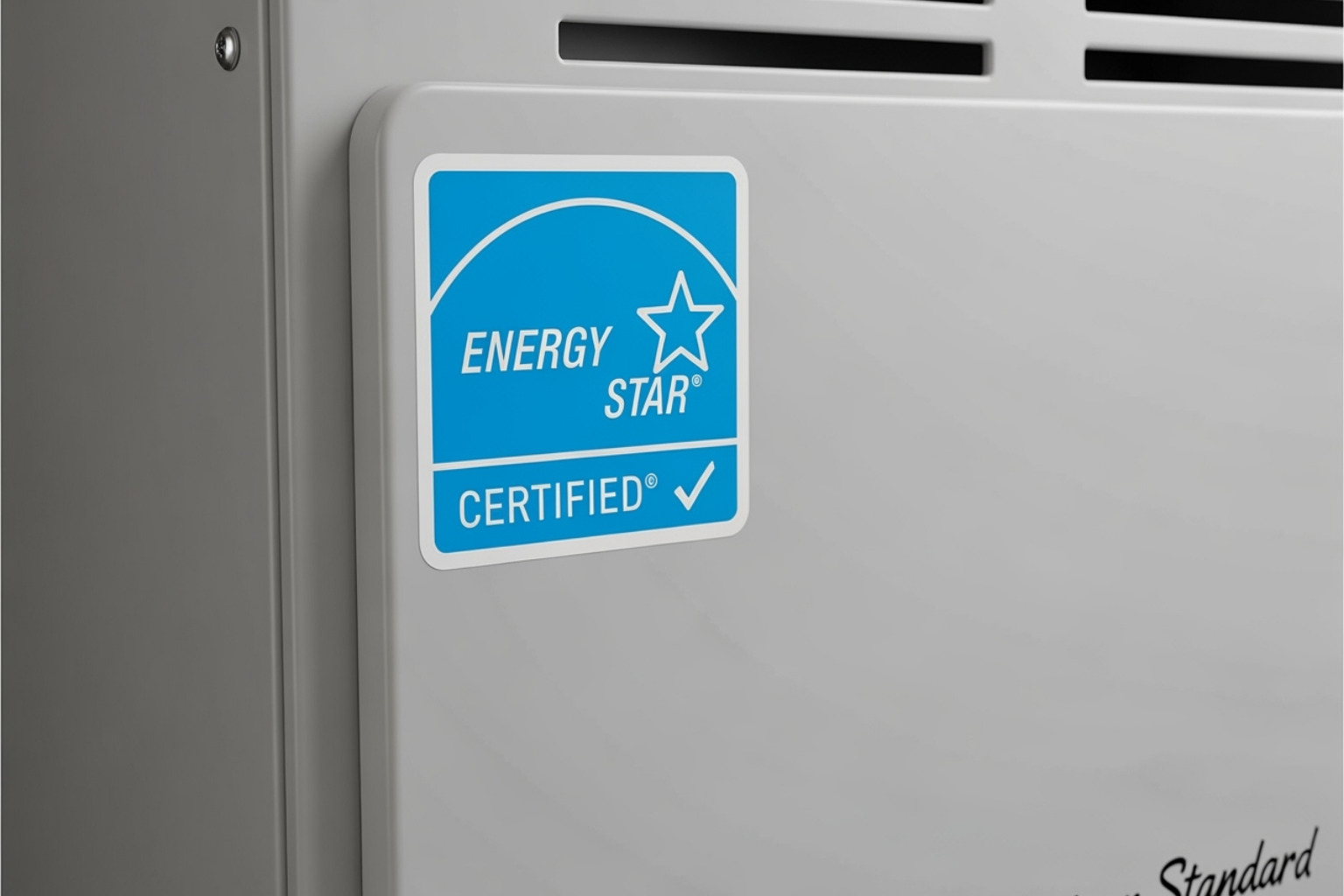
ENERGY STAR certified systems often qualify for various incentives. When you choose an ENERGY STAR rated furnace, you’re investing in superior efficiency and opening the door to potential savings.
Our team stays current on available programs and can guide you. For perspective on how these programs have evolved, you can review our previous guide: Navigating the Rebates, Tax Credits and Savings on HVAC and Water Heaters in 2020.
Choosing the Right New Furnace for Your Home
For a home furnace replacement, choosing the right system is about matching your home’s needs, comfort preferences, and energy goals. The right furnace, properly installed, will serve your family reliably for decades.
Proper sizing is the most critical factor. An oversized furnace will short cycle, causing uneven temperatures and excess wear. An undersized unit will run constantly, failing to keep your home warm and driving up utility costs.
We perform a detailed Manual J load calculation for every installation. This assessment considers your home’s unique features—square footage, insulation, windows, and local climate—to determine the precise heating capacity (BTUs) your home needs.
Energy efficiency, measured by the AFUE (Annual Fuel Utilization Efficiency) rating, is key to long-term savings. A higher AFUE rating means more of your fuel is converted into heat, lowering your monthly bills.
We recommend American Standard HVAC systems for their reliability and longevity, often lasting 20+ years with proper maintenance. Their robust warranty—a 20-year limited warranty on heat exchangers and 10 years on other parts—provides excellent peace of mind.
One recent customer shared their experience: “Austin is always very professional and knowledgeable. He takes the time to explain what he is doing and why. I would highly recommend him.” This kind of ongoing relationship is what we strive for—being your trusted partner for the entire life of your heating system.
Understanding warranty coverage is essential. Most quality furnaces come with manufacturer warranties on parts, and reputable contractors like AAA Home Services provide labor warranties on the installation, giving you confidence in your investment.
For more insight, you can read about Why American Standard HVAC Equipment is the Top Choice for St. Louis Homes.
The Importance of Energy Efficiency (AFUE)
AFUE is your key to understanding furnace efficiency. An 85% AFUE rating means 85 cents of every fuel dollar heats your home, while 15 cents is lost.
The difference between standard and high-efficiency furnaces is significant. Today’s minimum AFUE is 80%, but high-efficiency models reach 90% to 98.5% by using a secondary heat exchanger to capture waste heat.
Long-term savings are substantial. Upgrading from an old furnace (56%-70% AFUE) to a modern high-efficiency unit can significantly cut energy costs. Over the furnace’s lifespan, these savings add up. Choosing a high-efficiency furnace also means reduced carbon emissions. To learn about cooling system efficiency, see our guide: Understanding SEER Ratings: A Guide to Choosing the Best American Standard HVAC System for Your Home.
Single-Stage, Two-Stage, and Variable-Speed Furnaces
Modern furnaces offer different levels of control to match your comfort and efficiency goals.
Single-stage furnaces run at 100% capacity. This straightforward approach can cause noticeable temperature swings as the system cycles on and off.
Two-stage furnaces have two settings: a low one for mild days and a high one for cold weather. This provides more consistent temperatures, quieter operation, and better efficiency.
Variable-speed blowers offer the ultimate in comfort. They adjust their output incrementally, delivering the precise amount of heat needed. This results in the most consistent temperatures, superior air filtration, and the quietest operation. Our technicians can help you determine which system best fits your needs.
The Installation Process and Choosing a Contractor
A professional installation is just as important as choosing the right unit. It ensures your system runs safely, efficiently, and lasts for decades.
On installation day, our licensed and insured technicians will handle everything. We recommend clearing the area around your furnace beforehand. The process includes carefully disconnecting and properly disposing of your old unit, connecting the new American Standard furnace to your ductwork and utility lines, and performing comprehensive system testing. Installation typically takes 4 to 10 hours, and we ensure everything is operating perfectly before we leave.
One of our regular customers shared their experience: “I have used AAA for many years and have always been happy with their service. The technicians are always professional and do a great job. I would highly recommend them.” This level of service extends to every installation we perform. For more on our commitment to excellence, visit Why Choose AAA Home Services as Your Go-To for Comfort and Efficiency?.
How to Choose the Best HVAC Contractor for Your Home Furnace Replacement
Choosing the right contractor is crucial for a successful home furnace replacement. Look for value, not just the lowest price.
- Get a detailed, written estimate that outlines all costs, including the unit, labor, and disposal. Be wary of bids that seem too low.
- Check reviews and reputation. Real customer feedback, like our 8,000+ Google reviews, reveals a company’s true level of service.
- Verify credentials. Ensure your contractor is licensed, insured, and employs NATE-certified technicians, who have proven their expertise.
- Look for fair, honest pricing. A reputable contractor is transparent about all charges and builds a relationship on trust.
For more insights into what goes into a professional installation, check out our guide: New Furnace Installation.
Should I Replace My Air Conditioner at the Same Time?
If your air conditioner is 10-15 years old, replacing it with your furnace is often a smart financial and practical decision.
- Matched systems are more efficient. A new furnace and old AC can’t achieve optimal performance together. Manufacturers design them to work as a cohesive unit.
- Age is a key factor. An older AC unit has a much lower SEER rating than modern, energy-efficient models.
- You’ll save in the long run. Installation costs are lower when done together, and you avoid future repair bills for an aging AC, while enjoying lower energy bills year-round.
- Overall system efficiency improves dramatically. A matched, modern HVAC system provides more consistent temperatures, better humidity control, and quieter operation.
We can evaluate your AC unit and help you decide if a combined replacement makes sense. Learn more in our guide: AC Unit Replacement.
Frequently Asked Questions about Home Furnace Replacement
Considering a home furnace replacement brings up many questions. With over 50 years of experience serving the St. Louis, St. Charles, and Warren County areas, we’ve compiled answers to the most common ones.
How long does a furnace typically last?
A well-maintained furnace typically lasts 15 to 30 years. This lifespan depends heavily on the quality of the unit and, most importantly, regular professional maintenance. Annual tune-ups are key to maximizing your furnace’s life and preventing premature failure.
For practical tips on extending your furnace’s life, check out our guide: Ensure your warmth with regular furnace maintenance.
How much can I save with an energy-efficient furnace?
The savings can be impressive. Upgrading from an older furnace (which may have an AFUE of only 56% to 70%) to a modern, high-efficiency model (up to 98.5% AFUE) translates directly to your utility bills. For the average home, installing new, efficient heating and air conditioning equipment can significantly cut energy costs, providing a great return on investment.
One of our long-time customers experienced these benefits firsthand: “We have used AAA for many years and have always been happy with their service. They are always professional and do a great job. I would highly recommend them.”
Why is correct furnace sizing so important?
Correct furnace sizing is critical for efficiency and comfort. We use a Manual J load calculation to determine your home’s exact heating needs.
- An oversized furnace will “short cycle” (turn on and off too frequently), causing uneven heat and premature wear on components.
- An undersized unit will run constantly without being able to keep your home warm, especially on the coldest days.
A properly sized furnace operates smoothly, providing consistent heat and a longer system lifespan.
As one satisfied customer shared: “Austin is always very professional and knowledgeable. He takes the time to explain what he is doing and why. I would highly recommend him.” Our technicians ensure your new furnace is perfectly matched to your home.
Your Partner for a Warm and Efficient Home
A home furnace replacement is a major investment in your family’s comfort and your home’s value. Understanding the warning signs, choosing the right system, and ensuring professional installation are key to getting the most from your new furnace.
For over 50 years, AAA Home Services has been the trusted partner for heating solutions in St. Louis, St. Charles, and Warren County. Our commitment to fair, honest pricing and award-winning service is reflected in our 8,000+ Google reviews from satisfied customers.
One longtime customer perfectly captures what sets us apart: “We have used AAA for many years. They are always professional and do a great job. We just had our furnace and air conditioner replaced. The installers were great. They were very professional and did a great job. They were very neat and cleaned up everything when they were done. I would highly recommend them.” This relationship, built on trust and quality work, is what we strive for with every customer.
Our licensed technicians specialize in reliable, efficient American Standard HVAC systems. We ensure your new furnace is properly sized, professionally installed, and thoroughly tested. We are committed to making your home furnace replacement experience smooth and stress-free.
Ready for a more comfortable, efficient home? Contact us today to schedule your consultation for a Best New Furnace Installation. Let us show you why homeowners in the Greater St. Louis area have trusted AAA Home Services for more than five decades.


