



Is Your AC Ready for Replacement? Here’s What You Need to Know
If you’re searching for information about ac unit replacement, you’re in the right place. Here’s a quick overview of when you should consider replacing your AC unit:
- Age: Your AC unit is 10-15 years old
- Efficiency: Energy bills have steadily increased
- Repairs: Frequent breakdowns or costly repairs
- Performance: Inconsistent cooling or poor airflow
- Refrigerant: Unit uses phased-out R-22 refrigerant
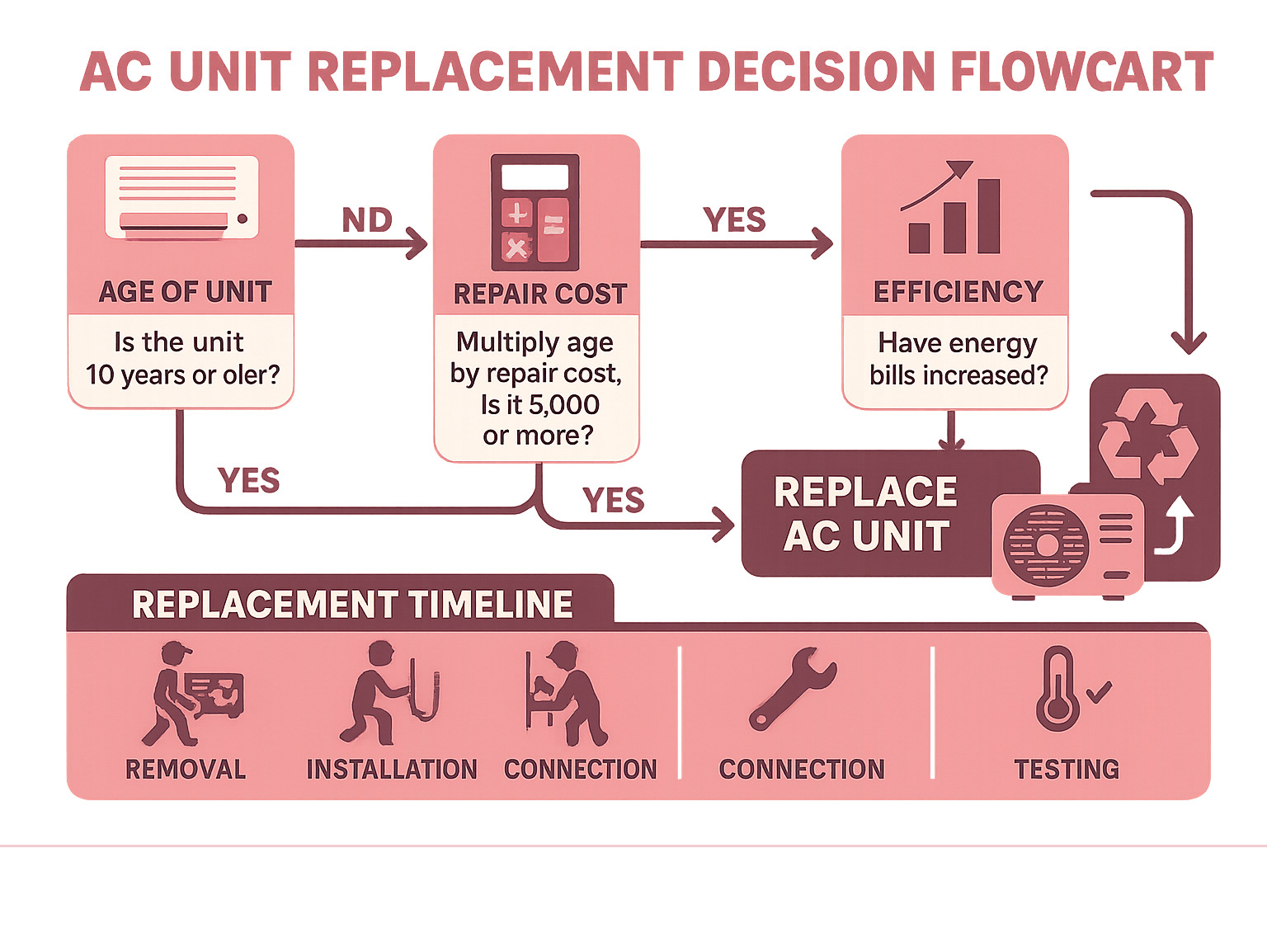
Use the $5,000 rule: Multiply your AC’s age by repair cost. If over $5,000, replacement is often more economical.
Replacing your air conditioning unit ranks among the most significant home investments you’ll make. It’s not just about restoring cool air—it’s about improving comfort, reducing energy costs, and ensuring reliable performance for years to come.
When your AC system starts showing signs of decline, the decision between repairing and replacing becomes increasingly important. Modern units offer substantial efficiency improvements over older models, with new SEER2 ratings providing better performance while consuming less electricity.
Many homeowners delay replacement until their system completely fails, often during the hottest days of summer. This reactive approach typically leads to higher installation costs, limited equipment choices, and unnecessary discomfort.
I’m Dan W, and I’ve spent years managing home repair services and technicians specializing in ac unit replacement, helping countless homeowners steer this important decision with confidence and clarity. Let me guide you through understanding when replacement makes sense, what to look for in a new system, and how to ensure a smooth installation process.
Ac unit replacement terms to know:
AC Unit Replacement 101: What It Is & When You Need It
That trusty air conditioner keeping your family comfortable won’t last forever. Most residential AC systems serve faithfully for about 10-15 years before efficiency drops, repair calls increase, and comfort levels decline. As your system ages, you’ll likely notice rising energy bills, more frequent service calls, and possibly issues related to outdated refrigerants being phased out for environmental reasons.
Deciding whether it’s time for an ac unit replacement is a significant home investment decision – but one that can deliver impressive returns through improved comfort, substantial energy savings, and peace of mind for years to come. At AAA Home Services, we’ve guided thousands of St. Louis area homeowners through this important transition.
What Exactly Is AC Unit Replacement?
When we talk about ac unit replacement, we’re describing much more than just swapping out that outdoor box. A complete replacement is a comprehensive system upgrade that includes several critical components working together as a matched system:
Your replacement typically involves a new outdoor condenser unit (the box most people call their “air conditioner”), a fresh indoor evaporator coil that transfers heat properly, new or cleaned refrigerant lines connecting these components, often an updated thermostat for better control, and a properly functioning condensate drainage system to manage moisture.
When professionally installed, your new cooling system delivers benefits you’ll notice immediately – quieter operation, more consistent temperatures throughout your home, better humidity control on those sticky St. Louis summer days, and that welcome drop in your monthly utility bills. Many homeowners are surprised by just how much more comfortable their entire home feels after a proper ac unit replacement.
Should You Repair or Opt for AC Unit Replacement?
This question weighs on many homeowners’ minds when their cooling system starts acting up. While each situation is unique, we’ve developed some reliable guidelines to help you make this important decision:
Age matters significantly. Once your system passes the 10-year mark, efficiency naturally declines while the risk of major component failure increases. Systems older than 15 years are almost always prime candidates for replacement rather than repair.
Frequency of repairs tells a story. If you’re on a first-name basis with your service technician because they’ve visited multiple times in recent years, those repair costs add up quickly. Investing in a new system often makes more financial sense than pouring money into an aging unit.
The $5,000 rule provides helpful clarity. Simply multiply your unit’s age by the repair cost – if the result exceeds $5,000, replacement typically makes better financial sense. For example, a 12-year-old system needing a $500 repair equals $6,000, suggesting replacement is the smarter investment.
Refrigerant type is increasingly important. If your system uses R-22 refrigerant (Freon), replacement becomes more urgent. This refrigerant has been phased out due to environmental concerns, making repairs increasingly expensive as supplies continue to dwindle.
Energy efficiency trends provide clear signals. When your cooling costs climb steadily despite regular maintenance, your system is likely becoming significantly less efficient than modern alternatives.
Persistent comfort issues shouldn’t be ignored. If you’re experiencing uneven cooling, excessive humidity, or your system struggles to maintain set temperatures, these are signs your current equipment may no longer be adequate for your home’s needs.
When these factors align, investing in a new, energy-efficient cooling system isn’t just about restoring comfort – it’s about enhancing your home’s efficiency, reducing your environmental footprint, and enjoying reliable performance for many summers to come.
Planning Your Perfect System: Sizing, Efficiency & Type
Finding your ideal cooling system shouldn’t be rushed. A little homework today rewards you with better comfort, lower bills, and fewer headaches for the next decade or more.
Load Calculations & the Right Size
AAA technicians always begin with a Manual J load calculation4an engineering method that considers square footage, insulation levels, window placement, local climate, and the number of occupants. The result is a cooling requirement expressed in tons (12,000 BTUs each). A typical 1,50062,000 sq-ft St. Louis home lands near 3 tons, but yours could differ.
Correct sizing matters. Oversized equipment short-cycles, leaves humidity behind, and wears out early. An undersized unit runs nonstop and still struggles to reach set-point, driving energy costs up.
Navigating SEER2 Ratings & Technology Upgrades
SEER2 is the “miles-per-gallon” label for air conditioners. New installations in our region must be at least 13.4 SEER2, yet units above 20 SEER2 are readily available. Each point typically trims cooling costs by about 810 %.
Modern features worth considering:
- Variable-speed compressors that match output to demand for steady temperatures and exceptional humidity control.
- Zoning and smart thermostats that cool occupied rooms instead of the whole house.
- Optional filtration and de-humidification add-ons that improve indoor air quality while the system runs.
According to scientific research on energy efficiency, upgrading to a properly sized, high-efficiency system is one of the most impactful energy improvements you can make.
At AAA Home Services, we walk you through these choices in plain language and recommend equipment that fits your home, comfort goals, and budget4never a one-size-fits-all upsell.
The AC Unit Replacement Process Step-by-Step
When you decide it’s time for a new AC, understanding the ac unit replacement process helps you know exactly what to expect. Before any installation begins, we handle the groundwork: a thorough assessment of your current system, detailed load calculations, and a transparent discussion about your comfort needs and budget. We’ll provide clear recommendations without sales pressure, and once you’re ready, we can often schedule your installation for the same day or next day, depending on our availability.
We take care of all the paperwork too, securing any permits required by your local municipality. And we’ll give you simple guidance on preparing your home, like clearing access paths to work areas so our technicians can move efficiently.
Day-Of Timeline: From Removal to Cool Air
When installation day arrives, our certified technicians show up on time with smiles on their faces and floor coverings to protect your home. A typical ac unit replacement takes between 4-8 hours, depending on complexity. Here’s how your day will unfold:
Morning (First 2-3 hours):
Our team starts by reviewing the installation plan with you, answering any last-minute questions. Then we safely recover the refrigerant from your old system (following strict EPA regulations), disconnect the electrical components, and remove both the outdoor condenser unit and the indoor evaporator coil. If your concrete pad needs leveling or the indoor mounting location requires modifications, we’ll take care of that too.
Afternoon (Next 2-5 hours):
This is where the magic happens! We’ll position and secure your new outdoor unit, install the new indoor coil, and connect and seal the refrigerant lines. Our technicians carefully make all electrical connections, test them for safety, evacuate the system, and charge it with the proper amount of refrigerant. Once your thermostat is installed and programmed, we fire up the system for thorough testing.
Before we leave, we’ll walk you through operating your new system and explain basic maintenance requirements. We want you feeling confident with your new investment!
Hidden Extras Homeowners Forget During AC Unit Replacement
When planning your ac unit replacement, it’s easy to focus solely on the equipment cost. But several additional components often play crucial roles in your system’s performance and longevity.
That copper refrigerant line connecting your indoor and outdoor units? It needs protection from weather, lawn equipment, and curious critters. We recommend installing a protective covering system that not only shields these vulnerable lines but improves your home’s appearance and can even boost efficiency.
Water management matters too. Your AC removes moisture from your home’s air, and that water needs somewhere to go. Older drainage systems sometimes can’t handle the increased moisture removal of newer, more efficient units. A proper condensate pump and drainage setup prevents water damage and mold issues down the road.
Modern AC systems often have different electrical requirements than older models. Your home might need electrical updates including dedicated circuits, proper disconnects, or panel modifications to meet current safety codes and ensure your new system runs correctly.
While not always necessary, upgrading to a smart thermostat during installation makes perfect sense. Why pair your high-efficiency system with outdated controls? Modern thermostats can significantly improve your comfort while maximizing those energy savings.
Sometimes your existing ductwork needs attention too. Sealing leaky ducts, cleaning years of accumulated dust, or modifying airflow paths can dramatically improve your new system’s performance. Proper airflow is absolutely essential for both efficiency and comfort.
Cost Influencers, Incentives & Financing Tools
The investment for an ac unit replacement varies from home to home, so any “one-price-fits-all” quote you see online is suspect. Here are the biggest factors that affect what you’ll pay a0and the programs that can make the purchase easier.
Key Cost Drivers Beyond the Unit
- System capacity larger homes need more tons of cooling.
- Efficiency tier higher SEER2 ratings cost more up front but save energy for years.
- Installation complexity attic or crawl-space work, difficult line-set runs, or duct repairs increase labor hours.
- Electrical upgrades modern systems sometimes need dedicated circuits or panel improvements to meet code.
- Timing planning replacement during spring or fall often avoids peak-season pricing and scheduling bottlenecks.
Incentives & Financing Paths to Make AC Unit Replacement Easier
Federal tax credits created by the Inflation Reduction Act can trim the net cost of qualifying high-efficiency equipment. Manufacturers frequently offer rebates as well, and AAA Home Services keeps track of current promotions for you.
If paying in full isn’t practical, ask about our flexible financing plans with competitive rates. Many homeowners also bundle furnace and AC replacements to capture additional savings and ensure perfectly matched heating and cooling.
Maintaining Your New System & Avoiding Rookie Mistakes
Once your new air conditioning system is installed, proper maintenance is essential to maximize its lifespan, efficiency, and performance. A well-maintained system can last years beyond its expected lifespan, while neglected equipment often fails prematurely.
Post-Install Maintenance Checklist
Follow these guidelines to keep your new system running optimally:
-
First 30 Days:
- Check and replace the air filter if it’s become dirty during the break-in period
- Listen for any unusual noises that might indicate installation issues
- Monitor your energy bills to establish a baseline for your new system
-
Seasonal Maintenance:
- Schedule professional tune-ups twice yearly (spring for cooling, fall for heating)
- Keep the outdoor unit clear of debris, leaves, and plant growth
- Ensure all vents and returns are unobstructed
-
Ongoing Care:
- Change air filters every 1-3 months depending on filter type and air quality
- Keep the area around your outdoor unit clean and clear (minimum 2 feet of clearance)
- Monitor your thermostat settings to optimize efficiency
- Inspect condensate drain lines periodically for clogs
-
Annual Professional Service:
- Coil cleaning
- Refrigerant level check
- Electrical connection tightening
- Thermostat calibration
- Moving parts lubrication
- Condensate system inspection
At AAA Home Services, we offer maintenance plans that ensure your system receives regular professional care, often at a significant discount compared to individual service calls.
Mistakes That Shorten AC Lifespan
Avoid these common errors that can reduce your system’s efficiency and lifespan:
-
Skipping Regular Maintenance: This is the #1 cause of premature system failure. Regular professional maintenance can identify and resolve small issues before they become major problems.
-
Ignoring Filter Changes: Dirty filters restrict airflow, forcing your system to work harder and potentially causing compressor damage.
-
DIY Refrigerant Adjustments: Never attempt to add refrigerant yourself. This requires professional equipment, EPA certification, and precise measurements. Incorrect refrigerant levels can damage your compressor.
-
Blocking Airflow: Ensure furniture, drapes, and decorations don’t obstruct vents or returns. The outdoor unit needs at least 2 feet of clearance on all sides.
-
Ignoring Strange Noises or Odors: These are often early warning signs of developing problems. Call a professional at the first sign of unusual operation.
-
Extreme Thermostat Settings: Setting your thermostat extremely low doesn’t cool your home faster but does strain your system unnecessarily.
-
Neglecting Ductwork: Leaky ducts can reduce efficiency by 20-30%. Have them inspected periodically and sealed if necessary.
By avoiding these mistakes and following proper maintenance procedures, you’ll maximize your return on investment and enjoy reliable comfort for many years.
Frequently Asked Questions about AC Unit Replacement
How long does AC unit replacement take in a typical home?
When homeowners ask me about timing for an ac unit replacement, I typically tell them to set aside 4-8 hours for a standard installation. Most St. Louis homes fall within this timeframe when the job is straightforward.
Your specific timeline might stretch a bit longer if your home has unique challenges. Older homes sometimes need electrical updates to handle modern systems safely. Homes with difficult access points—like tight attics or complicated basement setups—naturally take our technicians a bit longer to steer. And if we find your ductwork needs significant modifications to optimize airflow, that adds extra steps to the process.
At AAA Home Services, we typically send a team of 2-3 skilled technicians to your home. This crew approach helps us work efficiently while maintaining our quality standards. During your initial consultation, we’ll assess your specific situation and give you a more precise timeline so you can plan your day accordingly.
Is AC unit replacement worth it if my current system still cools?
I hear this question frequently from homeowners whose air conditioners are limping along but technically still working. The answer often surprises them.
Even when your older system still produces cool air, replacing it can make remarkable financial sense. Today’s air conditioners operate with dramatically improved efficiency compared to models from just a decade ago. Many of our customers see their cooling costs drop by 20-40% after upgrading to a modern high-efficiency system—savings that accumulate month after month, year after year.
There’s also tremendous value in choosing your timing rather than having it forced upon you. Replacing your system proactively means you can research options, take advantage of current tax credits and manufacturer rebates, and schedule the work when it’s convenient for your family. This beats an emergency replacement during the hottest week of summer when you’re desperate for relief and options may be limited.
Beyond the financial aspects, newer systems simply deliver better comfort. You’ll notice more consistent temperatures throughout your home, improved humidity control during those sticky St. Louis summers, and significantly quieter operation. Plus, a new efficient system adds real value to your home if you’re considering selling in the coming years.
Can I install a new AC unit myself to save money?
While I appreciate the DIY spirit that drives this question, ac unit replacement falls firmly in the “leave it to the professionals” category. There are several critical reasons for this:
First, handling refrigerant legally requires EPA certification—it’s not just a recommendation but a federal requirement. Proper refrigerant handling involves specialized knowledge and equipment to prevent environmental damage and personal injury.
Your warranty protection is another major consideration. Most manufacturers will void equipment warranties if anyone other than a licensed professional installs the system. That protection can save you thousands over the life of your unit.
The technical aspects of installation go well beyond simply connecting a few wires and pipes. Proper installation requires precise calculations for refrigerant charging, electrical load testing, airflow balancing, and system calibration. Even small errors in these areas can lead to inefficient operation, premature system failure, or even dangerous conditions in your home.
At AAA Home Services, our technicians undergo rigorous training and certification specifically for these complex installations. They arrive with specialized tools like vacuum pumps, manifold gauges, and torque wrenches that most homeowners don’t have in their toolboxes. More importantly, they bring decades of collective experience that helps them anticipate and prevent the common problems that can plague improperly installed systems.
The peace of mind that comes with professional installation—knowing your system is safe, efficient, and fully warranted—is truly invaluable when you consider the long-term comfort of your family.
Conclusion
Starting on an ac unit replacement journey might seem daunting at first, but it doesn’t have to be a stressful experience. With the right information and a trusted partner by your side, this important home improvement can be steerd with confidence and peace of mind. A properly sized and installed modern air conditioning system rewards you with years of reliable comfort while significantly reducing those monthly energy bills.
As we’ve explored throughout this guide, making informed decisions about your home cooling system pays dividends for years to come. Remember to apply the $5,000 rule when weighing repair versus replacement options – it’s a simple calculation that can save you from throwing good money after bad on an aging system. Proper sizing through professional load calculations ensures you don’t end up with an oversized or undersized unit that struggles to keep your home comfortable.
Don’t overlook the long-term value of higher efficiency ratings and advanced features. While these options might increase your initial investment, the energy savings and improved comfort often make them worthwhile over the life of your system. And be sure to ask about available rebates, tax credits, and financing options that can make your upgrade more affordable than you might expect.
Once your beautiful new system is installed, regular maintenance becomes your best friend. Simple steps like changing filters on schedule and scheduling annual professional tune-ups can dramatically extend your system’s lifespan and maintain its efficiency.
Here at AAA Home Services, we’ve been cooling St. Louis, St. Charles, and Warren County homes for more than 50 years. Our team brings not just technical expertise to your ac unit replacement, but also the genuine care and attention to detail that comes from being your neighbors. We understand this is a significant investment in your home’s comfort and value, which is why we take the time to listen, explain your options clearly, and provide honest recommendations without high-pressure sales tactics.
When you’re ready to explore your cooling options, we’re here to help with same-day or next-day service availability in many cases. The trust our community places in us is reflected in our 8,000+ Google reviews with outstanding ratings – a testament to our commitment to excellence in every installation we perform.
Don’t wait until your AC surrenders on the hottest day of summer. Contact AAA Home Services today to schedule a consultation and find how simple and stress-free ac unit replacement can be with the right team on your side.


