



Why a Water Heater Upgrade Matters for Your Home
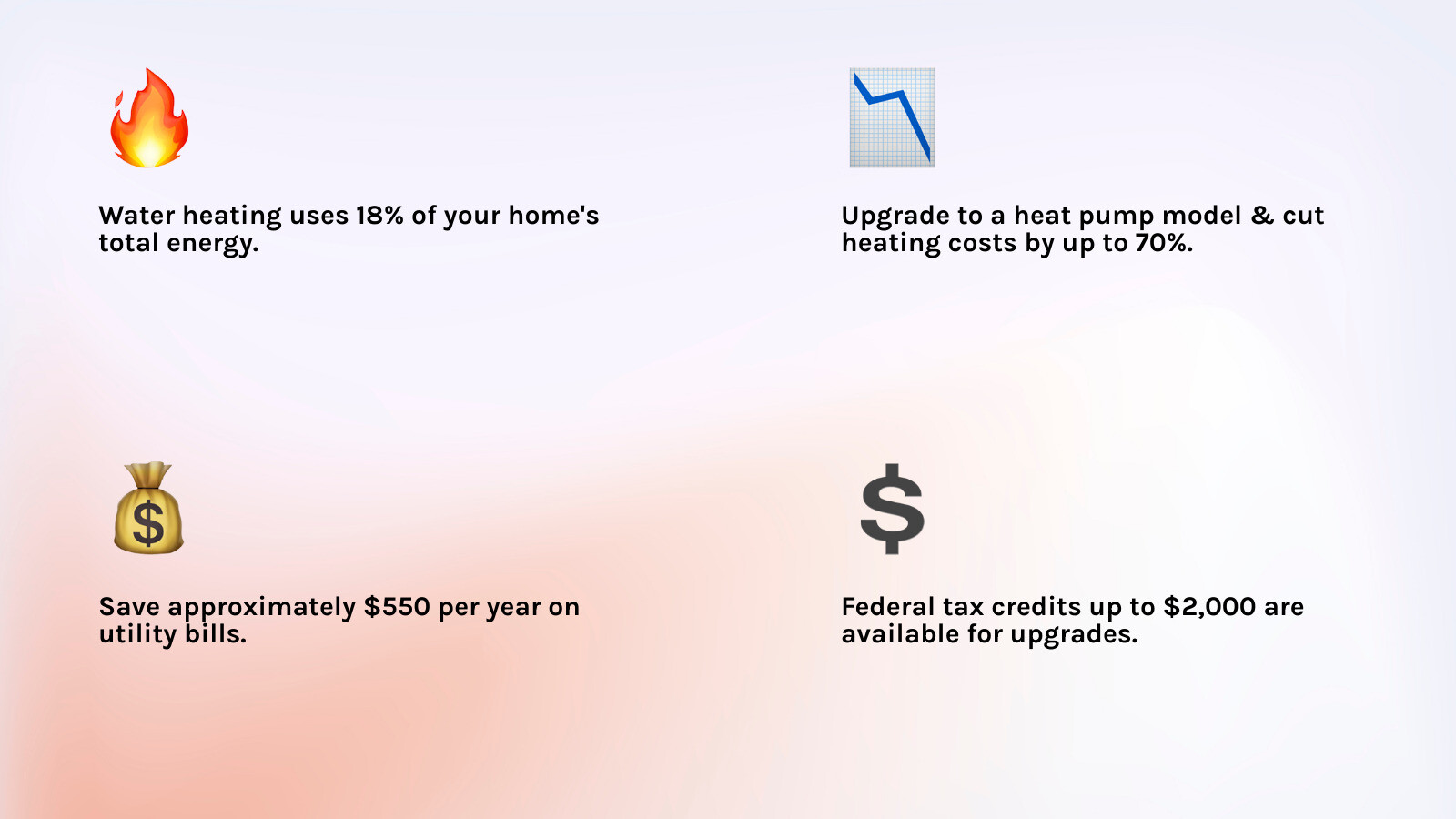
A water heater upgrade can deliver significant benefits, including lower energy bills, more reliable hot water, and improved safety. Water heating accounts for roughly 18% of your home’s energy use—more than your refrigerator, dishwasher, clothes washer, and dryer combined. With energy bills averaging $400 to $600 annually just for hot water, an aging or inefficient unit quietly drains your budget.
Upgrading to a high-efficiency model like a heat pump water heater can reduce water heating costs by up to 70%, saving a typical household around $550 per year. Modern units also provide more consistent hot water, recover faster, and offer safety improvements like automatic shut-offs and leak detection. With federal tax credits up to $2,000 and local rebates available, a proactive upgrade is a smart investment.
I’m Dan Walsh, and through my work at AAA Home Services, I’ve helped countless Greater St. Louis homeowners find water heater solutions that fit their homes and budgets. I’ve seen how the right upgrade delivers lasting comfort and savings.
Many homeowners only think about their water heater when it fails, leading to rushed decisions. A proactive approach, however, can save you stress, money, and cold showers. A standard tank water heater lasts 8 to 12 years, and its efficiency declines with age. If you’re experiencing high utility bills, your old water heater might be the culprit.
Signs that you need a water heater upgrade include:
- Old age: If your unit is over 8 years old, it’s time to plan for a replacement.
- Lack of hot water: Running out of hot water quickly can indicate a failing unit, sediment buildup, or improper sizing. If your hot water heater stops working, it’s a clear signal for a professional assessment.
- Leaks: Water pooling around the base is a serious sign. Leaks can lead to significant water damage and potential mold growth.
- Strange noises: Banging or rumbling sounds often point to sediment buildup, which reduces efficiency and shortens the unit’s lifespan.
- Discolored or smelly water: Rusty or foul-smelling water can indicate internal corrosion or bacterial growth.
Ignoring these signs can lead to a sudden failure, property damage, and safety hazards. By proactively considering a water heater upgrade, you can avoid these stressful situations and ensure your family’s comfort and peace of mind.
Understanding Your Water Heater Upgrade Options
The world of water heaters has evolved, offering a range of options beyond the traditional tank. When planning a water heater upgrade, understanding these choices is crucial for selecting the best fit for your home.
Types of Modern Water Heaters and Their Fuel Sources
Let’s explore the primary types of water heaters available today.
-
Conventional Storage Tank Water Heaters: These common units store and heat water in a large insulated tank.
- Pros: Lower upfront cost, reliable performance.
- Cons: Standby heat loss wastes energy, can run out of hot water, large footprint.
- Fuel Types: Natural gas models are cost-effective to run and heat water quickly. Electric models are often cheaper to install but can have higher operating costs.
-
Tankless (On-Demand) Water Heaters: These units heat water instantly as it flows, eliminating the tank.
- Pros: Endless hot water, significant energy savings, compact size, and a longer lifespan (15-20+ years).
- Cons: Higher upfront cost, may require electrical or gas line upgrades to meet demand.
- Fuel Types: Natural gas is most common, offering high flow rates. Electric models are available but often require substantial electrical panel upgrades. We can help you with a tankless water heater installation in St. Louis.
-
Heat Pump (Hybrid) Water Heaters: These highly efficient electric models pull heat from the surrounding air to heat the water.
- Pros: Two to four times more efficient than standard electric models, saving up to $600 annually. Eligible for large tax credits and rebates.
- Cons: Higher upfront cost, require specific installation conditions like adequate air space and condensate drainage.
- Fuel Type: Exclusively electric. An ENERGY STAR certified model can have a payback period as short as three years.
-
Solar Water Heaters: These systems use solar collectors to heat water.
- Pros: Extremely low operating costs and environmentally friendly.
- Cons: High upfront cost, dependent on sunlight, and require a backup system.
- Fuel Type: Primarily solar, with an electric or gas backup.
When choosing, consider your existing utilities. If you have natural gas, a tankless or high-efficiency tank model may be ideal. If you have an older electric heater, a heat pump offers a dramatic leap in efficiency. We can help you compare a traditional vs. tankless water heater or explore heat pump benefits.
Key Factors for Your Water Heater Upgrade: Sizing and Efficiency
Proper sizing and efficiency ratings are critical for your water heater upgrade.
Sizing a Water Heater
- For Tank Models: The First-Hour Rating (FHR) indicates how many gallons of hot water the heater can supply in one hour. This should match your family’s peak hour demand.
- For Tankless Models: Gallons-Per-Minute (GPM) is the key metric. It’s determined by how many fixtures you might use at once.
Our experts can use our water heater selector tools to help you calculate your needs and find the perfect size.
Energy Efficiency
- Uniform Energy Factor (UEF): This rating measures a water heater’s efficiency—the higher the UEF, the more you save. Conventional tanks have a UEF around 0.6, while tankless models are near 0.8, and heat pumps boast ratings of 3.0 or higher. Always look for the UEF on the EnergyGuide label. We prioritize offering ENERGY STAR certified models, which meet strict efficiency guidelines.
Installation, Maintenance, and Local Regulations
A successful water heater upgrade requires professional installation and maintenance.
Professional Installation Importance
Proper installation is critical for safety and efficiency, especially for heat pump models that need specific clearances, drainage, and airflow. Our licensed technicians ensure your new heater meets all local codes and manufacturer specifications, protecting your warranty and giving you peace of mind.
Professional Water Heater Maintenance
Regular maintenance by a qualified technician is key to your water heater’s performance and longevity. Attempting to service a unit yourself can be unsafe and may void your warranty. Our technicians can perform crucial tasks like:
- Flushing the tank to remove sediment
- Inspecting and replacing the anode rod to prevent corrosion
- Descaling tankless units to maintain efficiency
- Cleaning air filters and condensate lines on heat pump models
Scheduling routine service with AAA Home Services prevents costly repairs and keeps your system running efficiently. Understanding the importance of water heater maintenance is the first step.
Local Regulations
Many regions are adopting stricter efficiency standards for water heaters to reduce energy consumption. Choosing a high-efficiency model today is a future-proof decision that aligns with this growing trend toward electrification and sustainability.
“James S., Chesterfield, MO – Can’t say enough of how great Dan and Tim were in getting us a water heater replaced within a matter of hours. The customer service was so impressive… AAA will be my one and only source for any home appliance or home service needs from here on out. Can’t thank you guys enough, great, great service in all, and the impeccable Customer Service we used to be able to get! Jim”
Maximizing Savings with Your High-Efficiency Water Heater
One of the most compelling reasons for a water heater upgrade is the potential for significant financial savings. Modern, energy-efficient units can put money back in your pocket through reduced utility bills and various incentives.
Open uping Financial Incentives for Your Upgrade
Investing in an energy-efficient water heater upgrade is more affordable thanks to various financial incentives designed to encourage greener choices.
- Federal Tax Credits: The Energy Efficient Home Improvement Credit offers a tax credit of 30% of the cost for qualified systems. For heat pump water heaters, this credit is capped at $2,000 per year, covering both the unit and installation.
- State and Local Rebates: Many utility companies and municipalities offer their own rebate programs. Our team at AAA Home Services stays informed about current programs in the Greater St. Louis area. You can also check for incentives using online resources like the Database of State Incentives for Renewables and Efficiency (DSIRE) and the ENERGY STAR rebate finder.
These incentives can significantly offset the upfront cost of a high-efficiency water heater upgrade. We can help you steer these opportunities to maximize your savings.
Calculating the Long-Term Value of a Water Heater Upgrade
While the upfront cost of a high-efficiency water heater may be higher, the long-term savings are substantial. A water heater upgrade is a smart financial decision with a surprisingly short payback period.
- Reduced Utility Bills: An ENERGY STAR certified heat pump water heater can save a household of four approximately $600 per year on electric bills compared to a standard model. Over its 15-20 year lifespan, that can total over $4,500 in savings.
- Payback Period: Thanks to these energy savings and available incentives, the payback period for a heat pump water heater can be as short as three years.
- Environmental Benefits: Beyond financial savings, upgrading to an efficient system reduces your carbon footprint. This environmental impact is a significant added value for many homeowners.
The decision to pursue a water heater upgrade should consider both the immediate investment and the long-term returns. The benefits of better access to hot water and lower energy bills make it a worthwhile investment.
“Michael M., St. Louis, MO – I had a new water heater installed by Tim and his apprentice. They were both very professional and did a great job. They were on time, cleaned up after themselves, and the new water heater works great. I would definitely recommend them.”
Partnering with a Pro for Your Installation
When considering a water heater upgrade, professional installation is essential. DIY installation can lead to safety hazards, voided warranties, and costly damage.
- Ensuring Safety and Efficiency: Our licensed technicians understand the intricacies of each water heater type. We ensure all connections are secure and the unit operates at peak efficiency.
- Warranty Protection: Most manufacturers require professional installation to keep their warranties valid.
- Compliance with Codes: Our team is fully versed in local building codes in St. Louis, St. Charles, and Warren County, ensuring your upgrade is compliant.
- Peace of Mind: With AAA Home Services, you benefit from our 50+ years of experience and a reputation for fair, honest pricing. We offer same-day or next-day service depending on availability, so you can get your new system installed quickly and correctly. Our water heater repair service is just one aspect of our comprehensive plumbing offerings.
“Maureen B., Ballwin, MO – I have been using this business for the last 10 years and it never dawned on me to use them for my plumbing needs… Of all the plumbers we have hired they were the most professional, reliable, good quality and overall good people! Family owned and they are just excellent. Tim, knows his business, and that was reassuring.”
A water heater upgrade is an investment in your home’s comfort, efficiency, and safety. By understanding your options and partnering with experienced professionals, you can find the best solution for your household.
Explore your new water heater options with our experts today!


