


Why Understanding Air Conditioner Replacement Cost Matters for Homeowners
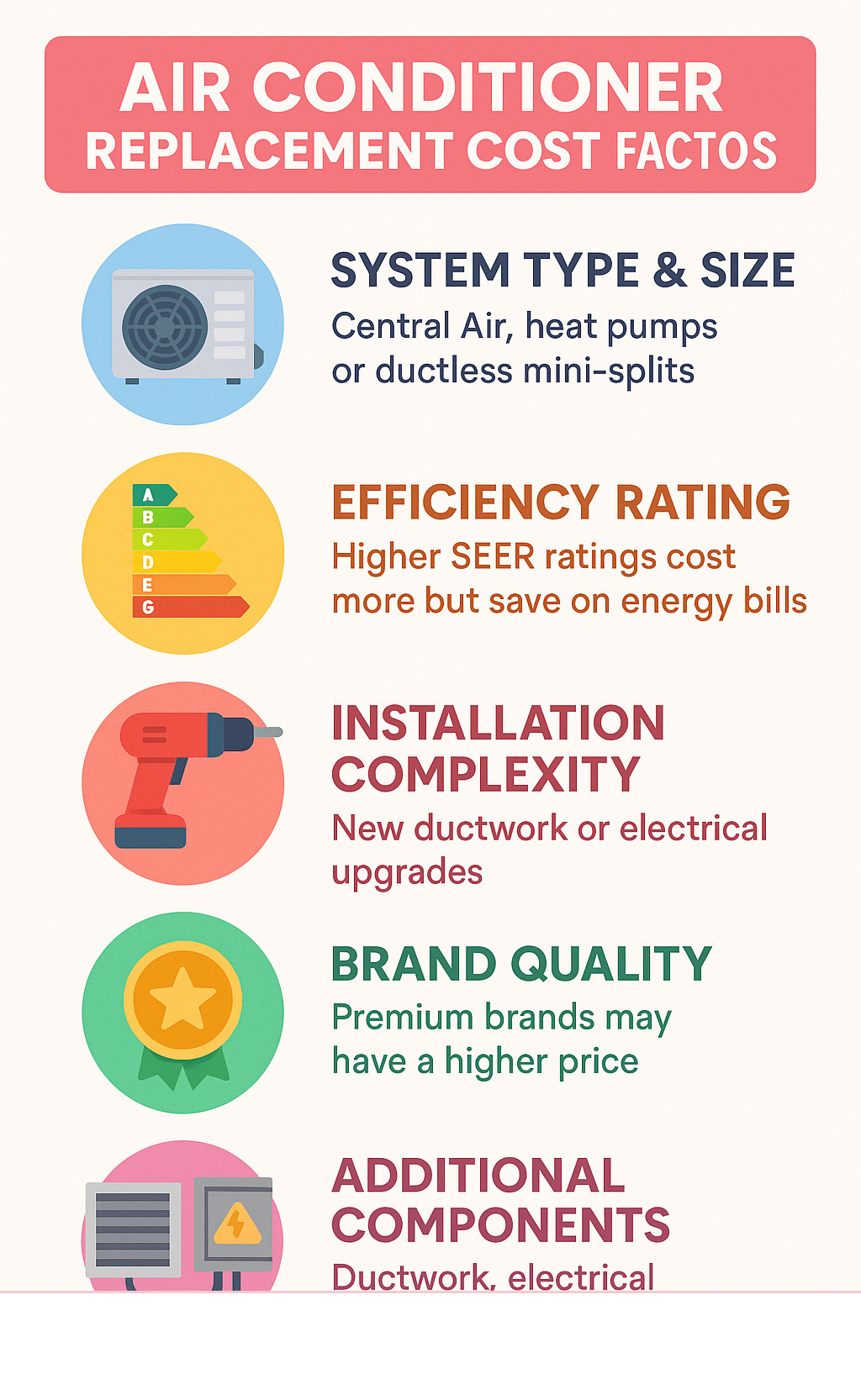
Air conditioner replacement cost is a significant investment for most homeowners, and several key factors influence the final price:
- System Type: Central air, heat pumps, and ductless mini-splits all have different price points.
- Unit Size: A 1.5-ton unit for a small home costs less than a 5-ton unit for a larger one.
- Efficiency Rating: Higher SEER ratings cost more upfront but save on long-term energy bills.
- Installation Complexity: The need for new ductwork or electrical upgrades increases labor costs.
- Brand Quality: Premium brands typically cost more than standard options.
When your AC shows signs of age—like frequent breakdowns or rising energy bills—understanding these factors helps you decide between repair and replacement. Understanding all the cost factors upfront—not just the unit price—helps homeowners make the best choice for their comfort and budget.
When to Repair vs. Replace Your Air Conditioner
Deciding whether to repair or replace your air conditioner is a common dilemma for homeowners. A repair might seem cheaper in the short term, but a replacement often offers better long-term value, especially if the unit is old or needs frequent fixes.
The general rule of thumb is this: if a repair costs more than 50% of a new unit’s price, or if your system is over 10-15 years old and has recurring issues, replacement is usually more economical. For example, a major component failure on an aging unit can be very expensive. Investing that money into an old system that will likely have other problems soon is often not a wise financial decision.
Another critical factor is the refrigerant. If your system uses R-22 Freon, which was phased out in 2020 due to its environmental impact, repairs can be incredibly expensive. The limited supply of R-22 makes it costly, pushing many homeowners toward replacement. You can read about the phase-out of R-22 freon on the EPA’s website.
Telltale Signs Your AC Needs Replacement
Your air conditioner often gives clues when it’s nearing the end of its life. Recognizing these signs can help you plan for a replacement ahead of time.
- Loud or Unusual Noises: Grinding, squealing, or banging sounds are red flags that often indicate worn-out parts or a failing motor.
- Poor Airflow: Weak airflow or uneven cooling can point to duct issues or a failing compressor.
- Excessive Moisture: Puddles around your unit can signal a clogged drain line or a refrigerant leak.
- Foul Odors: Musty or burning smells can indicate mold or electrical issues, affecting your indoor air quality.
- System is Over 10-15 Years Old: Most AC units last 12-15 years. Beyond this, efficiency drops and breakdowns increase.
- Uses R-22 Freon: Units made before 2010 likely use R-22. Since it’s phased out, repairs are very expensive.
- Rising Energy Bills: A sudden spike in utility bills without increased usage means your AC is losing efficiency.
- Frequent Breakdowns: If you’re constantly calling for repairs, a new, reliable system is often more cost-effective.
Key Factors That Influence Your Air Conditioner Replacement Cost
The air conditioner replacement cost involves more than the unit’s sticker price. Understanding the key factors helps you make a smart decision and avoid surprises. Technicians perform detailed calculations to determine what will keep you comfortable without wasting energy.
Unit size refers to cooling capacity (tonnage), not physical dimensions, and is a primary cost driver. Energy efficiency, measured by SEER ratings, is another key factor. Higher SEER ratings mean lower monthly bills but higher upfront costs. Brand and quality also matter, as premium brands may cost more but often offer better warranties and longer lifespans. Finally, installation complexity can increase labor costs if your home needs new ductwork or electrical upgrades.
How AC System Type Affects Your Investment
The type of system you choose has a major impact on your air conditioner replacement cost. Many homes use central air conditioners, which work with existing ductwork. Heat pumps are a versatile alternative that provides both heating and cooling. They can be incredibly efficient in moderate climates and may save money long-term by replacing both your air conditioner and furnace.
| Feature | Central AC | Heat Pump |
|---|---|---|
| Installation Needs | Requires existing ductwork, outdoor condenser, indoor air handler/furnace coil | Requires existing ductwork, outdoor unit, indoor air handler/furnace coil |
| Home Suitability | Ideal for whole-home cooling where ductwork is present | Excellent for whole-home heating and cooling, highly efficient in moderate climates |
| Efficiency | Measured by SEER rating (cooling only) | Measured by SEER (cooling) and HSPF (heating). Generally more efficient for heating than furnaces in milder weather |
Understanding the Air Conditioner Replacement Cost for Your Home
Your home’s unique characteristics play a huge role in the final air conditioner replacement cost. A well-insulated home with efficient windows needs less cooling power, which can mean a smaller, less expensive unit. A hot, humid climate also impacts the size and type of unit that’s best for your home. Additionally, if your existing ductwork is old or leaky, or if your electrical system needs upgrades for a modern unit, these factors will affect the total investment.
Because properly sizing an AC system is complex, a qualified technician performs a detailed Manual J load calculation during an in-home consultation. This ensures you get the right system—never oversized or undersized—for maximum comfort and efficiency.
The Professional Installation Process: What’s Included?
A professional air conditioner replacement is a comprehensive installation that ensures your system operates at peak efficiency for years to come.
Certified technicians bring years of training to handle every aspect of an installation safely and correctly. The process includes:
- Safe removal of old unit: Technicians safely recover refrigerants according to EPA guidelines and remove old equipment.
- Ductwork inspection and modification: They inspect existing ducts for issues that could undermine performance and make necessary repairs.
- Electrical connections: Licensed electricians handle all wiring to meet safety codes, preventing hazards.
- Refrigerant line installation: The installation team installs perfectly sealed and insulated copper lines, which is crucial for efficiency.
- System testing and calibration: After installation, technicians verify that the new system operates to manufacturer specifications for optimal comfort and efficiency.
- Permits and local code compliance: A professional contractor handles all necessary permits, ensuring the installation is safe, legal, and compliant with local codes.
A professional team’s expertise means they understand the unique challenges of homes in different climates and of varying construction.
Why Proper Sizing and Installation is Crucial
The most efficient AC unit will perform poorly if it’s the wrong size or installed incorrectly. Proper sizing requires a detailed Manual J load calculation, not guesswork. An oversized unit will short cycle, wasting energy and failing to remove humidity, while an undersized unit will run constantly, leading to high bills and premature failure. Expert installation is key to maximizing efficiency, ensuring system longevity, and preventing future repairs. Investing in quality installation upfront saves you money and frustration over your system’s lifetime.
Maximizing Value: Long-Term Savings and System Care
When considering the air conditioner replacement cost, the real value comes after installation. A new, energy-efficient system creates lasting savings and peace of mind.
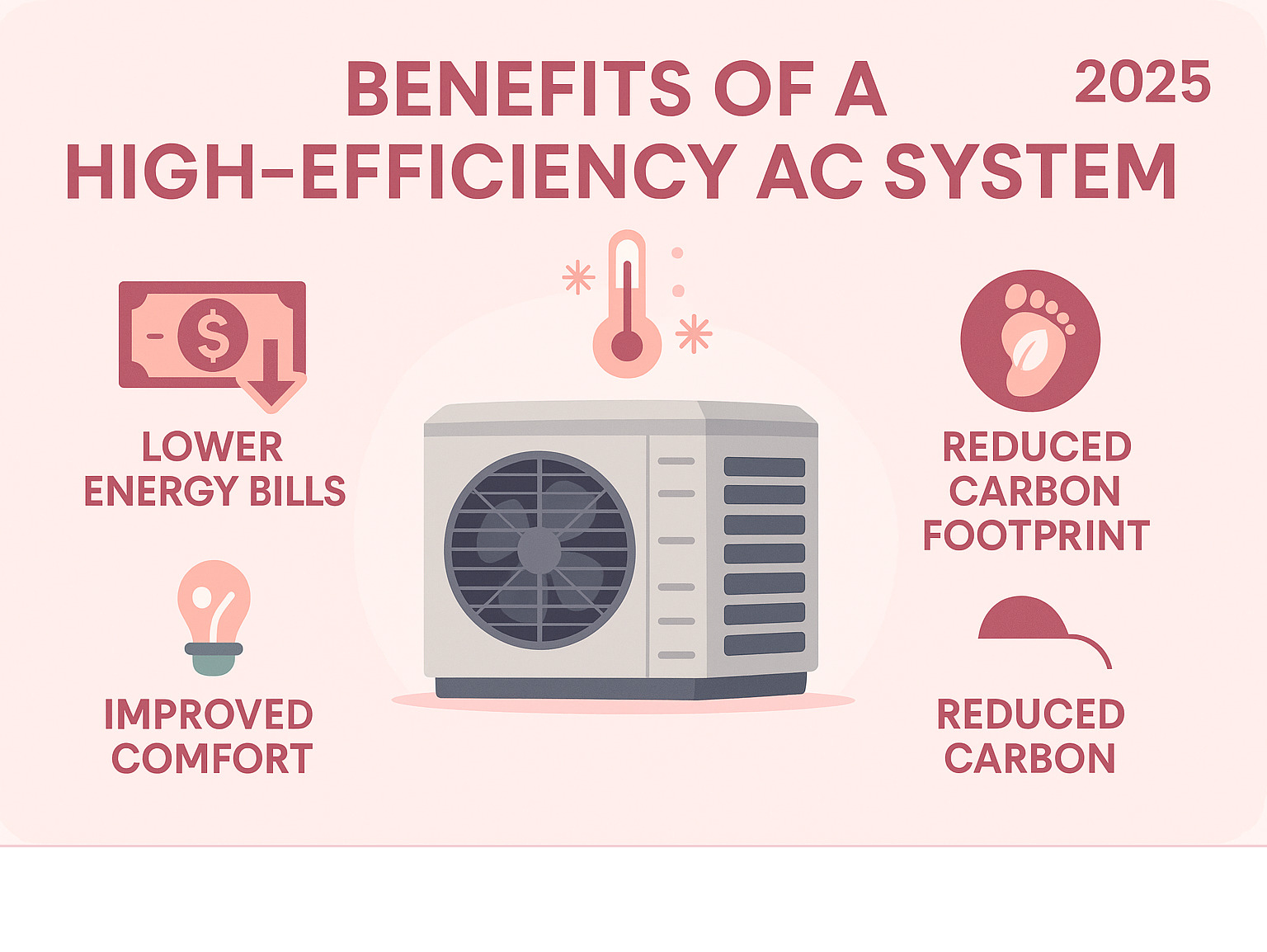
Benefits of a high-efficiency system include lower monthly energy bills, improved comfort, a reduced carbon footprint, and quieter operation. A programmable or smart thermostat can further improve savings by automatically adjusting temperatures.
You may be able to use federal, state, or local utility incentives to offset the cost. This can include programs like the Energy Efficiency Home Improvement Credit. A qualified contractor can help you identify qualifying systems.
However, the best way to maximize value is through proactive maintenance. Regular professional service protects your investment and ensures your system runs at peak efficiency.
The Role of SEER Ratings in Your Air Conditioner Replacement Cost
SEER (Seasonal Energy Efficiency Ratio) is like an MPG rating for your AC; a higher number means greater efficiency. The industry now uses SEER2 ratings for a more realistic measure of real-world performance. A higher SEER rating means a higher upfront air conditioner replacement cost, but the long-term savings can be substantial. For example, upgrading from an old 8 SEER to a new 16 SEER system could potentially cut your cooling costs in half. A contractor can help you calculate the potential return on investment for your home and usage patterns. For more details, you can find more info on SEER ratings from government resources.
Protecting Your Investment with Regular Maintenance
Regular professional maintenance is essential for getting the most out of your new AC system. Professional annual tune-ups are comprehensive, designed to catch small issues before they become expensive problems. A technician will clean coils, check refrigerant levels for leaks, inspect electrical components, lubricate moving parts, and perform a comprehensive system check. While you should change your filters every 1-3 months, these professional steps are crucial for maintaining efficiency and extending your system’s lifespan.
This proactive approach prevents breakdowns, maintains energy efficiency, and gives you peace of mind. Regular maintenance often catches minor issues that would otherwise turn into major, costly repairs.
Frequently Asked Questions about AC Replacement
When researching air conditioner replacement cost, homeowners often have similar questions. Here are answers to the most common ones.
How long does a typical air conditioner last?
Most air conditioners last 10 to 15 years. This lifespan is affected by the local climate, usage patterns, and the quality of the original installation. Most importantly, regular professional maintenance can add years to your system’s life.
What is the difference between replacing an AC and installing a new system in a home without ductwork?
An AC replacement uses a home’s existing ductwork, which involves swapping out the old components. Installing a system in a home without ducts is a much larger project that requires designing and installing a new duct system. For these homes, ductless mini-split systems are an excellent, efficient alternative that a professional HVAC contractor can discuss with you.
Is a higher SEER rating always worth the extra investment?
It depends on your situation. A higher SEER rating means greater energy efficiency and lower monthly bills. In hot summers, the savings from a high-SEER unit can add up quickly, especially if you plan to stay in your home long-term. A contractor can help you calculate the potential return on investment to see if the higher initial air conditioner replacement cost makes financial sense for you.
Making an Informed Decision for Your AC Replacement
Replacing your air conditioner is a major home investment. Understanding the factors discussed—from air conditioner replacement cost drivers like system size and efficiency to the importance of professional installation—helps you make a choice you’ll be happy with long-term.
Expert guidance can help you choose the perfect system for your specific needs and budget. Certified technicians have the experience to get the installation right the first time, maximizing your system’s efficiency and longevity.
The difference between a good installation and a great one is in the details—proper sizing, meticulous electrical work, and thorough testing. A quality installation is what separates a system that runs efficiently for 15+ years from one that causes recurring problems.
To take the first step toward a cooler, more efficient home, consider scheduling a consultation with a qualified HVAC professional. They can assess your home’s specific needs and provide a detailed recommendation.


