



When Your Hot Water Comfort Disappears
If your hot water heater stops working, you need quick solutions. Here’s what to check first:
- Electric heaters: Check the circuit breaker and reset if tripped
- Gas heaters: Verify the pilot light is lit and blue
- Both types: Check the thermostat is set to 120-140°F
- No hot water anywhere? Look for leaks around the tank base
- Strange noises? Sediment buildup may require flushing
Few household problems are as immediately disruptive as stepping into a shower only to be blasted with cold water. When your hot water heater stops working, it affects everything from morning routines to dishes, laundry, and basic comfort. The good news? Many water heater problems have simple solutions that homeowners can handle without specialized training.
Whether you have an electric or gas model, understanding the basic troubleshooting steps can help you restore hot water quickly and determine when professional help is truly needed.
I’m Dan W, with extensive experience managing home repair services and water heater technicians. I’ve helped countless homeowners solve issues when their hot water heater stops working and guided them through the repair or replacement process.
What You’ll Learn When a Hot Water Heater Stops Working
In this comprehensive guide, we’ll walk you through the most common reasons your hot water heater stops working and provide straightforward solutions. You’ll learn:
- How to identify the specific issue affecting your water heater
- Quick fixes you can safely handle yourself
- Essential safety precautions to take before attempting any repairs
- When it’s time to call in professionals like our team at AAA Home Services
- Preventive maintenance tips to avoid future hot water emergencies
With over 50 years of experience serving St. Louis, St. Charles, and Warren County residents, we’ve seen just about every water heater problem imaginable. Let’s explore solving yours.
Why Your Hot Water Heater Stops Working: 10 Common Culprits
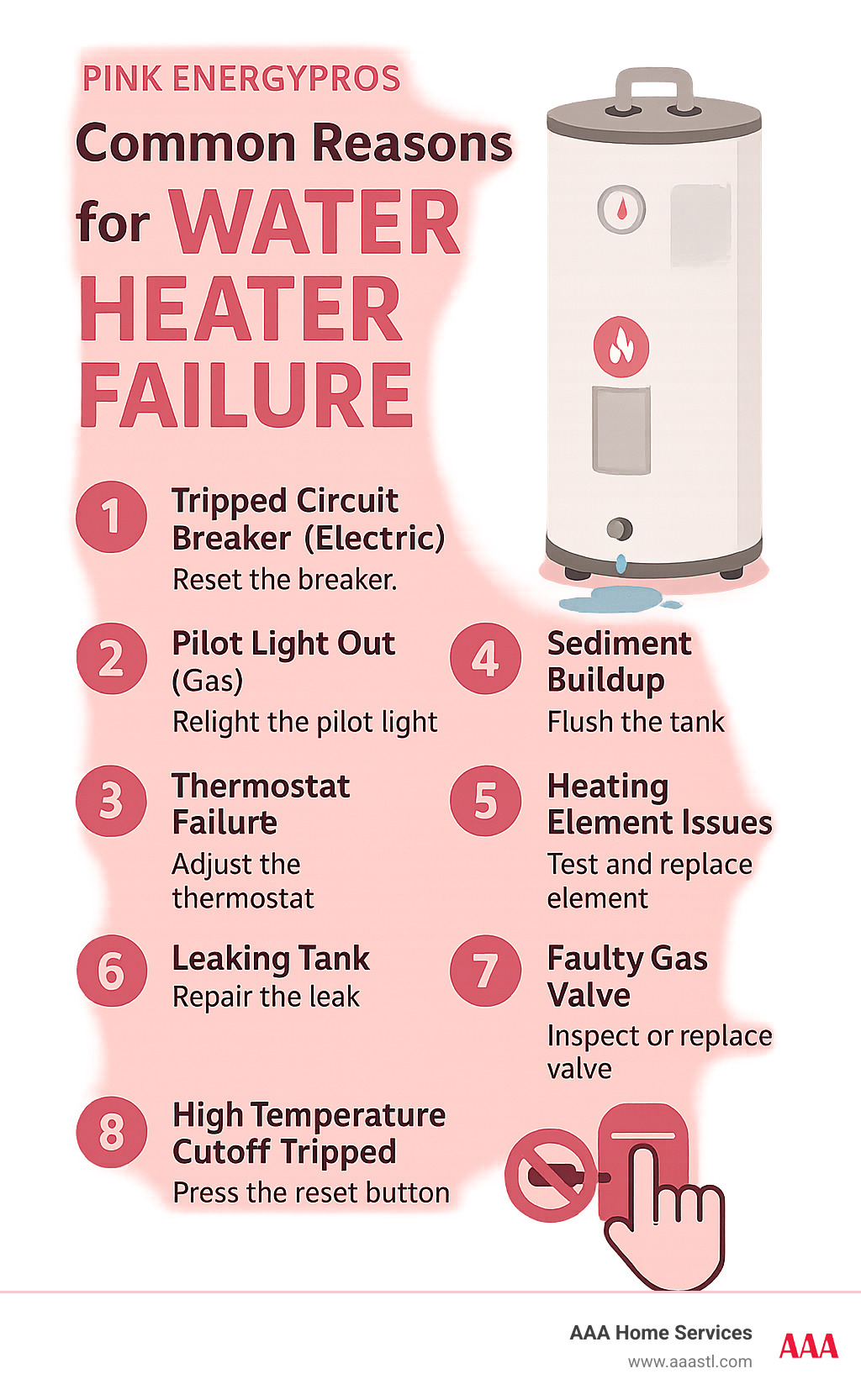
When your hot water heater stops working, the cause usually falls into one of several common categories we’ve encountered thousands of times in St. Louis homes. Understanding these issues can help you get back to hot showers faster.
Sediment buildup is perhaps the most common culprit we see, especially in homes with hard water. Those tiny mineral particles settle at the tank bottom over time, creating an insulating layer that prevents efficient heating. This not only wastes energy but can eventually lead to complete failure.
Thermostat failure is another frequent issue. This component regulates water temperature, and when it malfunctions, you might find yourself shivering under cold water or dealing with dangerously hot temperatures.
For electric water heaters, a tripped circuit breaker often stops everything in its tracks. This typically happens when heating elements develop shorts or when the unit draws too much power. Simply checking your electrical panel might solve your problem in minutes!
Gas water heater owners face different challenges. A pilot light outage means no heat transfer can occur. Wind, drafts, or component failures can all extinguish this crucial flame.
“Last winter, a family called us panicking because they had no hot water for three days,” recalls our technician Dave. “Turns out, their cat had bumped the gas valve to the ‘pilot’ position instead of ‘on.’ A thirty-second fix brought immediate relief!”
Heating element burnout in electric models, thermocouple issues in gas heaters, gas supply interruptions, and various leaks round out the most common problems we diagnose. Less obvious culprits include an undersized tank that can’t meet your household’s demands and simple old age—most water heaters reliably serve 8-12 years before efficiency declines.
Hot Water Heater Stops Working After Years of Service – Is It Just Old Age?
When a hot water heater stops working after nearly a decade of faithful service, age-related wear becomes the prime suspect. Traditional tank water heaters typically last 8-12 years, with problems multiplying as they approach retirement age.
The silent enemy inside your aging water heater is corrosion. Every tank contains a sacrificial anode rod—a component literally designed to corrode so your tank doesn’t. This metal rod attracts corrosive elements in your water, protecting the tank’s steel walls. But once it’s completely degraded, corrosion attacks your tank directly.
“I pulled an anode rod last month that was nothing but a thin wire,” shares our technician Mike. “The homeowner had never heard of this part, yet replacing it every few years could have doubled their water heater’s lifespan.”
The telltale signs of an aging water heater include rusty water (from hot taps only), increasing repair frequency, declining efficiency, visible exterior rust, and multiple small leaks. If your unit is approaching or past the decade mark and showing these symptoms, replacement often makes more financial sense than continued repairs.
Modern water heaters offer significant efficiency improvements that can lower your monthly utility bills while providing more reliable performance. For many St. Louis families, the investment pays for itself through energy savings and peace of mind.
Hot Water Heater Stops Working Suddenly – Could It Be Sediment or a Leak?
When your hot water heater stops working without warning, two culprits typically top our suspect list: sediment accumulation and water leaks. Both issues can develop gradually but cause dramatic, sudden failures.
Sediment buildup is particularly problematic in St. Louis and St. Charles County, where water hardness varies significantly by neighborhood. As minerals settle at the tank bottom, they form a barrier between the heat source and the water.
You’ll know sediment is the likely culprit if you’ve noticed strange noises coming from your water heater. That distinctive popping or rumbling sound isn’t your water heater threatening to explode—it’s actually trapped water bubbling up through layers of sediment, similar to thick oatmeal boiling on your stove. Other warning signs include increasingly longer heating times, higher energy bills, and temperature fluctuations.
“A customer called about ‘thunder in the basement’ every time the water heater ran,” recalls our plumbing supervisor. “When we flushed the tank, we removed nearly five pounds of sediment—enough to fill a small bucket!”
Regular tank flushing prevents this issue, and even with existing buildup, a thorough professional flush may restore function and extend your heater’s life.
Leaks represent another common cause of sudden failure. Even small leaks can reduce water pressure, trigger safety cutoffs, damage electrical components, or signal impending tank failure. Always check around your water heater’s base for puddles or moisture, particularly after it’s been running. Inspect all connections, the temperature and pressure relief valve, and the tank itself for signs of water.
If you’re experiencing strange sounds from your water heater, our detailed guide on “Hot Water Heater Not Working? What’s That Noise?” can help you identify specific problems based on the sounds you’re hearing.
Addressing these issues promptly not only restores your hot water but can prevent more expensive damage to both your water heater and your home.
DIY Diagnostic & Reset Checklist (Gas and Electric Models)
When your hot water heater stops working, don’t panic! This step-by-step checklist will help you pinpoint the problem and possibly fix it yourself without an expensive service call.
First Things First: No Hot Water Anywhere?
Before assuming your water heater is the culprit, let’s make sure the problem isn’t elsewhere.
Run the hot water at different faucets throughout your home. If some taps have hot water while others don’t, you might be dealing with a plumbing issue rather than a water heater problem. I once had a frantic call from a homeowner who finded their master bathroom was ice-cold while the guest bath was toasty—turns out a valve had been accidentally closed during a renovation.
Check that the shut-off valve on the cold water inlet to your water heater is fully open. This valve can sometimes get bumped to a partially closed position, reducing water flow.
Don’t forget about anti-scald mixing valves! These safety features in shower fixtures can fail, delivering only cold water even when your heater is working perfectly. They’re often the hidden culprit in single-fixture problems.
Finally, consider your household’s recent water usage. A St. Charles family I helped was convinced their heater was broken after everyone went cold during morning showers. The reality? Four teenagers had used up all the hot water before Mom and Dad got their turn. Their 40-gallon tank simply needed its normal 30-60 minutes to recover.
Electric Model: Press the Red Reset Button & Test Elements
If you have an electric water heater that’s not producing hot water, here’s what to do:
First, locate your home’s electrical panel and check if the circuit breaker for your water heater has tripped. If it has, reset it and wait to see if the problem resolves. If the breaker trips again immediately, you likely have an electrical issue requiring professional attention.
For a simple reset that often works wonders, turn off power to the water heater at the breaker first (this is crucial for safety). Remove the access panel(s) on the unit to reveal the upper thermostat. Look for a red button—this is the high-limit switch that trips when the water gets too hot. Press it firmly, replace the panel, restore power, and wait about an hour to see if hot water returns.
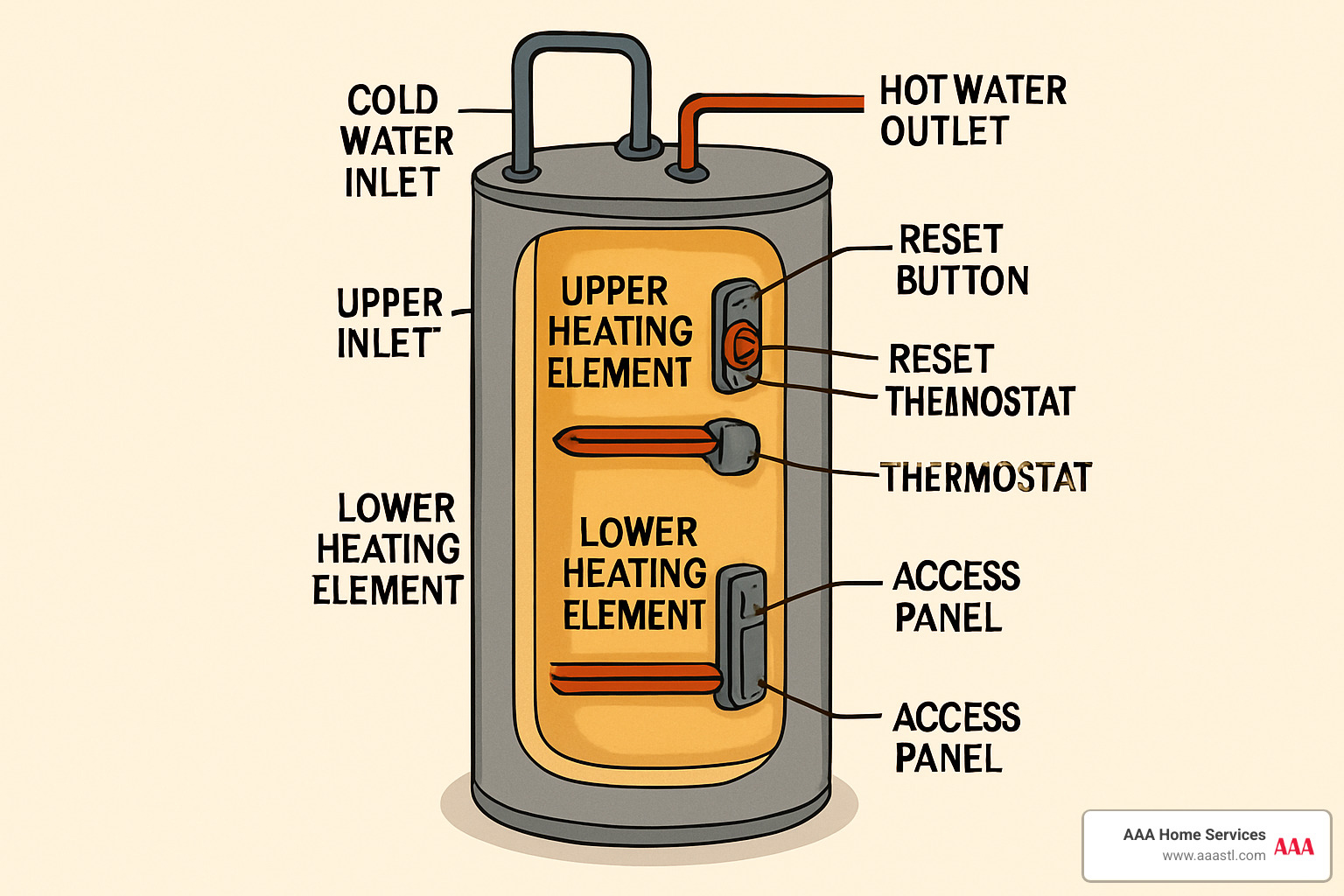
While you have the panels off, verify your thermostat settings are between 120-140°F. Settings below 120° may save energy but often don’t deliver enough hot water for most families, especially in winter.
If you’re comfortable using a multimeter, you can test the heating elements for continuity. No continuity reading means the element has burned out and needs replacement—a relatively straightforward DIY job if you’re handy, though many homeowners prefer to call us for this repair.
Gas Model: Relight the Pilot & Verify Gas Flow
For gas water heaters, pilot light issues are the most common culprit when your hot water heater stops working.
Locate the viewing window or remove the access panel to check if your pilot light is lit. A healthy pilot flame should be blue, not yellow or orange. If it’s out, relighting is usually simple:
Turn the gas control knob to “OFF” and wait 5-10 minutes for any gas to dissipate (safety first!). Then turn the knob to “PILOT,” press and hold it down while pressing the igniter button. Once the pilot lights, continue holding the knob down for a full minute—this heats the thermocouple. When you release the knob and turn it to “ON,” the pilot should stay lit.
“I was so nervous about relighting my pilot,” one Ballwin customer told me, “but after watching your technician do it once, I realized it wasn’t complicated at all.”
Make sure the gas valve leading to your water heater is fully open. If you detect a rotten egg smell, don’t attempt any repairs—leave immediately and call your gas company.
If your pilot lights but won’t stay lit after multiple attempts, you likely have a faulty thermocouple. This safety device shuts off gas flow if the pilot goes out, preventing dangerous gas leaks. Replacement is affordable but requires some technical knowledge.
One often-overlooked cause of pilot problems? Drafts. A Chesterfield homeowner solved recurring pilot outages by simply closing a basement window that created air currents near the water heater.
Sometimes you might encounter error codes like “E01” or “A21-394” on newer electronic water heaters. These cryptic messages (what technicians sometimes call “FGHI-WXYZ gibberish”) actually provide valuable diagnostic information to professionals. If you see these codes, write them down exactly as displayed to share with your technician.
| Diagnostic Step | Electric Water Heater | Gas Water Heater |
|---|---|---|
| Power/Fuel Check | Reset circuit breaker | Verify gas valve is open |
| Safety Reset | Press red high-limit button | Relight pilot light |
| Component Test | Test heating elements with multimeter | Check thermocouple condition |
| Recovery Time | ~1 hour after reset | ~30 minutes after pilot relight |
| Common Part Costs* | Heating element: moderate Thermostat: low-moderate | Thermocouple: low Gas valve: moderate-high |
*Costs vary; contact AAA Home Services for specific estimates based on your unit.
If these DIY steps don’t solve your hot water problems, it might be time for professional help. Our technicians at AAA Home Services have the tools and expertise to quickly diagnose issues that go beyond these basics, and we can often provide same-day or next-day service to restore your comfort.
For more detailed instructions on how to fix a water heater pilot light, check out this helpful guide from Family Handyman: How to Fix a Water Heater Pilot Light
Safety, Prevention, and Cost-Smart Decisions
When your hot water heater stops working, staying safe should be your top priority before you tackle any repairs. Trust me, I’ve seen what can happen when homeowners skip these crucial safety steps!
First things first: for electric heaters, turn off the power at your breaker box. For gas models, turn that gas control knob to “OFF.” Always wear gloves and eye protection when working on your water heater—those old tanks can have sharp edges and mineral deposits that can irritate your skin and eyes. And here’s a rule I never break: if you see your tank actively leaking, step back and call a professional. A leaking tank is not a DIY situation.
For those with gas water heaters, I can’t stress enough the importance of proper ventilation. Carbon monoxide is a silent killer—you can’t see it, smell it, or taste it. Make sure your water heater vents correctly, and please install a carbon monoxide detector nearby. It’s an inexpensive safeguard that could save your family’s life.
Did you know that water heater temperatures above 120°F can cause serious scalding injuries? Keep your water heater set around 120°F—this temperature kills most harmful bacteria while preventing burns and saving you 3-5% on energy costs for every 10 degrees you lower the temperature. It’s a win-win for safety and your wallet!
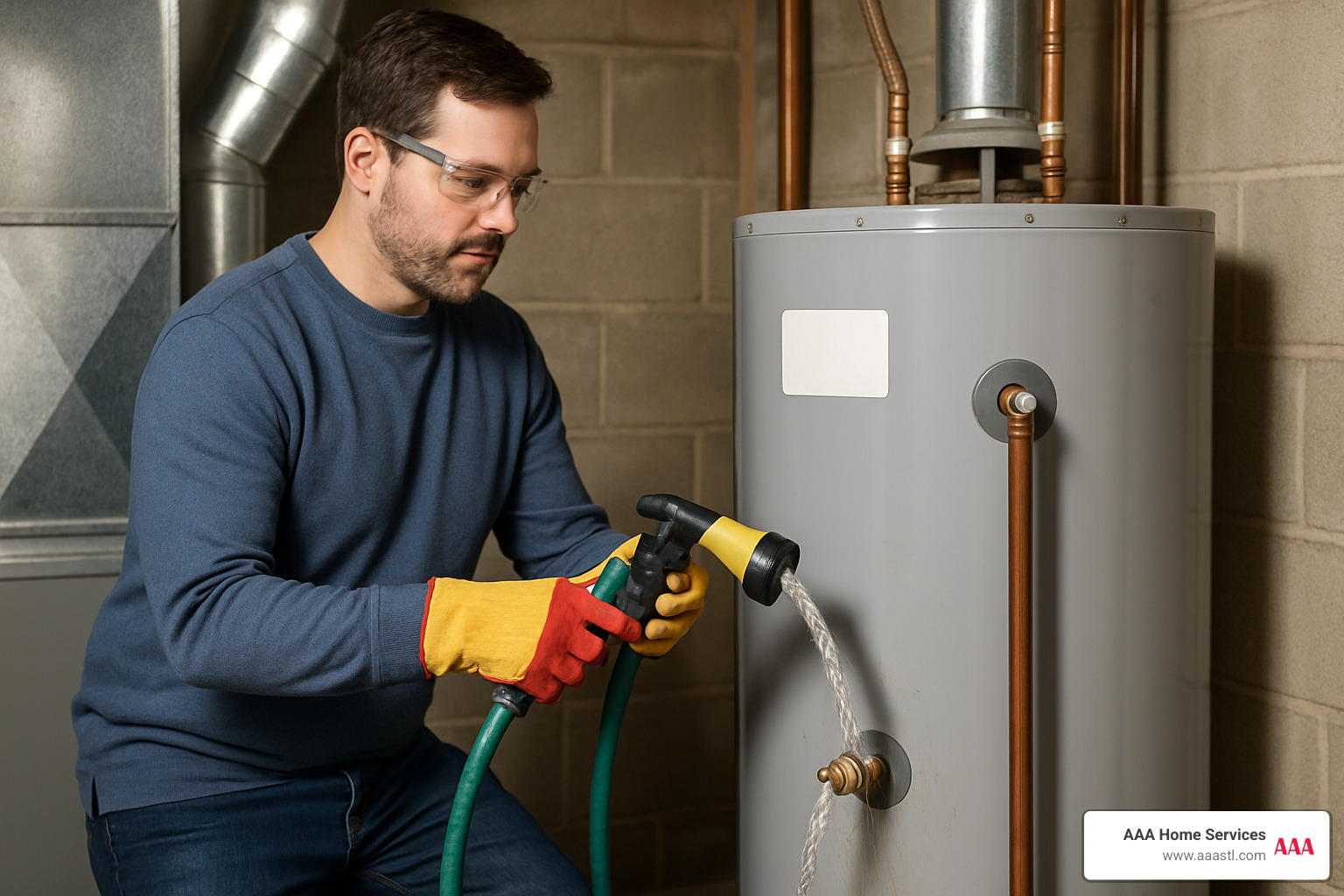
Regular maintenance is your best friend when it comes to preventing those cold-shower surprises. I recommend flushing your tank annually to remove sediment buildup—especially important in our St. Louis area where water can be quite hard. Don’t forget to replace your anode rod every 3-5 years (it’s like your tank’s personal bodyguard against rust), test your temperature and pressure relief valve yearly, and consider adding insulation to older tanks and pipes to improve efficiency.
When facing repair decisions, I always tell my customers to consider the “50% rule.” If your water heater is over 8 years old and repairs would cost more than half the price of a new unit, replacement is usually the smarter choice. As one of our Webster Groves customers happily reported: “My new water heater paid for itself in under three years through energy savings alone.” Today’s models are significantly more efficient than those manufactured even a decade ago.
When DIY Stops: Signs You Need a Licensed Technician
While I love empowering homeowners to handle simple water heater maintenance, some situations simply require professional expertise. If you notice persistent leaks from the tank itself, this usually signals the need for a replacement—not a repair. When your circuit breaker trips repeatedly after resetting, that’s your electrical system waving a red flag about a potential fire hazard.
Gas water heater owners should pay special attention if the pilot light refuses to stay lit despite multiple attempts. This typically indicates issues with the gas valve or thermocouple that require specialized tools and knowledge. And please, if you ever smell that distinctive rotten egg odor near your water heater, don’t investigate—evacuate! This could signal a gas leak requiring immediate professional attention.
Electrical burning smells are equally concerning and warrant professional inspection. Also consider your warranty before diving into DIY repairs—many manufacturers will void coverage if unauthorized repairs are attempted.
Rusty water or significant sediment in your hot water often indicates tank deterioration or severe buildup that DIY flushing might not resolve. And finally, for units over 10 years old experiencing problems, replacement is frequently more cost-effective than continuing to repair an aging system.
Our technicians at AAA Home Services bring over five decades of experience to every home we visit. We can quickly diagnose complex issues and recommend solutions that make sense for your home and budget. More info about water heater repair services
Maintenance Moves That Prevent “Hot Water Heater Stops Working” Moments
I’ve seen how a little preventive care can save homeowners from those inconvenient cold shower moments. Regular maintenance is truly your best defense against unexpected failures.
Annual tank flushing is perhaps the most important maintenance task. Sediment buildup is like cholesterol in your arteries—it restricts flow, reduces efficiency, and eventually causes failure. The process is straightforward: turn off power/gas and water supply, connect a garden hose to the drain valve, open the valve and drain until water runs clear, then close the valve, remove the hose, and restore water and power.
Your anode rod is a fascinating component—it literally sacrifices itself to save your tank! This rod attracts corrosive elements that would otherwise eat away at your tank’s lining. Check it every 3-5 years and replace it when it’s significantly corroded.
Don’t forget to test your temperature and pressure relief valve annually. This critical safety valve prevents dangerous pressure buildup that could cause catastrophic failure. Testing is simple: place a bucket under the discharge pipe, briefly lift the valve’s test lever, and verify water flows and the valve properly reseats afterward.
For older tanks, adding an insulation blanket and pipe insulation to exposed hot water lines can improve efficiency and reduce heat loss—especially valuable in unheated basements during our chilly St. Louis winters.
If you live in areas with particularly hard water (common in parts of St. Louis and St. Charles counties), consider installing a whole-house sediment filter. This extra layer of protection can significantly reduce mineral buildup in your water heater and extend its lifespan.
One of our Lake St. Louis customers put it perfectly: “After AAA Home Services recommended annual maintenance, I haven’t had a single hot water outage in five years. Before that, it was at least an annual headache.” That’s the power of prevention! Water Heater Maintenance: Understanding the Importance
Frequently Asked Questions About a Hot Water Heater That Stops Working
Why does my hot water heater stop working in cold weather?
When winter arrives, many St. Louis homeowners find their hot water heater stops working just when they need it most. There’s actually good reason for this seasonal challenge.
Cold weather puts extra strain on your water heater in several ways. The incoming water temperature drops significantly, forcing your unit to work harder and longer to reach the desired temperature. This increased workload can expose existing weaknesses in aging systems.
In particularly cold snaps, exposed pipes or water heaters in unheated spaces like garages can actually freeze, preventing proper operation altogether. Gas water heaters face an additional challenge when snow or ice blocks exhaust vents, triggering safety shutoffs to prevent carbon monoxide dangers.
“After moving to a new home in Warrenton, I couldn’t figure out why we suddenly had no hot water during a cold snap,” shared one customer. “Turns out, the previous owners had installed the water heater in an uninsulated garage. Adding insulation solved the problem completely.”
To keep hot water flowing in winter, try insulating your water heater and exposed pipes, ensure your unit is in a heated space, keep vents clear of snow and debris, and try spacing out high-demand activities like showers to allow proper recovery time between uses.
How do I reset my water heater safely?
When your hot water heater stops working, a simple reset might solve the problem—but safety should always come first. The reset process differs depending on whether you have an electric or gas model.
For electric water heaters, start by turning off power at the circuit breaker—never skip this critical safety step. Once power is off, remove the access panel(s) and locate the red reset button, usually positioned near the upper thermostat. Press this button firmly until you hear a click, then replace the access panel before restoring power at the breaker.
Be patient after resetting. Your water heater typically needs 30-60 minutes to heat the water to your desired temperature. Monitor the temperature afterward to ensure everything’s working properly.
Gas water heater resets focus on the pilot light. Turn the gas control valve to “OFF” and wait 5-10 minutes for any accumulated gas to dissipate. Follow the pilot light relighting instructions printed on your unit, then turn the control to your desired temperature setting. After about 30 minutes, check that your water is heating and verify the flame color is blue (not yellow, which indicates combustion problems).
One important caution: If you find yourself needing to reset your water heater frequently, this signals an underlying problem that requires professional attention. Repeated resets can indicate failing components or safety issues that shouldn’t be ignored.
Is it better to repair or replace a 10-year-old unit?
When your decade-old hot water heater stops working, you face a common dilemma: fix it or replace it? The answer depends on several important factors.
Consider replacement when your unit has passed its 10-year birthday, especially if repair costs would exceed half the price of a new installation. Frequent breakdowns are another clear signal—they’re not just inconvenient but often indicate more serious problems are developing. Any signs of tank corrosion or leaking are definitive red flags pointing toward replacement rather than repair.
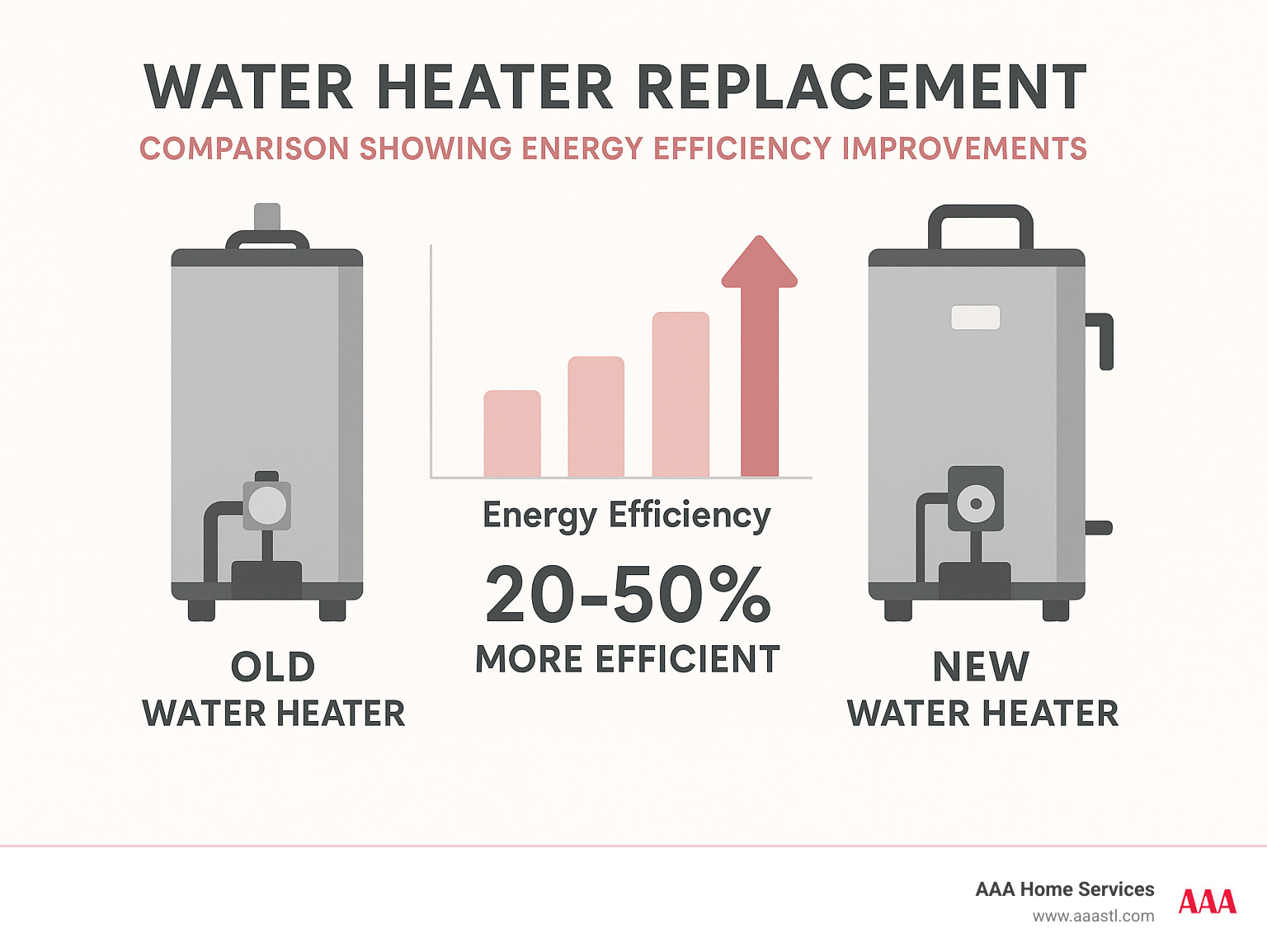
Energy efficiency provides another compelling reason to upgrade. Department of Energy research shows modern water heaters can be 20-50% more efficient than older models. For typical St. Louis area households, this translates to $100-$200 annual savings—money that helps offset the replacement investment.
Repairs might make sense for units under 8 years old with minor issues like thermostat or heating element problems, especially when the tank itself remains in good condition. If you’re planning to move soon, a repair might also be the more practical short-term solution.
One Kirkwood family we worked with was spending nearly $40 monthly on repairs to their 12-year-old water heater. After upgrading to a new high-efficiency model, they eliminated those repair costs completely while also reducing their energy bill by $25 monthly—creating significant savings from both directions.
Conclusion
When your hot water heater stops working, it’s more than just an inconvenience—it’s a disruption to your entire household’s rhythm and comfort. The silver lining? Many of these frustrating problems have straightforward solutions that you can tackle yourself with the guidance we’ve shared.
Throughout this guide, we’ve explored the most common causes of water heater failures, from sediment buildup to pilot light issues, and provided practical steps to diagnose and resolve them. Whether you’re facing the sudden shock of an ice-cold shower or dealing with a gradually failing unit, understanding these basics can save you time, money, and discomfort.
Remember these essential takeaways:
Always prioritize safety by turning off power or gas before you start any water heater work. Your well-being matters more than a hot shower! Begin with the simplest checks—circuit breakers, pilot lights, and thermostat settings often solve the problem in minutes. Commit to regular maintenance like annual flushing and anode rod replacement to prevent most common failures before they happen. When your unit crosses the 10-year mark or develops major issues, replacement is often more economical than continued repairs. And perhaps most importantly, know when to call in the experts for complex or potentially dangerous problems.
At AAA Home Services, hot water emergencies are something we’ve been solving for over five decades throughout St. Louis, St. Charles, and Warren County. Our experienced technicians have seen every water heater issue imaginable and can often provide same-day or next-day service to get your hot water flowing again quickly.
With more than 8,000 Google reviews backing our reputation for fair, honest pricing, you can trust us to recommend only the repairs you truly need. We’ll never suggest unnecessary work—whether you need a simple component replacement or guidance on selecting a more efficient new water heater that fits your family’s needs and budget.
Don’t let another morning start with an unwelcome cold shower surprise. Contact AAA Home Services and let our team restore your hot water comfort with the reliability and expertise that comes from over 50 years of serving our community. After all, life’s too short for cold showers!


