



Finding Quality Plumbing Help Without Breaking the Bank
When your kitchen sink starts backing up or your bathroom faucet won’t stop dripping, finding an affordable plumbing service can feel like trying to find a needle in a haystack. Many homeowners worry that “affordable” automatically means shoddy workmanship or cut corners. I’m here to tell you that’s simply not true.
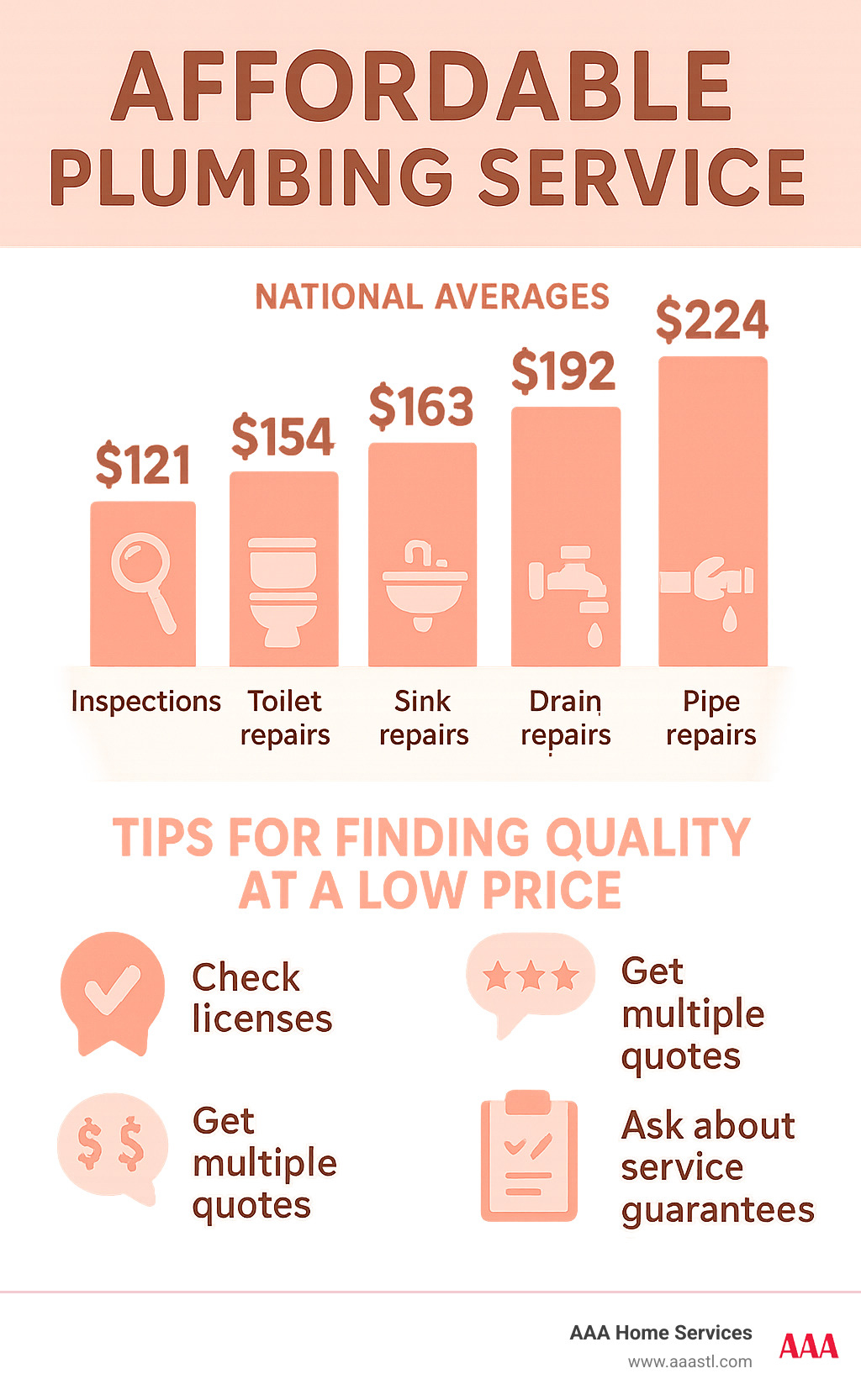
Quality plumbing help doesn’t have to empty your wallet. The national average for common plumbing repairs ranges from about $121 for basic inspections to $224 for pipe repairs. While these figures give you a good starting point, costs vary based on your specific situation, job complexity, and materials needed.
What truly makes a plumbing service affordable isn’t just the lowest price tag—it’s getting the best value for your dollar. This means finding a licensed professional who does the job right the first time, uses quality materials that last, and charges fair, transparent rates without surprising you with hidden fees afterward.
Service call fees typically range from $110-$275, though many companies will waive this fee if you hire them to complete the work. When comparing quotes, be sure to ask if this initial assessment cost is included or separate.
Did you know that scheduling routine plumbing maintenance at least once a year can help you avoid those midnight emergency calls that really hurt your budget? According to industry data, preventative maintenance catches small issues before they become major problems—like catching that slow leak before it turns into water damage and mold remediation.
One of the smartest ways to keep your plumbing costs in check over time is developing a relationship with a reliable plumber who knows your home’s system. They’ll spot potential issues during regular check-ups that you might miss, potentially saving you hundreds or even thousands in emergency repairs.
When it comes to DIY versus calling a pro, there’s a clear line. Minor clogs that respond to a plunger and leaky faucets with accessible parts can often be handled yourself. But when it comes to anything involving your home’s pipe system, water heater issues, or persistent problems, professional help is worth every penny.
Look for plumbers who are properly licensed and insured—this protects both you and them. Check online reviews, but don’t just look at star ratings. Read what customers say about responsiveness, punctuality, cleanliness, and how well the plumber explained the problem and solution.
With my background managing home repair services and technicians, I’ve helped many homeowners find reliable, affordable plumbing service providers who deliver excellent results without excessive charges. The best plumbers aren’t necessarily those offering the lowest bid, but those providing lasting solutions at fair prices.
The goal isn’t finding the cheapest plumber in town—it’s finding one who provides quality work at reasonable rates, saving you money in the long run by doing the job right the first time.
What Counts as an Affordable Plumbing Service?
When you’re searching for an affordable plumbing service, the lowest price tag isn’t always the best measure of value. True affordability combines fair pricing with quality workmanship that stands the test of time. Having served homeowners throughout St. Louis, St. Charles, and Warren County for over five decades, we’ve learned that genuine affordability means getting the job done right the first time.
Most homeowners tell us they care about transparent pricing with no surprise fees, reasonable service call charges, and competitive labor rates that align with local averages. As one Chesterfield resident shared with us: “I’ve learned that the cheapest quote often ends up being the most expensive in the long run. When my basement pipes burst last winter, I went with a plumber who charged slightly more but provided a detailed estimate and warranty. The peace of mind was worth every penny.”
Take a look at how St. Louis area prices compare to the national averages:
| Service Type | National Average | St. Louis Area Average |
|---|---|---|
| Plumbing Inspection | $121 | $100-$150 |
| Toilet Repair | $154 | $125-$200 |
| Sink/Faucet Repair | $163 | $140-$225 |
| Drain Repair | $192 | $175-$250 |
| Pipe Repair | $224 | $200-$300 |
| Service Call Fee | $64-$275 | $65-$150 |
The good news? St. Louis homeowners generally enjoy competitive pricing compared to national averages. Your actual costs will vary based on your specific location, job complexity, and even the season.
Cost Benchmarks for an Affordable Plumbing Service
Knowing what others typically pay helps you spot a fair deal when you see one. Based on national averages, here’s what you can expect to pay for common plumbing needs:
Many reputable plumbers (including us at AAA Home Services) will waive the service call fee if you proceed with the recommended repairs. As Monica from Kirkwood told us: “I was pleasantly surprised when the plumber explained that my diagnostic fee would be applied to the repair cost. It made the decision to proceed with their recommended fixes much easier, knowing I wasn’t paying twice for the same visit.”
Factors That Influence Affordability
Your final bill depends on several key variables that every homeowner should understand:
The materials used make a significant difference – PEX piping typically costs less than copper, while premium fixtures naturally cost more than standard models. Job complexity also plays a major role, as repairing an accessible pipe under a sink is much simpler than fixing one hidden inside a wall or buried under concrete.
Location accessibility matters too – work in tight crawl spaces or attics often costs more due to the extra time and effort required. Your distance from the service provider might affect pricing if you’re located far from their base of operations.
Don’t forget about seasonal demand. Prices sometimes increase during winter months when frozen and burst pipes create high demand for plumbing services. And perhaps most importantly, regular maintenance can dramatically reduce your long-term costs by catching small issues before they become expensive emergencies.
As Mike, one of our experienced technicians, often points out: “I see customers who could have saved hundreds of dollars if they’d addressed minor leaks earlier. What starts as a simple $150 repair can quickly become a $1,000+ job when water damage enters the picture.”
Best for Quick Fixes: Drain Cleaning
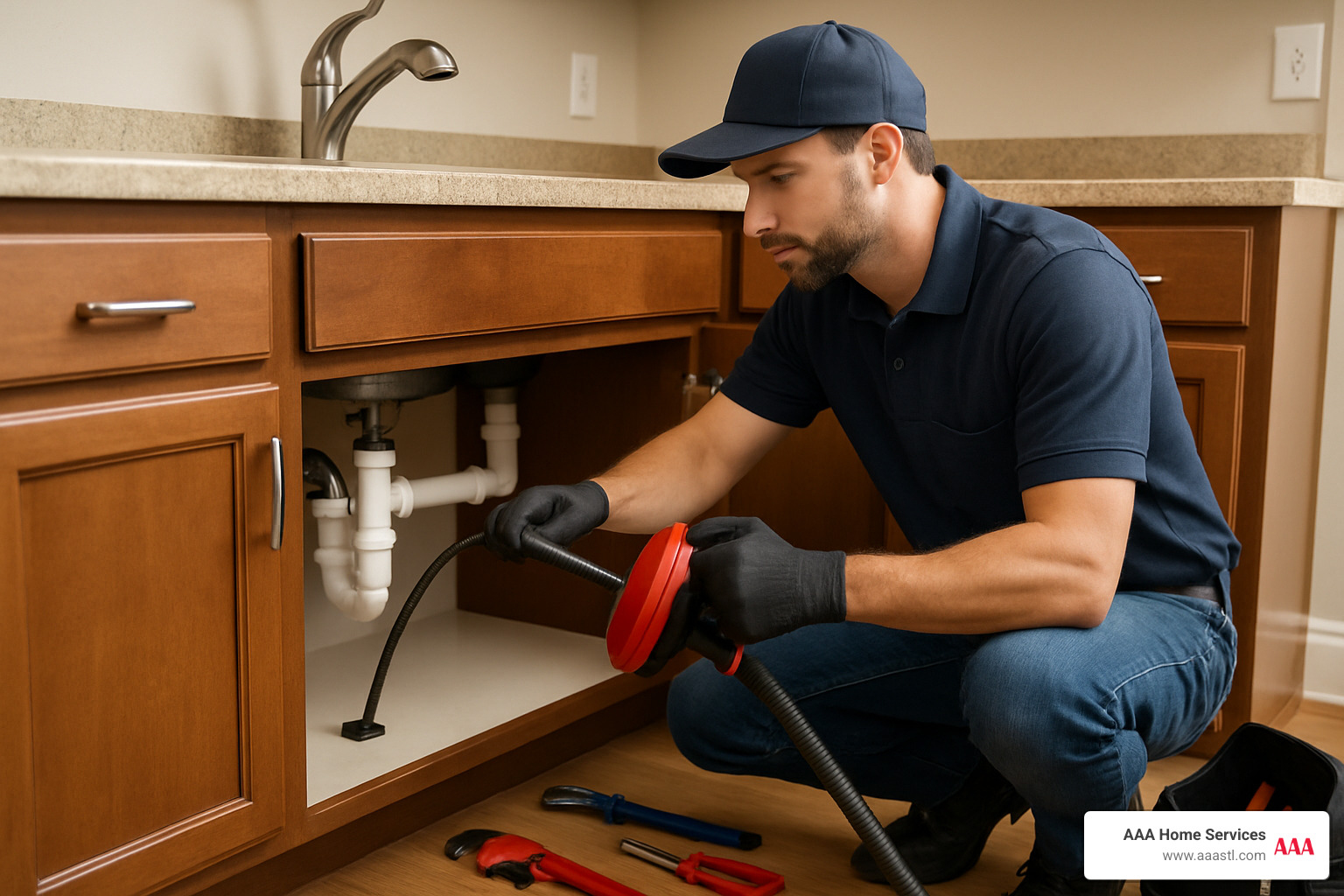
When water refuses to go down your drain, few things are more frustrating – or more common. Drain cleaning stands as one of the most frequently requested and cost-effective services we provide to homeowners across St. Louis. The beauty of professional drain cleaning is how quickly it resolves problems that can otherwise make your home uncomfortable or even unusable.
I remember helping Sarah from Manchester last month when her kitchen sink had slowed to a crawl. “Doing dishes had become a complete nightmare,” she told me. Our technician cleared her drain in under 30 minutes using a power auger, revealing years of built-up grease and food particles. What made Sarah happiest wasn’t just the fix but the prevention tips we shared to keep her drains flowing freely.
At AAA Home Services, we’ve helped thousands of local homeowners restore proper flow to their plumbing systems. Depending on your specific situation, we might use simple snake tools for basic clogs or advanced hydro jetting technology for tougher blockages. Our approach always matches the severity and location of your particular clog.
An affordable plumbing service like drain cleaning can quickly address slow-draining sinks and tubs, completely clogged drains, recurring drainage issues, and even foul odors coming from your plumbing. When multiple fixtures are affected simultaneously, it often signals a main line issue that needs prompt attention.
More info about Drain Cleaning
Signs You Need This Affordable Plumbing Service
Your drains rarely stop working without warning. They usually send clear signals that trouble is brewing. Catching these early warning signs can save you from more serious (and expensive) problems down the road.
Listen for gurgling noises when water goes down your drain – that’s air trapped in your pipes, often indicating a developing clog. If you notice standing water that drains very slowly in your sink or bathtub, don’t ignore it. This is typically the first stage before a complete blockage forms.
“When multiple drains in your home start acting up at once, that’s a red flag that shouldn’t be ignored,” explains Tom, one of our senior plumbing technicians. “It usually points to a problem in your main sewer line, which requires professional attention before it leads to a major backup.”
Other telltale signs include water backing up in unexpected places (like shower water appearing in your toilet), recurring clogs despite using store-bought drain products, and foul odors wafting from your drains. These symptoms suggest it’s time to call for an affordable plumbing service before the situation worsens.
Typical Cost Range & Savings Tips
Most homeowners in the St. Louis area can expect to pay between $85 and $250 for professional drain cleaning. The final price depends on several factors: where the clog is located, how severe the blockage has become, and what method we need to use to clear it. Simple sink clogs typically cost less, while main sewer line clogs requiring specialized equipment fall on the higher end of the spectrum.
You can save money on drain cleaning services by adopting some simple habits. Avoid pouring grease or oil down your kitchen drain – instead, collect it in a container and dispose of it in the trash. Install drain screens in showers and tubs to catch hair before it enters your pipes. After using your sink, run hot water down the drain for a few seconds to help prevent buildup.
Many of our customers have success with periodically flushing drains using a mixture of baking soda and vinegar, followed by hot water. This natural cleaning method can keep minor buildup from becoming a major problem.
One savvy customer in Ballwin shared this tip: “After getting three separate quotes for clearing my main sewer line, I found prices varied by over $200 for essentially the same service. It pays to make a few phone calls before committing.” We couldn’t agree more – getting multiple quotes for complex drain issues is always smart.
Best for Stubborn Leaks: Leaky Pipe Repair
That persistent drip under your sink isn’t just annoying—it’s a warning sign. Leaky pipes might seem like minor nuisances at first, but they’re silent home destroyers that demand attention before they turn into budget-busting nightmares.
We see it all too often at AAA Home Services. Just last month, a Creve Coeur homeowner called us about what they thought was “just a small leak” under their kitchen sink. When our technician arrived, he finded the leak had been quietly doing damage for months. Water had seeped behind the cabinetry, creating an ideal environment for mold growth. What could have been a simple $150 pipe repair ballooned into a $3,000 restoration project.
“The most expensive leaks are the ones you ignore,” explains Dave, one of our senior plumbers. “Water is incredibly persistent—give it enough time, and it’ll find ways to damage areas of your home you didn’t even know were vulnerable.”
Today’s affordable plumbing service options include modern materials that make repairs more durable and cost-effective. PEX piping has been a game-changer for many homeowners dealing with leaks. This cross-linked polyethylene material offers several advantages over traditional copper: it’s more flexible, less prone to freezing damage, and typically costs less to install. For many St. Louis area homes, especially older properties prone to pinhole leaks in copper pipes, PEX provides an ideal solution for replacing problematic sections.
Moisture spots appearing on walls or ceilings are telltale signs that you may have hidden pipe issues requiring professional attention. Unlike some plumbing problems that announce themselves loudly, leaks often do their damage quietly behind walls or under floors until they’ve created serious issues.
More info about Leaky Pipe Repair
When to Call an Affordable Plumbing Service for Leaks
Timing matters when it comes to leak repairs. Knowing when to pick up the phone can save you thousands in potential damage. Here are the warning signs that should prompt an immediate call to an affordable plumbing service:
Visible puddles or water stains shouldn’t be ignored, whether they’re on your floors, walls, or ceilings. These are obvious signs that water is escaping from somewhere it shouldn’t be.
Unexplained increases in your water bill often reveal hidden leaks before visible damage appears. As Sarah from Chesterfield told us, “My water bill suddenly jumped by $75 with no change in our habits. AAA found a leak in our main water line that was completely underground—we’d never have spotted it otherwise.”
Reduced water pressure throughout your home or in specific fixtures can indicate a leak is diverting water before it reaches its intended destination.
Musty or moldy odors in rooms with plumbing fixtures might mean moisture is accumulating where you can’t see it. Your nose often detects water damage before your eyes do.
Warped or discolored drywall, flooring, or cabinetry near plumbing fixtures suggests water exposure over time—a clear sign that pipes are leaking.
The sound of running water when no fixtures are in use is never normal and typically indicates a significant leak somewhere in your system.
Cost Range & Warranty Questions
Leaky pipe repairs typically range from $150 to $350 for accessible pipes—those under sinks or in utility rooms where plumbers can easily reach them. More complex repairs, like pipes hidden inside walls or under concrete slabs, can cost significantly more—anywhere from $500 to $4,000+ depending on accessibility and the extent of necessary restoration work.
Smart homeowners know that the warranty is just as important as the initial repair. Before hiring any plumber, ask these crucial questions:
“What type of warranty covers this repair?” The best affordable plumbing service providers offer comprehensive parts-and-labor warranties that protect you from both material failures and installation issues.
“How long will my repair be guaranteed?” Quality work should come with at least a 90-day warranty, though many reputable companies like AAA Home Services offer 6-12 month guarantees on plumbing repairs.
“What actions might void my warranty?” Understanding this upfront helps you avoid accidentally invalidating your protection through DIY modifications or other prohibited actions.
“Is this warranty transferable if I sell my home?” This can be an attractive selling point if you’re planning to move in the near future.
“Does your warranty cover consequential damage if the repair fails?” This is critical—a truly valuable warranty should cover not just fixing the failed repair but also addressing any water damage caused by that failure.
Tom from Clayton experienced the difference a good warranty makes: “When a pipe repair failed after two months, AAA not only fixed the issue at no charge but also covered the cost of drying out the affected area. That level of service builds real trust.”
The right affordable plumbing service provider won’t just fix your current leak—they’ll help ensure it doesn’t become a recurring problem, saving you money and stress in the long run.
Best for Fixture Upgrades: Toilet & Faucet Repair

That constant dripping from your bathroom faucet or the toilet that never seems to stop running might seem like minor annoyances, but they’re actually silent money drains. When these everyday fixtures start acting up, finding an affordable plumbing service becomes a priority for most homeowners.
Did you know that the EPA estimates fixing a leaky toilet can save you up to 500 gallons of water monthly? And that dripping faucet? Repairing it could save up to 3,000 gallons per year. Those water savings translate directly to lower utility bills, making these repairs smart investments rather than just necessary expenses.
Here in the St. Louis area, we’ve helped countless homeowners upgrade to more efficient fixtures that both perform better and save money. Modern low-flow toilets use just 1.28 gallons per flush compared to older models that guzzle 3.5 to 7 gallons each time. Similarly, WaterSense-labeled faucets reduce water flow by about 30% without you noticing any difference in performance.
“My 1990s toilet was basically a water hog,” laughs Robert from St. Charles, one of our recent customers. “After upgrading to a new water-efficient model, not only did my water bill noticeably decrease, but the new toilet actually flushes better than my old one ever did. The upgrade literally paid for itself within the first year.”
Whether you’re dealing with a running toilet, a dripping faucet, or simply want to upgrade to more efficient fixtures, these common repairs are perfect opportunities to improve your home’s efficiency while keeping costs reasonable.
DIY vs Pro: Knowing Your Limits
Some fixture issues are perfect for the DIY-inclined homeowner, while others really need a professional’s touch. Understanding where that line falls can save you both money and potential water damage.
You can likely handle swapping out a toilet flapper on your own – it’s a simple part that costs about $5 and takes minutes to replace. Tightening a loose toilet seat or replacing a faucet aerator are also straightforward DIY jobs. Even using a plunger on simple clogs or tightening supply line connections can be managed by most homeowners with basic tools.
But when that toilet continues running despite replacing the flapper, or you notice water seeping around its base – that’s when it’s time to call in reinforcements. Complete fixture replacements, corroded pipes under sinks, or water pressure issues affecting multiple fixtures are all signs you need professional help.
Mike, one of our experienced technicians, puts it simply: “It’s not just about whether you can do something yourself, but whether you should. I’ve seen simple DIY faucet replacements turn into flooding disasters when homeowners didn’t properly shut off the water supply or overtightened connections. Sometimes saving on a service call ends up costing much more in water damage.”
Average Costs & How to Save
According to national averages, expect to pay around $154 for typical toilet repairs and about $163 for faucet repairs. Complete replacements will naturally cost more, with the final price depending on fixture quality and installation complexity.
Want to keep your costs down while still getting quality work? Bundle multiple plumbing tasks into a single service call. This eliminates paying multiple trip fees and makes the most of the plumber’s time. Lisa from Florissant shared: “When I needed both a kitchen faucet and bathroom toilet repair, AAA offered me a discount for scheduling both together. The technician completed both jobs in one visit, saving me money on the service call.”
Another smart strategy is to provide your own fixtures if you find a good sale, though always check with your plumber first about compatibility. Some homeowners don’t realize that certain fixtures require specific installation components.
Address issues promptly before they worsen or cause water damage – that slow leak can quickly become a costly repair if ignored. And when selecting new fixtures, consider mid-range quality options that balance cost and durability. The cheapest fixtures often require replacement much sooner, costing you more in the long run.
Finally, ask about water-efficient models that may qualify for rebates from your local water utility. These rebates can sometimes offset a significant portion of your upgrade costs while providing long-term savings on water bills.
Best for Preventative Care: Annual Plumbing Inspections
Benjamin Franklin once wisely said, “an ounce of prevention is worth a pound of cure.” Nowhere is this more true than with your home’s plumbing system. Regular plumbing inspections are perhaps the most underrated service offered by an affordable plumbing service, yet they can save you thousands in emergency repairs and water damage restoration.
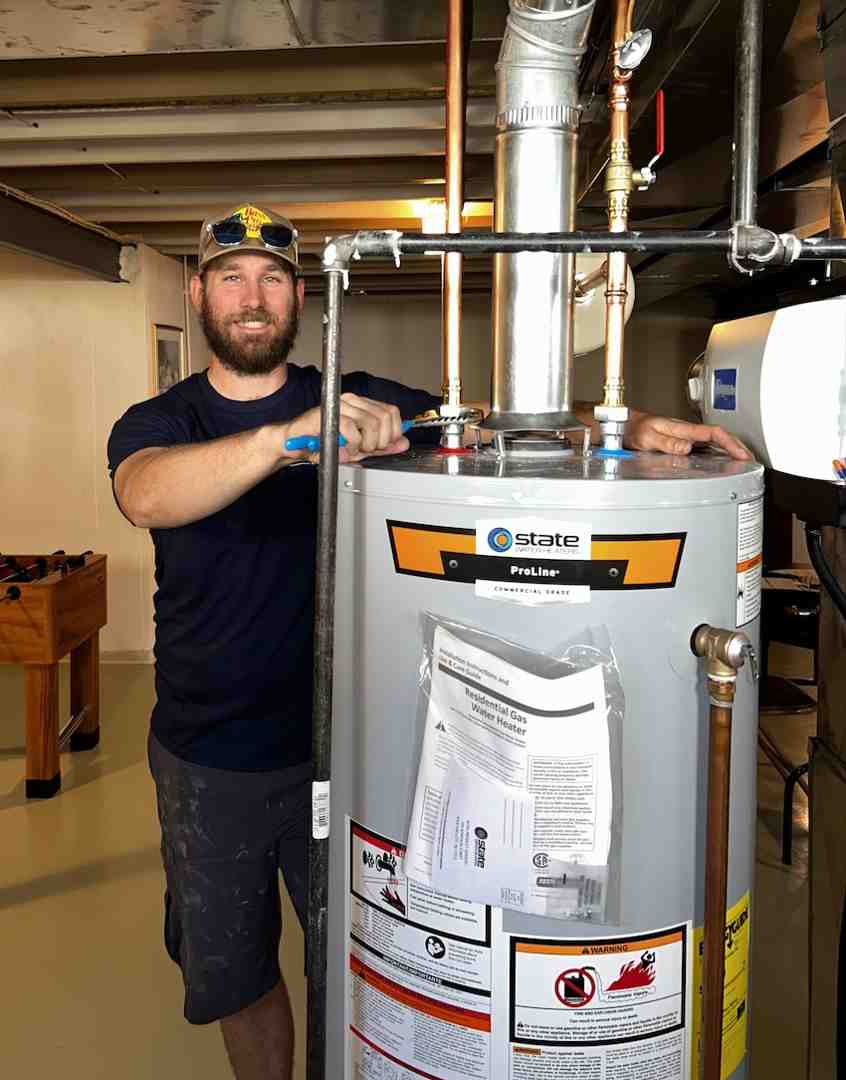
We’ve seen it time and again at AAA Home Services—small problems caught early prevent major headaches later. Just last month, our technician Mark was performing a routine inspection for a family in Des Peres when he spotted a hairline crack in their water heater tank. By replacing the unit before it failed, we helped them avoid a potential flood that would have ruined their newly finished basement and cherished family photos.
“Most people don’t think about their plumbing until something goes wrong,” Mark told me afterward. “But by then, the damage is often already done.”
A thorough plumbing inspection follows established industry guidelines, such as those from the International Association of Certified Home Inspectors. For most St. Louis area homes, we recommend scheduling these inspections annually, with an additional check before winter to prevent freezing pipes during our cold Midwest winters.
Scientific research on inspection checklists
What an Affordable Plumbing Service Includes in an Inspection
When our AAA technicians arrive for your plumbing inspection, they’ll conduct a comprehensive evaluation of your entire system. Your affordable plumbing service should cover all the bases—not just a quick glance at obvious fixtures.
Our inspections start with your water heater, checking for corrosion, proper temperature settings, and testing the pressure relief valve that prevents dangerous pressure buildup. We’ll also examine all shut-off valves throughout your home to ensure they’re accessible and working properly—something you’ll be thankful for if you ever need to quickly stop water flow during an emergency.
Your interior supply lines get careful attention too. “I once found a copper pipe that was paper-thin from years of mineral erosion,” shares Sarah, one of our senior technicians. “The homeowner had no idea they were just days away from a major leak inside their kitchen wall.”
We’ll test your drainage flow in all sinks, tubs, and showers, listening for the gurgling sounds that often indicate developing clogs. Your sump pump gets a thorough workout too—we’ll activate it to verify it’s ready for the next heavy rain.
“During a routine inspection for a customer in Clayton, I noticed their water pressure was dangerously high at 110 psi,” recalls Tom, another of our experienced plumbers. “We installed a pressure regulator that same day, potentially preventing burst pipes and appliance damage that would have cost thousands to repair.”
Long-Term Payoff
Yes, annual plumbing inspections typically cost between $100-$200, but consider this an investment rather than an expense. The financial benefits extend far beyond that modest outlay.
First, you’ll catch issues early before they cause structural damage or mold growth. Water damage restoration typically starts at $1,000 and can easily climb to $10,000 or more for serious cases.
You’ll also extend the lifespan of your fixtures and appliances. Regular maintenance can add years to your water heater, faucets, and toilets—postponing replacement costs that run into hundreds or thousands of dollars.
Perhaps most importantly, you’ll experience fewer emergency situations. As any homeowner who’s dealt with a burst pipe at 2 AM can tell you, emergency repairs always cost significantly more than planned maintenance.
Your water bills will likely decrease too. Hidden leaks can waste thousands of gallons annually—one dripping faucet can waste up to 3,000 gallons per year, while a running toilet can waste 500 gallons monthly.
Finally, well-maintained plumbing systems preserve your home’s value. When it’s time to sell, inspection reports showing regular professional maintenance give buyers confidence in your property.
Linda from Chesterfield, one of our long-time customers, estimates that annual inspections have saved her family over $5,000 in potential repairs during the past decade. “The peace of mind alone is worth every penny,” she told us recently. “Knowing our plumbing system is in good shape lets us travel without worrying about coming home to a flooded house.”
Cost Breakdown & Money-Saving Tips
When it comes to plumbing services, understanding what you’re paying for helps you recognize a fair deal and budget appropriately. Most affordable plumbing service providers break down their costs in similar ways, though the actual amounts can vary based on your location and the specific company.
A typical plumbing bill includes a service call fee ranging from $65-$150 (often waived if you proceed with repairs), hourly labor rates between $75-$150, plus the cost of parts and materials. Some jobs might also require permits ($50-$250 depending on your municipality) and cleanup fees, though many quality companies include cleanup in their overall price.
“We believe in complete transparency,” says one of our senior technicians at AAA Home Services. “That’s why we provide detailed, itemized estimates before starting any work. Our customers deserve to know exactly what they’re paying for, with no surprises when the bill arrives.”
Saving money on plumbing doesn’t mean cutting corners—it means being proactive and strategic. Regular maintenance catches small problems before they become expensive emergencies. Knowing where your main water shut-off valve is located can prevent extensive damage during a leak. Installing water leak detectors provides early warnings, while insulating pipes in unheated areas prevents costly freeze damage.
One of our customers in O’Fallon shared his experience: “The best money I ever spent was on insulating my garage pipes before winter. My neighbor skipped this $50 prevention step and ended up with a $2,000 repair bill when his pipes froze and burst during a cold snap.”
Another smart money-saving tip is to bundle several small plumbing jobs together for a single service call. This eliminates multiple trip fees and often qualifies you for a multi-service discount with companies like AAA Home Services.
More info about Spotting & Preventing Drainage Clogs
Smart Questions to Ask Before Hiring
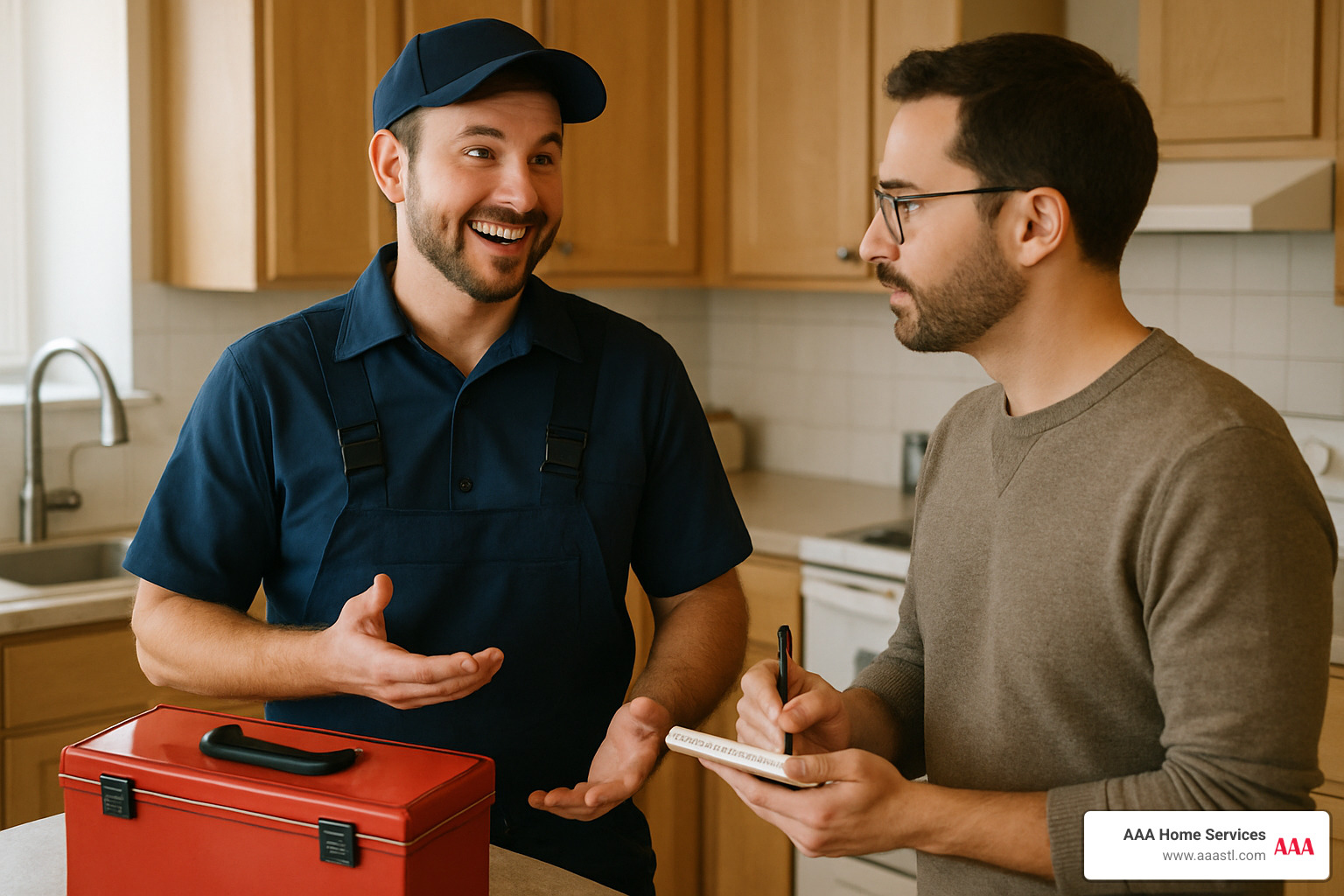
Finding a truly affordable plumbing service involves more than comparing price quotes. It means finding a company that delivers lasting value. Before you hire any plumber, arm yourself with these essential questions:
“What is your license number, and are you fully insured?” Always verify this information with your state licensing board. A properly licensed and insured plumber protects you from liability if something goes wrong.
“Will you provide a detailed written estimate before beginning work?” Any reputable plumber should be willing to commit their pricing to paper before starting. This protects both parties from misunderstandings.
“What warranty do you offer on parts and labor?” Quality plumbing work should come with at least a 90-day guarantee, though many excellent companies offer longer warranties.
Jennifer from Kirkwood learned the importance of proper credentials the hard way: “I hired an unlicensed handyman for a bathroom faucet installation, and when the connection failed and flooded my bathroom, his lack of insurance left me covering all the damage costs myself.”
Other important questions include asking about their experience and local references, whether they charge flat or hourly rates, if the same technician will handle the entire job, and what payment methods they accept. Be particularly cautious of any plumber requiring full payment upfront—this is rarely standard practice among reputable companies.
Simple Repairs Homeowners Can Handle
While many plumbing issues require professional expertise, tackling simple repairs yourself can save you money on service calls. Most homeowners can successfully manage these basic tasks:
Unclogging toilets with a proper flange plunger is often effective for standard clogs. Create a tight seal before plunging vigorously to create pressure that dislodges the blockage.
Replacing faucet aerators is a simple fix for low water pressure or splashing. Just unscrew the tip of the faucet, clean or replace the aerator, and screw it back on.
Fixing a running toilet typically involves replacing the flapper valve—the rubber part at the bottom of the tank that controls water flow. These are inexpensive and available at any hardware store.
Tightening loose connections under sinks can stop minor leaks. Use an adjustable wrench to gently secure compression fittings, being careful not to overtighten.
Applying plumber’s tape to pipe threads (wrapped clockwise) before reconnecting them helps create watertight seals and prevents leaks.
Tom, our senior technician at AAA Home Services, offers this advice: “If you’re attempting DIY repairs, always shut off the water supply first, and have a bucket and towels ready. And know when to call it quits—if you’ve spent more than 30 minutes on a ‘simple’ fix, it’s probably time to call a professional.”
Taking on these basic repairs can save you money, but knowing your limits is equally important. Complex issues involving main lines, hidden pipes, or gas connections should always be left to professionals with the proper training and equipment.
Frequently Asked Questions about Affordable Plumbing Service
How Often Should I Inspect My Plumbing?
Your home’s plumbing system works silently behind walls and under floors—until something goes wrong. To prevent those unwelcome surprises, we recommend scheduling professional plumbing inspections every 1-2 years. If your home is over 20 years old or has a history of plumbing issues, annual inspections are your best bet.
Between professional visits, it’s smart to conduct your own visual checks. I always tell homeowners to create a simple reminder—when you change your smoke detector batteries or adjust your clocks for daylight saving time, take a few minutes to examine your plumbing.
“Seasonal changes are perfect reminders to check your plumbing,” suggests Mike, our service manager at AAA Home Services. “When you’re adjusting clocks twice a year, use that as your cue to look under sinks and check for leaks. These quick inspections often catch problems when they’re still small and inexpensive to fix.”
Your DIY inspection should include checking under sinks for moisture, testing water pressure at various fixtures, and examining visible pipes for corrosion. Don’t forget to run water in rarely-used fixtures like guest bathrooms—stagnant water can cause problems over time. Also take a moment to flush all toilets, ensuring they operate correctly and don’t continue running.
The preventive value of regular inspections can’t be overstated. One of our St. Louis customers recently told me they’d saved over $4,000 in potential water damage because their annual inspection caught a slow leak behind their shower wall before it could cause structural damage.
What Are Warning Signs I Need a Plumber?
Some plumbing signals simply shouldn’t be ignored. While minor issues might wait for a convenient appointment, certain warning signs indicate it’s time to call an affordable plumbing service right away.
Pay immediate attention if you notice sudden changes in water pressure throughout your home. This often indicates a serious leak somewhere in your system. Similarly, unusual sounds like banging (water hammer), whistling, or gurgling pipes aren’t just annoying—they’re your plumbing’s way of signaling distress.
Water discoloration is another red flag. Brown or yellowish water often points to pipe corrosion, while foul sewage odors suggest a potential sewer line break or vent issue. These problems won’t resolve themselves and typically worsen over time.
“One customer ignored a persistent sewer smell in their basement for weeks,” Jennifer from our customer service team recalls. “By the time they called us, sewage had backed up into their floor drain, causing thousands in damage. Those early warning signs are your plumbing system’s way of asking for help.”
Multiple clogged drains throughout your home often indicate a main sewer line problem rather than isolated fixture issues. Similarly, if your water meter shows movement when all fixtures are turned off, you likely have a hidden leak somewhere in your system.
Outside your home, watch for unexplained wet spots in your yard or new cracks in your foundation—both can signal underground leaks. Inside, unexpected mold or mildew growth often points to hidden moisture problems that need professional attention.
Do Affordable Plumbers Offer Guarantees?
Quality workmanship deserves to be backed by solid guarantees, and reputable affordable plumbing services should stand behind their work. At AAA Home Services, we provide comprehensive warranties because we’re confident in our technicians and the parts we install.
Most professional plumbers offer 30-90 day labor warranties on repairs and up to one-year warranties on new installations. These warranties typically cover both parts and labor, giving you peace of mind that your investment is protected. The exact coverage varies by company and service type, which is why it’s important to ask about warranty terms before work begins.
“Always ask for warranty details in writing,” advises Tom, our warranty specialist. “A verbal promise isn’t enough if problems arise months later. Reputable companies stand behind their work with clear, written guarantees.”
Be aware that certain actions might void your plumbing warranty. DIY modifications to the repaired area, using harsh chemical drain cleaners, or having another plumber work on the same system could all nullify your coverage. Regular maintenance clauses in warranties are also common—some guarantees require you to perform basic upkeep to maintain coverage.
One of our long-time customers in Kirkwood recently shared how our warranty saved them from additional expenses when a newly installed faucet developed a leak three months after installation. Because they had our written warranty, the repair was completely covered, including parts and labor. That’s the kind of peace of mind every homeowner deserves from their plumbing service provider.
Conclusion
Finding an affordable plumbing service isn’t about pinching pennies—it’s about finding that sweet spot where quality meets reasonable pricing. Throughout this guide, we’ve explored what truly matters when it comes to plumbing services that won’t drain your bank account while still protecting your home.
I’ve seen how homeowners who choose solely based on the lowest estimate often end up paying more in the long run. That quick-fix pipe repair might seem like a bargain until it fails again six months later, causing water damage that costs ten times the original repair. True affordability comes from quality workmanship that lasts.
At AAA Home Services, we’ve built our reputation on exactly this principle over the past five decades. Serving St. Louis, St. Charles, and Warren County homeowners since the 1970s, we’ve learned that transparency in pricing and excellence in service create the best value for our customers. Our team doesn’t just fix plumbing problems—we build relationships with homeowners who trust us to care for their homes as if they were our own.
Don’t just take my word for it. Our community has shared over 8,000 Google reviews highlighting our commitment to fair pricing and reliable service. As one recent customer put it: “I expected to pay much more for the quality of work I received. AAA fixed my leaking shower without trying to upsell me on unnecessary repairs—that’s refreshing!”
Preventative maintenance remains your best defense against costly emergency repairs. The $150 you spend on an annual plumbing inspection might save you $1,500 on water damage repairs down the road. It’s like getting your car’s oil changed—a small, regular investment that prevents major breakdowns.
Whether you’re dealing with a stubborn clog, mysterious leak, or outdated fixtures, choosing a reputable plumbing service with transparent pricing and proven expertise will always provide the best value. Your home deserves nothing less than reliable, professional care that respects both your property and your budget.
Ready to experience truly affordable plumbing service that never compromises on quality? The team at AAA Home Services is just a call away, bringing over 50 years of expertise to every job, large or small.


