



Is Your Water Heater Rumbling, Popping, or Failing to Keep Up?
Clean sediment from hot water heater by following these essential steps:
- Turn off power – Switch off electricity or gas supply
- Shut off water – Close the cold water inlet valve
- Attach hose – Connect to the drain valve at tank bottom
- Open hot water faucet – This prevents vacuum formation
- Drain tank – Open drain valve and let water flow out
- Flush with cold water – Turn cold water back on to clear remaining sediment
- Refill and restart – Close drain, remove hose, restore power
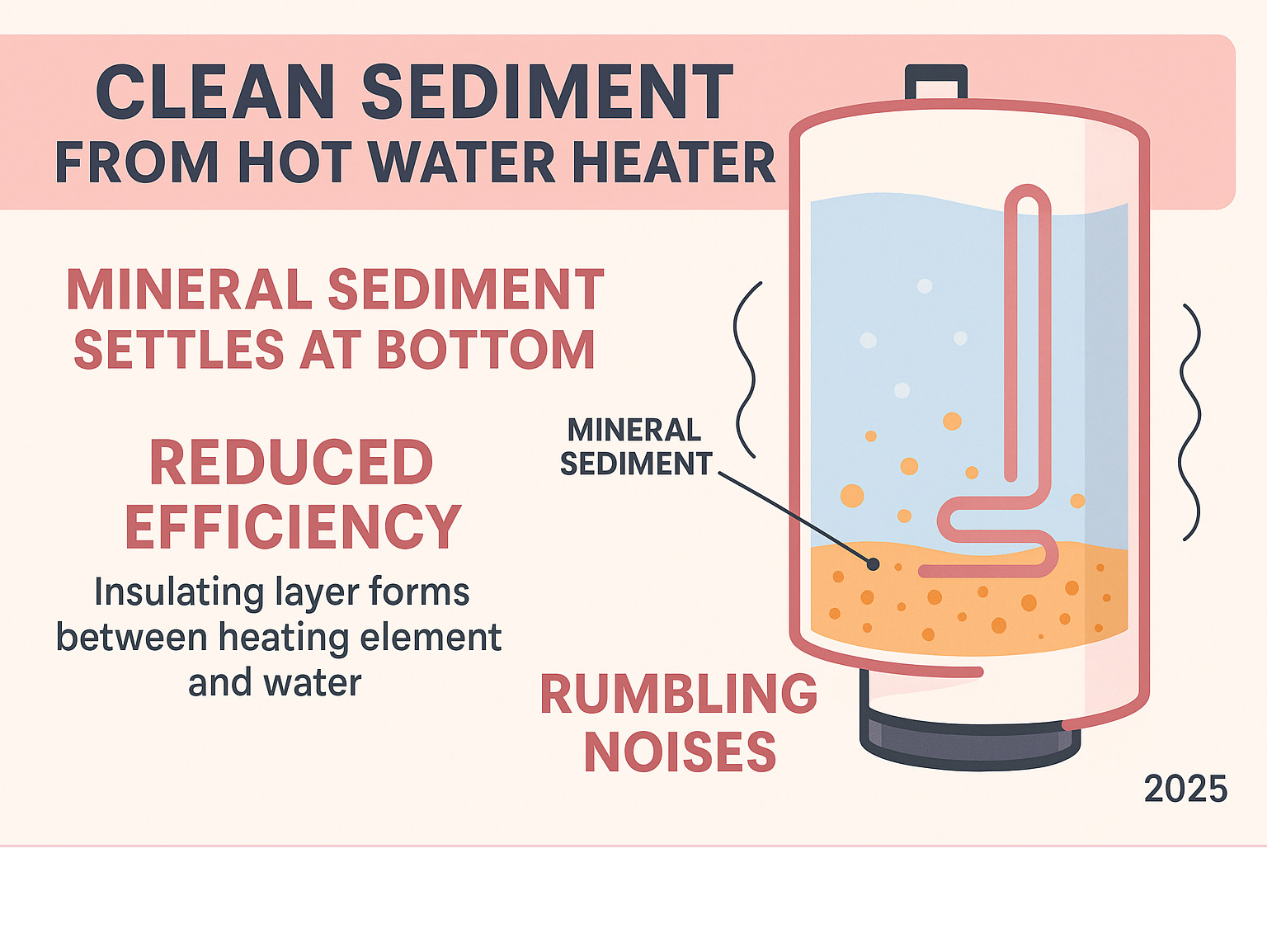
That rumbling sound coming from your basement isn’t your imagination. When minerals like calcium and magnesium settle at the bottom of your water heater tank, they create an insulating layer that forces your system to work harder. This sediment buildup is especially common in the Greater St. Louis area due to our hard water conditions.
Over time, this mineral accumulation leads to reduced efficiency, higher energy bills, and premature equipment failure. The good news? Regular sediment removal can restore your water heater’s performance and extend its lifespan significantly.
I’m Dan Walsh, and I’ve spent years managing home repair services and helping homeowners solve water heater problems just like yours. Through my experience working with technicians to clean sediment from hot water heater systems, I’ve seen how proper maintenance can save thousands in replacement costs.
How to Clean Sediment from Hot Water Heater: A Homeowner’s Guide
What is Sediment and Why Does it Form in Your Tank?
Picture this: every time you heat water in your kitchen kettle, you might notice a white, chalky residue building up over time. The same thing happens inside your water heater, except it’s happening 24/7 with much larger volumes of water.
Sediment in your water heater is primarily made up of mineral deposits like calcium carbonate and magnesium – the same minerals that make water “hard.” You might also find sand particles, rust flakes from aging pipes, or debris from a deteriorating anode rod mixed into this sediment layer.
The process is actually quite simple. When hard water gets heated, those dissolved minerals essentially “fall out” of the water and settle at the bottom of your tank like snow settling on the ground. The hotter your water temperature, the faster this happens – which is why your water heater becomes a magnet for mineral buildup.
Here in the Greater St. Louis area, we see this problem constantly. Our local water supply is naturally high in minerals, making sediment buildup a common issue for homeowners across St. Louis, St. Charles, and Warren County. While your water heater’s anode rod is designed to attract corrosive elements and protect your tank, even a properly functioning anode rod can’t prevent this mineral separation process.
Understanding why sediment forms is the first step toward keeping your water heater running efficiently for years to come.
5 Common Signs You Need to Clean Sediment from a Hot Water Heater
Your water heater is actually pretty good at telling you when something’s wrong – you just need to know what to listen and look for. Here are the five telltale signs that it’s time to clean sediment from hot water heater tanks:
Popping, rumbling, or banging noises are usually the first sign most homeowners notice. When sediment builds up at the bottom of your tank, water gets trapped underneath this mineral layer. As your heating element kicks on, this trapped water turns to steam and creates air pockets that burst – imagine a giant kettle boiling in your basement. These sounds often get worse over time as more sediment accumulates.
Running out of hot water faster than usual happens because sediment literally takes up space in your tank. If you used to get three comfortable showers in a row and now you’re lucky to get two, sediment has likely reduced your tank’s effective capacity.
Water temperature that fluctuates unpredictably during your shower is another frustrating symptom. The sediment layer acts like a blanket between your heating element and the water, making it much harder for your system to maintain consistent temperatures.
Longer wait times for hot water occur because your heating element has to work much harder to penetrate through that insulating sediment layer. What used to take 20 minutes to reheat might now take 45 minutes or more.
A leaking or dripping drain valve at the bottom of your tank often indicates sediment has gotten lodged in the valve mechanism, preventing it from closing properly. You might also notice discolored or cloudy water coming from your taps, especially when you first turn on the hot water.
If any of these symptoms sound familiar, your water heater is asking for help. For more detailed information about troubleshooting these issues, check out our guide on Hot Water Heater Not Working? What’s That Noise?.
How Sediment Impacts Your Heater’s Lifespan and Your Energy Bills
Ignoring sediment buildup is like driving your car with the parking brake on – everything still works, but you’re putting unnecessary strain on the system and wasting energy in the process.
The efficiency problem is straightforward but costly. Sediment creates an insulating barrier between your heating elements and the water they’re trying to heat. Electric water heaters normally operate at about 99% efficiency, while gas units start around 69% efficiency. But sediment can drop a gas water heater’s efficiency by 6-8% in just two years. That insulating layer forces your system to run longer and work harder to achieve the same results, which shows up directly on your monthly utility bills.
The lifespan impact is even more concerning. When your heating elements have to work overtime to penetrate through sediment, they burn out faster. Gas water heaters experience similar stress on their heat exchangers. This constant overheating creates a cycle of wear and tear that leads to premature corrosion, leaks, and eventual tank failure.
Here’s the frustrating part: most manufacturer warranties don’t cover failures caused by rust, scale, or lime buildup. This means a water heater that should last 8-12 years might need replacement in 5-6 years, and you’ll be paying for it out of pocket.
Regular maintenance to clean sediment from hot water heater systems is one of the most cost-effective investments you can make in your home. For more insights on protecting your investment, read our article on Water Heater Maintenance: Understanding the Importance.
The Professional Process to Clean Sediment from a Hot Water Heater
While you might find DIY guides online, we strongly recommend having a professional technician handle this job – especially if your water heater is over three years old or showing signs of significant buildup. Heavy sediment can completely clog your drain valve, turning a simple maintenance task into a complicated repair.
Our experienced technicians follow a systematic approach to safely and effectively clean sediment from hot water heater tanks:
Safety comes first in every job we do. We start by turning off the power supply at the circuit breaker for electric units, or shutting off the gas valve for gas models. Then we wait several hours for the water to cool down – scalding injuries are completely preventable with proper patience.
Preparation is key to avoiding water damage in your home. We connect a heavy-duty hose to your drain valve and route it to an appropriate drainage area, whether that’s a floor drain or safely outside your home.
The draining process requires opening a hot water faucet somewhere in your house to prevent vacuum formation, then carefully opening the drain valve. This is where our experience really matters – older valves can be stubborn or brittle, and we know how to handle them without causing damage.
The flushing technique is where professional expertise really shines. After the initial drainage, we use controlled bursts of cold water pressure to stir up and dislodge stubborn sediment. This process continues until the water runs clear, indicating most sediment has been removed.
For severe cases, we have specialized tools like wet/dry vacuum systems and safe chemical descaling solutions that aren’t available to homeowners. These advanced methods require professional knowledge to use safely without damaging your system.
The restart process involves careful refilling, leak checking, and proper system restoration. We make sure everything is working correctly before we leave your home.
Trusting professionals ensures the job is done right the first time and protects your water heater from potential damage. For more maintenance insights, visit our Water Heater Maintenance Tips for Your Home.
Proactive Steps to Prevent Future Sediment Problems
Prevention is always easier and less expensive than dealing with problems after they develop. Here are the most effective strategies for minimizing future sediment buildup:
Regular professional maintenance is your best defense against sediment problems. We recommend annual flushing for most homes, though some situations might require more frequent service. Our technicians can assess your specific needs and create a maintenance schedule that keeps your system running efficiently.
Water softener systems can dramatically reduce the minerals that cause sediment buildup. These systems exchange hard minerals like calcium and magnesium for sodium or potassium ions, preventing scale formation. However, softened water can be more corrosive to your anode rod, so professional monitoring becomes even more important. Learn more about our Water Softener Installation Service.
Temperature management plays a bigger role than most homeowners realize. Setting your water heater to 120°F provides plenty of hot water for daily use while minimizing the mineral precipitation that creates sediment. Higher temperatures accelerate sediment formation significantly.
Anode rod inspection and replacement every two years helps prevent corrosion particles from contributing to sediment buildup. While the anode rod doesn’t directly prevent mineral sediment, a failing rod can add rust particles to the mix and compromise your tank’s integrity.
Water filtration systems can capture larger particles before they reach your water heater. These systems are particularly helpful if you have well water or older pipes that contribute sand and rust to your water supply. Explore The Benefits of a Water Filtration System for more information.
Taking these proactive steps will keep your water heater running efficiently and extend its lifespan significantly.
Do Tankless Water Heaters Get Sediment?
This is one of the most common questions we hear from homeowners considering tankless systems. The answer is both yes and no – tankless units don’t accumulate sediment in the same way traditional tanks do, but they face their own mineral-related challenges.
Tankless water heaters develop “scaling” rather than sediment buildup. Since there’s no storage tank for minerals to settle in, the calcium and magnesium deposits form directly on the heating elements and heat exchanger surfaces. This scaling can be even more problematic than tank sediment because it directly interferes with heat transfer.
The consequences of scaling can be severe in hard water areas. Mineral deposits can clog pressure sensors, restrict water flow, and cause complete system failure within just 2-3 years if left untreated. This is why manufacturers typically require annual maintenance to preserve warranty coverage.
Professional descaling involves circulating a mild acid solution (often vinegar-based) through the system to dissolve mineral buildup. This process is more complex than flushing a traditional tank and requires specialized equipment and knowledge to ensure all components are properly cleaned and reassembled.
DIY descaling might seem tempting, but the intricate internal components of tankless systems make professional service the safer choice. Improper descaling can damage expensive heat exchangers or void your warranty.
For more information about these efficient systems, visit our Tankless Water Heater page. You can also find additional resources on tankless maintenance from Energy.gov.
Whether you have a traditional tank or tankless system, regular professional maintenance is essential for optimal performance and longevity.
For Safe and Thorough Service, Trust a St. Louis Professional
When it comes to maintaining your home’s hot water system, understanding how to clean sediment from hot water heater tanks is valuable knowledge. However, there’s a significant difference between knowing the process and executing it safely and effectively. The truth is, what seems like a straightforward maintenance task can quickly become complicated, especially when dealing with older systems or heavily clogged drain valves.
Improper flushing techniques can lead to damaged drain valves, water damage in your basement, or even incomplete sediment removal that leaves your system still struggling with efficiency issues. Professional technicians bring specialized tools and expertise that ensure the job is done right the first time, protecting your investment and giving you genuine peace of mind.
At AAA Home Services, we’ve been solving water heater problems for homeowners across the Greater St. Louis, St. Charles, and Warren County areas for over 50 years. Our team understands the unique challenges that hard water conditions present in our region, and we’ve developed proven methods to address sediment buildup effectively.
The results speak for themselves. As one satisfied customer noted in their review of our O’Fallon location, “Had AAA out to do a water heater flush and check up… It’s running much quieter now. Peace of mind is worth it.” This perfectly captures what we strive to deliver – not just a service, but the confidence that comes with knowing your home’s systems are in expert hands.
With more than 8,000 Google reviews and award-winning service, we’ve built our reputation on fair, honest pricing and reliable workmanship. We can often offer Same Day or Next Day service, depending on availability, because we understand that water heater issues don’t wait for convenient times.
Whether you’re hearing those telltale rumbling sounds, experiencing reduced hot water capacity, or simply want to stay ahead of potential problems with preventive maintenance, our skilled technicians are ready to help. We bring the right tools, extensive experience, and commitment to ensuring your water heater operates efficiently for years to come.
For expert assistance with your water heater maintenance needs, explore our comprehensive Plumbing services or learn more about our specialized Water Heater Repair Service to schedule your appointment with our trusted team.


