



What to Do Immediately When Your Water Heater Breaks
There’s nothing quite like the rude awakening of stepping into an ice-cold shower on a Monday morning. When your broken water heater decides to call it quits, it throws your entire household into disarray.
I’m Dan W, and after guiding hundreds of stressed homeowners through water heater emergencies over my 15 years in home repair services, I’ve learned that a calm, methodical approach makes all the difference. The good news? You don’t have to be a plumbing expert to handle these first critical moments.
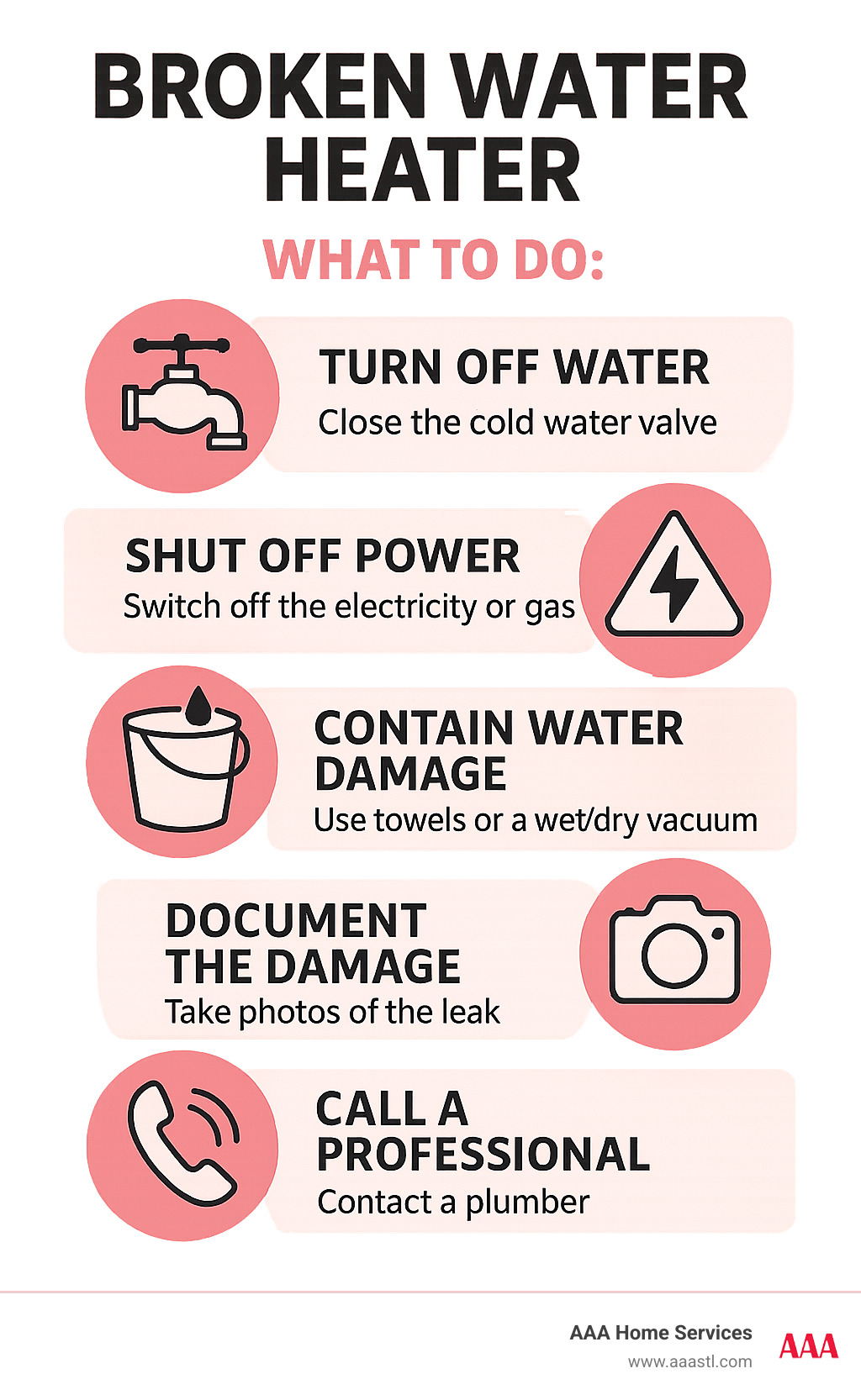
If you’re currently standing in a puddle reading this on your phone, here’s your emergency action plan:
- Turn off the water supply – Locate the cold water inlet valve on top of your heater and turn it clockwise until it’s fully closed.
- Shut off the power – For electric heaters, flip the dedicated circuit breaker to OFF. For gas models, turn the gas control valve to the OFF position.
- Contain water damage – Use towels, mops, or a wet/dry vacuum to remove standing water before it causes more damage.
- Document everything – Take clear photos of the damage and the broken water heater for your insurance claim.
- Call a professional – Contact a licensed plumber who specializes in water heater repair for proper assessment.
That sudden loss of hot water affects everything from your morning routine to basic household chores. Dishes stack up, laundry waits, and that growing puddle in your utility room could be silently damaging your home with every passing minute.
The initial steps you take can mean the difference between a simple repair and extensive water damage. By acting quickly and methodically, you’ll minimize damage, prevent potential safety hazards, and be on your way to restoring your hot water supply.
A broken water heater doesn’t have to become a household catastrophe. With the right immediate response, you can keep a minor inconvenience from turning into a major headache. The steps above will help you weather this home maintenance storm until professional help arrives.
Broken Water Heater: Key Warning Signs You’re About to Lose Hot Water
Your water heater works silently day after day, providing hot showers and clean dishes—until suddenly it doesn’t. The good news? Most water heaters don’t fail without sending distress signals first. Recognizing these early warning signs can save you from that shocking cold shower or finding a small lake in your basement.
Strange Noises
Hear popping or rumbling from your water heater? Your appliance isn’t trying to start a conversation—it’s crying for help.
“Those banging and popping sounds aren’t normal,” shares one of our veteran technicians. “They’re caused by sediment buildup on the tank bottom. As water heats, the trapped bubbles burst through this layer, creating those alarming noises.”
This sediment doesn’t just make noise—it forces your heater to work harder and longer to heat water through this insulating layer. The result? Higher energy bills and a water heater that’s aging before its time.
Rusty or Smelly Water
When your morning shower water looks rusty or smells like rotten eggs, your water heater is sending you an urgent message. Rusty water typically means internal tank corrosion has begun—a problem that eventually leads to leaks.
That sulfur smell? It usually indicates bacteria growth inside the tank or a failing anode rod. This sacrificial rod attracts corrosive elements away from your tank walls, but once it’s depleted, your tank becomes vulnerable.
Temperature Fluctuations
One minute your shower feels perfect, the next you’re jumping away from ice-cold water. These temperature swings often signal a failing heating element or thermostat.
In electric heaters, one of the dual heating elements might be burned out. Gas models might have issues with the burner or gas supply. Either way, inconsistent temperatures are a clear indicator your broken water heater needs attention soon.
Rising Utility Bills
Noticed your gas or electric bill climbing without explanation? Your water heater might be the culprit. As sediment builds up or components wear out, efficiency drops dramatically. Your heater works longer and harder to deliver the same hot water, silently consuming more energy and inflating your bills.
Water Around the Base
Even tiny puddles near your water heater deserve immediate attention. While sometimes it’s just condensation (especially in high-efficiency models), more often it’s the first hint of a developing leak. A broken water heater typically starts with minor seepage before progressing to a catastrophic tank failure.
Age of Your Water Heater
Most standard water heaters faithfully serve for 8-12 years. If yours is approaching or has passed this milestone, it’s living on borrowed time—even without obvious symptoms. Check your serial number if you’re unsure of the age—the first four digits usually indicate the manufacturing month and year.
What To Do First When Your Broken Water Heater Starts Leaking
Think you’ve spotted a leak? Here’s how to confirm and locate the source:
-
The Paper Towel Test: Completely dry the area, then place paper towels around your heater’s base. Check back in a few hours—if they’re wet, you’ve confirmed a leak.
-
Rule Out Condensation: Wipe the tank dry, then turn off the power or gas. If moisture reappears without the heater running, you’re dealing with a leak, not condensation.
-
Check Connections First: Examine the cold water inlet and hot water outlet connections at the tank top. Often, simply tightening these fittings solves the problem.
-
Inspect the Temperature-Pressure Relief Valve: This safety valve on the tank’s side can leak when pressure gets too high or if the valve itself is failing.
-
Look at the Drain Valve: Located near the tank bottom, this valve can develop leaks around its threads or through the valve if it’s not fully closed.
As Mike, one of our most experienced plumbers, often tells customers: “Don’t panic if you see water under your heater. Many times, it’s just a loose connection or a fixable valve issue—not a total tank failure.”
Is It Safe to Keep Using a Broken Water Heater with Minor Damage?
We hear this question often, and the answer varies depending on the specific issue:
Broken Sight Glass: That small glass viewer on gas water heaters serves an important purpose. If it’s cracked but intact, you can typically continue using the heater temporarily. However, if it’s completely broken out, arrange for prompt replacement as it affects proper combustion airflow.
Small Valve Drips: Minor drips from the temperature-pressure relief valve might indicate excessive pressure or temperature. You can usually continue using the heater while arranging repairs, but monitor it closely and consider lowering the temperature setting to 120°F.
Electric vs. Gas Safety Limits: With electric water heaters, minor external leaks may allow brief continued use, provided water isn’t contacting any electrical components. For gas heaters, any gas smell or pilot light issues demand immediate shutdown and professional assessment.
When uncertain, it’s always safer to shut down a broken water heater until a professional can properly evaluate it. A day or two of cold showers is far better than risking water damage to your home or creating safety hazards for your family.
Most water heater problems start small but rarely fix themselves. Addressing these warning signs promptly can save you from a complete failure at the most inconvenient time.
How to Safely Shut Off Water, Gas, and Power Like a Pro
When you’re facing a broken water heater emergency, knowing how to shut everything down properly can save you from water damage and potential safety hazards. Don’t worry—I’ll walk you through this step by step, just like I’ve guided countless homeowners through the same situation.
Water Shutoff Procedure
First things first—stop the water flow. Look for the cold-water inlet valve on top of your heater. It typically has a blue handle and sits on the pipe feeding cold water into your tank. Simply turn this valve clockwise until it stops—like closing a garden hose. This immediately prevents more water from entering the tank.
“Many homeowners panic when they see water pooling around their heater,” says Tom, one of our veteran technicians. “But turning that cold water valve clockwise is like hitting the emergency brake on the situation.”
Can’t find or reach that valve? No problem. Head to your home’s main water shutoff valve instead. You’ll usually find this where the main water line enters your home, often in the basement or utility closet.
Power Shutoff Procedure
Cutting the power is just as important as stopping the water. The approach differs based on your heater type:
For Electric Water Heaters:
Your water heater has its own dedicated circuit breaker in your home’s electrical panel. Look for one labeled “Water Heater” or “Hot Water”—it typically takes up two slots. Firmly flip it to the OFF position. This prevents any electrical components from continuing to heat an empty or damaged tank, which could create a fire hazard.
For Gas Water Heaters:
Find the gas control valve on the front of your tank. It usually has clear markings and should be turned to the “OFF” position. If you detect even the slightest smell of gas (that distinctive rotten egg odor), don’t hesitate—leave your home immediately and call your gas utility company from a safe location.
| Type | Water Shutoff | Power Shutoff | Safety Considerations |
|---|---|---|---|
| Electric | Turn cold water inlet valve clockwise | Switch dedicated breaker to OFF position | Wait 30 minutes after power off before draining |
| Gas | Turn cold water inlet valve clockwise | Turn gas control knob to OFF position | Never attempt to relight if you smell gas |
“Even after you’ve cut the water supply, the heating elements in your tank can remain dangerously hot,” our senior technician explains. “That’s why proper power shutdown is essential—it prevents potential fire risks and protects your system from further damage.”
Step-by-Step Electric Heater Shutdown
The shutdown process for electric heaters requires a bit of patience. First, locate your water heater’s dedicated circuit breaker in your electrical panel. It’s typically a double-pole breaker taking up two slots and might be clearly labeled.
Switch it firmly to the OFF position. If you think you might need to reset later, find the high-temperature limit switch—usually a red button near the thermostat behind an access panel on the heater.
Here’s the important part: wait at least 30 minutes before doing anything else. This cooling-down period allows the heating elements time to cool, preventing potential damage or injury during any subsequent repairs.
Step-by-Step Gas Heater Shutdown
Gas water heaters require special attention during shutdown. Begin by checking if the pilot light is still on through the viewing window (if your model has one).
Next, locate the gas control valve on the front of the unit and turn it to the OFF position. These controls typically have clear markings to guide you.
If you detect even the slightest gas smell (similar to rotten eggs), follow this critical protocol:
- Don’t touch any electrical switches or create sparks
- Leave your home immediately
- Call your gas company from a safe location
- Don’t return until professionals declare it safe
Never attempt to relight a gas water heater until you’re absolutely certain the area is safe. This means any gas smell has completely dissipated, the area has been properly ventilated, and you’ve confirmed there are no gas leaks.
For expert help with your broken water heater, visit our Water Heater Repair Service page to learn more about how our experienced technicians can help get your hot water flowing again.
Contain the Damage: Cleanup, Insurance, and Health Risks
You’ve shut down your broken water heater, but now you’re facing a puddle (or worse) spreading across your utility room floor. Don’t panic! Quick action now can save you thousands in secondary damage and protect your family’s health.
Water Damage Control
Water from a broken water heater is sneaky – it can silently seep into flooring, walls, and treasured belongings before you even notice. Here’s how to stop it in its tracks:
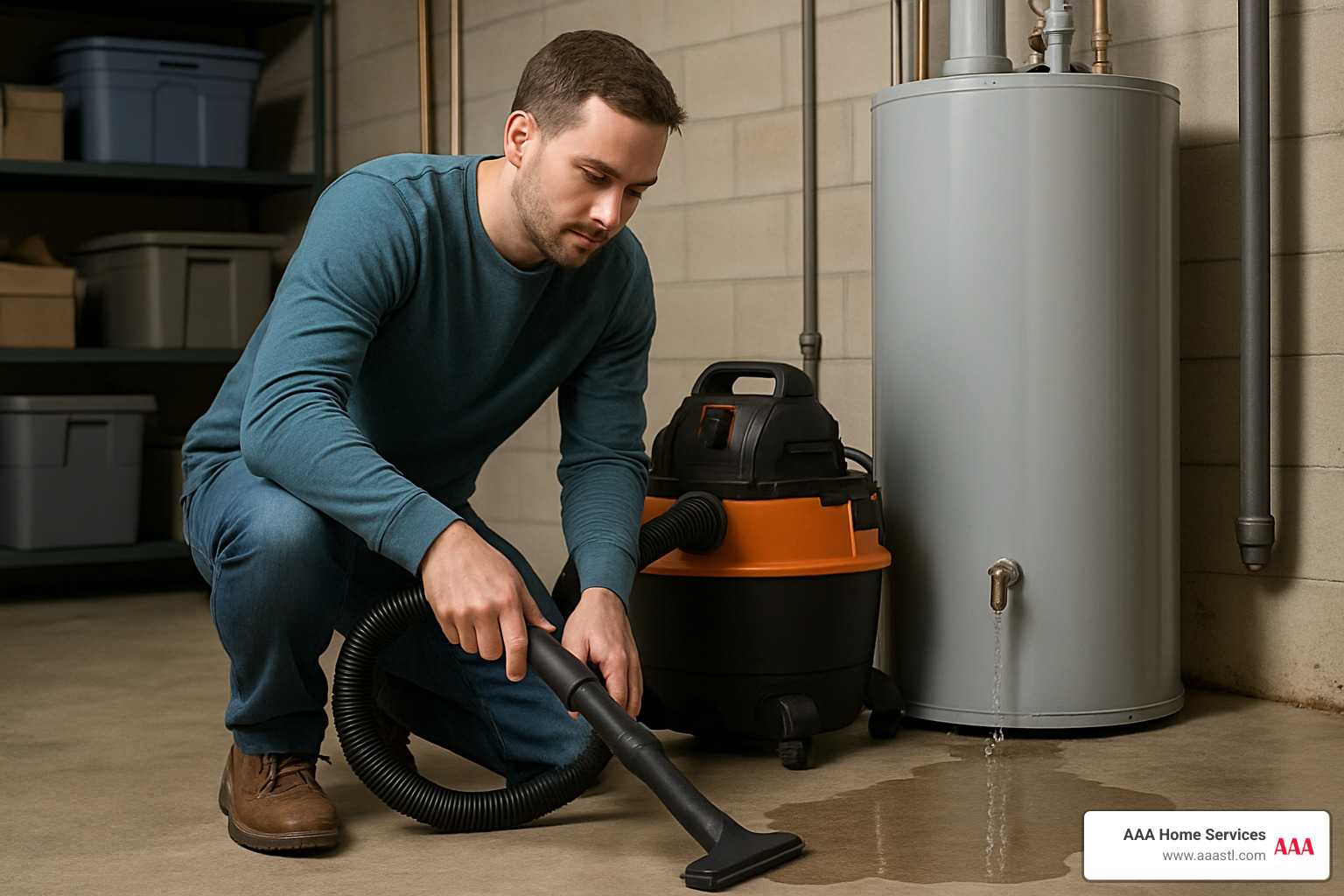
First, tackle that standing water right away. If you have a wet/dry vacuum, now’s the time to use it. No vacuum? Good old-fashioned towels and mops will do the job, just be prepared to wring them out repeatedly.
Next, rescue your belongings. Move anything sitting in or near the water to higher, drier ground. Pay special attention to cardboard boxes, furniture legs, and electronics – these are particularly vulnerable to water damage.
Creating good airflow is crucial. Position fans to create cross-ventilation in the affected area. This helps moisture evaporate instead of soaking deeper into building materials. Adding a dehumidifier to the mix pulls that moisture right out of the air, significantly reducing your risk of developing a mold problem later.
Health Considerations
That puddle from your broken water heater isn’t just an inconvenience – it can actually pose several serious health risks you might not immediately recognize.
Electrical hazards top the list of concerns. If water has reached any electrical outlets, appliances, or wiring, stay well back and call an electrician before attempting cleanup. Water and electricity create a dangerous combination that’s simply not worth risking.
Then there’s mold, which can begin growing in as little as 24–48 hours in damp environments. Beyond damaging your home, mold triggers allergic reactions and respiratory issues, particularly in children and those with existing conditions.
“Many homeowners don’t realize that mold can start growing before the area even appears dry to the touch,” explains one of our restoration specialists. “Running a dehumidifier after water removal is crucial. Skip this step, and you might face mold problems weeks later.”
Water sitting in a heated tank can also become a breeding ground for bacteria, including Legionella, which causes Legionnaires’ disease. According to CDC research on Legionella risk, water heaters maintained below 140°F may support Legionella growth, particularly in the biofilm that forms inside tanks.
DIY Cleanup Checklist
For manageable leaks that haven’t caused extensive damage, you can handle the cleanup yourself with these steps:
First, soak up all that water thoroughly. Leave no puddle behind, as even small amounts of moisture can cause problems later. Then move your belongings away from the wet area – this both prevents further damage and gives you better access for cleaning.
Position fans strategically to create cross-ventilation, and don’t skimp on the sanitizing step. Clean all affected surfaces with a good disinfectant to prevent mold and bacteria from taking hold. Finally, monitor the area for several days after cleanup, checking for any lingering moisture or musty odors that might indicate hidden dampness.
Filing a Claim for a Broken Water Heater Disaster
If your broken water heater has caused significant damage, your homeowner’s insurance may help cover some costs. Here’s how to properly document everything:
Before you start cleaning up, take detailed photos of everything – the water heater itself, the surrounding area, and all damaged items. Create a comprehensive inventory of anything affected by the water, from flooring to stored items.
Contact your insurance agent promptly, as many policies require timely notification. During cleanup and repairs, save every receipt for emergency repairs, cleanup supplies, or replacement items.
Most importantly, don’t throw away that broken water heater until your insurance adjuster has had a chance to inspect it. It’s key evidence for your claim.
It’s worth noting that while most homeowner’s insurance policies cover water damage from sudden and accidental leaks, they typically won’t cover the cost of replacing the water heater itself. Insurance companies consider water heaters maintenance items that fail due to normal wear and tear rather than sudden accidents.
When you’re ready for professional help with assessment, cleanup, or installing a new water heater, AAA Home Services is just a call away. Our experienced technicians can help you steer this challenging situation with minimal disruption to your daily life.
Fix or Replace? Troubleshooting Common Issues & When to Call In a Pro
When you’re facing a broken water heater, the million-dollar question is always: “Can I fix this, or do I need to replace the whole thing?” The good news is that not every water heater problem means you need a new unit. Let’s walk through the most common issues you might encounter and how to handle them.
No Hot Water
There’s nothing quite like stepping into what you expect to be a warm shower only to be greeted by ice-cold water. Before you panic, check these common culprits:
For electric heaters, it might be as simple as a tripped circuit breaker. Head to your electrical panel, reset the breaker, and press that little red high-temperature limit reset button on your water heater.
If you have a gas heater, check if your pilot light is still burning. If it’s out, carefully follow your manufacturer’s instructions to relight it.
“Most ‘no hot water’ calls we respond to have simple fixes like a tripped breaker or extinguished pilot light,” says our senior technician. “Always check these first before assuming the worst.”
Also worth verifying: is your thermostat set to at least 120°F? Sometimes the setting gets accidentally turned down, leaving you with tepid water at best.
Rotten-Egg Odor
If your hot water smells like rotten eggs, you’re not imagining things. This sulfur smell typically happens when bacteria in your tank react with the anode rod—that long metal rod that protects your tank from corrosion.
A good tank flush often solves this smelly situation by clearing out the bacteria. If the smell persists, you might consider replacing your standard anode rod with an aluminum alloy alternative, which is less reactive with certain water chemistry.
Popping or Rumbling Noises
Those strange sounds coming from your water heater aren’t supernatural—they’re sediment. Over time, minerals in your water settle at the bottom of the tank. When water gets trapped beneath this layer and heats up, it creates those alarming popping and rumbling noises.
The fix? Drain and flush your tank to remove the buildup. If you’ve never done this before and your heater is several years old, be prepared—the water coming out might look pretty alarming with rust and sediment. If the noises continue after a thorough flush, your heating element might need replacement.
Temperature-Pressure Relief Valve Dripping
The T&P valve is a crucial safety feature that releases pressure when temperature or pressure inside the tank gets too high. If it’s dripping, don’t ignore it—but don’t panic either.
First, try lowering your temperature setting to 120°F. Excessive heat is often the culprit. If the dripping continues, the valve itself might be faulty and need replacement—a job best left to professionals since it directly affects your water heater’s safety system.
DIY Fixes You Can Tackle Safely
Not every water heater issue requires professional help. Here are some fixes that most homeowners can handle:
Adjust the thermostat to 120°F—this provides plenty of hot water while preventing scalding and lowering your energy bills. It’s the sweet spot for most households.
Tighten loose connections if you notice minor leaks around pipe fittings. A gentle turn with a wrench often stops these drips in their tracks.
Install a drain valve cap if your drain valve is seeping. This simple fix can buy you time until a proper replacement.
Add a water alarm near your water heater. These inexpensive devices sound an alert at the first sign of moisture, potentially saving you from major water damage.
“A properly sized water heater should deliver about 75% of its tank capacity as usable hot water,” notes our installation specialist. “If you’re consistently running out of hot water, your tank might be undersized for your household needs.”
Signs You Need Professional Help or Full Replacement
While DIY solutions work for minor issues, some problems signal it’s time to call in the pros or consider replacement:
Internal tank leak is the point of no return. If water is seeping from the tank itself (usually visible at the bottom), replacement is your only option. This happens when the inner lining has failed—a condition that can’t be repaired.
Age over 10 years puts your water heater in the danger zone. Even if it’s still working, you’re living on borrowed time. Proactive replacement can save you from the inconvenience and potential damage of a sudden failure.
Repeated repairs add up quickly. If you’re on a first-name basis with your plumber due to frequent water heater issues, it’s probably more economical to invest in a new unit.
Visible corrosion on the tank exterior or connections suggests advanced deterioration. Similarly, if your hot water has taken on a rusty tint, your tank is likely corroding from the inside out.
Expired warranty is another consideration. When major components fail after your warranty period, replacement often makes more financial sense than expensive repairs.
For more detailed troubleshooting advice, our blog post Hot Water Heater Not Working? What’s That Noise? offers additional insights to help you diagnose common problems.
When it comes to gas connections or any repairs involving electricity and water, safety should always be your priority. When in doubt, it’s worth calling a professional to assess your broken water heater situation.
Preventive Maintenance to Avoid Another Broken Water Heater
Let’s face it—nobody wants to deal with a broken water heater twice. The good news? A little TLC goes a long way toward preventing those middle-of-the-shower cold water surprises. With some simple, regular maintenance, you can add years to your water heater’s life and keep those emergency situations at bay.
Essential Maintenance Tasks
Your water heater works hard every day, heating gallons upon gallons of water for your family. Just like your car needs oil changes, your water heater needs regular maintenance to keep running smoothly.
Sediment buildup is your water heater’s worst enemy. Over time, minerals in your water settle at the bottom of the tank, creating an insulating layer that forces your heater to work harder. An annual tank flush washes away this sediment, improving efficiency and extending your tank’s life considerably.
“I’ve seen water heaters cut short by years because homeowners skipped their annual flush,” shares one of our veteran technicians. “It’s like trying to boil water with a thick blanket between the burner and the pot.”
Your water heater’s anode rod is its unsung hero—this sacrificial component attracts corrosive elements that would otherwise eat away at your tank. Think of it as your water heater’s bodyguard. Check it every 2-3 years and replace it when it’s more than 50% depleted. This $30-50 part might be the most cost-effective maintenance you’ll ever perform.
If your home has a closed water system (with a pressure regulator or check valve), consider installing an expansion tank. When water heats up, it expands. Without somewhere for that pressure to go, it can damage your water heater and plumbing. An expansion tank provides that safety buffer.
Living in an area with hard water? You might want to think about a water softener. Hard water accelerates sediment buildup and scale formation, forcing your water heater to work harder and die younger. A water softener can significantly extend your heater’s lifespan.
Finally, make visual inspections part of your routine. A quick look for leaks, rust, or unusual noises can catch problems before they become midnight emergencies.
Quick Monthly Inspection Routine
You don’t need to be a plumbing expert to keep tabs on your water heater’s health. Just five minutes each month on these simple checks can help prevent major failures:
First, look for moisture around the base and connections. Even tiny droplets can signal the beginning of a leak. Run your hand around fittings and check the floor for dampness.
Next, take a moment to listen for unusual noises. Rumbling, popping, or hissing sounds aren’t normal—they typically indicate sediment buildup or pressure issues that need addressing.
It’s also smart to test the temperature-pressure relief valve monthly. This critical safety component prevents dangerous pressure buildup. Simply lift the lever slightly and release it—it should snap back and stop any water flow immediately. If it continues dripping afterward, it likely needs replacement.
Finally, pay attention to temperature consistency in your daily use. If your shower goes from hot to lukewarm faster than usual, or if temperatures fluctuate during use, your thermostat or heating element might be failing.
For more detailed guidance on keeping your water heater in top shape, check out our blog post on Water Heater Maintenance: Understanding the Importance.
Replacement Timeline and Upgrading Options
Even with perfect maintenance, every water heater eventually reaches retirement age. When that time comes, you’ll have some decisions to make.
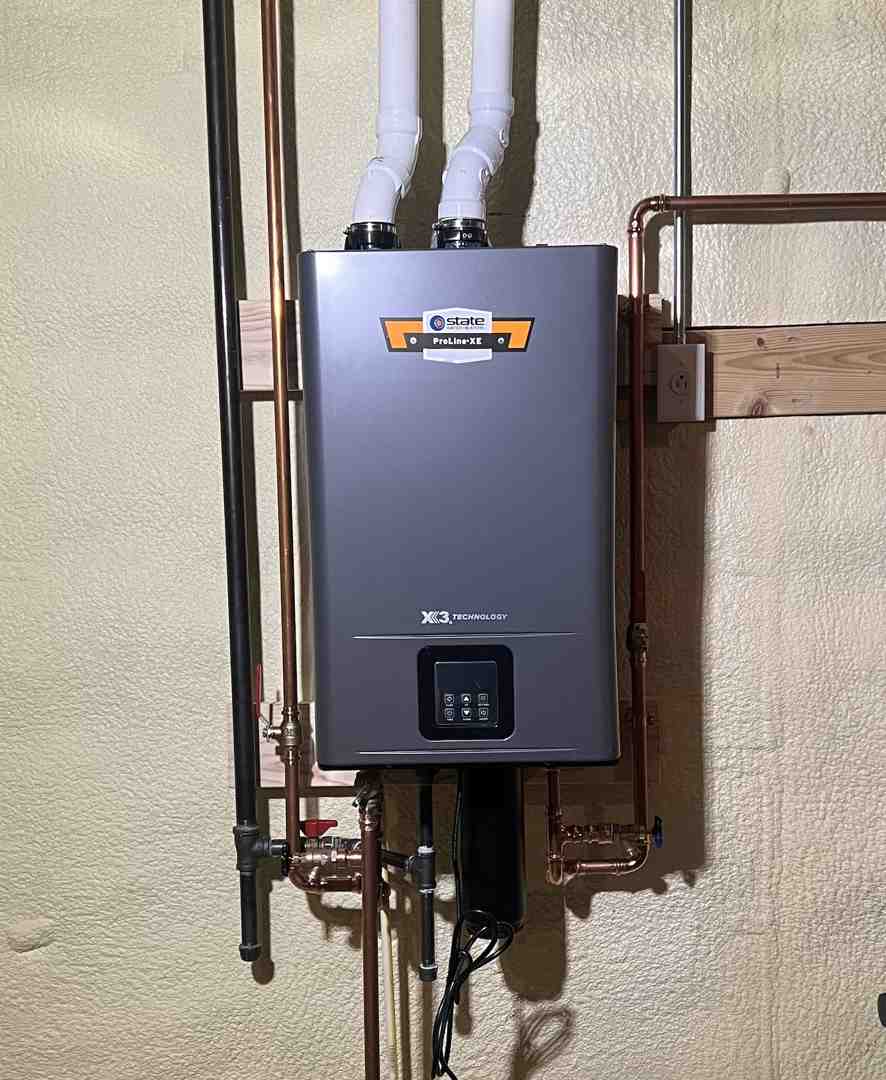
The most fundamental choice is between tank vs. tankless systems. Traditional tank heaters cost less upfront but typically last 8-12 years and consume more energy. Tankless models require a higher initial investment but offer longer lifespans (15+ years) and significant energy savings. For many families, the long-term economics favor tankless options.
When sizing your new water heater, remember the 75% capacity rule. A properly sized water heater should supply about 75% of its total capacity as hot water before temperatures drop. For a family of four, this typically means at least a 40-gallon tank or equivalent tankless capacity.
Today’s water heaters offer impressive energy efficiency improvements over models from even a decade ago. These efficiency gains often translate to hundreds of dollars in annual energy savings—money that helps offset the replacement cost.
Don’t forget to ask about available incentives when shopping for a new water heater. Many utility companies and government programs offer rebates for upgrading to energy-efficient models. Our team can help identify current incentives that might make that upgrade more affordable than you’d expect.
“The best time to replace your water heater is before it fails,” advises our installation specialist. “Emergency replacements always cost more and leave you without hot water longer. If your unit is over 10 years old, start planning now rather than waiting for that inevitable cold shower.”
Regular maintenance might seem like a hassle, but it’s much less trouble than dealing with a broken water heater on a busy weekday morning. A little prevention today means more reliable hot water tomorrow.
Frequently Asked Questions About Broken Water Heaters
Why do I have no water in certain fixtures after shutting off a broken water heater?
It can be genuinely puzzling when you shut off your water heater and suddenly find you have no water coming from your shower—not even cold water! Don’t worry, you’re not alone in this confusion.
The most common culprit is an anti-scald balancing valve in your shower fixture. These clever safety devices require balanced pressure between hot and cold water lines to function properly. When you shut off the hot water supply, the valve gets confused and may block all water flow completely.
“I’ve had panicked calls from homeowners thinking they’ve somehow broken their entire plumbing system,” shares one of our technicians. “They’re always relieved to learn it’s just the shower valve doing its job—albeit a bit too enthusiastically!”
Another possibility is an air lock in your plumbing lines. After any water heater service, it’s a good idea to run all your faucets briefly to help push any trapped air out of the system. This simple step can restore normal flow to all your fixtures.
What hazards come with delaying repairs on a broken water heater?
Putting off repairs on a broken water heater might seem like a way to save money in the short term, but it can lead to serious consequences:
Water damage can be extensive and expensive. Even small, slow leaks can seep into floors, walls, and foundations, causing structural damage that may not be visible until it’s severe.
Mold growth thrives in the damp environments created by water heater leaks. Once established, mold can spread throughout your home, affecting air quality and potentially causing health issues for your family.
Electrical fire risk increases when water leaks onto nearby electrical connections or outlets. Water and electricity create a dangerous combination that can lead to shorts, sparks, and even fires.
Gas leak dangers are a concern with aging gas water heaters. As components corrode, the connections to gas lines can become compromised, creating the risk of gas leaks in your home.
Insurance denial is another risk many homeowners don’t consider. If your insurance company determines you knew about a failing water heater but chose to ignore it, they might classify resulting damage as negligence rather than an accident—and deny your claim.
As one homeowner told us after experiencing a major leak: “I thought I was saving $500 by postponing the repair. It ended up costing me over $5,000 in water damage. I learned my lesson the hard way.”
How long should a water heater last before replacement?
Water heater lifespans vary significantly depending on several factors:
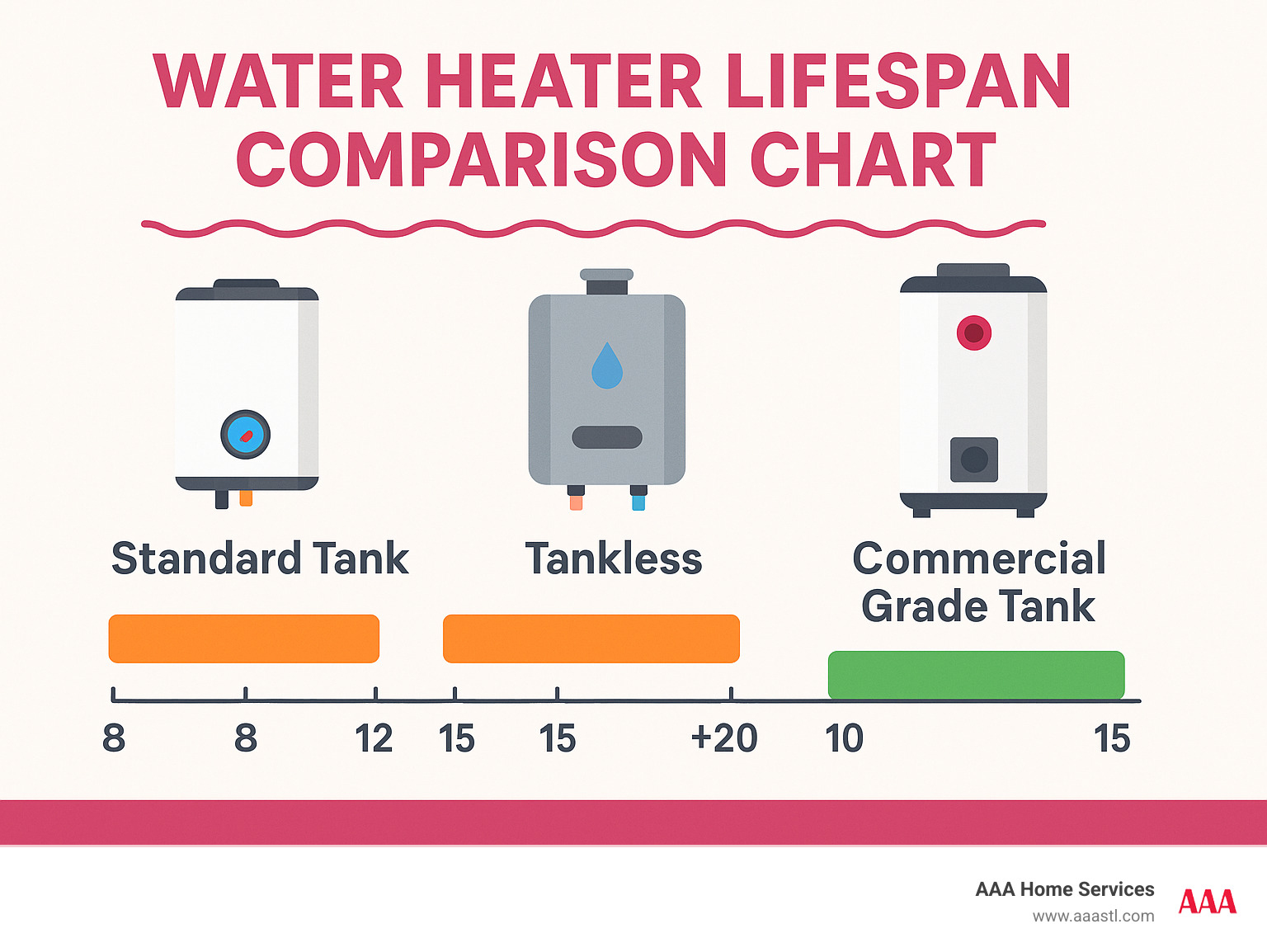
Standard tank water heaters typically last about 8-12 years with proper maintenance. Without regular care, that number can drop to 6-8 years.
Tankless water heaters offer greater longevity, often reaching 15-20+ years of service before requiring replacement.
Commercial grade tank heaters installed in residential settings may last 10-15 years under optimal conditions.
Several factors influence how long your water heater will serve you:
Water quality plays a major role—homes with hard water typically see shorter heater lifespans due to mineral buildup and accelerated corrosion. Regular maintenance can help counteract these effects.
Usage volume also matters. A household of six will put more strain on a water heater than a household of two, potentially shortening its useful life.
Installation quality and manufacturing differences can’t be overlooked either. A properly installed, high-quality unit will almost always outlast a poorly installed budget model.
“Even within the same brand, water heater models can vary significantly in quality and durability,” notes our installation manager. “We’ve seen budget models fail in 6-7 years, while premium units from the same manufacturer last 12-15 years with proper maintenance.”
Regular maintenance truly is the key to maximizing your water heater’s lifespan. Annual flushing, anode rod checks, and prompt attention to small issues can add years to your unit’s service life—and save you money in the long run.
Conclusion
Facing a broken water heater might feel overwhelming at first, but now you’re equipped with the knowledge to handle the situation confidently. Throughout this guide, we’ve walked through everything from emergency response to long-term prevention – all aimed at getting your hot water flowing again with minimal stress and disruption to your daily life.
Let’s recap the essential steps to remember when dealing with water heater troubles:
When you notice those first warning signs – strange noises, rusty water, or small puddles – don’t wait until you’re taking ice-cold showers to take action. Early intervention can be the difference between a simple repair and a flooded basement.
Always prioritize safety by properly shutting off water, power, and gas before attempting any inspection or maintenance. Those few extra minutes spent following proper shutdown procedures protect both your home and your family.
If you’re dealing with water damage, thorough documentation with photos and detailed notes will make your insurance claim process much smoother. Remember to keep all receipts for emergency services and replacement items.
When deciding between repair and replacement, consider the unit’s age, repair history, and efficiency. Sometimes investing in a new unit makes more financial sense than pouring money into an aging system that’s likely to fail again soon.
Perhaps most importantly, implement a regular maintenance routine. Those quick monthly checks and annual service appointments are your best defense against future emergencies. As the saying goes, an ounce of prevention is worth a gallon of hot water!
At AAA Home Services, we’ve been helping homeowners throughout St. Louis, St. Charles, and Warren County steer water heater challenges for over five decades. Our experienced technicians understand the urgency of hot water issues and are committed to providing honest assessments and reliable solutions.
Whether you need an emergency repair for a suddenly broken water heater, guidance on selecting an efficient replacement, or just want to establish a maintenance plan to avoid future problems, our team is ready to help. We take pride in our fair pricing structure and our commitment to treating your home with respect.
Don’t let water heater problems disrupt your family’s comfort any longer than necessary. For more information about resolving your hot water challenges, visit our water heater repair services page.
With the right care and timely attention, you can enjoy reliable hot water for years to come – and we’re here to help make that happen.


