



DIY AC Maintenance: Keeping Your Cool This Summer
Looking for ac servicing at home tips? Here’s a quick overview of what you need to know:
| AC Servicing Tasks You Can Do at Home | Frequency |
|---|---|
| Replace or clean air filters | Every 1-3 months |
| Clean outdoor condenser coils | 1-2 times per year |
| Clear debris around outdoor unit | Monthly |
| Check and clean condensate drain | Twice per year |
| Inspect and straighten coil fins | Once per year |
| Check thermostat settings | Seasonally |
When the temperature rises, your air conditioner becomes the most valuable appliance in your home. But without proper maintenance, it can struggle to keep you cool while driving up your energy bills. The good news is that many ac servicing at home tasks are simple enough for homeowners to handle without specialized training.
Regular DIY maintenance not only saves you money on professional service calls but also helps your AC run more efficiently, potentially reducing your cooling costs by up to 15%. Plus, these simple tasks can extend your unit’s lifespan and prevent those uncomfortable breakdowns during the hottest days of summer.
I’m Dan W, with extensive experience managing home repair services and training technicians in proper ac servicing at home procedures to ensure maximum customer satisfaction. Throughout this guide, I’ll share professional insights that will help you maintain your AC system like a pro.
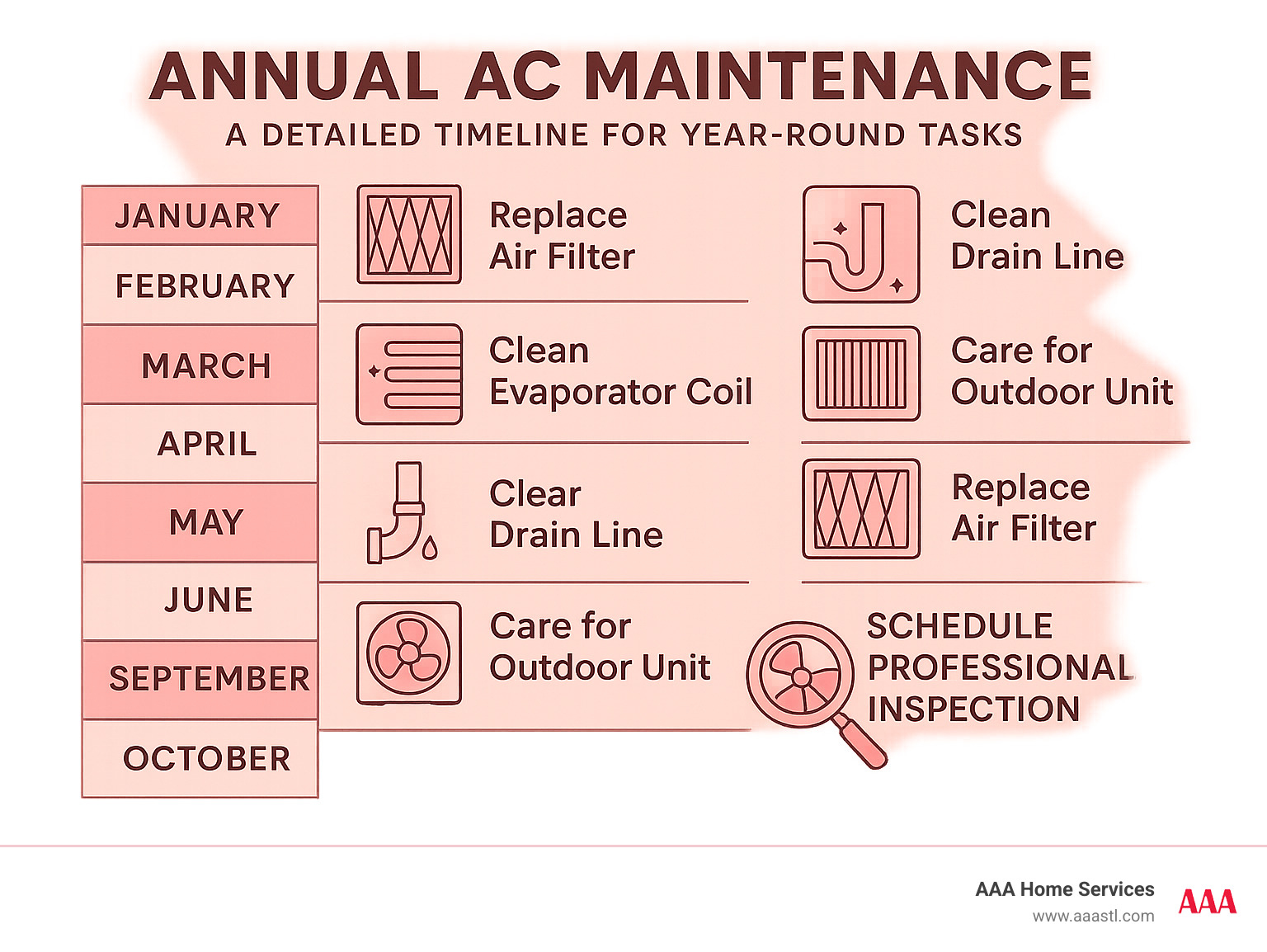
Why Regular AC Maintenance Pays Off
Ever wonder why your car needs regular oil changes? Your air conditioner works on the same principle—routine care keeps it running smoothly and helps you avoid those painful repair bills down the road.
Lower Energy Bills
When it comes to ac servicing at home, your wallet will thank you almost immediately. The U.S. Department of Energy reports that simply changing your air filter on schedule can reduce your cooling costs by approximately 15%. A clean system doesn’t have to struggle to push air through your home, which means less electricity used.
I’ve seen this with our customers. “When we service systems that haven’t been maintained,” one of our senior technicians often says, “we typically find them operating at just 60-70% efficiency. After a good cleaning and proper maintenance, those same units bounce back to near-original efficiency levels.”
Extended System Lifespan
Most air conditioners should last between 10-15 years. Without regular care, though, many give up the ghost much earlier. Simple ac servicing at home prevents the kind of accelerated wear and tear that leads to premature replacement.
One of our long-time customers in St. Charles recently shared, “I’ve had the same AC unit cooling my home for 18 years now. I’m convinced it’s still going strong because of the basic maintenance I do every spring and fall. It’s outlived what everyone told me to expect!”
Warranty Protection
Here’s something many homeowners don’t realize until it’s too late: many manufacturer warranties require proof of regular maintenance. Skip those simple maintenance tasks, and you might accidentally void your warranty—leaving you holding the bill for any repairs or replacements.
Better Indoor Air Quality
Your air conditioner does double duty—it cools your home while also filtering the air your family breathes. Regular filter changes and coil cleaning help capture dust, pollen, and other allergens that would otherwise circulate through your home.
Improved Comfort and Performance
A well-maintained AC distributes cool air more evenly throughout your home, eliminating those frustrating hot spots. You’ll notice more consistent temperatures from room to room and fewer temperature fluctuations throughout the day.
The latest research on routine HVAC care from ENERGY STAR® confirms what our technicians have been saying for years: regular maintenance is the single most important factor in system performance and efficiency.
Gear Up: Safety Precautions & Tools You’ll Need
Before rolling up your sleeves for ac servicing at home, let’s talk about staying safe and having the right equipment on hand. I’ve seen too many DIY warriors dive in unprepared, only to make costly mistakes or risk their safety.
Safety First
Your safety is non-negotiable when working with any electrical appliance. Always turn off the power to your AC unit before you start any maintenance. This means both switching it off at the thermostat AND flipping the circuit breaker that powers the unit. I can’t stress this enough—electricity and air conditioners don’t play nicely with curious fingers!
Give your system about 30 minutes to rest after shutting off the power. This allows those capacitors (which store electrical charge) to discharge safely. Think of them as tiny batteries that need time to drain.
Protective gear isn’t optional. Those aluminum fins on your condenser are sharp enough to slice paper (and skin). A good pair of gloves and safety glasses will keep your hands and eyes protected from debris and sharp edges.
One last tip from someone who learned the hard way: never work on your AC during a thunderstorm. Water and electricity make for dangerous companions, and lightning can cause power surges that complicate matters.
Essential Tools for DIY AC Maintenance
You don’t need a professional’s toolkit to handle basic ac servicing at home, but having the right tools makes the job easier and safer.
Your maintenance arsenal should include a screwdriver set (both flathead and Phillips), a garden hose with a spray nozzle, and a soft bristle brush for gentle cleaning. A fin comb is worth its weight in gold—this specialized tool helps straighten those delicate aluminum fins without causing damage.
For indoor components, keep a vacuum cleaner with brush attachment handy, along with mild detergent or a specialized coil cleaner. A wet/dry vacuum is perfect for clearing condensate drain lines, while a digital thermometer helps you verify your system is cooling properly.
Don’t forget a level to check that your outdoor unit sits evenly—a tilted unit can cause compressor problems over time.
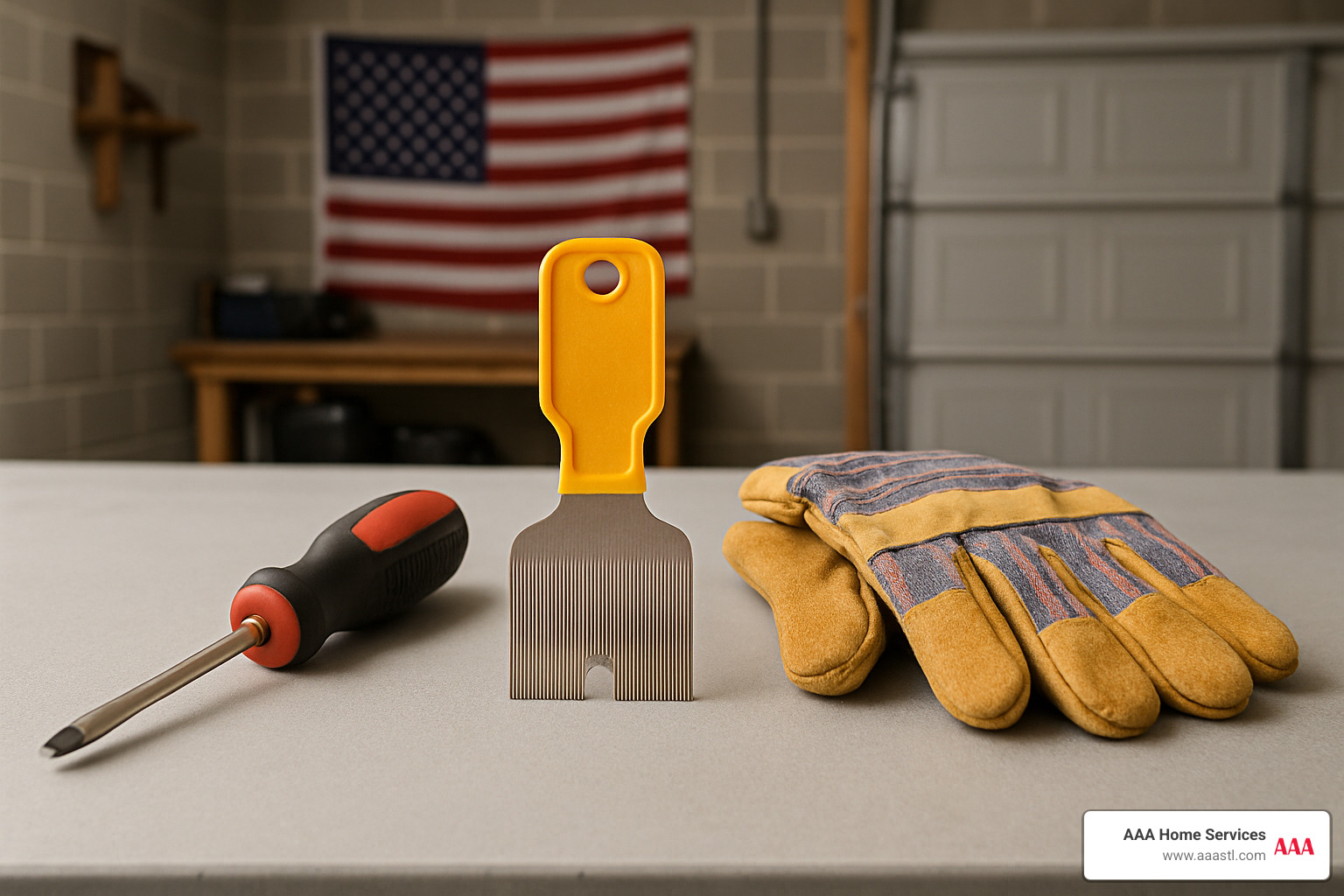
If you’re comfortable with basic electrical systems, a multimeter can help check simple connections. However, I recommend leaving electrical diagnostics to professionals like our certified technicians at AAA Home Services. Some things are best left to the experts, especially when it comes to the more complex electrical components of your cooling system.
The right tools not only make maintenance easier but also help prevent accidental damage to your system. A $15 fin comb can save you hundreds in repair costs by allowing you to safely straighten bent fins without causing further damage.
ac servicing at home: A Step-by-Step DIY Guide
Now that you’re prepared with the right tools and safety knowledge, let’s walk through the essential steps of ac servicing at home. We’ll cover both split systems (with separate indoor and outdoor units) and central air conditioning systems.
Step 1: Power Down Your System
Before starting any maintenance:
- Turn your thermostat to the “off” position
- Locate your circuit breaker panel and turn off the breaker that powers your AC unit
- Verify the power is off by trying to turn on the system at the thermostat
Step 2: Outdoor Condenser Unit Maintenance
The outdoor unit houses your condenser coil and compressor—critical components that need proper airflow to function efficiently.
-
Clear the surrounding area of leaves, twigs, grass clippings, and other debris. Maintain at least 2 feet of clearance around the entire unit.
-
Remove the protective grille on top of the unit (usually secured by screws or clips) to access the interior. Be careful not to bend or damage the grille.
-
Gently vacuum larger debris from inside the unit using a soft brush attachment.
-
Spray the condenser coils from the inside out with a garden hose. Use a gentle spray—never a pressure washer, which can damage the delicate fins.
“I always tell homeowners to spray from inside out,” says one of our experienced technicians. “This pushes the dirt in the same direction it entered, which is much more effective than trying to push it back through the coils.”
- Check the unit’s level using a bubble level. An unlevel unit can cause compressor problems over time. If it’s not level, adjust the pad or supports as needed.
Step 3: Indoor Air Handler Maintenance
The indoor component of your system is typically located in a closet, attic, basement, or utility room.
-
Locate the access panel on your air handler unit and remove it using a screwdriver.
-
Inspect the blower assembly and motor for dust buildup. If accessible, gently vacuum with a soft brush attachment.
-
Check the evaporator coil (if accessible) for dirt and dust. In many systems, this may require professional tools to access properly.
-
Inspect the condensate drain pan for mold, algae, or blockages. Clean with a mixture of bleach and water (1:1 ratio) if needed.
ac servicing at home: Cleaning or Replacing Air Filters
Perhaps the most important—and easiest—maintenance task is keeping your air filter clean. A clogged filter restricts airflow, forcing your system to work harder and use more energy.
When to Change Your Filter
- Standard 1-inch filters: Every 1-3 months
- Media filters (4-5 inches thick): Every 6-12 months
- Homes with pets or allergies: More frequently
How to Replace Your Filter
-
Locate your filter, typically found in either:
- The return air duct near your indoor air handler
- Behind the return air grille in your wall or ceiling
-
Note the size and direction of the existing filter. Most filters have an arrow indicating the correct airflow direction.
-
Remove the old filter and compare its size to your replacement. Filters are marked with dimensions like 16x20x1 (width x height x thickness in inches).
-
Install the new filter with the arrow pointing toward the air handler (in the direction of airflow).
“The most common mistake we see is homeowners installing filters backward,” notes our lead technician. “The arrow must point in the direction of airflow, toward the blower, not away from it.”
For washable filters, follow the manufacturer’s cleaning instructions, typically involving gentle rinsing and complete drying before reinstallation.
More info about AC Maintenance & Tune-Up
ac servicing at home: Coil & Drain Line Care
Keeping your coils clean and drain lines clear is essential for efficient operation and preventing water damage.
Evaporator Coil Cleaning
The evaporator coil is located in your indoor unit and can collect dust over time. While thorough cleaning often requires professional access, you can:
-
Inspect the visible portions of the coil for dust and dirt buildup.
-
Use a soft brush to gently remove any loose debris.
-
Apply a commercial no-rinse coil cleaner if accessible, following the product instructions.
For most homeowners, a professional cleaning of the evaporator coil during annual maintenance is recommended, as improper cleaning can damage the delicate fins.
Condenser Coil Cleaning
The outdoor condenser coil collects dirt, leaves, and debris that can impede airflow:
-
Turn off power to the unit at the circuit breaker.
-
Remove the protective grille to access the coils.
-
Gently brush away loose debris with a soft brush.
-
Spray the coils with a commercial coil cleaner, allowing it to sit according to product instructions.
-
Rinse gently with a garden hose from the inside out. Again, never use a pressure washer.
Condensate Drain Line Maintenance
A clogged drain line can cause water damage and trigger system shutdowns in units with safety switches:
-
Locate the drain line exit point, typically a PVC pipe near your outdoor unit.
-
Check for water flow when your system is running in cooling mode.
-
Clear clogs by:
- Pouring 1 cup of white vinegar or diluted bleach (1:1 with water) into the drain line access point near the indoor unit
- Using a wet/dry vacuum at the outdoor end of the drain line to suction out clogs
- Using a thin, flexible brush to manually clear visible blockages
“We recommend pouring a cup of vinegar down your drain line every 60 days during cooling season,” suggests our maintenance specialist. “This simple step prevents the algae and mold growth that causes most clogs.”
Outdoor Unit Check & Fin Straightening
The aluminum fins on your condenser coil can become bent over time, restricting airflow and reducing efficiency.
Fin Maintenance
-
Inspect the fins on your outdoor unit for bending or damage.
-
Use a fin comb (matched to your fin spacing) to gently straighten bent fins. Work carefully to avoid causing additional damage.
-
Clean between fins with a soft brush to remove trapped debris.
Outdoor Unit Area Maintenance
The area surrounding your outdoor unit affects its performance:
-
Maintain at least 2 feet of clearance around all sides of the unit.
-
Trim back shrubs, plants, and tree branches that could restrict airflow.
-
Check for level positioning and adjust the pad if necessary.
-
Remove any items stored on or against the unit that could restrict airflow.
One customer in Chesterfield shared: “After clearing overgrown bushes from around my outdoor unit and straightening the bent fins, my AC started cooling much better and my electric bill dropped by about $30 per month during summer.”
Thermostat & System Restart
Your thermostat is the command center for your cooling system, and proper settings can significantly impact efficiency.
Thermostat Maintenance
-
Remove the cover and gently clean inside with a soft brush.
-
Check battery status if your thermostat is battery-powered.
-
Verify proper operation by testing heating, cooling, and fan functions.
-
Consider upgrading to a programmable or smart thermostat for improved efficiency and convenience.
System Restart Procedure
After completing your maintenance:
-
Replace all access panels and secure them properly.
-
Restore power at the circuit breaker.
-
Wait 5 minutes before turning the system on at the thermostat.
-
Set to cooling mode and adjust to your desired temperature.
-
Monitor operation for the next 24 hours, listening for unusual noises and checking that air from vents is cool.
When to Call a Qualified HVAC Pro
While ac servicing at home can save you money and keep your system running efficiently, there are definitely times when it’s best to put down the tools and call in the professionals. Recognizing these situations can prevent costly mistakes and potential safety hazards.
Refrigerant Issues
Your air conditioner’s refrigerant is its lifeblood, and any problems with it require specialized handling. If your home isn’t cooling properly despite your best maintenance efforts, or you notice hissing sounds near the refrigerant lines, it’s time to call in the experts. Ice forming on refrigerant lines or the evaporator coil is another telltale sign of refrigerant issues.
“Refrigerant handling isn’t just difficult—it’s regulated,” explains one of our senior technicians. “The EPA requires certification for anyone handling refrigerant because improper handling can damage your system and harm the environment. This is definitely not a DIY job.”
Electrical Problems
Your AC system uses complex electrical components that can be dangerous to work with if you’re not properly trained. If your circuit breaker trips repeatedly when your AC runs, you notice unusual electrical odors, or your system fails to turn on despite having power at the breaker, it’s time for professional help.
One of our St. Louis customers recently shared: “I kept resetting my breaker when my AC would trip it, until a technician from AAA explained this was actually a warning sign of a serious electrical issue that could have caused a fire. I’m so glad I finally called for help instead of continuing to reset it myself.”
Mechanical Concerns
Unusual noises are your system’s way of crying for help. Grinding, screeching, or banging sounds during operation often indicate mechanical problems that require professional diagnosis. Likewise, if your compressor is short-cycling (turning on and off frequently), your home has uneven cooling, or you notice excessive vibration from either unit, these are clear signals to call in the pros.
Annual Professional Maintenance
Even the most diligent homeowner should schedule professional maintenance once a year. Think of it as your AC’s annual physical—while your regular ac servicing at home keeps things running smoothly day-to-day, a professional tune-up catches potential issues before they become major problems.
Our NATE-certified technicians at AAA Home Services perform comprehensive inspections that go beyond the DIY basics, including:
- Precise refrigerant charge testing and adjustment
- Complete electrical component testing
- Proper lubrication of all moving parts
- Thermostat calibration verification
- Ductwork inspection for efficiency-robbing leaks
- Safety control testing
- Deep cleaning of components not accessible to homeowners
“I do my own filter changes and keep my outdoor unit clean,” says a long-time customer in St. Charles, “but I never skip my annual tune-up with AAA. Last year they caught a small electrical issue that would have turned into a major repair if left unaddressed. That one visit paid for itself many times over.”
More info about Air Conditioning Repair Service
For a complete professional maintenance checklist, refer to the ENERGY STAR® maintenance checklist.
DIY Mistakes to Avoid & Money-Saving Tips
Let’s talk about keeping your cool—both your home’s and your own—when it comes to ac servicing at home. Even the most well-intentioned homeowners can make mistakes that end up costing more than they save.
Common DIY Maintenance Mistakes
I can’t tell you how many times I’ve seen homeowners accidentally create bigger problems while trying to fix small ones. Skipping the power shut-off is probably the most dangerous mistake I see. Always, always turn off power at both the thermostat and circuit breaker before touching any component. Your safety isn’t worth the few seconds you might save.
Another common error is getting a little too enthusiastic with cleaning. That pressure washer might seem perfect for blasting dirt off your outdoor unit, but those delicate aluminum fins bend easily. Once bent, airflow gets restricted, and your efficiency plummets. A gentle spray from a garden hose is all you need.
Installing filters backward happens more often than you’d think. Those arrows on the filter frame aren’t just decoration—they show which way the air should flow. Put it in backward, and you’ll restrict airflow and potentially damage your system.
“I thought I was being helpful by cleaning my husband’s tools after he serviced our AC,” shared one St. Louis homeowner. “I didn’t realize the fin comb was specially sized for our unit. After running it through the dishwasher, it warped just enough to be useless. An $8 tool turned into another trip to the hardware store.”
The refrigerant temptation is another big one to avoid. Your system seems low on coolant, so why not top it off yourself? Two reasons: it’s illegal without proper certification, and you can seriously damage your expensive equipment.
Money-Saving Maintenance Tips
Seasonal scheduling is your secret weapon for maximizing efficiency. Mark your calendar for spring and fall maintenance days. In spring, you’ll prepare your system for the heavy demands of summer cooling. In fall, you’ll winterize your system and address any issues that developed during the cooling season.
One customer in Ballwin shared his clever approach: “I buy my filters in bulk during winter sales and store them in the basement. I’ve saved about 30% compared to buying them one at a time, and I’m never caught without a replacement when I need one.”
Tracking your energy bills month to month and year to year gives you valuable insight into your system’s performance. A sudden increase might indicate maintenance needs before they become obvious through reduced cooling. Many utility companies offer online tools that make this tracking simple.
Consider how much time your home sits empty during the day. A programmable thermostat can automatically adjust temperatures when you’re away, potentially saving 10% or more on your energy bills. Some smart models even learn your schedule and preferences automatically.
Your outdoor unit placement matters too. When possible, keep your condenser unit shaded during the hottest parts of the day—but never restrict airflow with covers, plants, or decorations placed too close to the unit. That two-foot clearance rule exists for good reason!
“After sealing some leaky ductwork in my attic with metal-backed tape, my upstairs started cooling much more effectively,” a Webster Groves customer told us. “I was surprised that such a simple fix made such a big difference. My AC runs less now, and my family is more comfortable.”
By avoiding these common mistakes and implementing these simple money-saving practices, you can save $65-$200 per year on professional service calls while keeping your system running efficiently. When you do need expert help, AAA Home Services is just a phone call away, often with same-day or next-day appointments available for St. Louis area homeowners.
Frequently Asked Questions about AC Servicing at Home
How often should I perform basic AC maintenance myself?
Keeping your air conditioner running smoothly doesn’t have to be complicated, but consistency is key. For best results, we’ve found this schedule works well for most homeowners:
Monthly maintenance is all about your filters. Take a quick peek at them each month during cooling season and replace or clean them if they’re dirty. This five-minute task can dramatically improve your system’s efficiency and indoor air quality.
Come spring and fall, dedicate some time to cleaning your condenser coils and checking your condensate drain line. These twice-yearly checks help prevent the most common cooling problems we see in St. Louis homes.
Throughout the year, make it a habit to clear debris from around your outdoor unit whenever you notice leaves, grass clippings, or other materials building up.
“Regular filter checks are the single most important maintenance task,” emphasizes our technical trainer. “Set a monthly reminder on your phone—it takes less than 5 minutes but makes a huge difference in performance and efficiency.”
Even with consistent ac servicing at home, we still recommend having a professional tune-up annually. Our technicians can spot issues that aren’t visible to the untrained eye and perform adjustments that require specialized tools and knowledge.
What signs mean my AC needs immediate professional attention?
While many maintenance tasks are DIY-friendly, certain symptoms should never be ignored. If you notice any of these warning signs, it’s time to put down the tools and call us at AAA Home Services:
Your system is trying to tell you something if you hear grinding, squealing, or banging noises during operation. These unusual sounds often indicate mechanical problems that could worsen without proper attention.
Trust your nose, too. Burning smells might signal electrical issues, while musty odors could mean mold is growing in your system—both require professional expertise.
Water pooling around your indoor unit often indicates a blocked condensate drain that could lead to water damage or mold growth if not addressed promptly. Similarly, ice formation on refrigerant lines or coils suggests potential refrigerant issues that require professional diagnosis.
If you’re experiencing weak airflow despite clean filters or your system is blowing warm air when set to cool, something’s not right. Likewise, if your AC keeps turning on and off rapidly (short cycling) or your electric bills have spiked without explanation, give us a call.
Our St. Louis customers often tell us they wish they’d called sooner when they notice these symptoms. Addressing problems early typically means simpler, less expensive repairs.
Can DIY servicing void my manufacturer’s warranty?
This is a question we hear almost daily from homeowners eager to maintain their systems properly without risking warranty coverage. The good news is that basic ac servicing at home won’t void your warranty, but there are important boundaries to respect.
Basic maintenance tasks like changing filters, cleaning accessible coils, clearing debris, and keeping condensate drains flowing are all warranty-safe activities. In fact, most manufacturers actually require this kind of regular maintenance to keep warranties valid.
However, certain actions can indeed void your coverage. Never attempt to:
- Add or recover refrigerant (this requires EPA certification)
- Replace electrical components without proper knowledge
- Modify your system in any way
- Use parts or accessories not approved by the manufacturer
“Many manufacturers require proof of annual professional maintenance to keep warranties valid,” notes our warranty specialist. “DIY maintenance is great between professional visits, but don’t skip the annual professional service if you want to protect your warranty coverage.”
I recommend keeping a simple maintenance log with dates and tasks performed. This documentation can prove invaluable if warranty questions ever arise. A quick note in your phone or a small notebook kept near your thermostat works perfectly.
When in doubt about whether a particular task might affect your warranty, give us a call. We’re happy to guide you on what’s safe to DIY and what’s best left to the professionals at AAA Home Services.
Conclusion
Taking care of your air conditioner through regular ac servicing at home isn’t just about staying comfortable—it’s one of the smartest investments you can make for your home and wallet. By following the maintenance steps we’ve covered, you’re not just extending your system’s lifespan, you’re also keeping your energy bills in check and avoiding those dreaded mid-summer breakdowns when temperatures are soaring.
I’ve seen how a little preventive care goes a long way. One of our customers in Ballwin religiously changed her filters every month and cleaned her outdoor unit seasonally. When her neighbors were replacing their systems after just 8-10 years, her unit was still running efficiently after 17 years!
That said, DIY maintenance complements rather than replaces professional service. Think of it like dental care—you brush and floss daily, but you still need those regular checkups with the dentist. For tasks involving refrigerant, electrical components, or areas requiring specialized tools, it’s best to trust the experts.
At AAA Home Services, we’ve been keeping St. Louis families comfortable for over 50 years. Our team brings the expertise your system needs for peak performance, whether it’s a routine tune-up or addressing a more complex issue. We serve homes throughout St. Louis, St. Charles, and Warren County with the same dedication to quality that’s earned us over 8,000 positive Google reviews.
More info about New Air Conditioner Installation
When your cooling system needs attention beyond what you can handle yourself, we’re ready to help with fair, honest pricing and award-winning service. We understand that comfort can’t wait, which is why we can often provide same-day or next-day service for your convenience.
A little attention today prevents major headaches tomorrow. By combining your own ac servicing at home efforts with professional support when needed, you’ll enjoy reliable comfort for years to come. Stay cool, save money, and breathe easier knowing your AC system is in good hands—both yours and ours when you need us!


