



Why Your Furnace Stopped Working and What to Do Next
When your furnace not heating house properly, it’s often one of five common issues you can check yourself. While a malfunctioning furnace is frustrating, many heating problems have simple solutions.
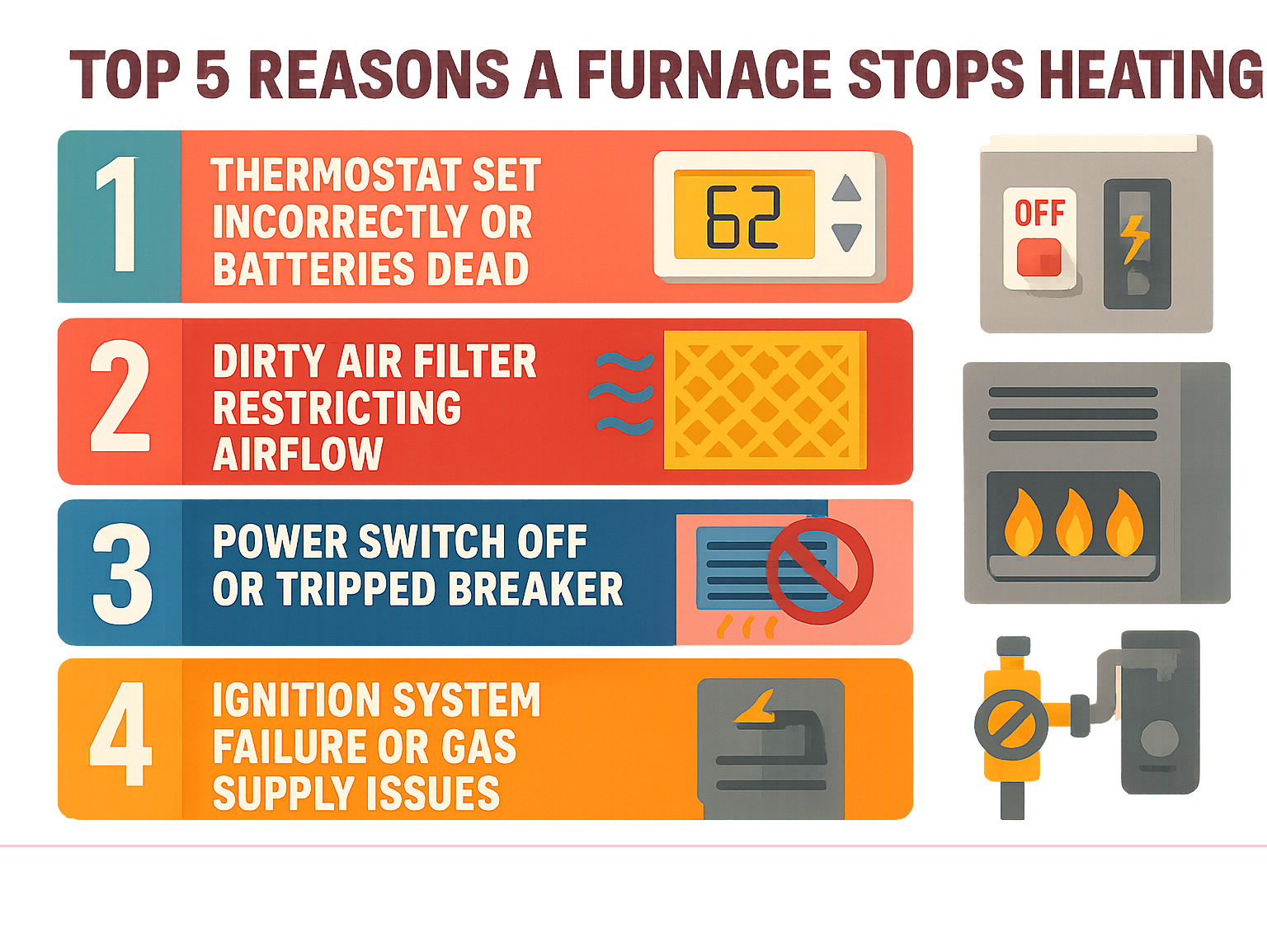
Quick fixes for a furnace not heating your house:
- Check thermostat settings – Ensure it’s set to “HEAT” and 5+ degrees above room temperature.
- Replace dirty air filter – Clogged filters block airflow and cause overheating.
- Verify power supply – Check the furnace switch and circuit breaker.
- Inspect vents and registers – Make sure they’re open and unobstructed.
- Look for gas supply issues – Ensure the gas valve is open (for gas furnaces).
Dirty air filters are the most common cause of furnace problems, and simple thermostat checks could prevent about 25% of all service calls. However, some issues require professional expertise, especially those involving gas lines or electrical components. Safety is always the top priority—if you smell gas or suspect carbon monoxide, evacuate immediately and call for help.
As Dan Walsh, with over two decades of home repair service experience in the Greater St. Louis area, I’ve seen these basic issues cause most furnace failures. My team at AAA Home Services specializes in diagnosing and repairing all heating systems to keep your family warm.
Your First Steps: Simple DIY Furnace Checks
When you realize your furnace not heating house properly, don’t panic. Before calling a technician, a few straightforward checks can often solve the problem in minutes. These simple, safe steps address the most common culprits behind heating failures.
Many homeowners find their “broken” furnace just needed a thermostat adjustment or a fresh air filter. A clogged filter can shut down your system to prevent overheating, while an incorrect thermostat setting will prevent it from turning on. Taking a few minutes to perform these diagnostics can save you time and money. Even if the issue persists, the information you gather will help a professional technician diagnose the problem faster.
1. Check Your Thermostat Settings
Your thermostat is the brain of your heating system. When your furnace not heating house properly, it’s the first place to look and often an easy fix.
First, check the mode setting is on “HEAT,” not “COOL” or “OFF.” Then, raise the temperature setting at least 5 degrees above the current room temperature to signal the furnace to turn on.
Set the fan to “AUTO.” The “ON” setting runs the fan continuously, which can circulate cool air when the furnace isn’t heating, making you think there’s a problem.
Dead batteries can disable a digital thermostat, so check for a blank or dim display. Replace them annually to prevent this issue. If you have a smart thermostat that’s unresponsive, try rebooting it.
“Sam was Professional and answered all my Questions. He replaced my Thermostat and got my Furnace working again. And he seemed very knowledgeable about what he was doing. I was very Satisfied with Sam. AAA Heating & Cooling Customer.”
Also, ensure your thermostat’s placement isn’t affected by direct sunlight or drafts, which can cause inaccurate temperature readings.
For more thermostat tips, see our guide: Is Your Thermostat Not Responding?
2. Inspect the Furnace Air Filter
A clogged furnace filter is the most common reason a furnace not heating house efficiently. When the filter is dirty, restricted airflow forces the system to work harder, causing the heat exchanger to overheat. As a safety measure, built-in switches will shut the furnace down.
A dirty filter also leads to reduced heat output, cold spots, and higher energy bills. Thankfully, this is an easy fix. Locate your filter, slide out the old one, and replace it with a new one of the same size. Check your filter monthly and replace it every 1 to 3 months.
Households with pets or allergies may need to change filters more often. This small step can prevent costly repairs.
For more details, see our guides: How to Change Your Home Air Filters and Furnace Filters: How Often Should They Be Replaced in St. Charles, MO Homes?
3. Confirm the Power Supply
Even gas furnaces need electricity to run the blower motor, thermostat, and safety controls. If your furnace not heating house properly, a power issue could be the cause. Without electricity, your furnace needs electricity to operate.
First, find the furnace power switch, which looks like a light switch on or near the unit. Ensure it’s in the “ON” position, as it can be accidentally bumped off.
Next, check your home’s circuit breaker panel. Find the breaker for your furnace or HVAC system. If it has tripped (it will be between “ON” and “OFF”), reset it by flipping it completely to “OFF” and then firmly back to “ON.”
If the breaker trips repeatedly, stop. This indicates a serious electrical problem that requires immediate professional attention. Do not keep resetting it.
Also, ensure the furnace panel door is securely closed. A safety switch prevents the furnace from running if the panel is ajar. For older systems with fuses, it’s best to call a qualified technician if you suspect a blown fuse.
Why Is My Furnace Not Heating My House? Deeper Diagnostics
If basic checks don’t solve your furnace not heating house problem, the issue may be with internal components or the heat distribution system. Understanding these deeper issues can help you talk to an HVAC technician.
What to check if your furnace is not heating the house
If the furnace runs but produces no heat, the problem is often in the ignition system.
- Pilot Light: On older gas furnaces, check if the pilot light is out. While you can relight it following manufacturer instructions, many prefer to have a professional handle it.
- Electronic Ignition: Modern furnaces use electronic ignition. A common failure point is a dirty or faulty flame sensor, which will shut the system down for safety if it can’t detect a flame.
- Gas Valve: Ensure the gas valve is open (handle parallel to the pipe).
- Heat Exchanger: A cracked heat exchanger is a serious safety hazard that can leak carbon monoxide. This requires immediate professional inspection.
For more on common repairs, see our guide: 7 Common Furnace Repairs to Keep You Warm This Winter.
What to check for uneven heating or poor airflow
If the furnace works but heat isn’t reaching all rooms, check your heat distribution system.
- Blocked Vents: Make sure furniture or curtains aren’t blocking supply and return air vents.
- Leaky Ductwork: Gaps in ductwork can leak heated air into your attic or basement, causing cold spots and high energy bills. Extensive duct problems require professional sealing.
- Zoned Systems: Ensure dampers and zone controls are set correctly. Learn more here: Add Customized Climate Control to Your Home with Zoned Heating.
“We have used AAA Home Services for over 20 years…This time will be major a Furnace and Air Conditioner Replacement. Rob came right away yesterday and showed us what issue was with our furnace…They gave us a fair price on a package deal. We signed up and they will do replacements next week. They are a reliable company. We trust them and that is important. Thank You!”
Gas vs. Electric Furnaces: Key Troubleshooting Differences
Knowing your furnace type is key when your furnace not heating house properly. Gas and electric furnaces have unique components and potential problems. Gas systems involve combustion, with risks like gas leaks, while electric systems have electrical components that can fail.
Troubleshooting a Gas Furnace
Gas furnaces burn natural gas or propane. Common issues involve gas flow, ignition, and combustion.
- Gas Supply: Ensure the gas valve handle is parallel to the pipe (open). For any other gas supply issues, call a professional.
- Ignition: Older furnaces have a pilot light that can go out. Modern furnaces use electronic ignition, where igniters or flame sensors can fail.
- Burner Flames: Healthy flames are blue. Yellow flames indicate a combustion problem that needs professional service.
- Heat Exchanger: A cracked heat exchanger can leak carbon monoxide and is a serious safety hazard requiring immediate professional repair.
AAA Home Services installs and services reliable American Standard gas furnaces known for their efficiency and safety.
Troubleshooting an Electric Furnace
Electric furnaces use heating elements to generate warmth. Troubleshooting focuses on electrical parts.
- Heating Elements: If one or more elements fail, you’ll get reduced or no heat. These require professional testing.
- Sequencer: This part controls the heating elements. A malfunction can prevent them from turning on, resulting in poor heating.
- Fuses and Breakers: In addition to the main breaker, some electric furnaces have internal fuses that can blow.
Here’s how the common failure points compare:
| Component | Gas Furnace | Electric Furnace |
|---|---|---|
| Heat Source | Natural gas or propane combustion | Electric resistance elements |
| Ignition | Pilot light or electronic igniter | Direct electrical heating |
| Common Failures | Gas valve issues, dirty flame sensor, pilot light problems | Heating element burnout, sequencer malfunction |
| Safety Concerns | Gas leaks, carbon monoxide exposure | Electrical fires, blown fuses |
| Power Requirements | Gas supply plus electricity for components | High electrical demand |
AAA Home Services also provides expert installation and service for American Standard electric furnace systems. Whether you have a gas or electric unit, most repairs require a trained technician to ensure safety and proper function.
Safety First: Critical Furnace Warning Signs
When troubleshooting a furnace not heating house, safety must come first. Certain warning signs signal serious dangers that require immediate action and can save lives.
Gas Leaks: The “Rotten Egg” Smell
The rotten egg smell around your furnace indicates a natural gas leak. Gas companies add this odor for safety.
If you smell gas:
- DO NOT use light switches, phones, or any appliance that could create a spark.
- DO get everyone out of the house immediately.
- DO call your gas company’s emergency line and 911 from a safe distance.
- DO NOT re-enter your home until cleared by emergency personnel.
Carbon Monoxide (CO) Dangers
Carbon monoxide is a colorless, odorless gas produced by incomplete fuel combustion. It is extremely dangerous.
Symptoms of CO Poisoning: Early signs mimic the flu: persistent headaches, dizziness, nausea, and fatigue. Since your body reacts to CO exposure within five minutes, quick recognition is vital. If multiple family members feel sick, suspect CO.
Furnace Warning Signs: Look for yellow or orange burner flames (instead of blue), soot stains around the furnace, or excessive moisture on windows.
Protection: Install CO detectors on every level of your home, especially near bedrooms. Smart detectors like the Nest Protect offer improved protection. If your detector alarms or you suspect CO poisoning, get fresh air immediately and seek medical help.
Annual professional maintenance is the best defense. As one customer shared, “I’ve used AAA Heating & Cooling for several years and have always been pleased with their service. Austin was out last week for annual HVAC maintenance and he was very friendly and professional. Terri K.” Regular maintenance is about safety, not just performance.
When to Call a Professional HVAC Technician
It’s important to know when a furnace problem is beyond a DIY fix. If your furnace not heating house persists after basic checks, it’s time to call an expert for safety and to ensure the job is done right. For more guidance, read: When Should You Call an HVAC Professional for Furnace Repair?
Signs You Need an Expert
Call a professional HVAC technician if you notice:
- Persistent Problems: The issue continues or returns after basic troubleshooting.
- Tripping Breaker: A circuit breaker that repeatedly trips signals a serious electrical fault.
- Loud Noises: Banging, squealing, or grinding sounds indicate mechanical failure that can worsen quickly.
- Faulty Internal Components: Issues with the igniter, flame sensor, or blower motor require specialized tools and diagnosis.
- Cracked Heat Exchanger: This is a critical carbon monoxide risk that demands immediate professional inspection.
- Gas or Electrical Concerns: Any issue beyond a simple check should be handled by a licensed professional.
“We have had great experiences with AAA service people over many years. It’s so nice to know who to call when I have a problem. Thanks for the good work!!”
At AAA Home Services, our certified technicians have served the Greater St. Louis, St. Charles, and Warren County areas for over 50 years. We offer fair, honest pricing and award-winning service. As Mike G. shared, “This is an excellent company and I have used them for years. Austin is a good guy too! He’s always upfront with me on issues that I should consider and goes beyond the call. Thanks for sending him AAA!”
We often provide same-day or next-day service and can prevent future issues with regular maintenance. Learn more: American Standard HVAC Maintenance Tips for St. Louis and St. Charles Homeowners.
Conclusion: Restoring Warmth and Peace of Mind
When your furnace not heating house properly, it can be overwhelming. However, many issues have simple solutions you can handle yourself. Start by checking the thermostat, air filter, and power supply, as these steps solve a surprising number of problems.
Safety must always come first. If you smell gas or suspect a carbon monoxide leak, evacuate immediately and call for emergency help. For complex issues like ignition failures or persistent electrical problems, it’s time to bring in an expert.
For over 50 years, AAA Home Services has provided families in the Greater St. Louis, St. Charles, and Warren County areas with reliable heating repairs. Our commitment is to fair, honest pricing and award-winning service for all furnace types, including American Standard systems.
As a customer shared, “We have had great experiences with AAA service people over many years. It’s so nice to know who to call when I have a problem. Thanks for the good work!! AAA Heating & Cooling Customer.”
Don’t stay in the cold. When you need professional help, Request Service with AAA Home Services to restore warmth and peace of mind to your home.


