



Why Hiring Certified AC Technicians Protects Your Home and Investment
Certified AC technicians have completed rigorous training and passed industry-standard exams to safely handle refrigerants and service air conditioning systems. Here’s what you need to know:
Key Certifications to Look For:
- EPA Section 608 – Required by federal law for refrigerant handling (never expires)
- NATE Certification – Industry’s highest standard with 34,1105 certified technicians nationwide
- State HVAC License – Local licensing requirements vary by state
- Manufacturer Training – Brand-specific system knowledge
How to Verify Credentials:
- Ask to see EPA 608 certification card
- Request NATE ID number and verify online
- Check state licensing through local department
- Confirm insurance and bonding status
When your AC breaks down in the middle of a St. Louis summer, you want someone who knows what they’re doing. The research shows that hiring an uncertified HVAC technician may void your manufacturer’s warranty – and that’s just the beginning of potential problems.
Why certification matters: Certified technicians complete at least 2,000 hours of on-the-job training plus 144 hours of technical education. They understand proper refrigerant handling, system sizing, and safety protocols that protect both your equipment and your family.
I’m Dan W, and I’ve spent years managing home repair services and working with certified AC technicians to ensure maximum service satisfaction for homeowners. Through my experience overseeing technician teams, I’ve seen how proper certification makes the difference between a job done right the first time and costly callbacks.

Why Certification Matters for Safe, Efficient Cooling
When your AC stops working on a sweltering July afternoon, you might be tempted to call the first technician who can show up quickly. But here’s the thing – the difference between certified AC technicians and uncertified workers can literally make or break your cooling system, your wallet, and even your family’s safety.
Safety isn’t negotiable. Working with refrigerants requires specialized knowledge because these chemicals can be dangerous when mishandled. Certified technicians understand how to prevent refrigerant leaks that could harm your family’s health and damage the environment. They know the proper safety protocols, wear the right protective equipment, and follow procedures that keep everyone safe. When someone without proper training works on your system, they’re essentially experimenting with potentially hazardous materials in your home.
The EPA requires all technicians who handle refrigerants to have Section 608 certification – and this isn’t just bureaucratic red tape. This federal requirement exists because improper refrigerant handling can release ozone-depleting substances into the atmosphere. For detailed information about these requirements, you can check the EPA’s Section 608 technician certification guidelines.
Your warranty protection depends on proper certification. Here’s something that surprises many homeowners: if an uncertified technician services your AC system, you could void your manufacturer’s warranty entirely. When you’ve invested thousands of dollars in a new cooling system, losing that warranty protection because someone cut corners on credentials is a costly mistake you can’t afford to make.
Energy savings start with proper installation and service. Certified technicians know how to correctly charge refrigerant systems, properly size equipment for your home, and optimize airflow throughout your ductwork. These technical skills directly impact your monthly utility bills. When refrigerant levels are wrong or airflow is restricted due to poor service, your system works harder and costs more to operate – sometimes for years before the problem gets finded.
Fewer headaches mean more peace of mind. The data tells a clear story: NATE-certified technicians have significantly lower callback rates compared to uncertified workers. When the job gets done right the first time, you avoid the frustration of repeated service calls, unexpected breakdowns, and the inconvenience of living without AC while waiting for repairs.
At AAA Home Services, we’ve seen how certification makes all the difference in our work throughout St. Charles, O’Fallon, and the greater St. Louis area. Our certified technicians consistently deliver the quality and reliability that comes from proper training, ongoing education, and a commitment to doing things the right way – not just the fast way.
The bottom line? Certified AC technicians aren’t just better trained – they’re your best insurance policy against costly mistakes, safety hazards, and the kind of problems that turn a simple repair into a major headache.
Choosing Certified AC Technicians for Your Home
When you’re looking to hire someone to work on your home’s air conditioning, you’ll quickly find that HVAC certifications can feel overwhelming. The good news? Once you understand what the main credentials mean, it becomes much easier to identify qualified certified AC technicians who can properly service your system.
Think of certifications like a ladder – each one builds on the previous level of knowledge and expertise. At the bottom rung, you have basic safety training. At the top, you find technicians who’ve mastered both the science and the practical skills needed to keep your home comfortable year-round.
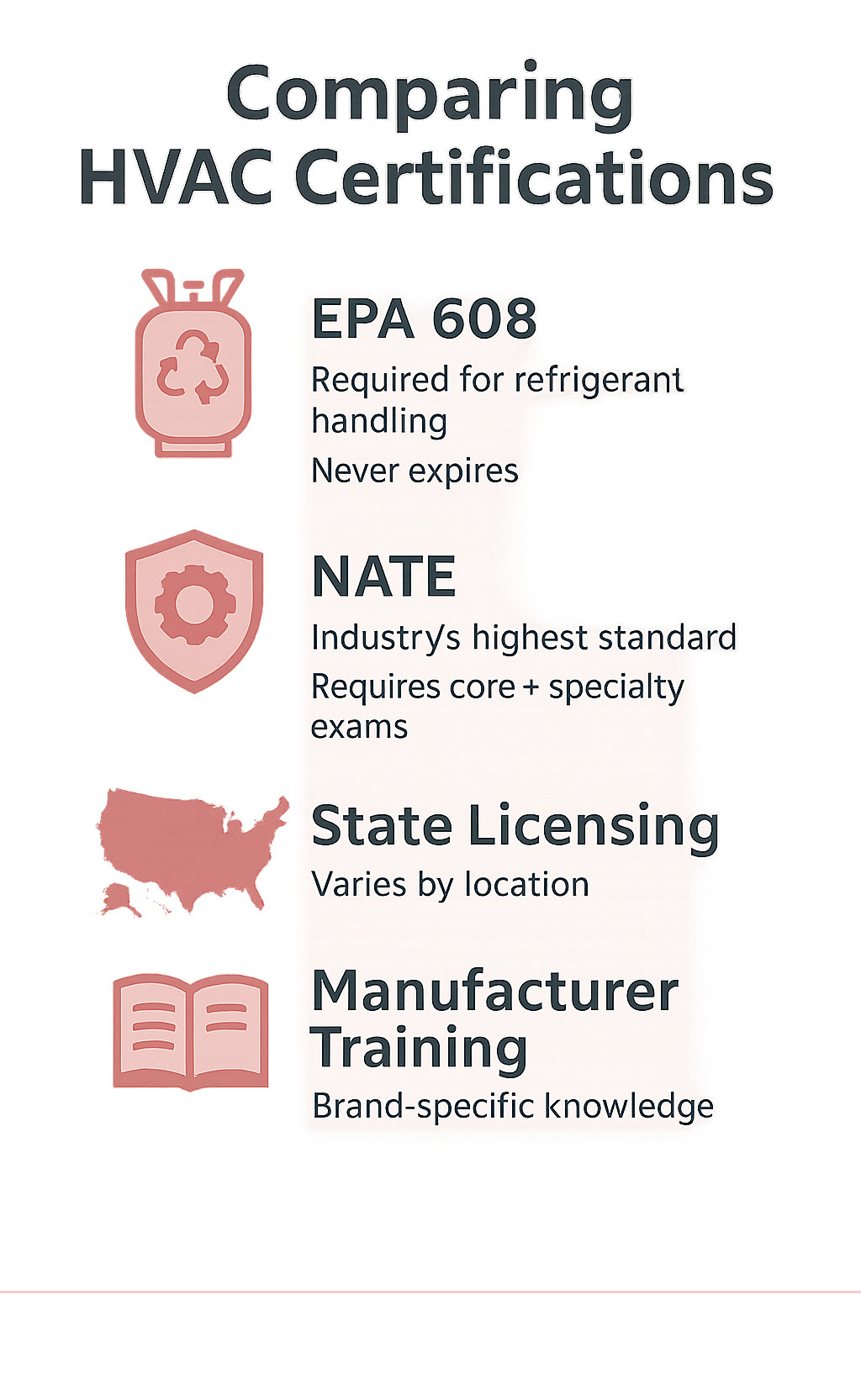
EPA Section 608 certification sits at the foundation of legitimate AC work. Federal law requires this credential for anyone who handles refrigerants in your air conditioning system. Without it, a technician is literally breaking the law by working on your AC. What’s interesting about EPA 608 is that once earned, it never expires – though smart technicians stay current with changing regulations anyway.
The certification comes in different flavors based on the types of systems a technician can work on. Type II covers high-pressure systems like most residential air conditioners, while Universal certification allows work on all system types. For your home’s AC, you want someone with at least Type II, though Universal shows even broader expertise.
Moving up the expertise ladder, NATE (North American Technician Excellence) represents the gold standard in our industry. With 34,1105 certified technicians nationwide working for 5,358 contractors, NATE certification demonstrates mastery that goes well beyond basic requirements. These technicians have proven their knowledge through comprehensive testing that covers both core HVAC principles and specialized equipment knowledge.
State licensing adds another layer of credibility by ensuring technicians understand local building codes and safety requirements. In Missouri, HVAC contractors must hold appropriate licenses, and you can verify these credentials through state licensing departments. This isn’t just paperwork – it means the technician knows the specific rules that apply to work in your area.
Many technicians also pursue manufacturer training for specific equipment brands. While not always required, this specialized knowledge helps them understand the unique features and service requirements of different systems. It’s like the difference between a general doctor and a specialist – both are valuable, but specialists bring deeper expertise to specific situations.
What “Certified” Really Means
Behind every certification card lies months or years of dedicated learning. Becoming a certified AC technician isn’t something that happens overnight, and understanding this process helps you appreciate the expertise you’re hiring.
Most technicians start their journey through one of two paths: formal HVAC programs at technical schools or apprenticeship programs. The classroom route typically takes six months to two years and covers the theoretical foundation – how refrigeration works, electrical principles, and safety protocols.
Apprenticeships take longer but provide more hands-on experience. These programs require at least 2,000 hours of on-the-job training combined with 144 hours of technical education. That’s roughly equivalent to a full year of 40-hour work weeks spent learning the trade under experienced supervision.
The testing process separates serious professionals from those just looking for quick credentials. Core exams test fundamental knowledge that applies to all HVAC work – electrical theory, refrigeration cycles, safety protocols, and environmental regulations. Specialty exams dive deeper into specific equipment types like heat pumps or air conditioning systems.
This combination of classroom learning, hands-on experience, and rigorous testing ensures that certified technicians understand both the science behind HVAC systems and the practical skills needed to service them safely. When a certified technician arrives at your home, they’re bringing years of preparation to solve your comfort problems.
Key Credentials Every Homeowner Should Look For
When you’re ready to hire AC service, certain credentials should be non-negotiable. These certifications demonstrate that a technician has the training and legal authority to work on your system safely and effectively.
EPA 608 certification is your starting point for any legitimate AC work. For residential air conditioning, you want technicians with Type II certification (for high-pressure systems) or Universal certification (which covers all system types). Universal certification shows broader expertise and is often preferred by homeowners who want the most qualified technicians.
NATE certification follows a “Core + Specialty” format that demonstrates both broad knowledge and specific expertise. The core exam covers fundamental HVAC principles that apply across all systems, while specialty exams focus on particular equipment types. For air conditioning work, look for technicians certified in Air Conditioning or Heat Pump specialties.
State HVAC licenses ensure your technician understands local building codes and safety requirements. Licensed contractors have demonstrated knowledge of local regulations and business practices that affect your project. You can verify these credentials through your state’s licensing department.
Continuing education keeps good technicians sharp as technology evolves. While EPA 608 certification doesn’t expire, NATE certification requires ongoing education to maintain credentials. Technicians who pursue continuing education show commitment to staying current with new equipment and techniques.
At AAA Home Services, our technicians maintain all these key credentials because we know they make a real difference in the quality of service we provide to homes throughout St. Charles, O’Fallon, and the greater St. Louis area. When you’re dealing with the complexity of modern air conditioning systems, proper certification isn’t just helpful – it’s essential for protecting your investment and your family’s comfort.
How to Verify a Technician’s Credentials
You wouldn’t hire a contractor without checking references, so why skip credential verification for your AC service? The good news is that checking certified AC technicians’ qualifications is much easier than you might think – and it’s worth the few extra minutes it takes.
Online lookup portals have made verification incredibly convenient. NATE provides a straightforward online ID verification system where you simply enter a technician’s certification number to see their current status, specialty areas, and expiration dates. It’s like having instant access to their professional report card.
The ACCA 608 registry serves as another valuable resource for confirming EPA certification status. This searchable database not only verifies credentials but also provides contact information if technicians need replacement cards – a sign of a well-organized system you can trust.
State licensing boards maintain their own databases that show you everything from license status to disciplinary actions. In Missouri, the state’s professional licensing division makes it easy to verify HVAC contractor licenses online. These databases give you the complete picture of a contractor’s standing with regulatory authorities.
Taking advantage of these verification systems before scheduling service protects both your investment and your peace of mind. At AAA Home Services, we’re proud when customers verify our credentials – it shows you’re being smart about protecting your home. For ongoing care, our AC Maintenance & Tune-Up services ensure your system receives expert attention from properly credentialed professionals.
Step-by-Step Checklist to Confirm a Certified AC Technician
Here’s your straightforward approach to credential verification that takes just minutes but provides lasting protection:
Start by asking for photo identification and compare the name to their certification cards. Legitimate technicians expect this request and come prepared with both personal ID and professional credentials clearly displayed.
Write down the certification numbers from their EPA 608 and NATE cards rather than just glancing at them. This extra step lets you verify the information later and shows the technician you’re serious about quality service.
Use the NATE ID verifier online to confirm that the technician’s name matches their certification number and that their specialties align with your specific service needs. This verification takes less than a minute but confirms everything checks out.
Check expiration dates carefully on all credentials. While EPA 608 certification never expires, other certifications require regular renewal, and you want current credentials working on your system.
Confirm insurance coverage and bonding status with the company. Reputable contractors carry comprehensive liability insurance and worker’s compensation coverage that protects you from potential issues during service.
This verification process might seem thorough, but it’s really just smart homeownership. You’re protecting yourself from liability issues while ensuring you receive the qualified service you deserve.
Questions to Ask Before Booking a Visit
The right questions help you evaluate both technical qualifications and service quality before anyone steps foot in your home. “How many years of experience do you have specifically with residential AC systems?” gives you insight into their background, though remember that experience combined with proper certification matters most.
“When did you last complete recertification or continuing education?” reveals whether the technician stays current with evolving technology and industry best practices. Active learning shows professional commitment that translates to better service for your home.
“Do you have manufacturer-specific training on my equipment brand?” can make a significant difference in service efficiency and effectiveness. While certified technicians can work on various brands, specific training often means faster diagnosis and more targeted solutions.
“How does your certification status affect my equipment warranty?” helps you understand the long-term implications of your service choice. Proper certification protects warranty coverage, while uncertified work can void it entirely.
These conversations also give you a feel for the technician’s professionalism and communication style. You want someone who answers questions clearly and seems genuinely interested in providing quality service. For more detailed answers to common concerns, our Heating & Air Conditioning FAQ addresses many topics homeowners ask about when choosing HVAC service.
Hiring Process & What to Expect from Certified Pros
When you hire certified AC technicians, you’re not just getting someone who knows how to fix air conditioners – you’re getting professionals who follow proven processes that protect your home and your wallet. The difference becomes clear from the moment they arrive at your door.
Think about it this way: would you want someone guessing at what size air conditioner your home needs? Certified technicians don’t guess. They use Manual J load calculation software to determine exactly what your home requires based on your square footage, insulation, windows, and St. Louis’s climate. This precision means you won’t end up with an oversized system that cycles on and off constantly or an undersized one that runs all day but never quite keeps you comfortable.
Proper refrigerant charging is another area where certification makes a huge difference. Your AC system is designed to work with a specific amount of refrigerant – not close enough, but exact. Certified professionals use digital gauges, scales, and temperature measurements to get it right. When refrigerant levels are off, your system works harder, uses more energy, and wears out faster.
Airflow diagnostics might sound technical, but it’s really about making sure cool air reaches every room in your house efficiently. Certified technicians measure air pressure, check for duct leaks, and ensure your system distributes air evenly. This attention to detail is what separates professional service from someone just going through the motions.
At AAA Home Services, we understand that AC problems don’t always happen at convenient times. That’s why we can often provide same-day or next-day service when your system needs attention. Our comprehensive Air Conditioning Repair Service handles everything from minor tune-ups to complete system replacements.
Maintenance planning is where certified professionals really shine. Instead of just fixing what’s broken, they help you prevent problems before they happen. They’ll create a maintenance schedule that makes sense for your specific system and how you use it.
From First Call to Post-Service Follow-Up
Professional service follows a clear path that ensures you know what to expect every step of the way. When you call a certified contractor, you’re entering a process designed to protect both you and your equipment.
Written estimates aren’t just about the money – they’re about communication. A certified technician will explain exactly what work needs to be done and why. No surprises, no hidden costs, just clear information that helps you make the right decision for your home.
Permit handling takes one more worry off your plate. When local codes require permits for equipment replacement or major repairs, certified contractors handle the paperwork and coordinate inspections. You don’t have to steer city hall or worry about compliance issues.
System startup testing is where you see certification in action. Before leaving your home, certified technicians verify that everything works correctly. They check refrigerant pressures, measure airflow, test electrical connections, and ensure all safety controls function properly. This thorough approach prevents callbacks and ensures your system operates safely.
Cleanup and walkthrough shows respect for your home and your investment. Professional technicians don’t just pack up and leave. They clean their work area, dispose of old parts properly, and walk you through any changes or maintenance recommendations. You’ll understand how your system works and what to watch for in the future.
How Certification Protects Your Warranty & Energy Bills
Here’s something that might surprise you: using an uncertified technician can void your equipment warranty. Most manufacturers require that installation and major repairs be performed by properly certified technicians to maintain warranty coverage. When you’ve invested thousands in a new system, you don’t want to lose that protection because someone without proper credentials worked on it.
Manufacturer requirements exist for good reason. They know that proper installation and service require specific knowledge and skills. When certified technicians follow established procedures and use genuine parts, your equipment performs as designed and lasts as long as it should.
Fewer breakdowns naturally result from proper installation and maintenance. Certified technicians understand manufacturer specifications and follow procedures that reduce the likelihood of premature failures. This means fewer emergency calls and less disruption to your family’s comfort.
Higher SEER performance depends entirely on correct installation and setup. You might buy the most efficient air conditioner available, but if it’s not installed properly, you won’t see the energy savings you expect. Certified technicians know how to optimize system performance to achieve the efficiency ratings you’re paying for.
The connection between certification and your monthly energy bills is direct and measurable. When systems are properly sized, installed, and maintained, they use less energy to keep your home comfortable. Over the life of your equipment, this can add up to significant savings.
For homeowners considering new equipment, our guide on Why American Standard HVAC Equipment is the Top Choice for St. Louis Homes explains how proper installation by certified technicians maximizes equipment performance and longevity.
Frequently Asked Questions about Certified AC Technicians
When you’re looking for reliable AC service, understanding the difference between various credentials helps you make smart hiring decisions. These are the questions we hear most often from homeowners in St. Louis and St. Charles County.
What is the difference between certification and state licensure?
Here’s the simple way to think about it: certification proves a technician knows how to do the job safely and correctly, while licensure gives them legal permission to do business in your state. Both matter, but they serve different purposes.
EPA Section 608 certification is required by federal law for anyone who handles refrigerants – no exceptions. This applies whether you’re in Missouri, Illinois, or anywhere else in the country. It’s about technical competency and environmental safety.
NATE certification goes beyond the legal minimum. It’s voluntary but demonstrates that a technician has mastered advanced technical skills. When you see a NATE-certified technician, you know they’ve invested extra time and effort to prove their expertise.
State licensing handles the business side of things. In Missouri, HVAC contractors must hold appropriate state licenses to legally operate. Individual technicians working for licensed contractors may not need separate licenses if they’re properly supervised, but they still need EPA certification to handle refrigerants.
The bottom line? Look for both. You want certified AC technicians who work for properly licensed contractors.
Does EPA 608 certification ever expire?
This is one of the unique things about EPA 608 certification – it never expires once you earn it. Unlike many professional certifications that require renewal every few years, your EPA 608 card is good for life.
That said, the regulations can change over time. The EPA occasionally updates requirements or adds new rules, and certified technicians must stay compliant with these changes even though their original certification remains valid.
This is why the best technicians don’t just rely on their original training. They stay informed about industry developments and regulatory updates throughout their careers. At AAA Home Services, our technicians regularly attend training sessions to stay current with the latest requirements and best practices.
How often must certified AC technicians complete continuing education?
NATE certification requires ongoing education to maintain credentials, though the specific requirements depend on the specialty area and certification level. This ensures that NATE-certified technicians stay sharp and current with evolving technology.
Many certified AC technicians pursue additional training voluntarily because the HVAC industry constantly evolves. New refrigerants, updated equipment designs, and improved diagnostic tools mean there’s always something new to learn.
State licensing may include continuing education requirements as well. These vary by state but typically focus on code changes, safety updates, and new regulations that affect residential HVAC work.
Equipment manufacturers also provide ongoing training on new products and service procedures. This manufacturer-specific education helps technicians understand the unique features and requirements of different equipment brands.
The technicians at AAA Home Services regularly participate in manufacturer training programs and industry workshops. This commitment to ongoing education means you get service from professionals who understand both traditional systems and the latest technology innovations.
Conclusion
Hiring certified AC technicians isn’t just about following best practices – it’s about protecting your investment, ensuring your family’s safety, and getting the reliable service you deserve. The research clearly shows that certification makes a measurable difference in service quality, warranty protection, and long-term system performance.
When you’re dealing with AC troubles in the St. Charles, O’Fallon, or greater St. Louis area, the cheapest option isn’t always the best value. Certified technicians bring the training, experience, and accountability that ensure your cooling system receives expert care.
At AAA Home Services, our commitment to using certified technicians reflects our broader dedication to fair, honest service backed by over 50 years of experience and more than 8,000 Google reviews. We understand that your home’s comfort system is a significant investment, and we treat it with the professional expertise it deserves.
Whether you need emergency repairs, routine maintenance, or complete system replacement, working with certified professionals gives you confidence that the job will be done right the first time. For new system installations, our New Air Conditioner Installation service ensures your equipment is properly sized, installed, and commissioned by certified technicians.
The next time you need AC service, remember to verify credentials, ask the right questions, and choose professionals who demonstrate their commitment to excellence through proper certification. Your home’s comfort and your peace of mind depend on it.


